
Bleach is one of those “old-school” cleaners that’s been under a kitchen sink for generations. Your nan used it, your mum used it, and it’s likely in some of your own products, too. (Check your laundry detergent, for starters!)
But while bleach has long been a household staple, it’s also a “misunderstood” product. Some people overuse it as an all-purpose cleaner when it isn’t, and others are put off by the harsh chemicals.
Still, bleach earns a place in your home maintenance kit. Oxygen bleach goes in your laundry or bathroom; meanwhile, chlorine bleach disinfects and removes stains. Then it’s just about knowing how to clean with bleach properly and effectively.
From safety tips to when not to use it, here’s your guide to using bleach for cleaning.
Before Cleaning | How to Properly Clean | Bleach Uses for Cleaning | Does Bleach Kill Mould? | Can Bleach Disinfect? | What Not to Clean
Is It Okay to Clean Your House with Bleach?
Bleach is useful for cleaning some things around your home, but it’s best reserved for specific tasks.
Chlorine bleach, for example, disinfects surfaces after someone’s been sick. Oxygen bleach is a gentler option for laundry or surface wiping.
However, bleach isn’t necessary for everyday cleaning. For most cases, warm water with dish soap or a good multipurpose cleaner is enough. Bleach can also damage some common household surfaces like stainless steel, natural stone, and wood.
Consider bleach as a specialist solution: it’ll whiten or disinfect, but you won’t use it to wipe that spilled sauce in the sink!
Before Cleaning with Bleach: Prep and Safety Tips
Bleach is a straightforward but powerful cleaning product. Preparation goes a long way, both for getting the best results and keeping yourself safe.
We’ll go over what type of bleach to use, how to clean safely, and other precautions to take.
Oxygen bleach vs chlorine bleach
There are two main types of bleach: chlorine-based and oxygen-based.
Most “household bleach” is chlorine-based, with a 4–5% sodium hypochlorite solution. On the other hand, you’ll usually find oxygen bleach in laundry products, including Napisan.
Here’s a quick comparison table of the two:
| CHLORINE BLEACH | OXYGEN BLEACH |
| Based on sodium hypochlorite (which is sodium, chlorine, and oxygen) | Based on sodium percarbonate or hydrogen peroxide; sometimes called oxygenated bleach |
| Strong oxidising agent; sodium hypochlorite breaks down colour molecules or grime | Gentler and less reactive; releases oxygen molecules to remove dirt and stains |
| Used to whiten or disinfect heavily soiled items; not safe for coloured items | Pre-treats stains and brightens white fabrics; safe for colourfast fabrics |
| Can kill a wide range of germs on non-porous surfaces | Milder and weaker germ-killing properties |
How do I safely clean with bleach?
Always check that you’re using household bleach, which has up to a 5% concentration. Commercial bleach is much stronger and is not meant for household use.
Wear protective gloves and a face mask, and eye protection if possible. Make sure the room is well-ventilated by opening windows or exhaust fans. Bleach fumes are very strong!
Only dilute bleach with water. You should never mix bleach or use it right after any of these household cleaners:
- White vinegar or citric acid: Forms toxic fumes (chlorine gas)
- Clear or cloudy ammonia: Produces dangerous chloramine gas
- Isopropyl alcohol or methylated spirits: Creates a toxic gas called chloroform
It’s not recommended to use bleach around small children and pets, since it causes respiratory irritation and is toxic when ingested.
However, bleach products are safe to use while pregnant with proper precautions. If you’re unsure, stick to oxygen-based cleaners, which are less reactive.
Finally, store bleach in a cool, dry place away from direct sunlight, and out of reach of children or pets.
Do you need to rinse after cleaning with bleach?
You must rinse food-contact surfaces after using bleach — that includes sinks, benchtops, and plastic cutting boards.
The same goes for surfaces accessible to kids or pets. That removes any residue and lessens the risk of accidental ingestion.
For floors and other non-food contact surfaces, it isn’t necessary to rinse bleach unless the manufacturer recommends it. Check the packaging of your product for instructions.
Is bleach safe for septic systems?
In small diluted amounts, chlorine bleach is safe for septic systems. However, regular or heavy use will disrupt beneficial bacteria. It’s also not greywater-safe, as it releases harmful residue into the water.
On the other hand, oxygen bleach is both septic-safe and greywater-safe in normal household amounts, as it readily decomposes. Just use it in moderation, because it does add salt to the water and soil!
How to Properly Clean with Bleach
Bleach should be diluted before use.
Check the manufacturer’s instructions for mixing, or use this formula (based on Australian health department guidelines) for general cleaning:
| Chlorine bleach | 2 tsp per 1 litre of cool water |
| Oxygen bleach | 1 tbsp per 1 litre of warm water |
Remember: for chlorine bleach, it should be cool water, or lukewarm at most. Warm to hot water makes chlorine bleach less effective, because heat makes it break down quickly and release more fumes.
Oxygen bleach is fine in warm water, though, as heat activates it faster.
Ideally, mix your bleach solution in a bowl or bucket, then use a cloth to apply it. Spray bottles aerosolise the mixture, which can then irritate your nose or eyes. You’re also less likely to forget to empty a bowl, since you shouldn’t store the diluted bleach.
Still, using a spray bottle isn’t dangerous. Choose one with a stream setting (instead of spray/mist), and make only as much solution as you need. Dispose of any leftovers according to local regulations.
And of course, label the bottle clearly so you don’t use it for anything else!
How Do I Use Bleach to Clean Things?
Bleach isn’t just for your laundry or toilet! That bleach cleaner works all around the house, from showers to tile floors.
You should, however, use the correct type of bleach. Oxygen-based products are best for general chores, while chlorine-based ones are better suited for heavy-duty tasks or disinfecting. Don’t use both at the same time.
The usual safety precautions apply: wear gloves and a mask, ensure ventilation, and spot-test first.
Brightening laundry with bleach
| Laundry booster | 1/2 cup oxygen bleach per standard washer load (or see package instructions) |
Before anything else, check whether bleach is compatible with both your clothes and your washer. For coloured fabrics, do a spot-test first. That’ll save you a headache later on.
To get the best results, add the bleach to the empty washer tub, then load your laundry. Fill up the tub but don’t start the wash cycle yet. Instead, leave the clothes to soak for around 1 hour so the oxygen bleach lifts stains or discolouration.
After soaking, run your usual wash cycle with laundry detergent. You can run an extra rinse cycle to remove leftover residue.
NOTE: Skip the oxygen bleach for delicate fabrics like silk or wool, since it damages the fibres.
Removing stains with bleach
| Stain remover | 1 tbsp powdered oxygen bleach + 1 cup cool to lukewarm water |
When treating stains, you’ll need a slightly stronger dilution than for a laundry cycle. Make sure the clothing item is bleach-safe and do a patch test first.
If you’re treating protein-based stains like blood or sweat, use cool water so you don’t “cook” the stains and cause them to set.
Use a soft sponge to dab the diluted bleach onto the stain — dab, not rub, so you don’t push the stain further into the fibres. Wait 1–3 minutes before rinsing the fabric with water. Then run the clothing through its usual laundry cycle.
Cleaning a toilet with bleach
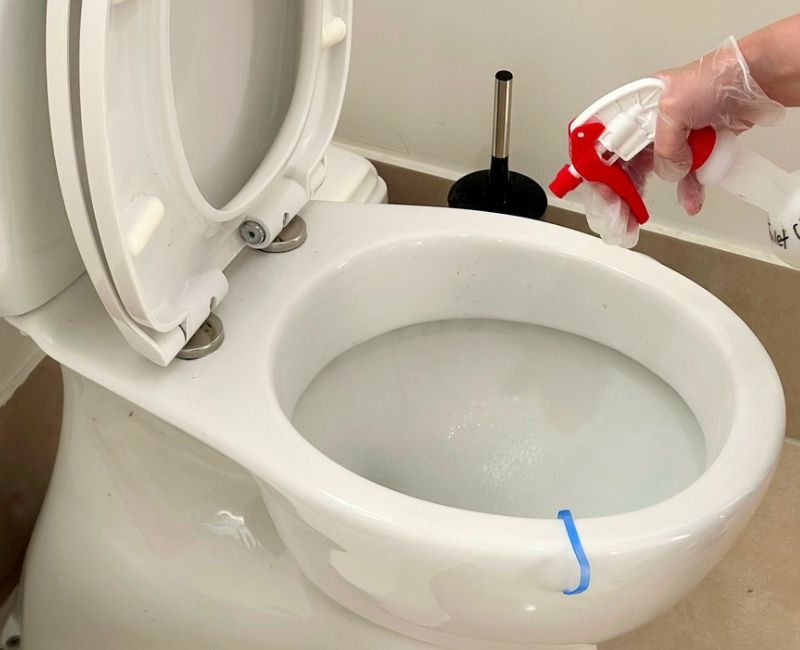
| Toilet cleaner | 1/4–1/2 cup of chlorine bleach in the toilet bowl |
Sodium hypochlorite is a key ingredient in many bleach-based toilet cleaners. If you’ve got a particularly grimy toilet, chlorine bleach works as a disinfectant and stain remover.
NOTE: Do not use bleach if your toilet has rust stains. Bleach is an oxidiser, so it’ll make the rust worse or even permanent.
Always flush the toilet once or twice first. Urine contains ammonia, which makes a toxic gas when combined with bleach.
Carefully pour the bleach over the toilet bowl surfaces. Use the toilet brush or a sponge to spread the bleach under the rim, where the water nozzles are. Let the bleach stay for up to 5 minutes.
Following that, scrub the toilet bowl as usual with the brush. Flush again to rinse, then leave the toilet seat open for a while to air it out.
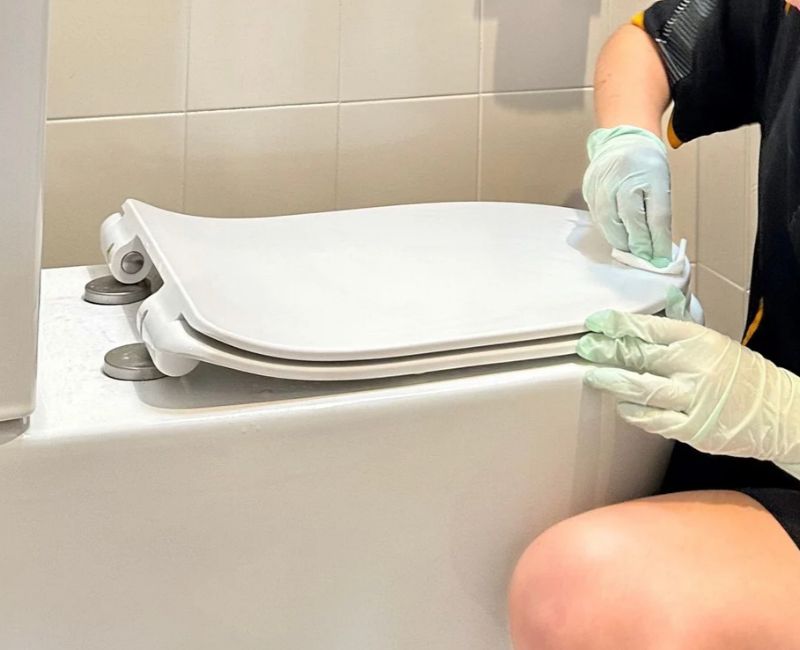
You can also use bleach to disinfect the other toilet surfaces! Mix 2 tsp bleach with 2 cups of water in a container. Dampen a rag with the solution, then wipe the seat, rim, and exterior surfaces clean.
Cleaning a shower with bleach
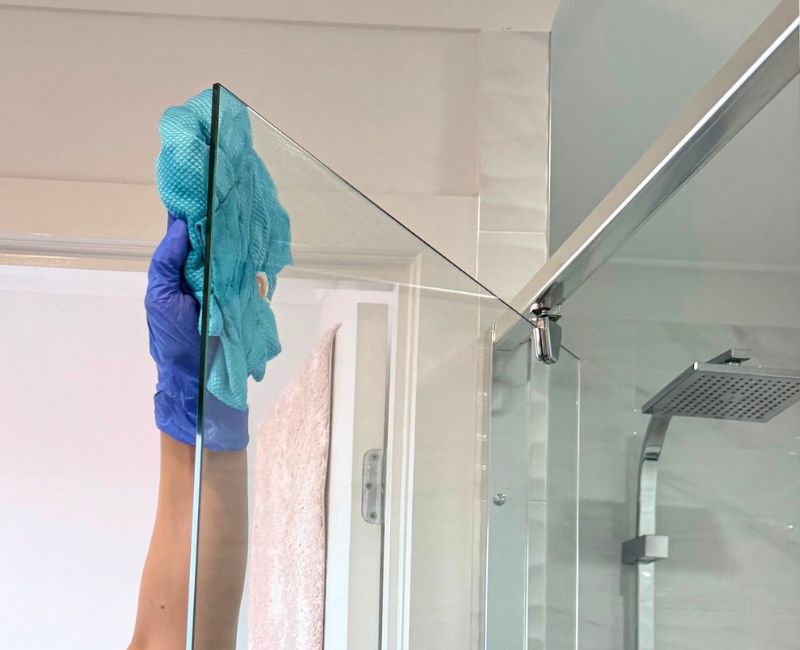
| Shower cleaner | 1–2 tbsp of oxygen bleach per 1 litre of warm water |
Oxygen bleach can tackle your shower and bathtub! It’s most effective for deep cleaning shower glass or ceramic tiles, though keep it to occasional use — repeated exposure damages tile grout.
Skip it for acrylic, fibreglass, and stone; it’s too harsh for those materials.
Make your solution in a spray bottle, then saturate the shower surfaces. Let the bleach sit for 20–30 minutes, then go over the surfaces with a soft sponge or scrubbing brush. Go from top to bottom so you don’t get dirty water on clean spots.
No need to rinse unless the product recommends it, but you should wipe the shower area dry with a cloth or squeegee.
NOTE: Oxygen bleach also works for cleaning shower liners. If they’re washable, add half a cup to the wash cycle. For hand-washing, soak the liners in a bathtub filled with hot water and half a cup of oxygen bleach.
Cleaning kitchen sinks and benchtops with bleach
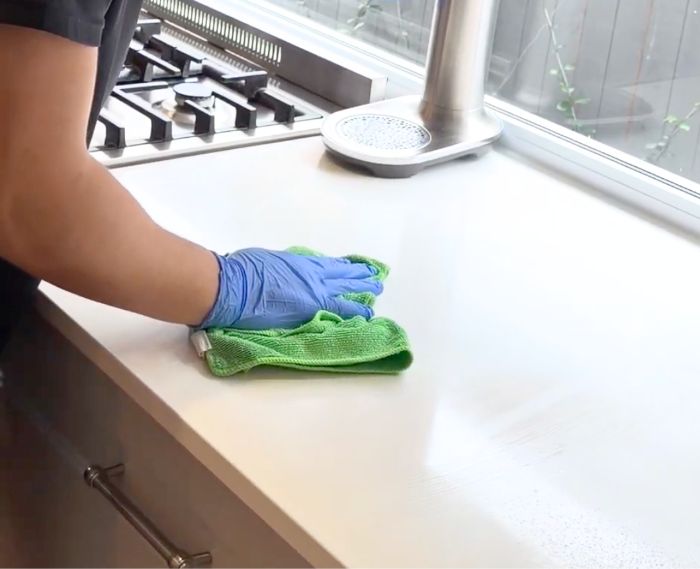
| Kitchen cleaner | 1 tbsp of oxygen bleach per 1 litre of warm water |
This works best on porcelain or ceramic sinks, and glass or tile benchtops. Do not use bleach on natural stone benchtops and aluminium sinks.
Diluted oxygen bleach can be used on stainless steel in a pinch, but it isn’t recommended. If it is needed, do a spot-test first.
Make your cleaning solution in a container, then dampen a microfibre cloth or soft sponge. Wipe down your kitchen sink or benchtop thoroughly. Don’t rinse them right away, though — give the bleach 1–2 minutes to break down grime.
Afterwards, go over the surfaces with a fresh, damp cloth to remove any bleach residue, then another clean cloth to dry.
NOTE: This method also works for tile splashbacks. Skip it for mirror splashbacks, since it can leave streaks or wear out the sealant. For plastic cutting boards, use a lower concentration of 1 teaspoon per litre.
Cleaning a tile floor with bleach
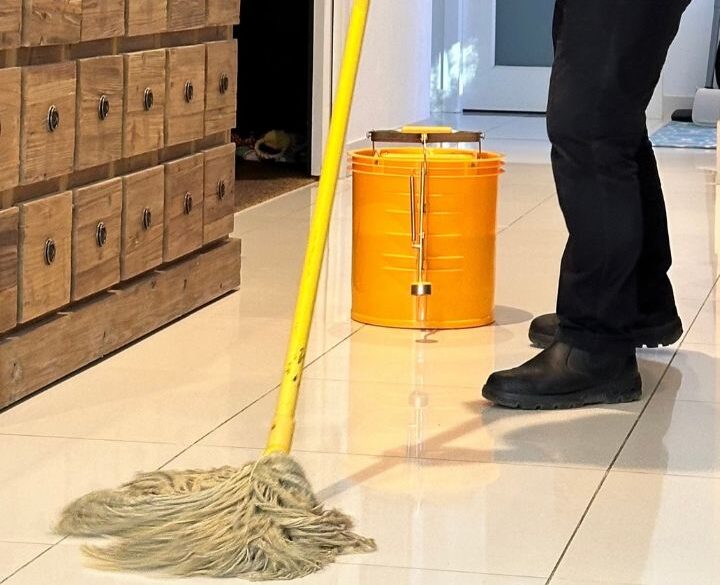
| Tile cleaner | 1/2 cup of oxygen bleach per 4 litres of warm water |
Oxygen bleach can deep clean ceramic or porcelain tile floors. Just be sure the grout is sealed, so the solution doesn’t seep into the material.
Avoid this method for vinyl, laminate, stone, and hardwood flooring.
Get two buckets: one for the bleach and one for the rinse water. Mop the floors as you usually do, working one section at a time. Rinse the mop head regularly, and change out the water when it gets murky.
Leave the diluted bleach to sit for 5–10 minutes before going over the floors with a fresh mop head and clean water. Finally, dry the floors so you don’t leave streaks.
Cleaning grout with bleach
| Grout cleaner | 2 tbsp of oxygen bleach per 2 cups of warm water |
If you have very dirty or stained tile grout, oxygen bleach helps remove stains and lighten the appearance. This shouldn’t be your routine cleaner, though, as repeated exposure can erode the grout lines. Skip this method for unsealed grout for that reason.
Combine the bleach and water in a spray bottle, then lightly spritz the grout lines. Let the solution work for 1–2 minutes before scrubbing the surface with a grout brush or old toothbrush. Right after scrubbing, mop away the residue with a damp cloth.
Dry the tiles and grout afterwards with some old towels.
Cleaning a washing machine with bleach
| Washing machine cleaner | 1 cup of oxygen bleach in a standard wash cycle |
If your washing machine smells musty or needs a deeper clean, oxygen bleach does the trick. It’s already found in many detergents, so it’s safe for most washers! (Still, check the manual so you’re certain.)
Don’t use chlorine-based bleach for this, since it could corrode metal parts or degrade rubber seals.
Add a cup of oxygen bleach directly into the drum, then run the hottest cycle available. After that’s done, do a second rinse cycle to get rid of any remaining residue. Leave your washer door slightly open to let it air dry.
For particularly strong smells, it may take 2–3 cycles to eradicate them fully.
Cleaning rubbish bins with bleach
| Bin cleaner | 1 tbsp of chlorine bleach per 1 litre of cool water |
Sometimes the rubbish bins get extra gross, such as when a bin liner breaks or something goes mouldy. Chlorine bleach helps disinfect the surfaces and remove smells.
Make sure to work in an outdoor space or a very well-ventilated space.
First, wash the bins with soap and hot water to remove surface dirt and traces of other chemicals (e.g. ammonia).
Dip a nonabrasive sponge into the diluted bleach, then go over all the bin surfaces. Give the solution 5–10 minutes to sit, then rinse the bins in warm water. Dry them with some cleaning rags.
Does Bleach Actually Kill Mould?
Chlorine bleach kills surface-level mould on non-porous surfaces. It cannot penetrate surfaces to kill mould at the root, so it’s ineffective on porous materials like wood, drywall, fabric, and stone.
Moreover, since household bleach is mostly water, the moisture worsens mould problems on wood and drywall.
You can use bleach to clean bathroom or shower mould — namely non-stone shower tiles, glass shower screens, porcelain/ceramic sinks, and porcelain bathtubs. (Not on rubber seals, though.) Wear gloves and a face mask, and keep the bathroom well-ventilated.
Mix 1 cup of chlorine bleach per 4 litres cool water and apply it to the affected areas. Leave it for 10–15 minutes to kill the mould.
Afterwards, scrub the surface clean with a soft-bristled brush or damp sponge. Thoroughly rinse the surface, then wipe dry with soft cloths.
However, undiluted white vinegar OR 3% hydrogen peroxide is more effective for treating light mould. (Not combined — that makes peracetic acid, which is corrosive.) If the mould is on a porous surface or an area larger than 1sqm, contact a professional remediator.
Can I Disinfect Surfaces with Bleach?
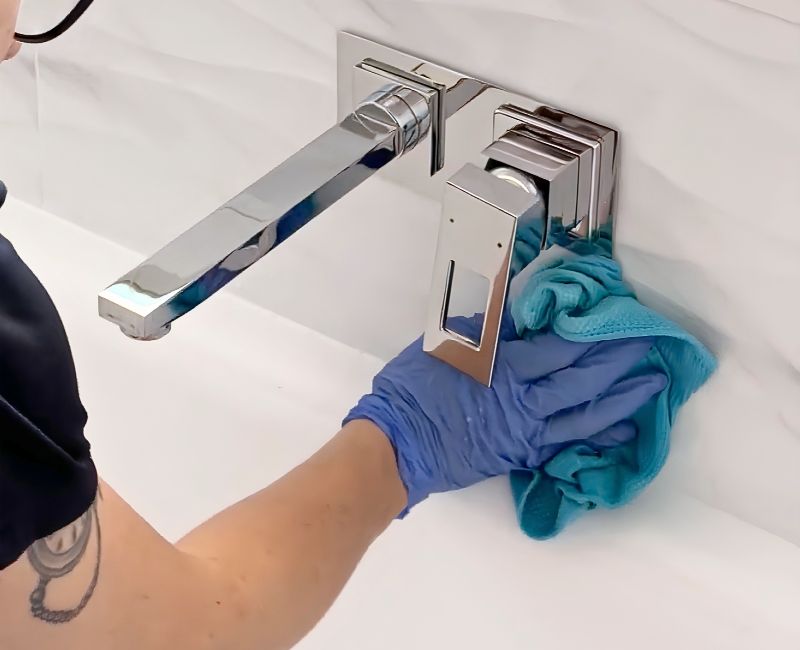
Chlorine bleach can be used for household disinfecting, as it kills germs like E. coli and flu viruses. It’s best used to disinfect hard surfaces after someone has been sick.
When treating food-contact surfaces, such as after handling raw meat, food-safe disinfecting products or 70% isopropyl alcohol are better options. Bleach also won’t disinfect porous materials like wood or fabric.
Per Australian health guidelines, you’ll need a 1000 ppm (parts per million) dilution for general disinfecting with bleach. That comes out to:
| Bleach Strength | Dilution |
| 4% sodium hypochlorite | 25ml per 1 litre of cold water |
| 5% sodium hypochlorite | 20ml per 1 litre of cold water |
Always wash the surface with hot water and soap first. This removes surface dirt, so you maximise contact with the disinfectant. Apply the diluted bleach with a clean cloth and let it sit for at least 10 minutes.
Rinse the surface afterwards with fresh water or a damp cloth to remove any residue, then allow to air dry.
What Should You Not Clean with Bleach?
Regular bleach is a strong cleaning product, so it won’t work on everything.
For these surfaces, other cleaners will be safer or more effective.
Coloured or non-colourfast fabrics
Note that this applies to chlorine bleach, which bleaches coloured fabrics! It lightens or even removes dyes, especially if the item isn’t colourfast.
Oxygen bleach is safer for coloured or non-colourfast clothing, since it uses oxygen and not sodium hypochlorite. It’s also gentler on the fibres. Still, check the label directions on your clothes to be sure.
Carpets and upholstery
Chlorine bleach isn’t recommended for carpets and upholstery — it can weaken or discolour fibres, and break down any adhesive backing. Moreover, it’s difficult to rinse out of carpet piles, especially thick or high-pile ones.
Oxygen bleach is usually fine for synthetic carpets, though do a patch test first. Don’t use it on natural fibres like wool, jute, or hemp.
Delicate fabrics and leather
You’re better off opting for a dedicated leather cleaner or, for delicate fabrics, mild detergents. Bleach strips the natural oils in leather, and weakens the fibres in delicate fabrics like silk or wool. That applies to both chlorine and oxygen types!
Alternatively, refer to the clothing or item label for specific instructions.
Metal surfaces
Both chlorine and oxygen bleach are oxidising agents. When used on metals, they damage protective coatings and expose the metal underneath, leading to tarnish, rust, or corrosion.
Metals you shouldn’t clean with bleach include:
- Stainless steel
- Aluminium
- Chrome
- Copper
- Brass
Warm, soapy water and a soft cloth are more than enough. For stainless steel, spot-clean with white vinegar or rubbing alcohol.
Natural stone
Bleach is oxidising and very alkaline — both properties that damage natural stone. It can discolour or degrade the finish, and cause cracks, pitting, or erosion over time. Repeated contact also turns the stone brittle.
pH-neutral cleaners like methylated spirits are better for stone surfaces.
Painted surfaces
Keep bleach away from any painted surfaces, including walls and cabinets. It can strip the paint, make it peel or flake off, or fade colours with prolonged contact.
A soft cloth plus some warm water and dish soap are better for cleaning painted materials. Alternatively, use a safe all-purpose product.
Rubber or silicone
Bleach dries out and degrades rubber or silicone, especially with prolonged or repeated exposure. Around the house, you’ve got rubber seals on fridges, dishwashers, front-load washers, and shower doors.
Stick to an old toothbrush and soapy water when cleaning rubber seals. If there’s mould, soak the spot in 3% hydrogen peroxide for 10 minutes.
Tile grout
Do not use chlorine bleach on tile grout, both sealed and unsealed. Repeated exposure damages the sealant and dries out tile grout. As it turns brittle, it cracks or breaks off.
If necessary, oxygen bleach is safer for tiles and sealed grout with occasional use, such as deep cleaning or tough stains.
Wood surfaces
Wood also needs dedicated pH-neutral products or mild soap and water. Bleach is highly alkaline, so it breaks down finishes on wood, such as lacquer or varnish.
It also weakens the material and leads to cracking, discolouration, or degradation.
FAQs About Bleach Cleaning
Here are some other common questions about using bleach for cleaning.
Can you pour bleach down the drain?
You should not pour chlorine bleach directly down the drain.
The solution could damage your pipes, especially metal ones. It can also sit in your P-trap, where it’ll get mixed with other cleaning products that you pour out, creating potentially toxic fumes.
Diluted oxygen bleach, however, is fine and readily breaks down into oxygen, water, and salt.
Stick to white vinegar or a dedicated product for drain maintenance. Then, for disposing of chlorine bleach, check your local state or council regulations for guidelines.
How do I get rid of the bleach smell?
Time and good ventilation should help the bleach smell dissipate! Open the windows and doors, and switch on any fans or exhaust systems. An air purifier helps, too.
If the bleach smell persists, set out some shallow containers of baking soda or activated charcoal to absorb the odours.
Do not use white vinegar to neutralise any smells — it could react with any bleach residue.
Does bleach expire or go off?
Yes, bleach does expire and has reduced effectiveness over time. Exposure to air, light, and warmth will cause the bleach to break down.
When stored in a cool, dry place, it’ll have a shelf life of up to a year, but refer to the product label for any expiry dates. You can also check for the smell (no more stinging scent) or a watery appearance.
Is vinegar or bleach better for cleaning?
Vinegar and bleach are both versatile household cleaners, but each has different uses.
Here’s a quick comparison table:
| WHITE VINEGAR | CHLORINE BLEACH | OXYGEN BLEACH |
|
Best for:
|
Best for:
|
Best for:
|
