
You toss in a load of laundry, wait through the full cycle, and open the door expecting a clean, fresh scent. Instead, a wave of damp, sour air hits you — and somehow your clothes come out smelling even worse!
That usually means there’s something gross lurking inside your washing machine.
Washers are constantly exposed to moisture, sweat and body oils from clothes, plus residue from detergents and fabric softeners.
Over time, all that grime creates the perfect breeding ground for mould and bacteria. Water can also pool in hidden parts of the appliance, which adds to the stench.
The good news is that most washing machine odours can be fixed. But to get rid of them properly, you first need to figure out where exactly they’re coming from.
Let’s break down why your washing machine stinks and how to make it fresh again!
Before Cleaning | Cleaning a Smelly Washing Machine | What To Do If It Still Smells | Preventing Smells
Why Does My Washing Machine Smell Bad?
Bad smells coming from your washer can be caused by different things.
Excess moisture and residue are the most common culprits. But in some cases, the issue might be your plumbing or an overheating component.
Musty smells in washing machines
A damp or musty smell from your washer often points to bacteria, mildew, or mould.
These thrive in hidden areas where moisture lingers, especially if you wash clothes at low temperatures (less than 60°C). While cooler cycles may save energy, they can’t kill germs or mould spores.
Over time, bacteria can multiply and create a stubborn, invisible layer called biofilm.
Detergent and fabric softener residue might also combine with hard water minerals to form scrud, a waxy buildup that coats your washer’s surfaces.
On top of that, sludge is another common problem. This dark and slimy buildup forms when dirt, hair, lint, and bacteria clump together.
Once any of these clings onto surfaces, a regular wash cycle isn’t enough to rinse it off!
Sewage smells in washing machines
If your washing machine smells like sewage or rotten eggs, that’s a sign that organic grime or sludge has started decomposing inside.
This usually happens if the residue is sitting in stagnant water.
However, the smell might not always be coming from the appliance but the plumbing.
Your washer’s drain hose connects to a P-trap — a U-shaped pipe that holds a little water to block sewer gases from rising back up. It automatically refills each time the washing machine drains.
However, the P-trap can dry out if you haven’t run a laundry cycle in a while, which allows foul odours to escape.
Burnt smells in washing machines
A burning smell can signal a mechanical or electrical fault, so stop the cycle and unplug the washing machine immediately.
Common causes include a worn drive belt, a blocked drain pump, or an overheating motor.
This can happen if you often overload the drum, since heavy items like blankets and doonas put extra strain on your appliance.
Small objects like coins, hairpins, and bra wires can also find their way to the pump filter and cause damage.
There’s an exception, though. If your machine is brand-new, a faint burning smell during the first few washes can be normal as factory oils and the heating element settle in.
However, if the smell is pungent, keeps returning, or comes with noises, stop using the washer and contact a technician straight away.
Before Cleaning a Stinky Washing Machine
Before you start cleaning, make sure the smell is actually coming from the washing machine itself and not your plumbing!
How to tell where the smell is coming from
Check where your washing machine’s drain hose (the thick, corrugated plastic tube) connects to your home’s plumbing.
Carefully pull the drain hose out, or just sniff near the pipe or drain.
A strong odour coming from the pipes is usually caused by a dry P-trap. Running water through the drain for a few seconds is typically enough to refill it and clear the smell.
But if that doesn’t work, call a professional plumber to inspect the pipework.
On the other hand, if the stench seems stronger inside the washer, sludge or mould is the more likely cause. In that case, it’s time for a deep clean!
Safety precautions
To get rid of smells coming from the washer, you’ll need to remove a few parts for a thorough clean. Make sure to check the manufacturer’s manual to avoid damaging the appliance or voiding your warranty.
When it comes to cleaning solutions, choose gentle options.
For heavy buildup, 3% hydrogen peroxide works well. It kills mould and bacteria, and cuts through grime without wearing down any rubber or plastic components.
A mixture of equal parts water and vinegar is another good alternative.
Vinegar can help with lighter buildup, and it’s suitable for most washing machine components or surfaces.
However, avoid leaving it too long (3–5 minutes is usually enough!) or applying it undiluted. Since vinegar is acidic, it can thin rubber seals and etch metal finishes, especially the drum.
Do not use strong chemicals like chlorine bleach and ammonia. Bleach can corrode and discolour surfaces, and ammonia produces harsh fumes.
You’ll also need non-abrasive tools like a soft-bristle brush or microfibre cloths to prevent scratches.
Lastly, wear rubber gloves and a mask to avoid exposing yourself to bacteria, mould, and harmful smells while cleaning.
How to Clean a Smelly Washing Machine
Whether you have a top load or a front load washer, the best way to remove bad smells is to do a deep clean and remove any stagnant water inside.
Step 1. Clean all visible buildup
Tackling the visible grime inside your washer can reduce unpleasant smells right away!
Work through the machine section by section, focusing on the detergent dispenser, lint filter, and drum.
| PART | HOW TO CLEAN |
| Detergent tray | Pull it out and soak it in 50:50 vinegar and water for 10 minutes. Clean the housing cavity where the tray slides in, too. |
| Lint filter | Usually found near the top of the drum (though some front loaders may not have one). Remove and clear any debris under running water. |
| Drum | Apply 3% hydrogen peroxide (leave for 5–10 minutes) or a vinegar solution (leave for 3–5 minutes) directly onto stains. |
Always give your cleaner enough time to loosen residue buildup. Then, gently scrub the surfaces with a microfibre cloth or an old toothbrush.
Rinse the cleaning solution off and wipe the surface dry. Let all parts air dry completely before putting them back into your washing machine.
Step 2. Tackle hidden parts
Sludge often collects in parts of the washing machine that you don’t normally see. Unfortunately, that hidden buildup is often what causes lingering smells!
FOR SMELLY FRONT LOAD WASHING MACHINES:
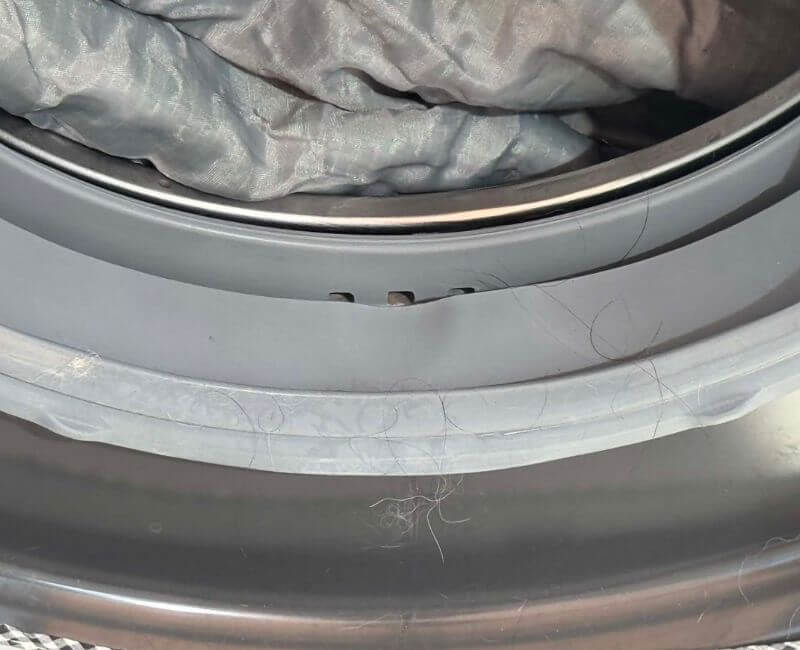
Gently pull back the folds of the rubber gasket (or door seal) to clear out any stagnant water and check for grime underneath.
Clear away any loose debris like hair or lint by hand. Then spray the area with a solution of 3% hydrogen peroxide with a few drops of dish soap. Let it sit for 15 minutes before scrubbing.
Wipe clean with a damp cloth, then dry thoroughly with a fresh towel.
Many front loaders also have a drain pump filter that catches lint, hair, and small objects. You can usually access it through a small panel at the bottom front of the machine.
Place a shallow bowl or towel underneath that panel, since some water will spill out when you open it.
Check if there’s a tiny hose next to the filter — this usually contains a little water, too. Slowly pull it out, remove the plug, and let the water empty into your bowl.
Next, take out the filter carefully. Brush away any trapped debris, then soak the filter in a vinegar solution for a few minutes.
Scrub with a soft brush, then rinse and dry before reinstalling.
FOR SMELLY TOP LOAD WASHING MACHINES:
If the user manual allows it, remove your washing machine’s agitator (a tall pole in the centre) or impeller (a flat disc at the bottom of the drum).
Clean the agitator, including the bottom, with 3% hydrogen peroxide and a non-abrasive brush. Rinse thoroughly and wipe everything dry.
For agitators or impellers that are fixed or tricky to remove, do a deep soak.
Fill about a third of the drum with the hottest water available, add 2 cups of white vinegar, and soak for at least 2 hours before draining. This helps dissolve any biofilm beneath.
Step 3. Clean or replace the drain hose
Since a drain hose is corrugated, it’s a magnet for biofilm and scrud. Dirty water can also pool inside, especially if the hose is installed too high.
Before you disconnect the hose, have a small bowl ready to catch any water that drains out. Then, remove the clamps and detach the hose from the washer and the plumbing.
Look inside the tube for any buildup. For light grime, soaking in a vinegar solution can help.
However, it’s often impossible to scrub the inside of the hose thoroughly because of the ridges. In that case, it makes more sense to replace the drain hose.
It’s cheap, easy, and more effective, especially if you’ve been using the hose for at least five years!
Step 4. Run a hot wash cycle
After reassembling the machine, run a final cleaning cycle to flush out any remaining residue and odours.
Add either 1–2 cups of white vinegar or 2 cups of baking soda directly to the drum.
Use only one at a time — mixing vinegar and baking soda neutralises both, making them less effective.
Then, choose the hottest setting available (ideally 60°C or higher), or use the washer’s dedicated cleaning cycle if it has one.
After the cycle, leave the washing machine door open so the drum and internal parts can air dry completely.
Why Does My Washing Machine Still Smell Bad After Cleaning?
If your washing machine still stinks after a full clean, there’s a good chance some grime or stagnant water was missed! Go back over the areas you cleaned to check.
Another possible source is the outer drum.
Most washing machines have two tubs: the inner drum you can see and a second outer tub that holds the water. Over time, bacteria, mould, and grime can coat the outer tub and cause persistent odours.
To address this, add oxygen bleach (not regular chlorine bleach!) or a commercial washing machine cleaner to the drum. Follow the instructions on the packaging for how much to use.
Afterwards, run the hottest, longest cycle available. It may take 2–3 washes before the smell disappears completely.
If the stench lingers, it may be time to call a technician. Some internal parts — like hidden hoses and drainage components — are difficult to access without dismantling the machine.
How to Prevent Washing Machine Smells
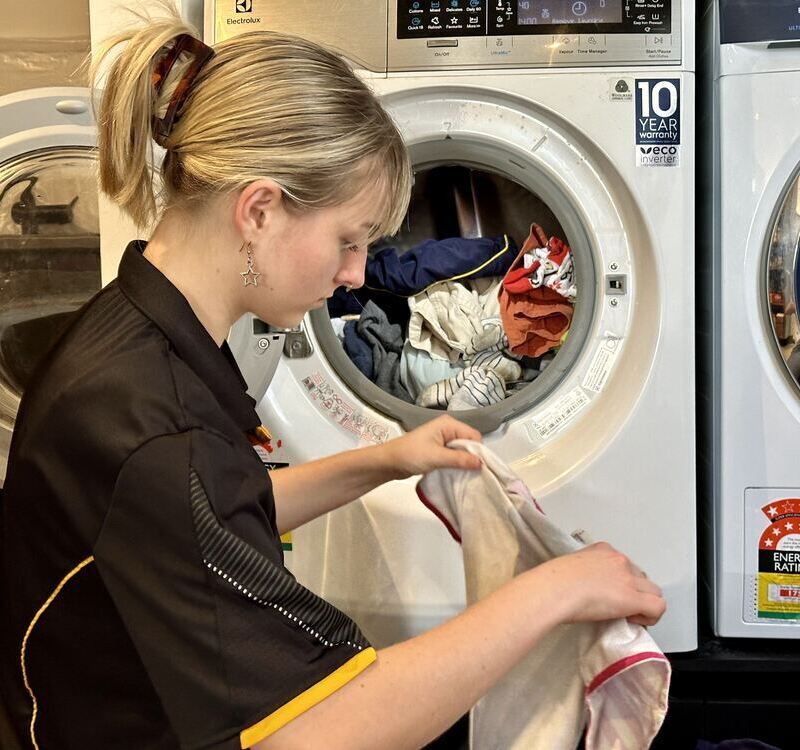
A few habits can stop buildup from forming in the first place!
Whether you’ve got a front loader or a top loader, regular cleaning helps prevent unwanted odours.
After each use, remove wet clothes straight away and leave the door open for an hour or two to let the drum air dry.
Detergent use plays a big role as well.
Using too much detergent can leave behind residue that gradually collects inside the machine. Ideally, opt for a high-efficiency (HE) detergent — it’s low-sudsing and easier to rinse away.
As much as possible, skip fabric softeners. Softeners leave a thin coating of oil or wax on both your clothes and your washing machine’s surfaces.
For a natural alternative, add half a cup of white vinegar to the rinse cycle. Vinegar softens fabrics without leaving any residue. And don’t worry, your clothes won’t smell sour once they dry.
Running a hot cycle weekly also keeps the machine fresh, especially for items like bath towels, which can hold onto moisture and bacteria.
