
Greywater systems are great ways to conserve water by recycling what flows out of bathrooms, laundry rooms, and (sometimes) kitchens.
However, you can’t just take the liquid from your last laundry load and pour it onto your lawn. The quality and contents of the water matter; certain chemicals can make it unfit for reuse, especially on plants.
Say hello to greywater-safe household products, which don’t contain harmful ingredients. By using these products, the water entering your system stays safe to repurpose, and won’t contaminate the soil or waterways.
If you’re looking for greywater-safe cleaning products in Australia, we’ve rounded up our favourites here! And don’t worry, they’re still tough on grime while being gentle on the environment.
How to Choose | General Cleaning Products | Bathroom & Laundry | Kitchen Cleaning | Are These Cleaners Safe? | Storing and Using Greywater
What Does “Greywater-Safe” Mean?
A product is labelled “greywater-safe” if it does not contain ingredients that could contaminate a greywater system or storage.
Greywater (or grey water) is the wastewater from around your house: showers, bathtubs, washing machines, and bathroom sinks. It does not include water from the toilet — that’s blackwater, which contains raw sewage and other contaminants.
Your state or territory may make a distinction about water from the kitchen, and whether it should be separated or can be reused with treatment.
In Australia, you can use greywater for toilet flushing, cold water supplies to washing machines, or even garden irrigation. You’ll be saving on water costs and helping the environment at the same time!
How to Choose Greywater-Safe Products

The main things to check in products are the ingredients. This section tells you what to look for on product labels or online, though many brands now state if something is explicitly greywater compatible.
If you’re getting a professional home cleaning service, check whether your cleaner’s products are greywater-friendly — or ask them to use yours.
What ingredients are greywater-safe?
As a general rule, when choosing products, look for biodegradable ingredients or certification. Those will readily decompose in soil or water and won’t contribute to buildup.
You can also check the ingredient list for things like:
Essential oils: When diluted in normal household amounts, essential oils are fine for greywater. They’re biodegradable and won’t persist in the soil.
Citric acid: It may be an organic acid, but citric acid is mild enough that it won’t lower pH levels too much, especially when watered down.
Plant-based surfactants: Look for products with surfactants derived from plants, like coconut- or sugar-based agents (e.g. coco glucoside, decyl glucoside).
Saponified vegetable oils: Soaps and detergents made from vegetable oils (e.g. Castile soap) are safe for greywater systems.
Hydrogen peroxide and oxygen bleach are okay in normal household amounts or when properly diluted. Just use oxygen bleach in moderation, since it does release sodium carbonate when decomposing, which adds sodium to the water.
Cleaning products with biodegradable enzymes are also generally fine; the enzymes are just proteins that target different substances. (For example, lipase breaks down fats and oils.) They should break down in the soil and won’t harm plants.
What chemicals should be avoided with greywater?
Some ingredients or harmful chemicals in commercial products should not enter a greywater system. That includes common substances like:
Boron: This is a plant toxin that may harm ecosystems even in small amounts. Boron-based substances include borax and boric acid.
Chlorine bleach: Unlike oxygen bleach, chlorine bleach breaks down into compounds that can kill beneficial microorganisms (like bacteria and fungi) in the ground.
Highly-acidic ingredients: Strong acids (e.g. hydrochloric acid) or too-low pH can also alter the pH of the ground or harm soil microbes.
Phosphorus and phosphates: While phosphorus is beneficial to nature, high levels of phosphorus or phosphates cause algae growth in waterways. Excess phosphorus can also harm Australian native plants.
High levels of salt and sodium compounds: Salts and sodium compounds can accumulate in the soil and hinder plant growth! No need to avoid salt entirely, but it’s best to use low concentrations to minimise buildup.
Very alkaline or high pH ingredients: Large amounts of compounds with a high pH can dissolve organic matter, hurting both plants and soil organisms.
Nonbiodegradable compounds: Avoid products with nonbiodegradable ingredients (e.g. microbeads) since they do not decompose in the water or soil.
Is greywater-safe the same as septic-safe?
There is some overlap between a product being “greywater-safe” and “septic-safe,” but not all septic-safe products work with greywater systems, especially if you use the water for plants.
Some septic-safe cleaning products contain large amounts of ingredients that aren’t good for greywater when reused for gardens. That includes compounds like washing soda (sodium carbonate) or sodium sulphate. You can still use that greywater for your toilet, though!
Are eco-friendly products always greywater-safe?
Not all eco-friendly cleaning products are safe for greywater! While they may use organic or natural ingredients, those could harm plants and soil microbes.
Some examples would be products that use boron/borax, salts, or highly alkaline compounds.
List of Greywater Safe Products in Australia
General Cleaning Products
These are products used all around your home, including the bathroom and laundry, which are common greywater sources. Choosing compatible cleaners means you don’t need to worry about the rinse water or residue.
Greywater-safe multipurpose cleaner: Koh Universal Cleaner
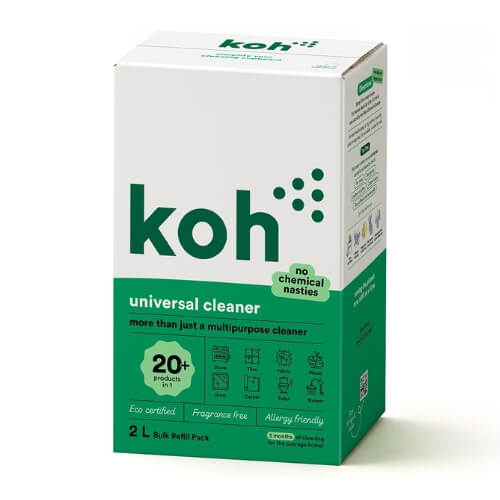
| KEY INGREDIENTS | PRODUCT HIGHLIGHTS |
| Potassium hydroxide Purified water |
GECA Eco-certified Sensitive Choice approved Canstar Blue winner (2022, 2023) |
You did read that right! Koh’s Universal Cleaner only uses two ingredients: potassium hydroxide and water.
Unlike sodium hydroxide, potassium hydroxide breaks down into potassium salts, which won’t degrade soil structure or harm plants. Potassium is even an essential plant nutrient! And while it is an alkaline compound, the formula contains less than 0.5% potassium hydroxide, so the concentration isn’t harmful.
Koh’s cleaner is also fume-free, so it releases fewer volatile organic compounds (VOCs) during use. That makes it safe for your greywater and indoor air quality, too.
Greywater-safe floor cleaner: Euclove Floor Cleaner
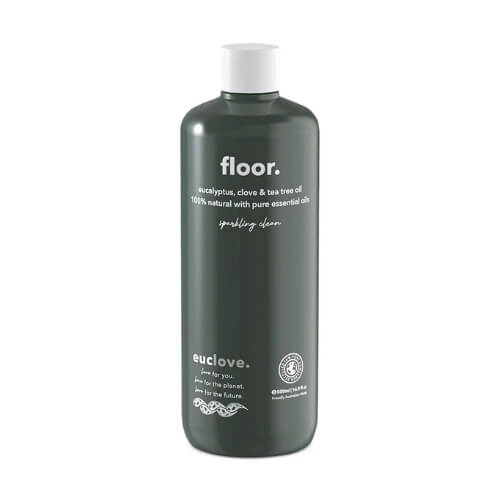
| KEY INGREDIENTS | PRODUCT HIGHLIGHTS |
| Eucalyptus, clove, and tea tree oil Coconut oil soap Menthol |
Vegan and cruelty-free Made in Australia Palm oil-free |
There are greywater-safe cleaners that work on most floor types, including tile, granite, laminate, and even hardwood!
Euclove’s Floor Cleaner gives you clean floors thanks to eucalyptus, clove, and tea tree oils, which have natural antimicrobial properties.
Besides the plant-based oils, the other ingredients are purified water, coconut oil soap, camphor, and menthol, which all decompose easily. Euclove does not use ammonia, bleach, SLS, parabens, or phosphates, making their floor cleaner greywater- and septic-safe.
Greywater-safe drain cleaner: Enzyme Wizard Drain Maintainer
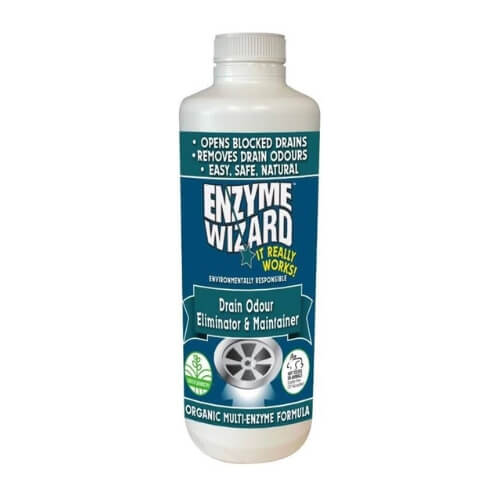
| KEY INGREDIENTS | PRODUCT HIGHLIGHTS |
| Biodegradable enzymes Plant-derived surfactants Water |
Cruelty-free Made in Australia Environmentally-friendly |
It’s admittedly tricky to find drain cleaners that are safe for greywater, since traditional cleaning products often contain strong acids or caustic substances.
However, Enzyme Wizard’s Drain Odour Eliminator and Maintainer uses enzymes to break down organic matter and remove odours. For showers and tubs, it can tackle soap scum, body oils, and other buildup in the drain.
The downside is that it’s formulated more for maintenance than immediate unclogging. If you need a fast-acting product, try Vamoosh Plughole Unblocker. While the full active ingredients aren’t disclosed, it’s biodegradable, septic-safe, and free of bleach or caustic chemicals.
Greywater-safe glass cleaner: Koala Eco Peppermint Glass Cleaner
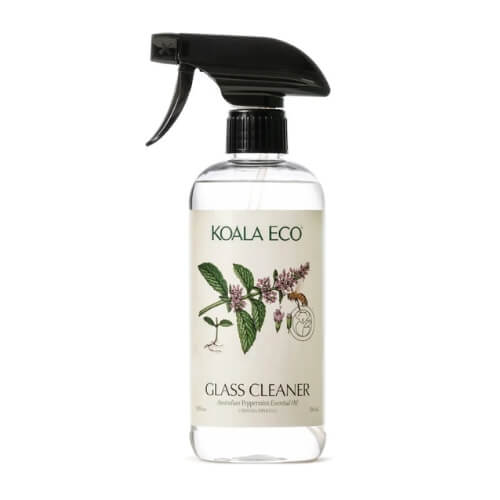
| KEY INGREDIENTS | PRODUCT HIGHLIGHTS |
| Peppermint oil Citric acid Sugar-based alcohol |
Vegan and cruelty-free Australian Allergy certified Made Safe certified |
Need to clean a bathroom mirror or wash your shower glass? Go for the Koala Eco Glass Cleaner!
Koala Eco uses native peppermint, which has natural antibacterial and deodorising properties. Combined with the citric acid and sugar-derived alcohol, you’ll get a streak-free finish on all glass surfaces.
Peppermint is also an effective insect deterrent, so use the Glass Cleaner on your windows to help keep annoying bugs out of your home.
Bathroom and Laundry Products
Showers, bathroom sinks, and washing machines are some of the biggest sources of greywater in a home. Choosing the right products means the wastewater can safely enter your storage or system.
(And remember, toilet water is not collected for greywater, so the toilet cleaner doesn’t have to be compatible.)
Ideally, your cleaners and detergents should have low amounts of sodium, phosphorus, and phosphates. On the other hand, biodegradable surfactants or enzymes are fine, since they should be neutralised or diluted when they reach your greywater.
Greywater-safe bathroom cleaner: Koala Eco Bathroom Cleaner
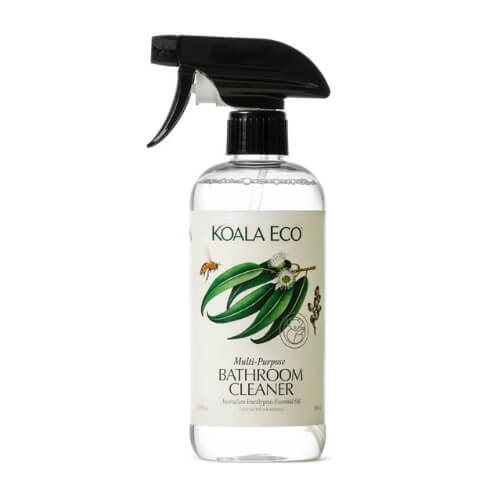
| KEY INGREDIENTS | PRODUCT HIGHLIGHTS |
| Eucalyptus oil Acetic acid Sugar-based alcohol |
Vegan and cruelty-free Australian Allergy Certified Made Safe Certified |
Use Koala Eco’s Multi-Purpose Bathroom Cleaner all around your bathroom, from the shower tiles to the benchtop. The natural eucalyptus oil and acetic acid (like in vinegar) will cut through soap scum and other general grime.
Acetic acid is mild and won’t lower the pH of your greywater too much. As an acid, it’s effective at dissolving soap scum (which is alkaline) and even mineral deposits.
The rest of the ingredients are biodegradable, including surfactants and alcohols, making the bathroom cleaner both greywater- and septic tank-safe.
Greywater-safe laundry detergent: Cold Power Advanced Clean Laundry Washing Liquid
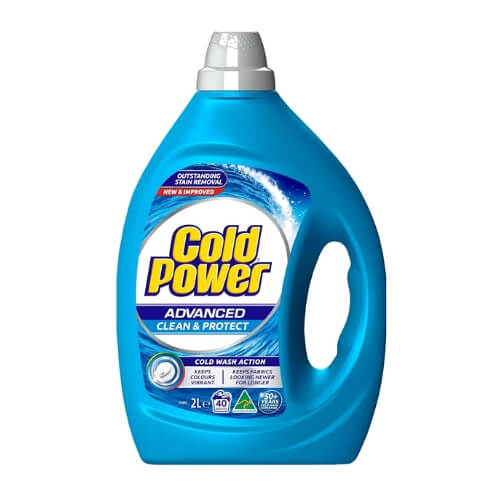
| KEY INGREDIENTS | PRODUCT HIGHLIGHTS |
| Biodegradable enzymes Biodegradable surfactants Sodium citrate |
Less than 0.5% phosphorus Works in cold washes Made in Australia |
Liquid detergents are usually better for greywater, since they tend to contain less salt and don’t build up as much. And one of the top liquid detergents is Cold Power’s Advanced Clean Laundry Liquid!
The standout feature is in the name: Cold Power works even with cold water washes, thanks to the enzymes that deep clean and tackle stubborn stains. Cold washes use less energy, which further reduces the environmental impact of each load.
Cold Power’s detergent does contain sodium laureth ethoxylated sulphate (SLES), a milder alternative to sodium lauryl sulphate (SLS). It’s less irritating to the skin and readily breaks down.
Greywater-safe washing powder: SimplyClean Laundry Powder
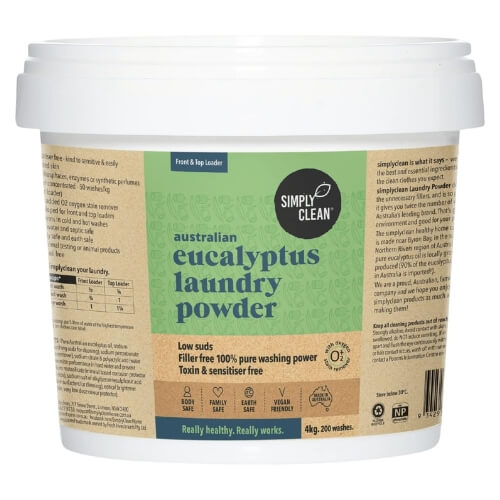
| KEY INGREDIENTS | PRODUCT HIGHLIGHTS |
| Eucalyptus essential oil Washing soda (sodium carbonate) Oxygen bleach (sodium percarbonate) |
Vegan and cruelty-free Made in Australia Hypoallergenic |
Of course, that doesn’t mean powder detergents can’t fit into your laundry routine! So long as they’re safely formulated, washing powders can be greywater-safe.
Take SimplyClean’s Eucalyptus Laundry Powder, which contains natural ingredients that gently but effectively clean clothes. It has a concentrated formula, so less powder per load means less going into your greywater.
Moreover, instead of synthetic corrosion inhibitors, SimplyClean uses a mineral-based compound (disodium silicate) to protect your washing machine.
Greywater-safe fabric softener: White vinegar
| KEY INGREDIENTS | PRODUCT HIGHLIGHTS |
| Acetic acid | Dissolves detergent residue Tackles odours |
The easiest greywater-safe alternative for fabric softeners is white vinegar! Add 1/4 to 1/2 cup to the rinse cycle or the rinse aid compartment, and wash as normal.
It doesn’t add a coating to fabrics the way commercial softeners do. Instead, as a mild acid, vinegar removes any detergent residue or mineral buildup on your clothes. That leaves them feeling soft and even gets rid of unpleasant odours.
There are some caveats to using vinegar, though. Most importantly, do not use it if your detergent contains hydrogen peroxide or bleach (both chlorine and oxygen). Peroxide and chlorine bleach have dangerous reactions with vinegar, while oxygen bleach releases hydrogen peroxide when breaking down.
Also, avoid using it with every wash if you have a front-load washer. Repeated exposure to vinegar can dry out the rubber gaskets.
Kitchen Cleaning Products
Always check your state or territory regulations about using kitchen wastewater as greywater! Several states classify it separately from regular greywater (or even as blackwater) due to the oils, food debris, and possible foodborne pathogens.
Your state may allow kitchen wastewater reuse if it passes through a certified greywater treatment system (GTS). In these cases, treated greywater could be approved for toilet flushing or even garden irrigation.
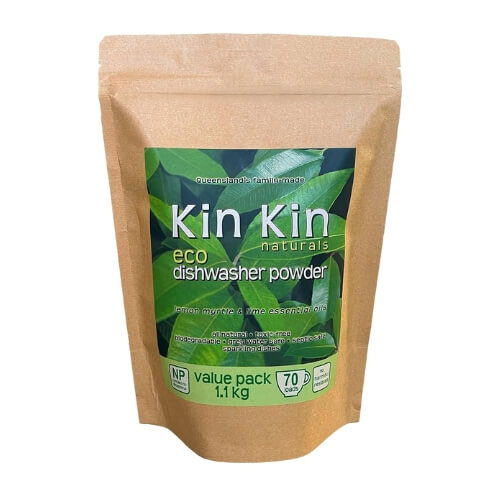
Greywater-safe dishwasher detergent: Kin Kin Naturals Dishwasher Powder
| KEY INGREDIENTS | PRODUCT HIGHLIGHTS |
| Lemon myrtle oil Lime essential oil Plant-based surfactants |
All-natural ingredients Family-made in Queensland |
Kin Kin products are all made locally in Queensland by a small family business, using ingredients like Australian lemon myrtle. The plant’s natural antibacterial properties give you fresh-smelling, clean dishes.
Since it’s concentrated, you only need a little detergent per load — so less powder goes into the greywater, while the product lasts longer. The organic surfactants and enzymes do the heavy lifting, removing food residue from plates and cutlery.
Kin Kin does use several sodium compounds, though (per the brand) they’re in low concentrations and are biodegradable. And unlike other dishwasher powders, it contains no phosphorus or phosphates.
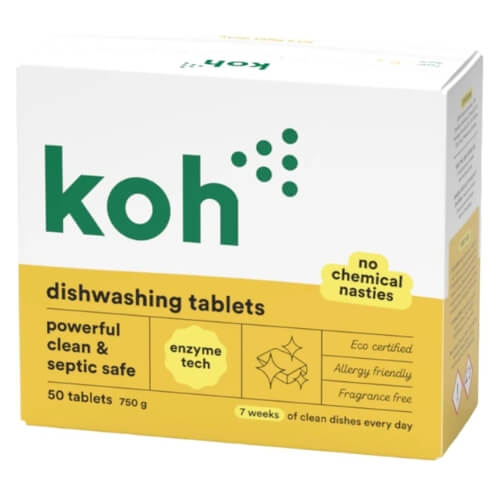
Greywater-safe dishwasher tablets: Koh Dishwashing Tablets
| KEY INGREDIENTS | PRODUCT HIGHLIGHTS |
| Citric acid Biodegradable enzymes Washing soda (sodium carbonate) |
Allergy-friendly GECA Eco-certified Sensitive Choice approved |
Dish tablets are a nifty and convenient option for dishwashers. They’re pre-measured, so you just need to put one in the detergent compartment before a wash.
One popular option in Australia is Koh’s Dishwashing Tablets. They use protease and amylase enzymes to break down food residue, while citric acid removes hard water minerals. (And hey, even the wrappers are biodegradable, so that’s less plastic at home.)
No need to pre-rinse — just load the machine, place the tab inside, and get fully clean dishes with no harsh chemicals.
TIP: The dish tablets will also work as a dishwasher cleaner! Pop a tab into an empty dishwasher and run a short, hot cycle without heat drying. Afterwards, leave the door slightly open so the interior can air dry.
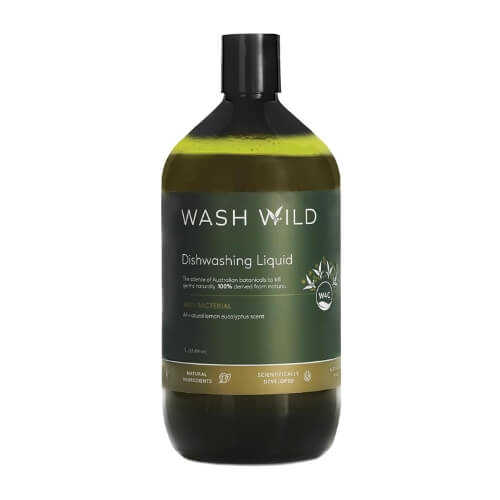
Greywater-safe washing-up liquid: Wash Wild Dishwashing Liquid
| KEY INGREDIENTS | PRODUCT HIGHLIGHTS |
| Australian native essential oils Plant-derived alcohol Plant-based surfactants |
Made in Australia Safe for sensitive skin Eco-friendly and cruelty-free |
For those who prefer to hand-wash their dishes, check out Wash Wild Dishwashing Liquid.
The product uses a blend of Australian native essential oils that are tough on grime but gentle on skin. Don’t worry about washing up after dinner — the soap won’t dry out or irritate your hands. Those same oils also provide a natural, fresh scent, with no synthetic fragrance needed.
Wash Wild’s formula does contain some sodium compounds (including salt and sodium citrate), but no phosphates or phosphorus.
Are These Cleaners Greywater-Safe?
Looking at other products at the shops, or wondering if your DIY bicarb soda paste is safe for greywater?
Here’s a quick rundown of common Aussie household cleaners and whether they’re greywater-compatible.
Is bicarb soda greywater-safe?
Bicarb soda (or baking soda) is generally safe for greywater in normal household amounts and with proper dilution.
However, heavy use or large amounts can increase water alkalinity and contribute to sodium buildup in the soil.
Is bleach greywater-safe?
Chlorine bleach is not greywater-safe, as it releases harmful chemicals into soil or water.
Oxygen bleach is fine when properly diluted, since it readily decomposes into oxygen, water, and sodium carbonate. It does add sodium to the water and soil, though, so use it in moderation.
Is borax greywater-safe?
Since it contains boron, borax is not safe for greywater that’s reused for plants. It can cause boron toxicity, which stunts growth or even kills plants with enough buildup.
However, borax should be safe for greywater used for toilet flushing, since it’s septic-safe in normal household quantities.
Is hydrogen peroxide safe for greywater?
3% hydrogen peroxide is generally greywater-safe with proper dilution and limited use. It readily breaks down into water and oxygen in a greywater system.
Just avoid using large amounts, especially if undiluted, since that can shock the soil or water. And stick to the 3% concentration for home use!
Is vinegar greywater-safe?
White vinegar is safe for greywater so long as it’s properly diluted.
The acetic acid in vinegar gives it a pH of 2.5, which can be detrimental on its own. But when mixed with water for cleaning, it won’t harm plants or waterways.
Is Napisan greywater-safe?
Napisan is not safe for greywater that’s reused on plants.
The products contain sodium compounds and potentially harmful chemicals, which could harm soil microbes or increase alkalinity.
Is Omo greywater-safe?
Omo labels certain products, like the Active Clean Washing Powder, as safe for greywater and septic systems! These products use biodegradable enzymes and other natural ingredients for cleaning.
However, be mindful of products containing bleach or other harsh chemicals. Those are not compatible with greywater or septic tanks. Always check the product label to be sure.
Is Pine O Cleen safe for greywater?
No, Pine O Cleen disinfectant products are not greywater-safe.
As antibacterial products, they can contain ingredients that disrupt the natural balance in soil and waterways.
What store-brand products are greywater-safe?
Aldi, Coles, and Woolies sell store-brand cleaning products formulated to be safe for greywater and septic systems. Several items in Aldi’s Green Action line or the Coles Ultra range, for example, are formulated to meet greywater-safe standards.
Still, it’s best to verify using the packaging and ingredient list.
Storing and Using Greywater at Home
You don’t always need a sophisticated system to store greywater! Your greywater system can be as simple as a storage tank — it all depends on what’s allowed by your state or territory.
With simple container storage, you usually cannot keep the water for more than 24 hours without treatment. Make sure you separate any water from kitchen sinks, since it will contain fats and food residue that can spoil or attract pests. Do not store greywater if someone in your home has a contagious illness.
Then, for greywater reuse, check the local regulations in your state, territory, or suburb. They will have guidelines about where and how it’s acceptable to use greywater in your home.
For example, in Queensland, kitchen greywater is distinct from other sources (e.g. bathrooms and laundries). You should not store untreated greywater, and your system should not be able to enter swimming pools or flow into neighbouring properties.
Victoria, meanwhile, states you can use untreated or treated greywater as an alternative water source so long as it is safe and meets regulatory standards. Greywater must be treated for storage.
Other Questions About Greywater-Friendly Products
Still have more to ask about greywater-safe products or greywater use? We’ll answer some common questions here.
What are some greywater-safe personal care products?
Your shampoos and other care products also go down the drain and into a greywater system!
So go the whole mile with these personal care products:
| CATEGORY | PRODUCT | PRODUCT HIGHLIGHTS |
| Greywater-safe shampoo | Ethique Solid Shampoo Bar | Ethique uses naturally-derived ingredients in its personal care products. The shampoo bar has mango seed butter, brassica alcohol, rice powder, and glycerine, among other compounds. |
| Greywater-safe conditioner | Ethique “The Guardian” Solid Conditioner Bar | Pair Ethique’s shampoo with its all-natural conditioner bar! “The Guardian” contains lime essential oil, Samoan coconut oil, and cocoa butter. It’s even suitable for coloured hair. |
| Greywater-safe body wash | Koala Eco Body Wash | Like its other products, Koala Eco’s body wash uses plant-based ingredients like mandarin, lemon myrtle, and pink grapefruit oils, plus decyl glucoside. |
| Greywater-safe soap bar | Biome True Castile Soap Bar (Unscented) | Castile soaps are greywater-safe since they use mainly plant oils. This Biome Castile soap bar uses 100% olive oil, so it’s fine even for sensitive skin. |
| Greywater-safe hand wash | Olieve & Olie Wild Lemon Myrtle Liquid Wash | Olieve & Olie’s liquid wash features natural ingredients like olive oil soap (potassium olivate), lemon myrtle oil, and citric acid. |
What dishwashing detergent is safe for greywater?
Dishwashing detergents are considered greywater-safe if they have low to no amounts of phosphates and sodium, and do not contain bleach or nonbiodegradable compounds (like microbeads).
Some dish detergents that are safe for greywater, whether for hand or machine washes, include:
- SimplyClean Lemon Myrtle Dishwash Liquid
- Kin Kin Naturals Dishwasher Powder
- Wash Wild Dishwashing Liquid
- Koala Eco Dish Soap
You can also use diluted Castile soap as a detergent for hand-washing by mixing 1 part soap per 10 parts hot water. Don’t use this in the dishwasher, though — it’ll get too sudsy!
Can you use greywater on vegetable gardens?
Generally, you should not use greywater on vegetable gardens or other edible plants, especially if the produce will be eaten raw. Bacteria and other pathogens from the greywater could persist and transfer to the plants.
On the other hand, you can use greywater on ornamental plants and lawn grass! Check your local state or council regulations regarding treatment and storage. Just be mindful of how much greywater you use; excess watering may cause nutrient runoff or soggy soil, or leach salt into the waterways.
