
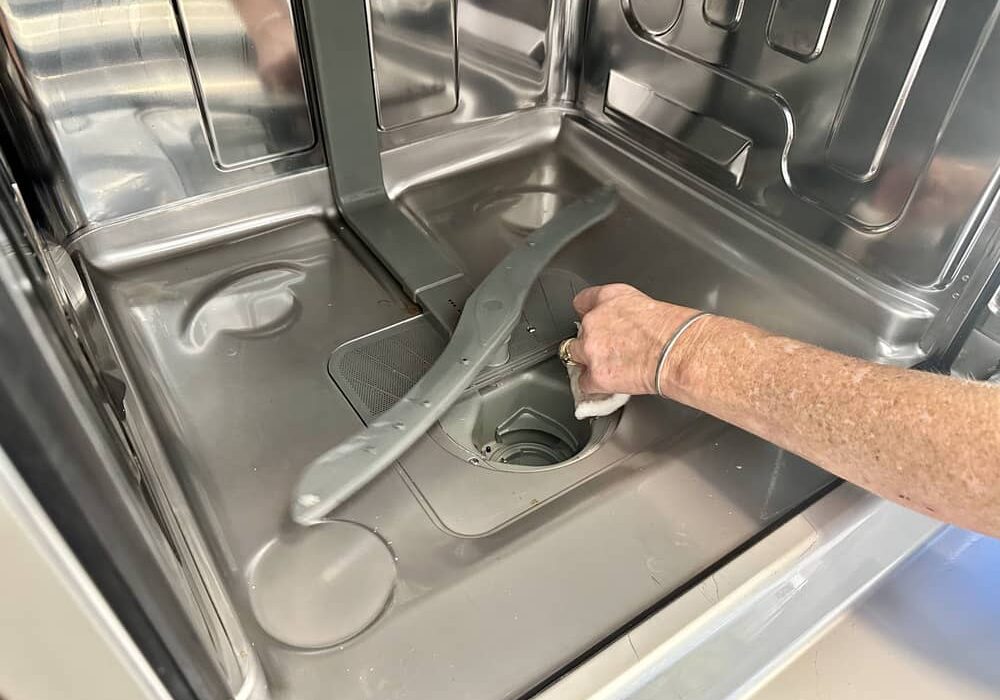
Have you ever opened the dishwasher only to find a puddle of gross water at the bottom? The likely culprit is a dirty or clogged dishwasher drain.
Food scraps, grease, detergent residue, and even mineral deposits build up in the filter and drain over time. If the drain is blocked, the dirty water could back up into the tub — and all over your sparkling dishes. (Yuck!)
Knowing how to clean a dishwasher drain is a key part of maintenance. The easiest way is to flush the drain with hot water, or you can mix in white vinegar for a stronger solution. A sink plunger can tackle more stubborn blockages.
Don’t let your dishwasher’s cleaning efforts go down the drain! Proper maintenance keeps the kitchen free of dirty dishwasher dish water.
Signs of a Clogged Drain | Before Cleaning | How to Clean the Drain | Cleaning a Clogged Drain | Cleaning the Drain Hose | After Cleaning | Dishwasher Not Emptying
How Often to Clean a Dishwasher Drain
Your cleaning schedule will depend on how frequently you run the dishwasher and how dirty your dishes are!
| LEVEL OF USE / DIRT | HOW OFTEN TO CLEAN |
| Daily use / very dirty dishes | Once a month |
| A few times a week / moderately dirty dishes | Every 1–2 months |
| Once a week or less / pre-rinsed dishes | Every 2–3 months |
Don’t want to get down and dirty with a drain? Get your kitchen cleaned with Maid2Match and ask us to tackle the dishwasher, too!
Signs of a Clogged Dishwasher Drain
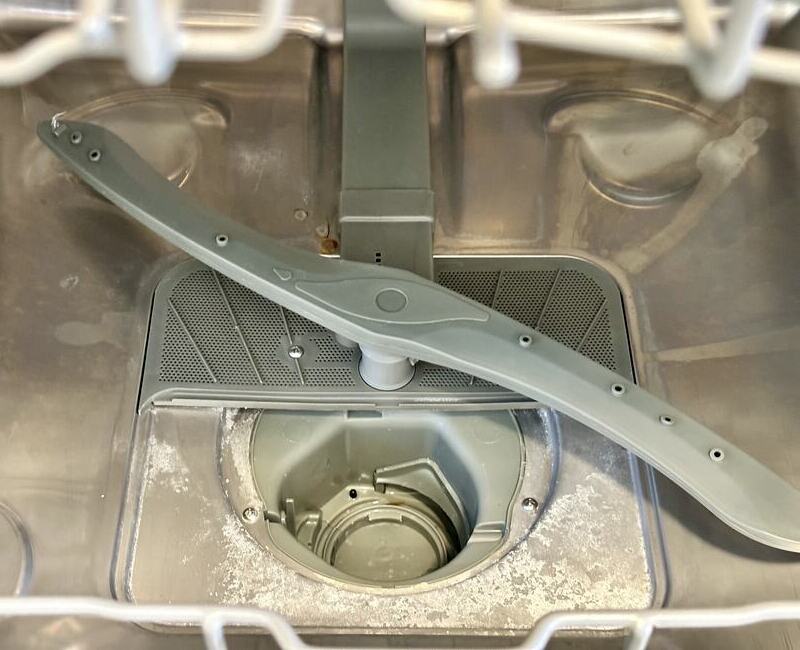
Even with routine cleaning, though, here are some signs you should check the dishwasher drain right away:
- Slow drainage
- Unpleasant odours
- Pooling or standing water
- Dishes coming out still dirty
- Odd noises (e.g. gurgling or rattling)
- Food scraps and visible debris after a cycle
Keep an eye out for water backing up into the sink or leaking around the dishwasher as well. A blockage in the drain could force the water to “escape” outside the dishwasher since it has nowhere to go.
For newer models, the control panel can alert you to drainage problems.
Before Cleaning a Dishwasher Drain
Don’t stick just anything down the drain of your dishwasher! Knowing what to use and how to prep means you won’t damage the appliance during maintenance.
What you’ll need
Your dishwasher drain cleaning supplies are simple:
- Dish soap
- White vinegar
- Non-abrasive sponge
- Hot water (not boiling)
- Microfibre cloths or dish towels
- Soft-bristle brush (like a bottle brush)
For the hot water, make sure it’s no hotter than your dishwasher’s cycle (ranging from 54º–60ºC). Any hotter (e.g. boiling temps) could cause warping or damage seals.
As for what not to use, avoid harsh cleaners containing ammonia or bleach, since these might damage the appliance. Do not use a drain cleaner, either, as it’s not formulated for appliances.
Steer clear of highly abrasive tools like steel wool, too. These often leave scratches inside the drain that later trap dirt and debris, leading to bad smells or mould.
Preparing to clean
Safety first! Make sure the dishwasher is switched off and unplugged, and shut off the inlet valve if possible. You’ll usually find the inlet valve under the sink or near the access panel.
Wear rubber gloves while working, and use a face mask if you suspect mould. Ensure the kitchen is well-ventilated, too.
Follow the instructions in your owner’s manual to remove the dish rack, spray arm, and filter so you can access the drain. Set aside the parts (then use this time to soak and wash the dishwasher filter).
If you don’t have a copy of the manual, look up the dishwasher brand and model online — the manufacturer’s website often has a digital version!
For newer models, check if any fixes (like disconnecting the drain hose) might void your warranty. In those cases, leave the repairs to an official service technician.
How to Clean the Drain in a Dishwasher
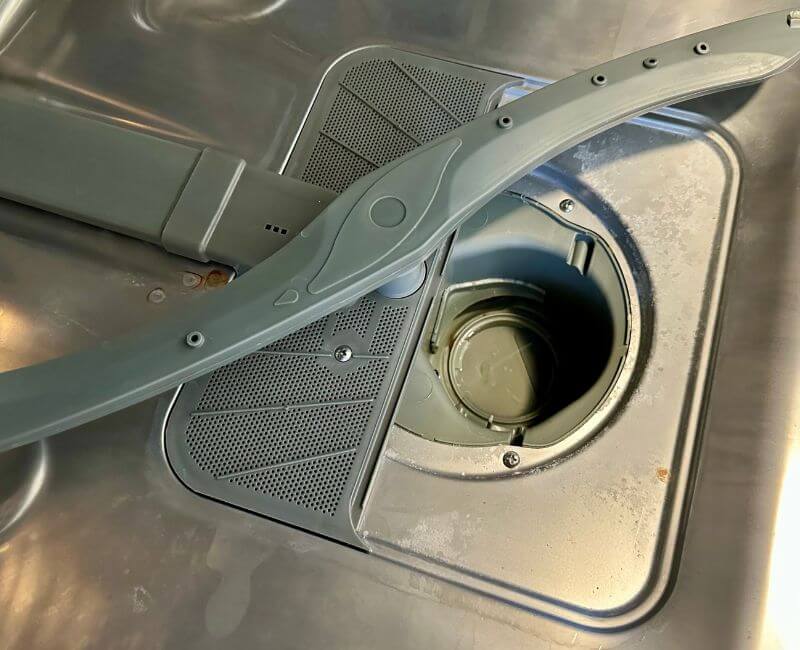
Once you’ve accessed the drain, inspect the area and remove large food debris with paper towels or a spoon. Then use the spoon or a ladle to empty out standing water, before soaking up the remaining water with kitchen towels.
The simplest dishwasher drain cleaner is hot water! Boil a kettle of water, then wait several minutes so it cools to around 60ºC (the highest temperature for most dishwashers). You can also run the hot tap and use that.
Slowly pour the water down the drain, monitoring the water level. If the water starts to back up, pause and let it work its way through the drain and hose so it dissolves any debris or residue inside.
(If the water isn’t draining at all, there may be a larger blockage that hot water can’t break down.)
Once the water runs out, give it at least 10 minutes to make its way through the drainage system. Follow with 1–2 cups of vinegar to flush any remaining buildup and neutralise odours. It also helps tackle hard water deposits.
Afterwards, wait a short while for the drain area to cool down. Then scrub the drain area with a soft brush or sponge and some dish soap.
Follow with some warm water to rinse the drain and check that it’s draining properly. Don’t use cold water to avoid causing thermal shock, which could damage the drain parts.
How to Clean a Clogged Dishwasher Drain
If your dishwasher has a pool of water at the bottom, there’s likely a blockage in the drain.
In that case, you’ll need to combine regular cleaning with some unclogging methods.
Common causes of drain clogs
For a dishwasher that’s not draining properly, some common reasons are:
- Hard water deposits
- Buildup of grease and oil
- Trapped large food particles
- Soap scum or detergent residue
- Soiled or clogged dishwasher filter
Your kitchen sink drain could also be the issue — a blocked sink drain prevents the hose from emptying water into the sewer line. Try pouring hot water down the sink drain first and see if that resolves the issue.
Alternatively, a dish may have broken inside, and the pieces are blocking the drain. Wear gloves or use a dish towel when picking out pieces so you don’t hurt yourself.
Unclogging a dishwasher drain
Do a visual inspection of the drain first, in case you can see what’s clogging it. Shine a torch or your phone’s flashlight over the drain — if you see any debris, carefully take it out with a spoon or by hand (with gloves).
Then start by trying the hot water method! Slowly pour hot (not boiling) water down the drain to dissolve the clog. It may take more than one attempt to get rid of the blockage completely.
If that doesn’t work, look for a sink plunger. These are smaller and often have curled handles, unlike the ones for toilets (so don’t use those).
Position the plunger so it fully covers the drain opening. Apply firm but careful pressure as you plunge up and down for a few minutes. That should dislodge any stubborn blockages in the drain or drain hose.
Follow with hot water to flush out the debris and verify that the drain works properly.
If the drain is still blocked, it may need an auger (or drain snake) to break up the clog — in that case, let a professional handle the work.
How to Clean the Dishwasher Drain Hose (Without Removing It)
Locate the dishwasher drain hose, usually behind the appliance or under the sink. Consult the manual if you’re uncertain.
Check for obstructions or bends that could restrict water flow, and inspect the points where the drain hose connects to the dishwasher and drainage system. Look at the drain valve at the end, too.
If you find a blockage, you can clean the dishwasher drain hose by flushing it with a heated vinegar solution. Boil water and let it cool for a few minutes, then mix it with equal parts vinegar. Slowly pour the solution into the drain so it flows through the hose and dissolves the clog.
But if that doesn’t work, you may need to disconnect the hose. Lay some old towels or a shallow container underneath to catch spills, then consult your owner’s manual for disconnection instructions.
Wipe the mouth of the hose and connection points with some paper towels or scrub with an old toothbrush. For the blockages, try flushing them out with high-pressure water (like a garden hose or sink sprayer).
Once the hose is clear, reconnect it securely. Run a quick dishwasher cycle afterwards to make sure everything’s in working order.
For stubborn blockages or a broken valve, contact a professional.
After Cleaning Your Dishwasher Drain
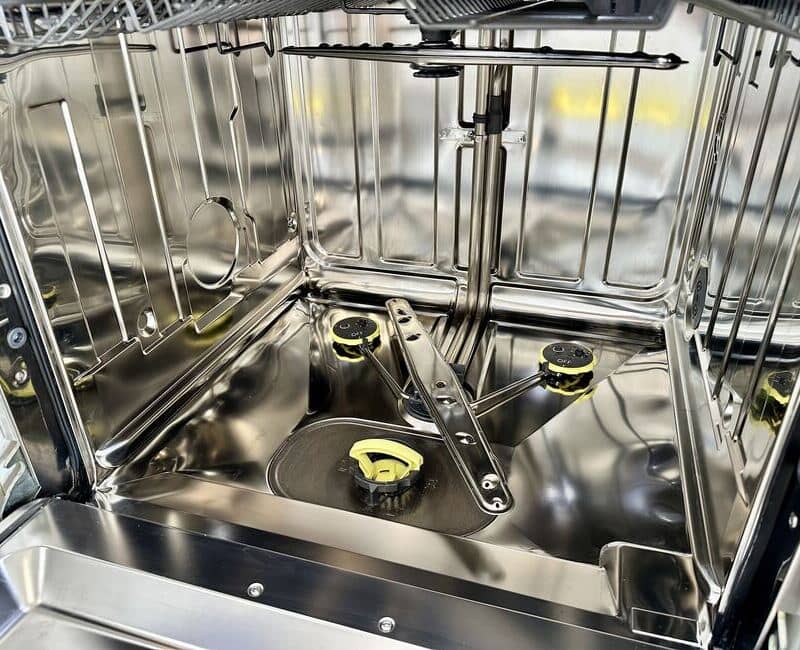
Once you’ve finished cleaning the dishwasher drain and there are no further issues, it’s time to reassemble the appliance!
Reinsert the filter, then put back the spray arm and dish rack. Ensure everything is securely in place — loose fittings could damage dishes later on.
Add a cup of white vinegar to a dishwasher-safe container and place it on the top rack. Run a quick, hot cycle with no detergent and no drying cycle. You can also do this with a commercial dishwasher cleaner.
After the rinse cycle is done, leave the door open a little so the dishwasher interior can air dry.
Why is My Dishwasher Not Emptying With No Blockage?
If you’ve checked and there are no blockages in the drain or hose, the issue might be with other parts of the dishwasher!
For those living in areas that allow waste disposal units or InSinkErators, try switching them on. Get a technician for any repairs.
Drain trap
Depending on the installation, your dishwasher may connect to the drain trap (or P-trap) under the kitchen sink. The drain trap holds a little water to prevent sewer gas and wastewater from going back up the pipes.
Over time, grease, food scraps, and other gunk build up inside the trap. Eventually, it stops water from draining or even causes a smelly dishwasher.
You can try flushing the drain trap with hot water, but better to call a professional plumber.
Drain pump
The drain pump helps remove wastewater and debris from the drainage system. Any blockage or damage to the pump could stop it from working properly.
Refer to your manual for instructions on how to access the pump — it’s usually located underneath or behind the dishwasher. Do a visual inspection for leaks, cracks, warping, or blockages.
If you notice an issue, or your dishwasher is built-in, contact a technician or (for renters) your landlord.
Air gap
A dishwasher’s air gap is a small cylinder connecting the dishwasher to the kitchen sink drain, which manages the water flow into and out of the machine.
They’re less common in modern dishwasher models or installations, so look up the owner’s manual or local building code first.
If you do have an air gap, check if it’s intact and functioning. A clogged or malfunctioning air gap could prevent water from draining out of the dishwasher.
For clogged air gaps, remove the cover and use a straw brush or thin implement to dislodge stuck debris. But if that doesn’t work, or the air gap is broken, have a professional do the repairs.
Tips for Keeping the Drain Clear
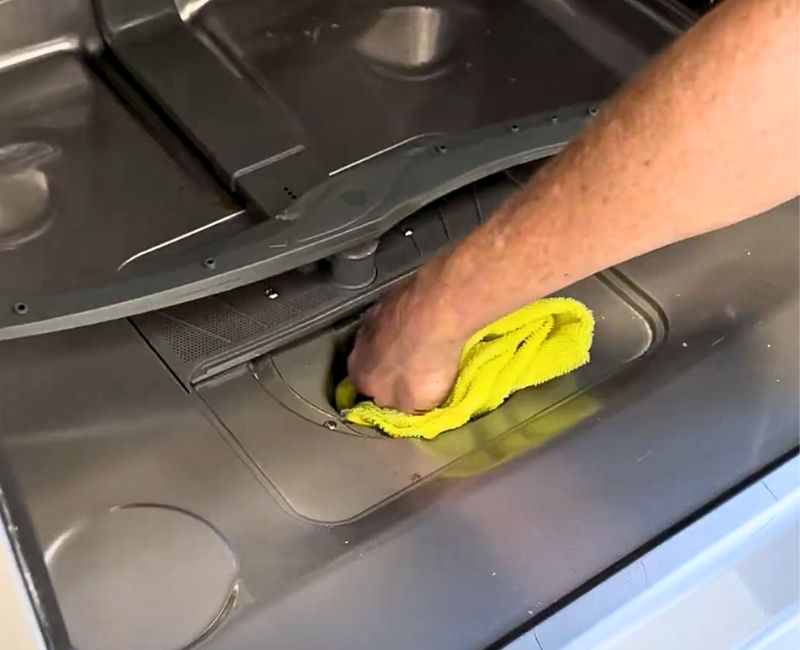
Besides regular cleaning, here are some good habits that help prevent dishwasher clogs.
Pre-rinsing isn’t strictly necessary, but it’s still best to scrape off large food bits or greasy sauces! That lessens the risk of buildup in the filter and drain over time.
For dishwashers connected to a hot water tap or heater, run the water for 30–60 seconds before a cleaning cycle to let the water come up to temp. If the water doesn’t get hot enough, it won’t dissolve detergent or food debris, leaving a residue that accumulates in the dishwasher.
Alongside that, use the correct amount of dishwasher detergent to minimise residue or soap scum. If you have a hard water supply, consider rinse aids or water softeners to prevent mineral deposits.
Clean the dishwasher regularly, too! See if your machine has a cleaning cycle, or deep clean the interior with dish soap and water.
Other Questions About Dishwasher Drain Cleaning
We’ll break down a few more concerns people have about their dishwasher’s drain here.
Why is there standing water at the bottom of my dishwasher?
If there’s water pooling at the bottom of your dishwasher after a cycle, that’s due to drainage problems.
Common causes include:
- Faulty drain pump
- Dirty dishwasher filter
- Blocked dishwasher drain
- Bends or obstructions in the hose
Inspect the different components, starting with the filter and drain. If you can’t identify the problem, contact a professional for repairs (or your landlord for renters).
How to clean the dishwasher drain with baking soda and vinegar?
You can use baking soda and vinegar separately when cleaning your dishwasher.
Combining vinegar and baking soda is a popular cleaning hack, but it’s not very effective! The fizzy reaction isn’t strong enough to properly unclog a drain; instead, it leaves you with a weak salt solution.
Mix vinegar with hot water to unclog a drain or treat hard water deposits. Meanwhile, save the baking soda for tackling stains in the tub and racks, since it’s not very useful for drains.
Can you use drain cleaner in a dishwasher?
No, you should not use drain cleaner on your dishwasher.
Many drain cleaners contain strong ingredients like hydrochloric acid or sodium hydroxide, which could corrode or degrade parts of your dishwasher. In general, they’re not made for use inside appliances.
How to clean mould from the dishwasher drain?
Clogged filters or drains inside the damp, enclosed space of a dishwasher can lead to mould — usually in the filter, drain, or rubber door seals.
Tackle the mould by spraying the affected area in 3% hydrogen peroxide for 10 minutes. You can use undiluted white vinegar for non-metal/rubber parts (like the mesh filter), with a soak time of at least 1 hour.
Following that, scrub the mould off with a toothbrush dipped in hot, soapy water, then run a hot cycle with a dishwasher-safe container of vinegar on the top rack. Thoroughly dry the surface afterwards.
What should I do if my dishwasher still doesn’t drain after cleaning?
If you’ve checked and cleaned the different parts, from the filter to the hose, try inspecting the sink drain or plumbing. The issue may not be with the dishwasher, but with other connecting systems.
But if you don’t feel comfortable doing that — or prefer to leave it to the pros — contact a technician. The manufacturer may have a service centre or maintenance team to fix the dishwasher for you.
