
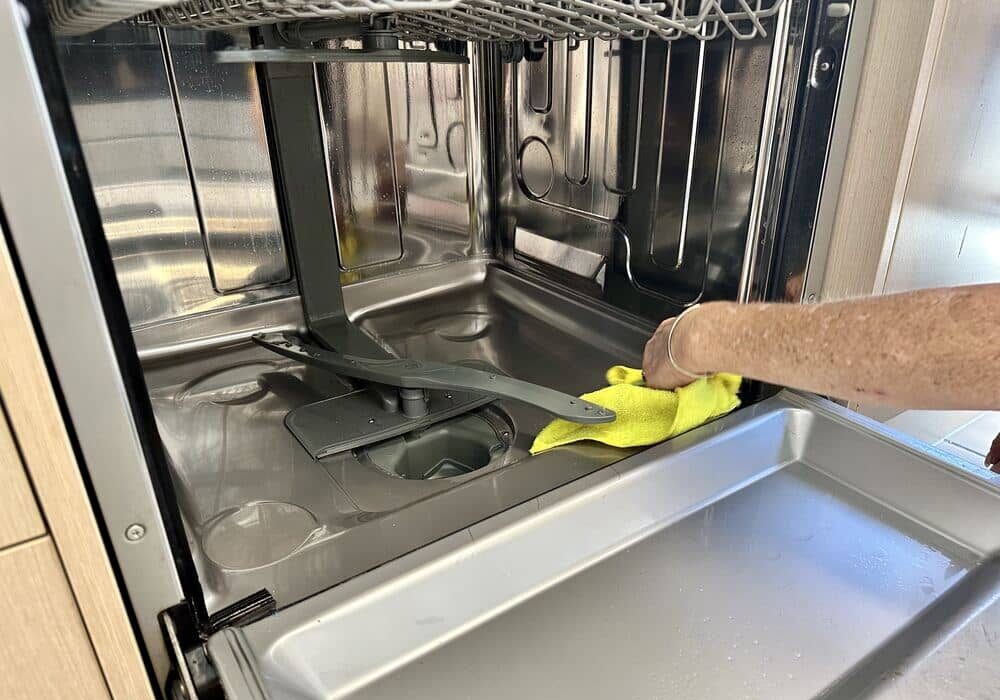
Did you open your dishwasher to stack some plates, only to get hit with a fishy funk? Or maybe you just ran a cycle and suddenly your machine stinks of melted plastic.
A little mustiness or a damp smell inside the dishwasher is normal, given the warm, moist environment. But stronger or lingering odours indicate a problem that won’t go away by leaving the door open to air out.
If you’re desperately searching “Why does my dishwasher smell?!”, you’ve come to the right place. We’ll break down common causes (from a dirty filter to a mouldy gasket) plus how to get rid of dishwasher smells — and prevent them, too.
No one wants a stinky dishwasher that could create stinky dishes. With a few kitchen staples, you’ll get your dishwasher fresh and clean in no time.
My Dishwasher Smells Like…? | How to Clean | Dishwasher Still Smells After Cleaning | Preventing Bad Smells
Why Does My Dishwasher Smell Bad? (A Quick Guide)
Here’s a rundown of reasons for bad odours in a dishwasher, why they happen, and immediate solutions.
| SOURCE OF ODOURS | OVERVIEW | CAUSES | QUICK FIX |
| Food or grease buildup | Debris gets washed off dirty dishes and deposited inside the tub, drain, or hose | Too little detergent, wrong wash cycle, or low water pressure from clogged spray arms | Quickly clean the spray arms; run a hot cycle with the correct amount of detergent |
| Dirty dishwasher filter | Food residue and detergent buildup clog the filter surfaces | Inadequate or incomplete cleaning (e.g. not washing the upper filter) | Take out all filter components and wash in hot, soapy water |
| Clogged dishwasher drain | Food, grease, and soap scum build up inside the drain | Not cleaning the drain and filter; hardened hard water deposits | Flush the drain with hot water, then wash with dish soap and water |
| Dirty gasket seals | Food debris and soap get trapped in the seal folds | Not scrubbing the gasket when cleaning the dishwasher | Scrub with dish soap, water, and an old toothbrush |
| Malfunctioning dishwasher drain hose | Clogged or blocked drain hose doesn’t carry dirty water away; odour lingers even after washing the filter and drain | Food particles, grease, and detergent residue get deposited in the hose and accumulate; kinks or obstructions block water flow | Flush the drain and hose with hot water; check for obstructions or faulty connections |
| Mould or mildew | Warm, moist environment can lead to mould on the gasket, racks, filter, or drain | Grime trapped in the seals; poorly-cleaned racks, filter, and drain | Soak in 3% hydrogen peroxide for 10 minutes before scrubbing with dish soap and water |
My Dishwasher Smells Like…
Does your dishwasher have a specific odour, like plastic or rotten eggs? The type of smell can point you towards the cause and how to fix it.
Why does my dishwasher smell like plastic?
If your new dishwasher has a plastic odour, that’s normal! It’s a lingering scent from the factory and storage, and should dissipate in a few weeks with regular use.
The same goes for a slight petroleum or varnish smell — these are from factory treatments to internal components like the motor. The scent should wear off within 4–6 weeks.
However, if the plastic smell is particularly strong, check inside. Some plastic may have fallen near the heating element and warmed or melted slightly.
Why does my dishwasher smell musty?
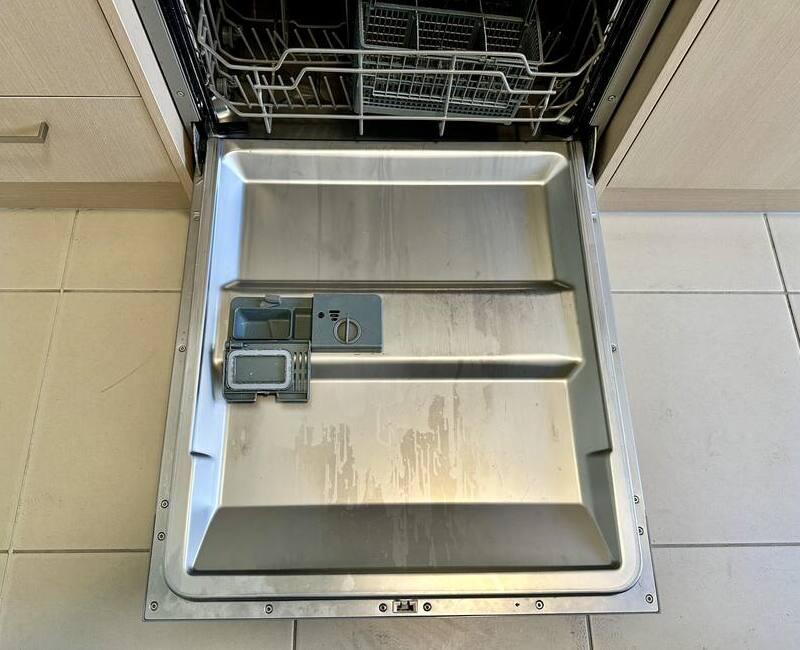
Musty or stuffy odours (or a “wet dog” smell) inside a dishwasher can come from trapped moisture or mould.
If you don’t leave the door open after a wash cycle, the warm, moist environment inside creates that mustiness. Eventually, the dampness can lead to mould or mildew growth, especially on the door seals or drain surfaces.
Leave the door open slightly to air out the interior and see if that helps.
Why does my dishwasher smell fishy?
Unpleasant, fishy smells may come from leftover food particles and soap scum buildup, especially inside the drain or hose.
The residue becomes a hotspot for odour-causing bacteria inside the dishwasher. This often happens inside the drain and hose if dirty water doesn’t get flushed out properly.
Wash the filter and flush the drain with hot water, then disinfect with a little rubbing alcohol.
Why does my dishwasher smell like rotten eggs?
There are a few reasons a dishwasher smells like sewage or rotten eggs:
- Clogged filter
- Clogged drain
- Sink drain issues
- Drain hose issues
Decomposing food in the filter or drain could create a rotten smell. Wash the part with hot water and soap, then spray with rubbing alcohol to sanitise.
Your kitchen sink has a P-trap (or drain trap) under the drain, which prevents sewer gas and wastewater from coming back up the pipes. The dishwasher hose connects to that same drain. If the P-trap is dry or dirty, it could be allowing sewer gas up into the dishwasher.
The issue could also be with the drain hose. If your hose isn’t positioned properly (with a high loop along the underside of the benchtop), wastewater from the sink could back up the hose into the dishwasher. A blocked hose could also prevent dirty water from draining properly.
Why does my dishwasher smell like it’s burning?
A dishwasher that stinks of burning rubber or plastic could have an issue with the heating element or the electrical components.
Switch off the dishwasher right away, and unplug it or shut off the breaker if possible. Check inside to see if some plastic (like a Tupperware lid) touched the heating element and melted. If yes, you’ll need to scrape off the plastic ASAP then scrub off the residue with a thick baking soda paste.
Afterwards, call in a technician to make sure the parts are intact. Do not run the dishwasher again until you’re sure it’s safe.
However, if there’s no melted plastic, then some electrical components (like the solenoid or pump motor) may have been damaged. Contact a professional technician to inspect the machine and do any repairs.
How to Clean a Smelly Dishwasher
Both vinegar and baking soda can neutralise unpleasant odours inside your dishwasher! We’ll be using them separately, since they cancel each other when combined.
Start with an empty dishwasher. Take out all dishes and racks, then remove any standing water in the tub with a ladle and some dish towels.
Check your owner’s manual for instructions on how to disassemble the filter and spray arms. The manufacturer’s website should have an online version if needed.
Step 1: Clean the filter and spray arms
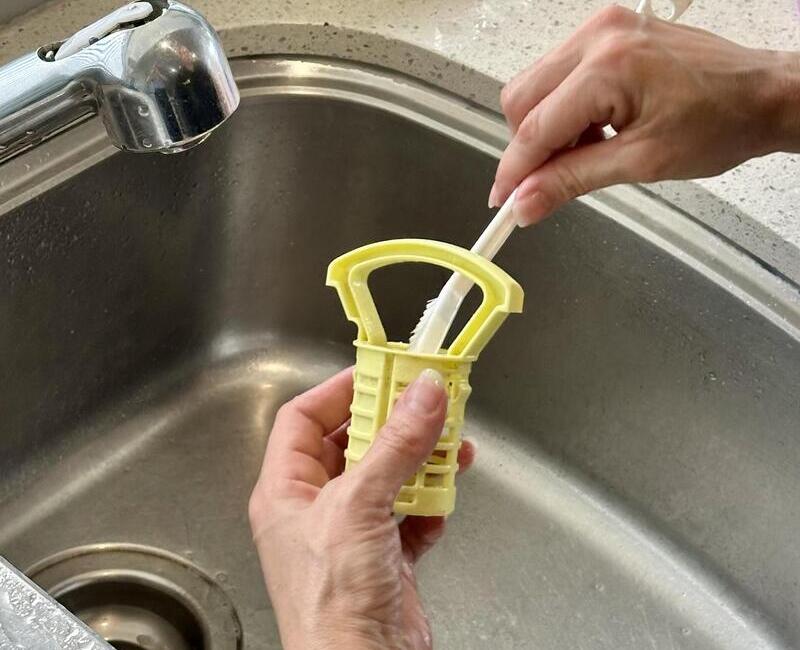
A heavily soiled dishwasher filter not only creates unpleasant smells, but could also lead to bacteria or mould growth.
Take out all parts of the filter — many models have a flat metal upper screen, while others have a lower filter. Check for a coarse filter inside the main mesh piece as well, and pop it out.
Fill half the sink with hot water, then add 1 tsp of dish soap and a cup of baking soda. Soak the spray arms and filter parts for 10–15 minutes before scrubbing them clean with a non-abrasive sponge or soft brush.
Rinse the parts thoroughly and shake off excess moisture.
Step 2: Wash the tub and racks
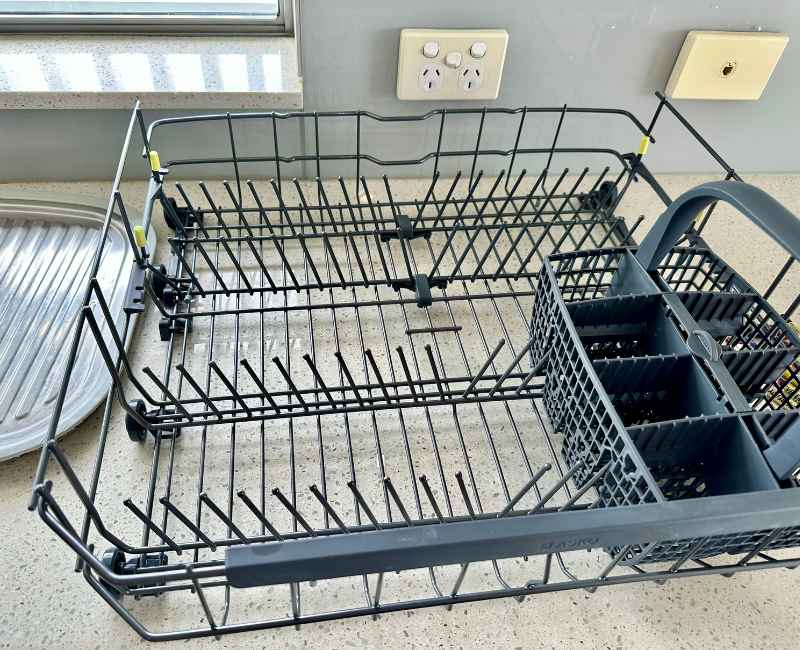
Next up, you’ll need to deep clean the dishwasher tub. Scrub the interior walls with a non-abrasive sponge dipped in hot, soapy water. Look out for spots with detergent or food residue, and the connection points for the spray arms.
For stainless steel tubs, wipe with the grain to prevent streaks or smudges.
If there are stains or stubborn buildup, combine 2 parts baking soda, 1 part warm water, and 1 tsp dish soap into a paste. Apply with a damp sponge and leave for 10–15 minutes, then scrub clean. Wipe away residue with a damp cloth.
For the racks, let them soak in hot, soapy water for 10–15 minutes, then wash with a soft sponge before rinsing.
Step 3: Clean the drain
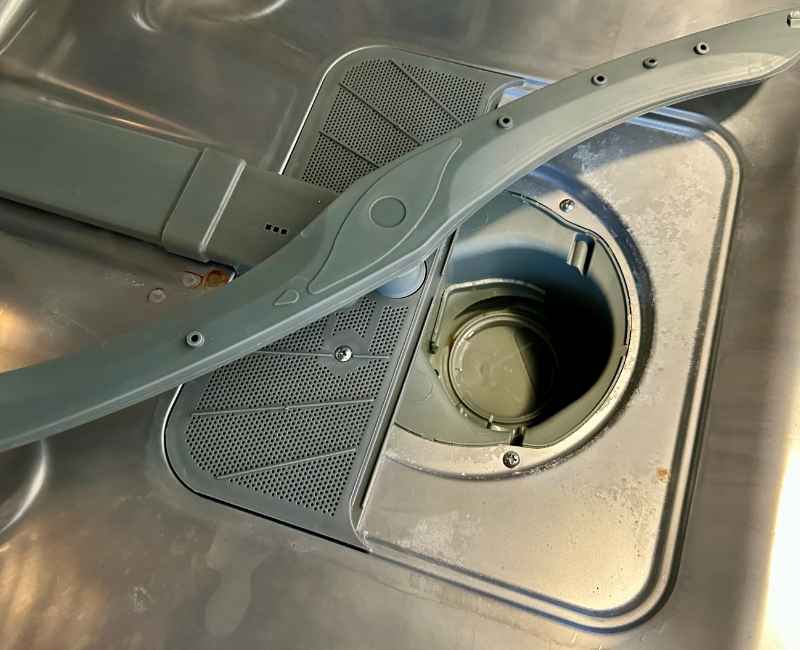
Do a visual check on the drain first and pick out food debris with a spoon or by hand (with gloves). Empty standing water with a spoon or ladle.
Run the hot tap until it reaches full temp (about 50º–60ºC), or boil a kettle of water and let it cool for several minutes. Slowly pour the water into the dishwasher drain, keeping an eye on the water level and pausing if it starts backing up.
Wait at least 10 minutes for the water to run through the drainage system, then follow with 1–2 cups of white vinegar to dissolve remaining buildup and neutralise odours.
Let the drain area cool down so you can wash the surfaces with a soft brush (like a bottle brush) and dish soap. Rinse with warm (not cool) water afterwards.
Step 4: Scrub the gaskets
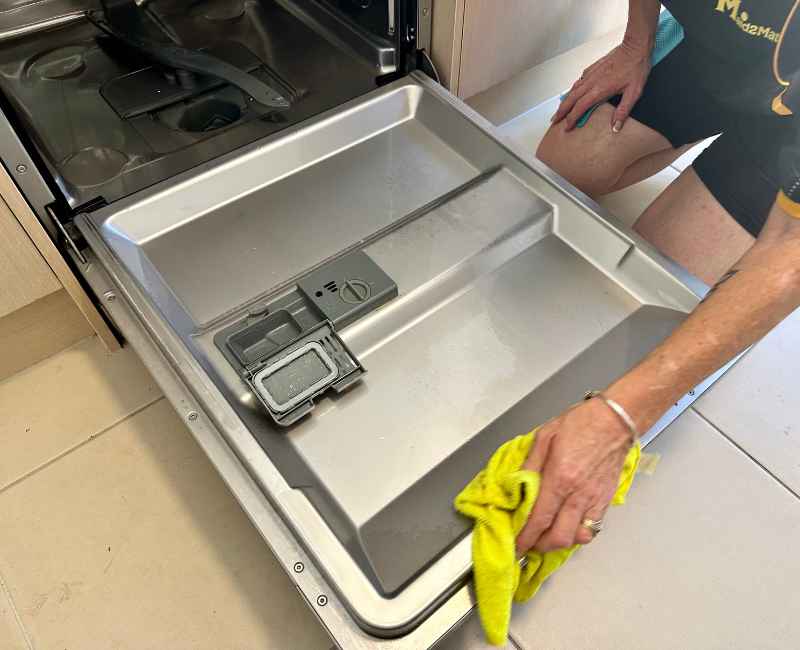
The gaskets or rubber seals on the dishwasher door often get overlooked when cleaning, and later develop unpleasant odours.
Dip an old toothbrush into a mix of warm water and a few drops of dish soap. Scrub the gasket, getting between the folds and creases. Wipe away heavy grime and dirty water as you go.
If you find mould on the gasket, saturate the spot with 3% hydrogen peroxide and leave for at least 10 minutes. Scrub the mould off with the toothbrush and soapy water afterwards, then rinse thoroughly to remove lingering peroxide.
Do not use bleach for this, as it degrades the rubber and might corrode the dishwasher interior.
Step 5: Run a cleaning cycle
Once you’ve cleaned all the problem spots in the dishwasher, put all the parts back inside. Make sure the filter locks into place with a “click.” You shouldn’t run the cleaning cycle if the filter isn’t secure.
Pour a cup of white vinegar into a dishwasher-safe bowl and place it on the top rack. Run a quick, hot wash cycle with no heat drying. You can also do this step with a commercial dishwasher cleaner instead.
Afterwards, sprinkle a cup of baking soda over the bottom of the dishwasher. Run another short, hot dishwasher cycle without drying. Wipe excess moisture off the dishwasher interior with a microfibre cloth.
Finally, leave the door slightly open to air dry and allow lingering odours to dissipate.
What If My Dishwasher Still Smells Bad After Cleaning?
If you’ve deep cleaned the dishwasher and it still has a bad scent, the problem may be somewhere you can’t easily access. For example, there might be mould in the drain hose or food particles trapped by internal components.
In hard water areas, meanwhile, limescale (mineral buildup) can accumulate inside difficult-to-reach parts, such as the hose or pump.
The issue may also be with your plumbing instead of the dishwasher, especially with a rotten egg odour. Get a plumber to look at your kitchen’s drainage system, including the sink P-trap.
Consider the age of your appliance as well! In old dishwashers, persistent smells can point to worn-out gaskets, hoses, and internal parts — signs your appliance needs replacing.
Contact a professional or your landlord for a more thorough check. If your machine is still under warranty, see if the manufacturer has an official service centre.
If you suspect mould, plumbing issues, or problems with internal parts, avoid running your dishwasher until the problem has been identified. It could transfer the scent onto your dishes or even lead to damage, giving you a bigger headache.
Preventing Bad Smells in a Dishwasher
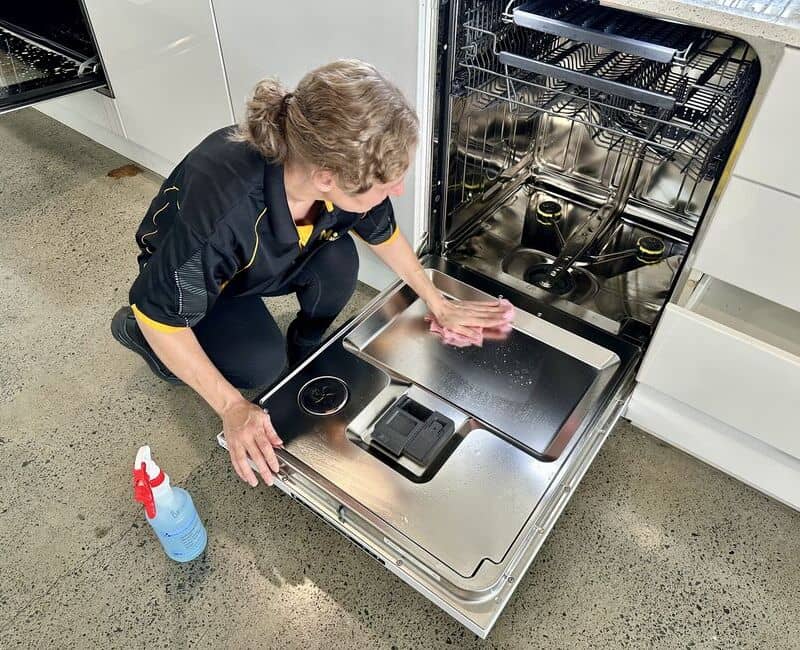
Good dishwashing habits and regular cleaning do a lot for preventing bad odours in the first place!
Scrape off large food scraps and greasy residue before loading dishes into the dishwasher. Pre-rinsing isn’t required, but doing this step helps minimise buildup inside the appliance. It also prevents clogs in the filter or drain.
Make sure you’re using the correct wash cycle and amount of detergent. Ineffective wash cycles won’t get your dishes clean, and the leftover grime creates an unpleasant smell inside the tub. Consider a rinse aid, too, so water doesn’t cling to interior surfaces or pool at the bottom.
For machines connected to the hot tap, run the water for 30–60 seconds before a cycle so it reaches the right temps.
After each dishwasher cycle, leave the door open slightly so the interior can air dry. You’ll prevent odours from building up and minimise the risk of mould.
And of course, regularly clean your dishwasher! Every 1–2 weeks, run a quick maintenance wash with an empty dishwasher and either your usual detergent or a dedicated dishwasher cleaner.
Wash the filter once a week as well, and deep clean the appliance inside and out every 1–2 months. Or you can request to have your dishwasher cleaned when you book a service with Maid2Match.
My Dishwasher Smells Bad: FAQs
Here are a few other concerns about cleaning a stinky dishwasher.
Does running the dishwasher empty help with smells?
You can run the dishwasher while empty as part of routine cleaning! This stops odour buildup and keeps the appliance in good condition.
Place a standard amount of detergent (or dishwasher cleaner) into the dispenser, then run a short, hot cycle with no heat drying. Afterwards, wipe the interior surfaces and let the tub air dry.
Why are there dishwasher smells even after cleaning the filter?
If cleaning the filter didn’t get rid of stinky smells, the problem could be with the drain, gasket seals, or drainage system.
Check and clean the other parts of your dishwasher. Flush the drain with hot water, then scrub the gaskets with an old toothbrush and soapy water.
Why does my dishwasher smell like rotten eggs when I run the drain?
If you’re getting a rotten egg or sewer smell from the dishwasher drain, the likely culprits are the drain hose or kitchen sink drain. Something is causing wastewater or sewer gas to come up the drain into the dishwasher.
Flush both the drain hose and sink drain with a kettle of hot (not boiling) water, then follow with 2 cups of vinegar to neutralise odours. Inspect the drain hose to verify that it’s properly positioned, too.
If that doesn’t help, you may need to contact a plumber to check your pipes.
