
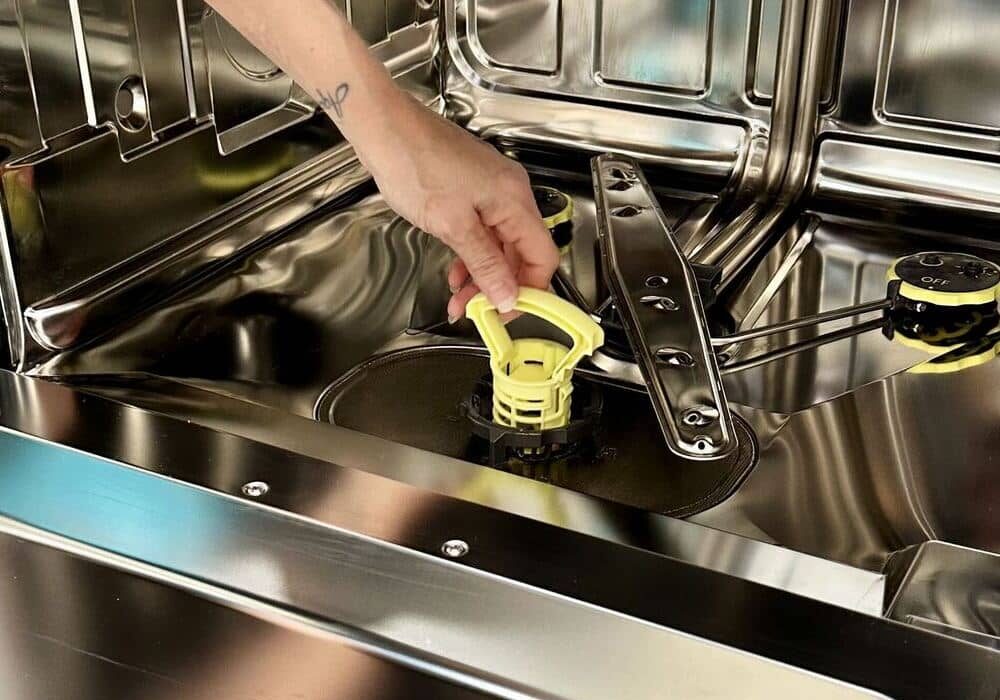
Dirty dishes are nothing new in a kitchen, but what is surprising is how grimy the filter can get in your dishwasher after use!
The filter is the last line of defence in the dishwasher. It’s responsible for trapping food particles, grease, soap residue, and other debris that gets washed off the dishes inside. Without regular maintenance, that grime builds up quick.
As for how to clean a dishwasher filter, simply remove it, then wash with warm water and dish soap! For tougher grime, soak it in hot, soapy water or diluted white vinegar.
No one wants a clogged filter that causes yucky water to pool in their dishwasher — or worse, breaks the appliance. Washing the filter now could save you from a repair bill later on.
How Often to Clean | Signs to Clean | What You Need | Where’s the Filter? | How to Clean | Clogged Filters
Types of Dishwasher Filters
Most dishwashers will have either a self-cleaning filter or a manual one. Self-cleaning filters are more common in older models (pre-2010)!
| FILTER TYPE | LOOKS LIKE | ABOUT | CLEANING TIPS |
| Self-cleaning dishwasher filter | Features a plastic grid with holes around it, integrated at the bottom of the tub. | Have a grinder or macerator that crushes buildup so it gets washed down the drain, but can be quite noisy. | Still needs manual cleaning every few months to maintain efficiency. |
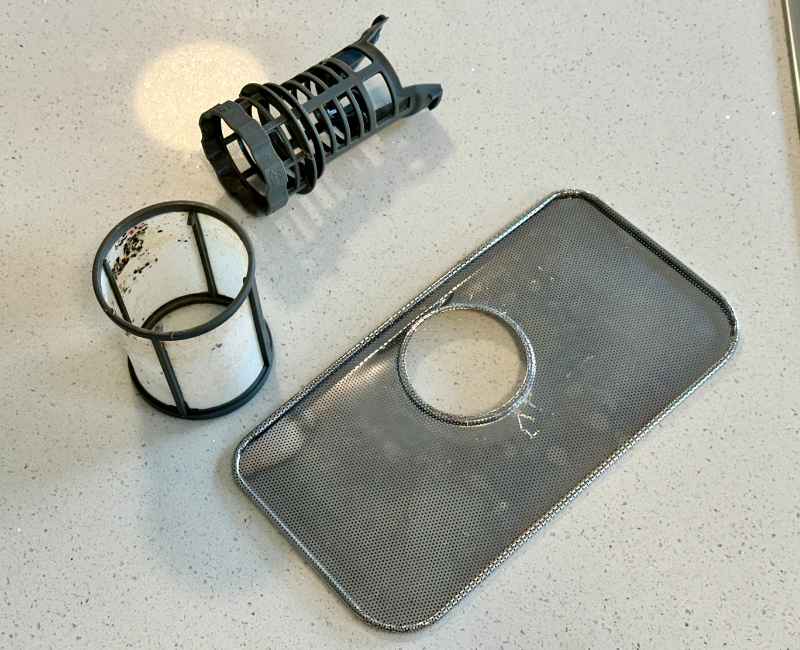
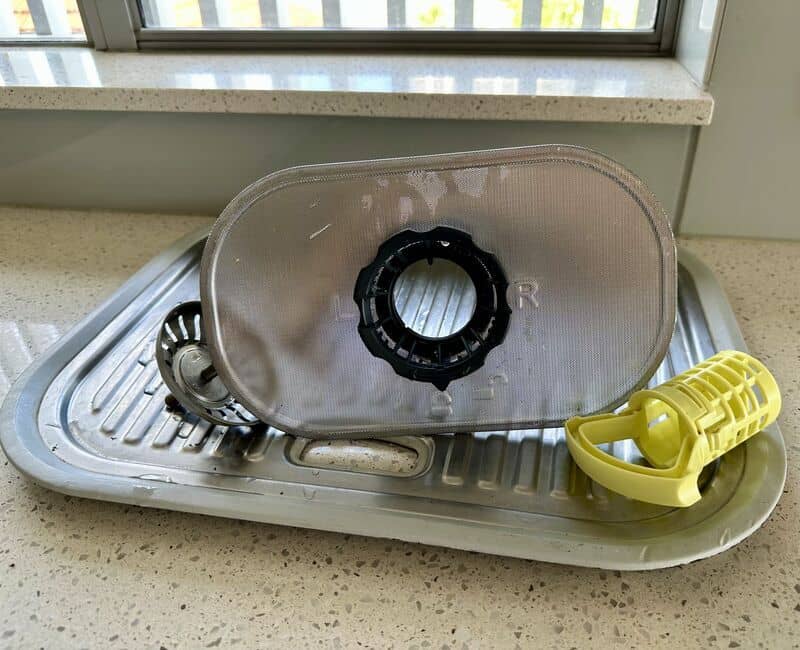
| Manual dishwasher filter | Typically a twist-lock cylinder with fine mesh around the sides. For triple-filter systems, there’s also a coarse filter inside. | Often have an “upper filter” (or flat filter) on top that looks like a flat metal screen. That catches most of the food debris. The lower filter (cylinder) is underneath, usually over or inside the drain. | All 2 or 3 parts of the filter should be cleaned to prevent clogs, odours, or mould. |
How Often to Clean a Dishwasher Filter
Your filter cleaning schedule will depend on the level of dirt on your dishes and how often you use the dishwasher!
| LEVEL OF USE | HOW OFTEN TO CLEAN |
| Very dirty dishes, everyday use | Once a week |
| Moderate dirt, several days a week | Every 1–2 months |
| Pre-rinsed dishes, a few days a week | Every 3–6 months |
| Pre-rinsed dishes, a few times a month | Every 6–12 months |
It’s vital you clean the filters regularly. Food debris, detergent residue, and other dirt build up on the mesh over time. Hard water can also leave mineral deposits (limescale) that dry and harden on surfaces.
Regular cleaning prevents clogged filters and drains, and ensures the dishwasher functions efficiently. Otherwise, dirt can lead to unpleasant odours, mould, or even a malfunctioning appliance.
Signs Your Dishwasher Filter Needs to Be Cleaned
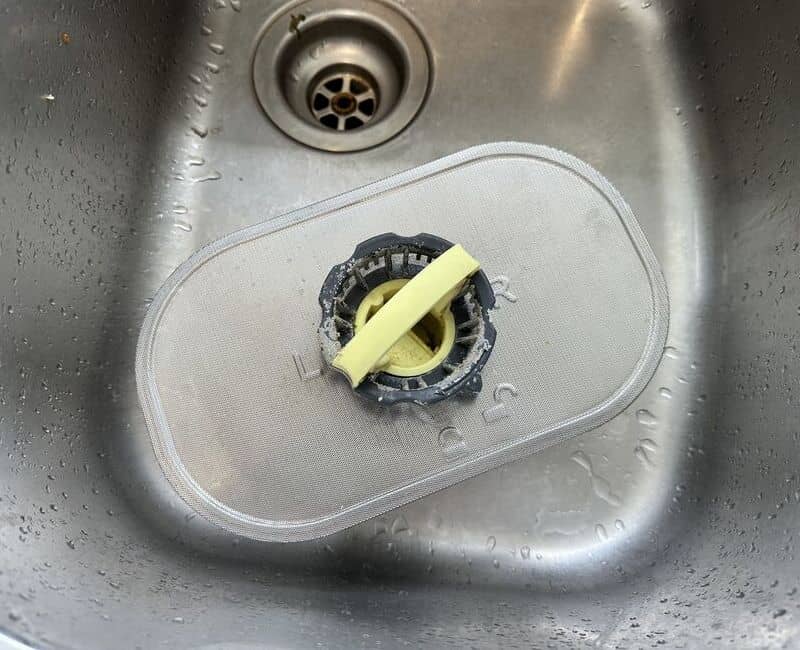
Even with routine maintenance, there are some signs you should clean the filter straight away:
- Gritty residue on dishes
- Cloudiness or film on glassware
- Odd noises during the wash cycle
- Frequent clogging or slow drainage
- Dishes still dirty even after washing
- Buildup on the upper filter assembly
- Unpleasant odours in dishwasher tub
What You Need to Clean Your Dishwasher Filter
Your list of supplies is short and straightforward! To clean your dishwasher filter, you’ll need:
- Dish soap
- Soft dish cloths
- Non-abrasive sponge
- Large bowl or kitchen sink
- Soft brush (e.g. old toothbrush)
Make sure your dishwasher is switched off before working, and of course, remove any dishes!
As for what not to use when cleaning the filter, avoid abrasive tools like scouring pads, wire brushes, or steel wool. These could tear the mesh or leave scratches on the casing that trap dirt later on.
Skip the bleach or other harsh chemicals as well. If you must disinfect your dishwasher filter, wash it in hot, soapy water or spray it with 70% isopropyl alcohol. When using alcohol, leave it on for 1–3 minutes before rinsing off.
Where is the Filter on a Dishwasher?
On most dishwasher models, you’ll find the filter at the bottom of the dishwasher tub.
Slide out the lower dish rack so you can access the base. If there’s a bottom spray arm, refer to your owner’s manual for how to remove it.
Many models have an upper filter (the flat metal screen), which should lift up and out. The main filter will be located underneath, typically inside the drain.
If you’re ever unsure, consult the owner’s manual or check the manufacturer’s website.
How Do You Clean a Dishwasher Filter?
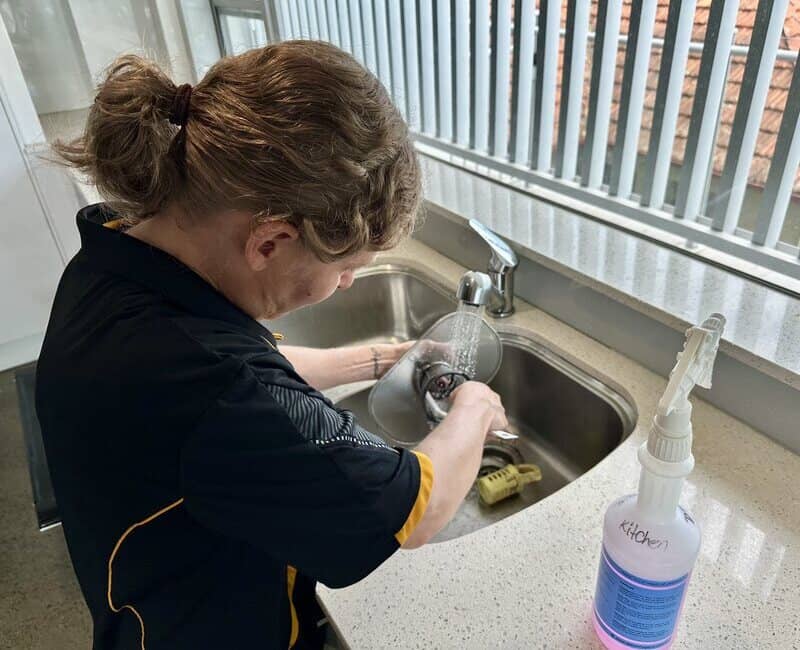
Washing a dishwasher filter is a lot like washing the dishes! Everyday dirt just needs some scrubbing with soap and water, while tougher grime can be loosened with a good soak.
Don’t want to get down and dirty with your dishwasher? Our Maid2Match house cleaners can handle the job — and they won’t dish-appoint.
Step 1: Remove the filter
Most dishwashers use a twist-and-lock mechanism for the filters. There should be arrows indicating the direction to go.
After taking out the bottom rack and spray arm, remove the dishwasher filter underneath. Lift out the upper filter, as well, and the lower filter if applicable.
For dishwashers with coarse filters, gently squeeze the tabs that hold it in place to eject it.
Step 2: Wash the filter
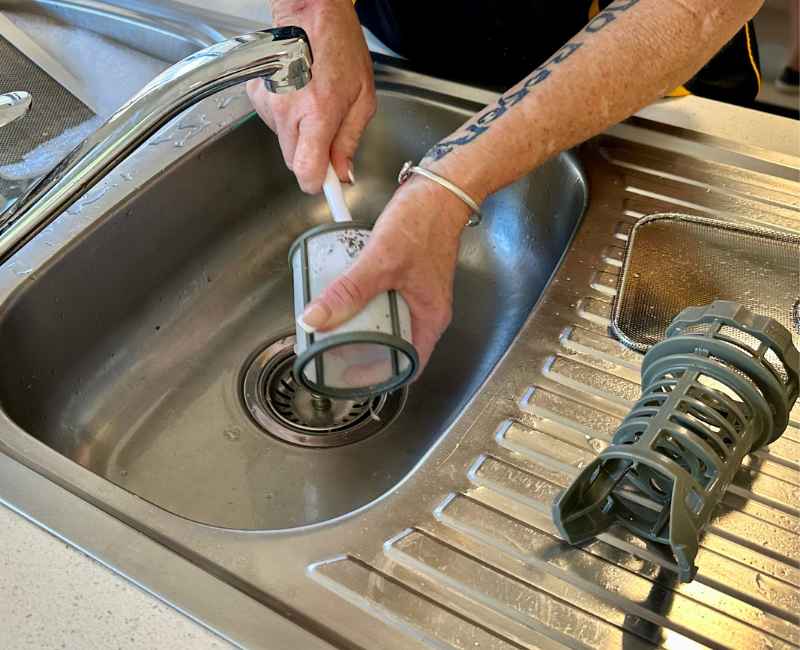
The best way to clean a dishwasher filter is with dish soap and warm water!
Run the filter under warm water first to loosen the grime. Then gently scrub off any residue with a soft brush (like an old toothbrush or nylon brush) and some dish soap. Wash each part separately so you’re thorough.
For stubborn dirt or a deeper clean, fill a large bowl or the kitchen sink with hot, soapy water. Soak all the filter components for 10–15 minutes to loosen the grime, then scrub them clean.
While the filter soaks, use the time to clean the dishwasher drain and wipe the tub.
Step 3: Reassemble the filter
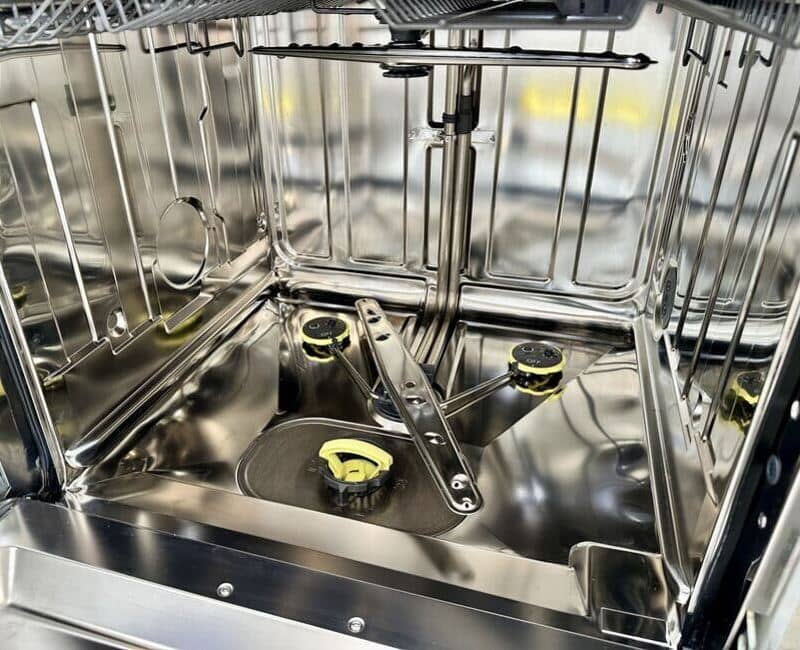
Rinse all the components, then shake off excess water before wiping them dry with a soft cloth. Reinsert the coarse filter (if applicable).
Next, return the filter to its housing. Twist until you hear a ‘click’ that indicates it’s in a locked position. Some models have tiny arrows on the filter and tub that align when the filter is locked.
Give it a wiggle to check that it’s secure and not moving — a loose filter could damage your dishwasher!
Finally, slot the upper filter into place, then put back the spray arm and lower rack. You can run the shortest cycle afterwards to confirm everything’s working properly. If you hear any unusual noise, the filter may not be secure.
How to Clean a Clogged Dishwasher Filter
If the dishwasher filter is heavily clogged, you’ll need a tougher cleaning solution!
The first step is to identify the buildup, so you can choose the appropriate cleaner. Food debris appears brownish or dark-coloured, and feels slimy or gritty. Soap scum is usually a greyish, waxy film.
On the other hand, mineral deposits from hard water are white or light grey, and feel tough and chalky.
If you have a sink sprayer, start by using that to remove as much loose dirt as possible from the filter. Sometimes that’s enough to get all the grime off.
For food residue, fill the sink halfway with hot water, then add a cup of baking soda and 1 tsp of dish soap. Let the filter soak in the solution for 15–20 minutes to break down the debris, then scrub the surfaces clean.
You can also dissolve a dish tab (with no rinse aid) in hot water, and submerge the filter in that for 15–20 minutes.
For soap scum or mineral deposits, mix equal parts white vinegar and hot water in a bowl. Soak the filter for 15–20 minutes (or up to 30 minutes for calcified buildup), then use a soft sponge or brush to remove the residue.
Rinse the filter thoroughly afterwards.
Keep Your Dishwasher Filter Clean
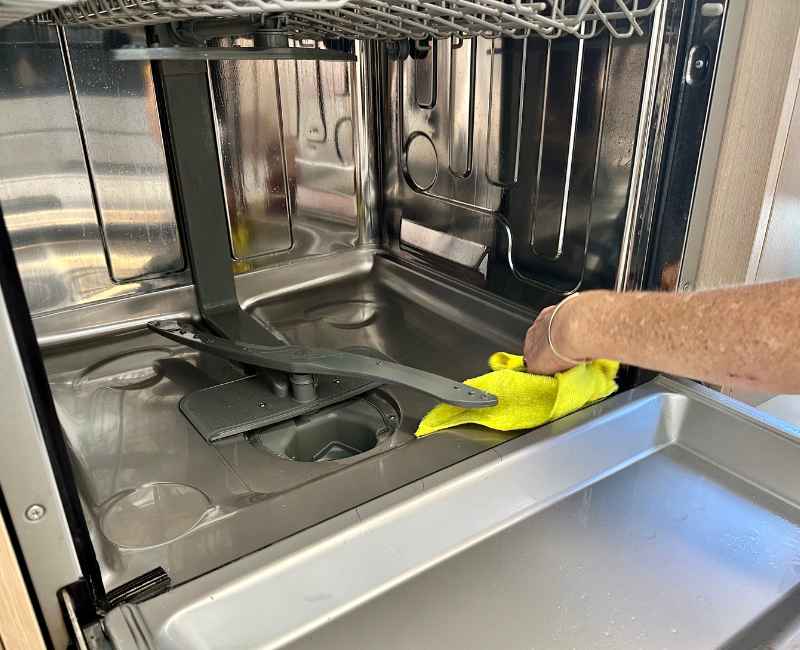
Besides cleaning a dishwasher filter regularly, a few other habits help keep it in good condition!
Scrape off large food debris and wipe off heavy sauces before loading dishes. Pre-rinsing isn’t necessary, but removing the worst food messes lessens buildup and prevents clogging.
Also, be mindful of how you load the dishwasher! Don’t overcrowd the dishes, and make sure they’re neatly placed inside.
Use a good-quality dish detergent or dishwasher tablet, and choose the correct cycle for your dishes. Incorrect cycles might not fully dissolve the detergent or break down grime, leaving a residue that gets stuck in the filter.
After a wash cycle, leave the door open slightly so the interior can air dry. Otherwise, trapped moisture could lead to musty odours, or even mould or bacteria growth.
And of course, clean the dishwasher itself once a month! (Or every 1–2 months if you don’t use it much.)
Dishwasher Filter Cleaning FAQs
Got more questions about how to clean the filter on a dishwasher? We’ll answer some common concerns here.
Do all dishwashers have a filter that needs to be cleaned?
All dishwashers have a filter, but not all of them require frequent maintenance. Many self-cleaning filters will grind any buildup so it gets washed down the drain during a cycle.
However, these types may still need occasional cleaning to keep them in good working order. Check your owner’s manual to be sure!
How to clean a dishwasher filter with vinegar and baking soda?
You can use baking soda and vinegar to clean your dishwasher filter, but not at the same time.
When combined, vinegar and baking soda neutralise each other, leaving you with a residue that’s ineffective for cleaning. Instead, use them separately!
Soak dishwasher filters in vinegar to tackle limescale and soap scum, which get broken down by the mild acid. Mix equal parts vinegar and hot water, then submerge the filter for 15–20 minutes.
Meanwhile, add baking soda to a sink full of hot water and dish soap, then use it to soak off stubborn grime.
Can I run my dishwasher without the filter to clean it?
No, you should not run your dishwasher without a filter. Doing this can cause significant damage to the appliance’s internal components, leading to costly repairs.
When should you replace your dishwasher filter?
Most dishwasher filters are built to last the lifetime of your appliance. However, there are some cases where you’ll need to replace them, such as a damaged filter.
Look out for signs like:
- Tears in the mesh
- Cracks or warping
- Recurring mould or mildew
- Calcium deposits that can’t be cleaned off
One other big sign is if your dishwasher keeps functioning poorly even after cleaning the filter.
Check with the manufacturer for the correct replacement model!
