
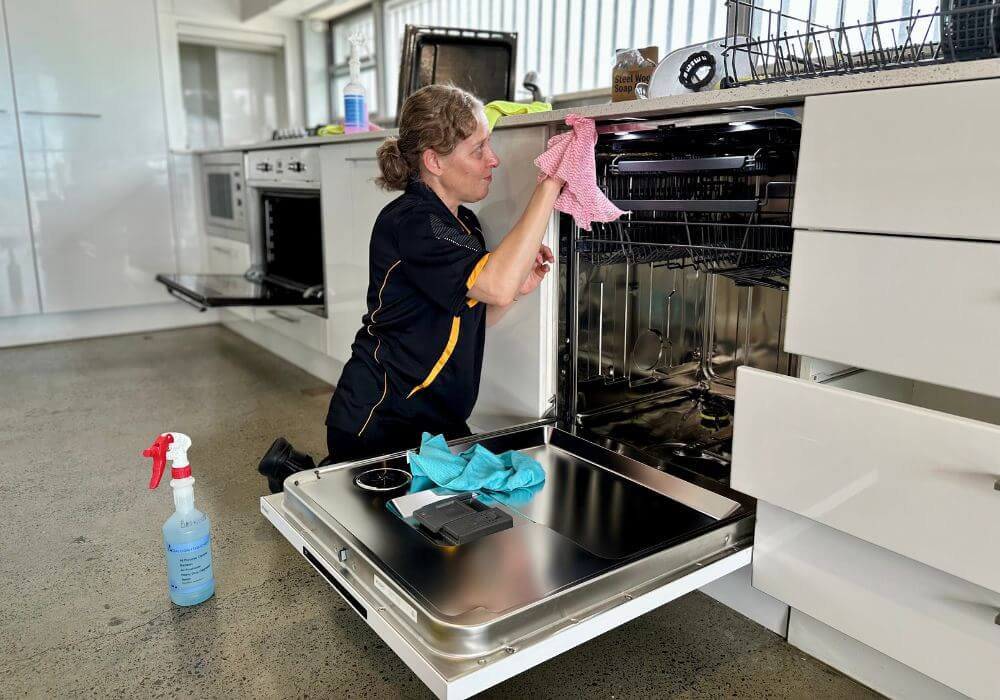
Here’s something that can bring down your day: taking out the dishes after a dishwasher cycle, only to find they’re still dirty.
Maybe there’s soap all over the spoons or bits of food stuck on the plates. But now you’re standing in the kitchen, asking the universe, “Why isn’t my dishwasher getting my dishes clean?”
Common reasons for a dishwasher not cleaning dishes include:
- Incorrect loading
- Dirty dishwasher filter
- Detergent issues
- Wrong wash cycle
- Hard water deposits
- Low water temperature
- Clogged spray arms
- Clogged drain
- Broken soap dispenser
- Faulty inlet valve
- Water supply issues
It may feel like a dish-aster right now, but the sooner you find the cause, the sooner you can fix it. Then you’ll have clean plates again for your next delicious meal.
Dishes Still Dirty After the Dishwasher? A Quick Guide
Sometimes you can find the cause by looking at the dishes, not the dishwasher.
If they’re dirty in a specific way, that’ll point you to where the problem is and how to address it straight away.
| PROBLEM | LIKELY CAUSE | IMMEDIATE FIX |
| Dishes on top rack aren’t clean | Clogged spray arm or overloaded racks | Unblock nozzles with a toothpick; check that items aren’t blocking top sprayer |
| Dishes on bottom rack aren’t clean | Clogged spray arm or “Top Rack Only” setting | Check if dishwasher has a Top Rack Only setting that’s been accidentally selected; if not, clean lower spray arm |
| White streaks or residue on dishes | Mineral deposits or too much detergent | Wipe dishes with diluted white vinegar to dissolve minerals or remove soap residue |
| Filmy or gritty residue on dishes | Undissolved detergent from low water temperature | Rinse residue off; ensure water temp is correct or switch detergents |
| Cloudy glassware after dishwasher | Mineral deposits or permanent etching (from soft water, heat, and excessive detergent) | Wipe glasses with diluted white vinegar; if that doesn’t work, check if damage is permanent |
| Food residue stuck on dishes | Incorrect loading, wrong wash cycle, detergent issues, or blocked spray arm | Re-run on correct cycle with proper loading and detergent; clean spray arm |
| Dishes still greasy or oily | Overcrowded dishes, wrong cycle used, or low water temperature | Re-run with proper loading and correct cycle; check that water temp is correct |
| Dishes smell bad after dishwasher | Dirty filter or drain | Clean filter and drain before running another cycle |
Why Is My Dishwasher Not Cleaning Dishes Properly?
If the table above helped you spot the problem, then you already have your fix. But often, the cause isn’t that clear-cut.
The dishes may come out dirty for less visible reasons (e.g. a clogged filter) or a combination of them, like hard water plus wrong detergent.
Start by unloading the dishes so you can inspect the dishwasher interior. Then, so you know what to look for, we’ve broken down the most common causes, from easy fixes to mechanical faults that may need a professional.
If the issue is a dirty dishwasher, make it a priority in your Maid2Match kitchen clean!
1. Incorrect dishwasher loading
This is one of the most common reasons your dishwasher isn’t cleaning dishes. It’s also the easiest problem to fix.
Both overloading and improper loading can affect your dishwasher’s performance.
Too many dishes will block the spray arms or hinder detergent distribution, resulting in dirty plates. The same goes for when you don’t position dishes correctly.
How to fix it:
Place items properly on the racks, with enough space between them so water and detergent can circulate. Your dishwasher’s manual may have recommended placements, especially for glasses and utensils.
Some dishes could also get in the way of the spray arm. If it can’t rotate freely, water won’t reach all your dishes. Make sure nothing’s jutting out from the racks, especially the bottom.
TIP: Don’t let different metals (like aluminium and stainless steel) touch inside a dishwasher. This causes galvanic corrosion, where one metal corrodes the other in a conductive liquid, like water with salt from detergents.
2. Dirty dishwasher filter
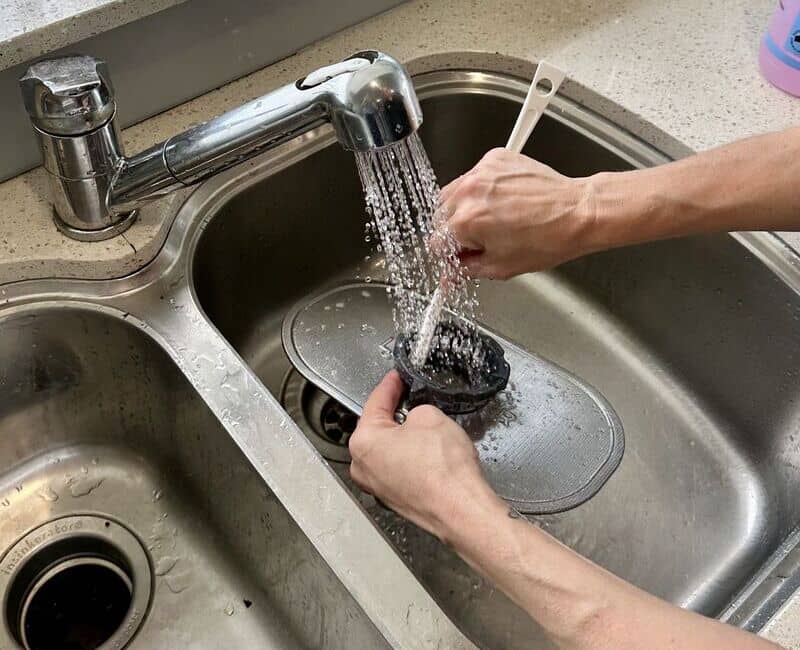
Your dishwasher filter traps grease, food particles, and other residue during a cycle. It then prevents the debris from blocking the drain or washing back into the tub.
However, that dirt accumulates on the filter surfaces over several cycles. Hard water can also cause mineral buildup, while detergent can leave soap scum.
When you have a clogged dishwasher filter, the debris could recirculate onto your dishes, covering them in dirt again.
How to fix it:
You need to clean your dishwasher filter regularly! For heavy loads or everyday use, aim to wash the filter once a week.
Locate the filter at the bottom of the dishwasher tub. Take it out, then scrub it clean with a soft brush, plus some warm water and dish soap.
For a clogged filter, submerge it for 10–15 minutes in hot, soapy water first. If there are mineral deposits, try soaking it in equal parts vinegar and water.
3. Detergent issues
Your detergent plays a key role in dish cleaning, so choose the correct type. For starters, dish soap is not the same as dishwasher detergent, so it’s not meant for dishwashers!
But even with the right detergent, improper use can still leave you with dirty dishes. Too much detergent might leave a residue, while too little detergent won’t wash off the grime.
How to fix it:
Use the correct detergent and the amount recommended for the load size. Follow the detergent package or check your owner’s manual.
Most detergents come as liquids, powders, or dishwasher tablets. Make sure they’re formulated specifically for dishwashers. Some may even have a built-in rinse aid to prevent streaks when rinsing and drying.
4. Wrong wash cycle
Most dishwasher models have different wash cycles (or settings) depending on the number of dishes or how dirty they are.
If you pick the wrong setting — like a quick wash for very greasy plates — you’ll be left with plenty of grime afterwards.
Frequent use of Eco Mode could also be the issue. Eco Modes use less electricity by reducing water consumption and lowering temperatures. However, they might not be enough to wash grimy dishes or large loads.
How to fix it:
Choose the appropriate cycle for the load and level of dirt! Your dishwasher’s manual may outline recommended settings, such as a heavy cycle for a large load or a quick wash for a half-empty rack.
Alternatively, check if your appliance has an “Auto Mode,” which will adjust the washing cycle for you!
5. Hard water mineral deposits
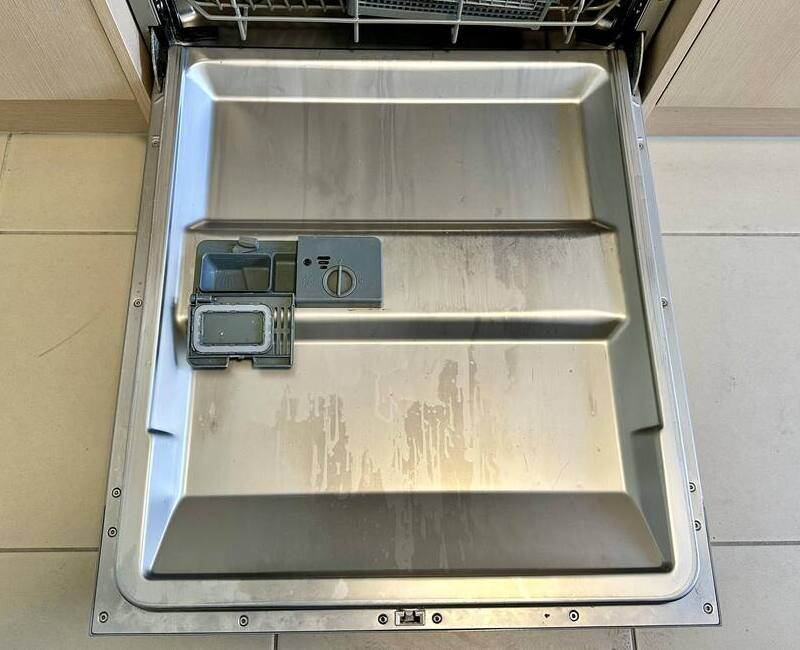
This is a common issue in Australia. If you live in a hard water area, minerals like calcium and magnesium can be left behind on dishes after the water dries.
Mineral deposits (also called limescale) appear white or light grey, hard, and chalky. You may also get cloudy or streaky glassware.
Moreover, when hard water reacts with dishwasher detergent, it can create soap scum. This appears as a thin, waxy film on your dishes.
How to fix it:
Minimise hard water deposits by using a rinse aid or dishwasher salts, or adding white vinegar to the rinse cycle every few weeks. These help soften the water or prevent mineral buildup.
Alternatively, consider installing a water softener in your water supply.
You can also descale your dishwasher! Add a cup of white vinegar to a dishwasher-safe container, then place it on the top rack. Run a short, hot cycle to rinse out mineral deposits.
Only do this every 3–4 months, since repeated and prolonged contact with vinegar could dry out the rubber seals on the dishwasher door.
If you need more frequent descaling, consider a dishwasher-safe commercial descaler or dishwasher cleaner.
6. Low water temperature
Dishwashers use hot water to break down food residue and sanitise your dishes (alongside the detergent). Many modern dishwashers reach temps of 49º–64ºC for standard washes and up to 80ºC for rinsing.
If the water temperature is too low, the water won’t dissolve grease and food debris properly.
On the other hand, a too-high temperature can scald delicate items like aluminium, so those will need gentler cycles.
How to fix it:
Check that your dishwasher is reaching the correct temperatures. The minimum manufacturers aim for is 49ºC, the same as at-home water heaters.
If your dishwasher is connected to a hot water tap or water heater, run the water for around 30 seconds before you start a load. That ensures only hot water enters the dishwasher.
But if your dishwasher heats the water by itself, inspect the heating element or check the thermostat. Any issues there will need professional repairs.
7. Clogged spray arm
The dishwasher spray arms release strong jets of water to remove grime from the dishes. They’re located above and/or below the racks, with water coming from small holes or nozzles (called jets).
Over time, soap residue and food particles can get into those jets and block the water coming out. Hard water deposits may also build up as water dries.
That reduces the water pressure from the jets, so your dishwasher can’t wash or rinse off dirt.
How to fix it:
Consult your owner’s manual for instructions to remove the spray arms. Modern dishwashers have 1–3 sprayers: top, middle, and/or bottom. Check which dishes are staying dirty; if it’s only the top rack, then it’s the upper spray arm, and so on.
In mild cases, use a toothpick or old toothbrush to dislodge the debris. However, for more stubborn dirt or mineral buildup, soak the spray arms in equal parts white vinegar and water for 10–15 minutes.
Scrub them clean with some dish soap and a soft brush, then rinse thoroughly. If the jets are clear, you should see water draining out of them.
Reinstall the arms and give them a spin to ensure they’re firmly in place.
Prevent clogging in the future by checking the spray arms regularly and cleaning your dishwasher (sprayers and all) once a month.
8. Clogged dishwasher drain
If your dishes are coming out of the dishwasher dirty and there’s standing water inside, the issue is likely the drain.
Food bits, grease, and other residue can accumulate in the drain and prevent the dishwasher from emptying properly. This usually happens with a broken or dirty filter, or when large bits of food aren’t scraped off before loading.
Pooling water could also lead to unpleasant odours, or health concerns like mould and bacteria growth.
How to fix it:
Take out the bottom rack, spray arm, and filter so you can access the drain. Shine a torch (or use your phone’s flashlight) to do a visual check for any blockages.
Lift out any solid debris with a spoon or paper towels, then pour some hot (not boiling) water into the drain. Leave it for 15–20 minutes to dissolve any residue.
If that doesn’t work, call in a professional. Then prevent future clogs by cleaning the dishwasher drain regularly.
9. Broken soap dispenser
Say you’ve loaded the dishes properly, used the right detergent, and selected the right setting. And yet, your dishes are still dirty after a dishwasher cycle.
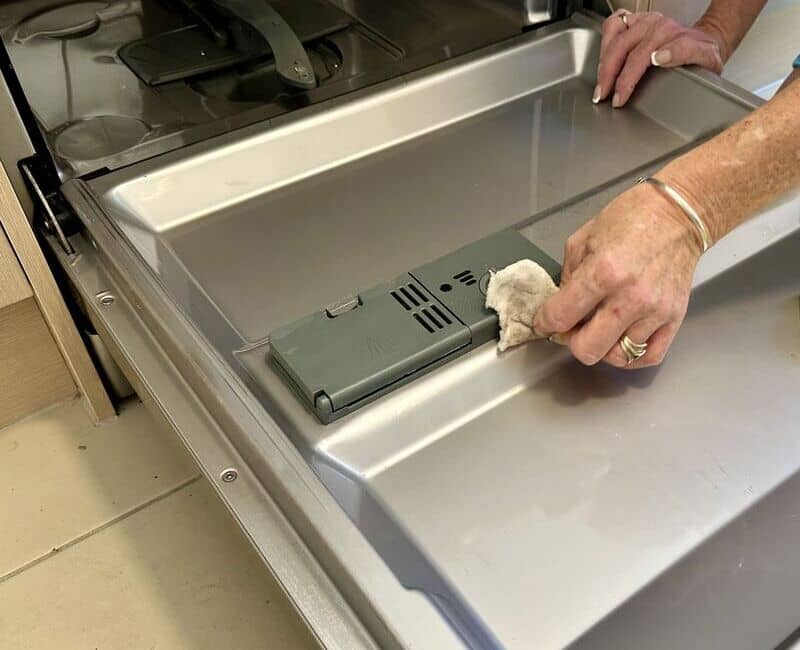
Check the soap dispenser — if the detergent is still inside, that’s the likely culprit. For models with a rinse aid dispenser, inspect that too.
The spring or hinge may be stuck with dried detergent, mineral deposits, or even rust. It’s also possible the latch broke.
If the hinge is working, it may be a software issue instead, as the dishwasher isn’t triggering the dispenser door at the right time. In that case, you’ll need to contact the manufacturer for servicing.
How to fix it:
Use a dull knife (like a butter knife) or flathead screwdriver to gently scrape off any dried detergent. Be careful not to scratch or crack anything inside!
Combine equal parts vinegar and hot water, then add a small amount to the dispenser. Let it sit for 15–20 minutes to break down any stubborn buildup.
Afterwards, use a small brush and some soap to scrub the detergent dispenser clean. Then dry the area thoroughly with a paper towel or soft cloth.
If the hinge, spring, gasket, or latch is broken, though, check the manufacturer’s website for replacement parts. You can also contact a professional for repairs.
10. Faulty inlet valve
If your dishwasher isn’t filling up with enough water — or you hear a hammering or knocking noise during the filling cycle — you may have a broken inlet valve.
The inlet valve controls the flow of water into your dishwasher. If it’s malfunctioning, the appliance won’t take in enough hot water to wet and rinse the dishes.
How to fix it:
You’ll usually find the inlet valve near the access panel of your dishwasher. Consult the owner’s manual if you’re unsure.
Switch off the power and water to your dishwasher, then do a visual check on the valve. Look for physical damage like cracks, warping, or corrosion, or problems like a water leak. If you find any, contact a professional for repairs.
You can also locate the valve’s filter screen, a small mesh part where the water supply connects. The issue may just be a dirty screen, which you can wash with some soap and warm water.
11. Water supply issues
Sometimes, the issue isn’t with the dishwasher itself! Water pressure or volume is another reason why your dishwasher is not cleaning properly.
Low water pressure means the spray arm won’t rotate properly or release enough water, leading to inadequate wetting and rinsing. Weak water flow can’t “blast” off grime, either.
How to fix it:
Check your water supplier first to see whether there’s an issue with water pressure in your suburb or city. If yes, wait until the issue has been resolved before running a cycle.
You can also inspect the dishwasher’s water supply hose or the connected tap. Someone may have accidentally closed the tap or blocked the hose. Then all you need to do is reopen them!
Otherwise, check the water flow in other areas of your house. If it’s consistently weak, contact a plumber straight away.
Other Dishwasher Concerns
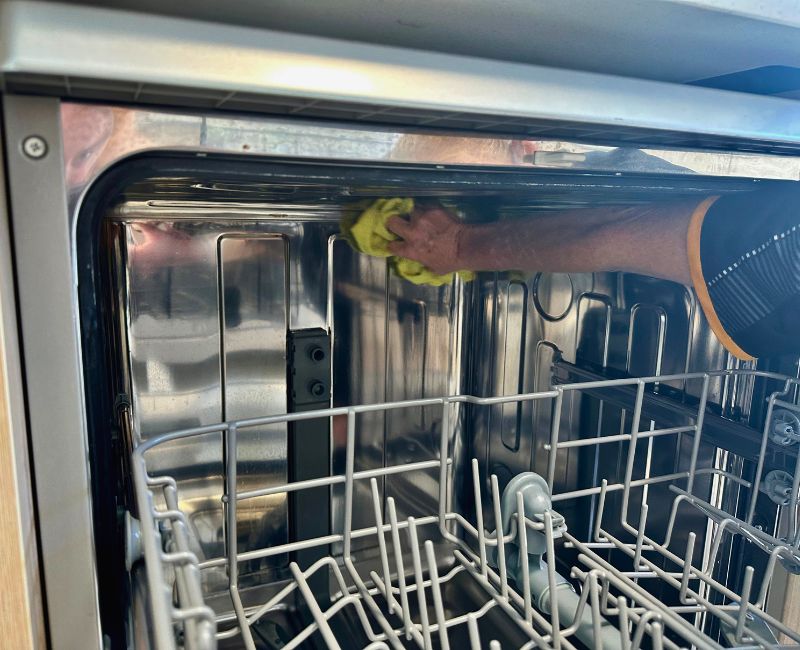
We’ll break down a few other specific problems people have when their dishwasher doesn’t clean properly.
Why is the dishwasher not cleaning dishes on the top rack?
If your dishwasher isn’t cleaning the top-rack dishes, the most likely reasons are:
- A clogged upper spray arm
- Dishes facing the wrong way
- Inadequate dishwasher detergent
- Something blocking the spray arm
Another reason might be the dishwasher design. Some models only have lower sprayers, so items on the lower rack could impede the water. Large items (like an oven tray) or overcrowded racks are the usual culprits.
But if none of those check out, it may be a water pressure issue.
Why is my dishwasher leaving residue even after cleaning?
Inspect the residue itself — how it looks and feels will usually tell you why your dishwasher is leaving residue on your dishes.
| RESIDUE | CAUSE | FIX |
| White, chalky deposits | Minerals from hard water | Add rinse aid, vinegar, or water softener to the dishwasher rinse cycle |
| Sticky or greasy residue | Fats or grease weren’t washed away | Make sure the water temperature is correct and use a good detergent |
| Waxy or gritty residue | Undissolved or too much dishwasher detergent | Use the correct cycle and amount of detergent |
Why are my glasses coming out cloudy from the dishwasher?
There are typically 2 causes for cloudy glassware in a dishwasher: hard water deposits or permanent etching.
Minerals from hard water should come off when wiped with a mix of equal parts water and vinegar (or lemon juice). Consider a rinse aid or softener to tackle the hard water issue.
However, if the cloudiness can’t be cleaned off, the damage is likely permanent. Glass can be etched from a combination of soft water, excessive detergent, and high heat.
This is especially common with powder detergents, since they tend to be more alkaline than tablets or liquids. If they don’t fully dissolve, the concentrated granules could then etch the glass.
You can prevent etching by skipping the heated drying cycle for glassware, using a gentler cycle, or even avoiding powder detergent entirely. Or stick to handwashing for fine glassware and leave the dishwasher for sturdier stuff!
