
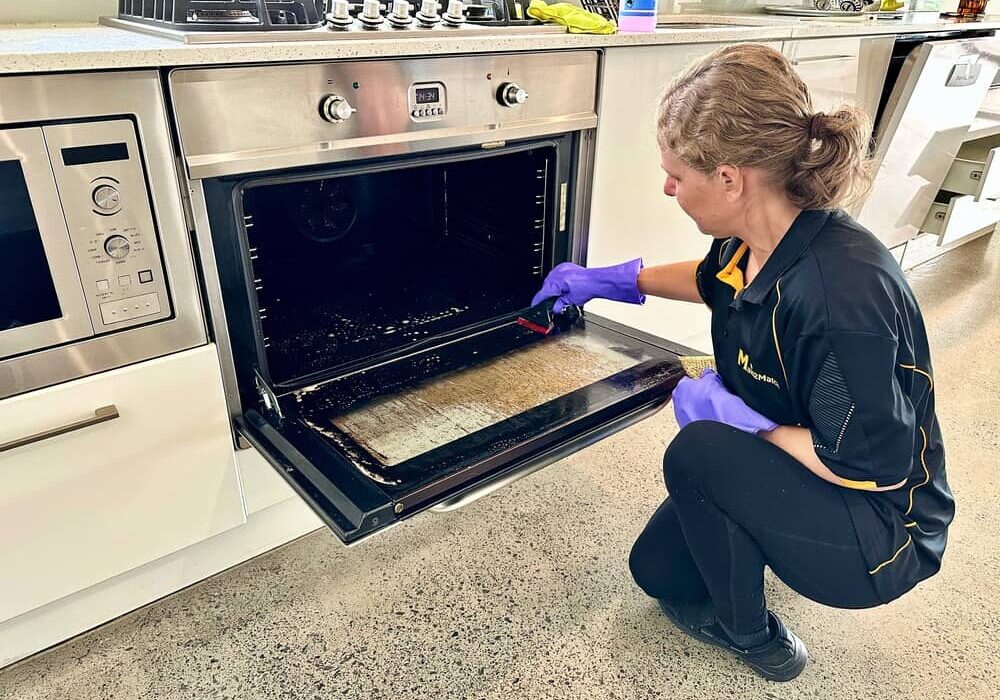
Most of us are guilty of ignoring a dirty oven door.
After cooking, it’s easy to close the door and forget about the mess — until the next time you roast some vegetables and can barely see through the glass.
Oils and food splatters become harder to remove the longer they’re left on the oven glass, since heat “bakes” them onto the surface.
Fortunately, one of the most effective cleaning methods might already be in your cupboard: baking soda.
Just mix baking soda and a little water to make a thick paste, apply it onto the glass, and prepare to do some scrubbing. You may also use a dedicated cleaner if you’d rather not mix ingredients.
A clean oven door can make your kitchen look instantly fresher. Whether you’re tackling the inside of the glass, the outside, or the tricky space between the panes, this guide has you covered!
Before Cleaning | Preparing for Cleaning | Cleaning with Baking Soda | Cleaning Without Baking Soda | Cleaning Between the Glass | Cleaning the Outside | Removing Stubborn Stains | Maintenance Tips
How Often Should You Clean the Oven Glass?
It depends on how often you use the oven and what you cook in it.
The rule of thumb is to give the inside of the oven glass a quick clean once a week. Then, do a deep clean — including between the glass — every 3 months.
You can go longer between deep cleans if you don’t use your oven often. Watch for signs that it’s time to clean, such as the glass looking cloudy or visible brown stains.
If the buildup has gotten out of hand or you want a break from chores, we suggest booking an oven clean with an experienced home cleaner!
Before Cleaning Oven Glass
Fully cleaning oven glass can be a bit of a job. A few precautions and prep steps can make the cleaning process more efficient!
General safety precautions
Before cleaning the glass, switch off and unplug the oven.
If you just baked or roasted something, let the oven cool down first.
Never clean the glass while it’s still hot! Aside from the risk of burns, sudden temperature changes (like from water) can crack tempered glass.
What you need to clean the oven glass
One of the best ways to clean an oven glass door is with baking soda!
Its alkaline pH effectively breaks down acidic stains like grease and oils. It also loosens stuck-on residue, since it’s a gentle abrasive.
Don’t worry, though — it’s softer than an oven’s tempered glass, so it won’t scratch the surface.
In addition to baking soda, you’ll also need:
- Dish soap
- Warm water
- Spray bottle
- Paper towels
- Microfibre cloths
- A non-abrasive sponge
Also, wear rubber gloves to protect your hands or avoid touching grease.
If you’re using a stronger cleaning product, you’ll need a face mask, since fumes may be strong.
Lastly, ensure proper ventilation by opening a window or switching on the exhaust fan.
What not to clean the oven glass with
It might be tempting to grab a heavy-duty, green scouring pad or even a standard steel wool to tackle that brown crust, but don’t do it!
These are too abrasive and can leave tiny scratches that weaken the glass over time.
Most ovens use plain tempered glass, which can handle careful scraping or scrubbing.
However, higher-end models with self-cleaning functions typically use a glass with a protective layer. That coating can be easily damaged by scrapers or even ultra-fine steel wool.
Avoid harsh chemical cleaners, too, so no bleach and ammonia! They can cause permanent damage, especially to the door seals or the frame around the glass.
If you need a dedicated oven cleaner for heavy buildup, be mindful not to use it near the door seals. Once they’re damaged, heat can leak out during cooking, making the oven less efficient.
Whenever in doubt, read the label on your cleaning product to check that it’s glass-safe. You can also spot test it on a small, inconspicuous area.
Can a self-cleaning mode work on the oven glass door?
It helps, but it won’t clean the whole door.
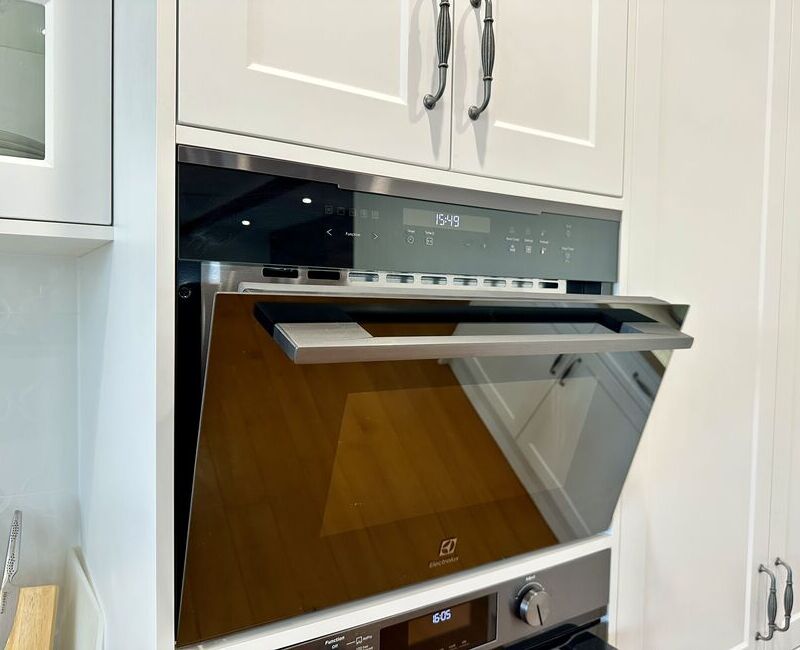
Some ovens have a self-cleaning function, aka a pyrolytic cycle. It uses extremely high heat (400°C–500°C) to break down grease, fat, and food residue inside the oven. The residue becomes carbonised, meaning it’s turned into ash so it’s easier to wipe away.
Self-cleaning is a useful shortcut, particularly when deep cleaning the entire oven.
But if you’re tackling the oven glass specifically, the self-cleaning cycle only works on the interior-facing side. It won’t reach the space between the glass.
For ovens without a pyrolytic mode, you can still get the glass clean — it just takes a bit more elbow grease.
Should you remove the oven door for cleaning?
Not for a quick wipe-down! But if you’re deep cleaning a very dirty oven glass door, detaching it lets you do a more thorough job.
Start by laying some towels on the floor or on the benchtop. This gives you a soft surface to place the oven door or glass on.
Then, check the oven’s manual or the manufacturer’s website for instructions on how to remove the oven door.
In many ovens, you’ll need to tilt the door to around 75° before lifting it off the hinges.
On the other hand, some models let you slide the glass panels out without taking off the entire door. They usually have buttons on the sides that release the glass when pressed.
Just be careful — the glass is heavy, and the door can suddenly snap shut! Find someone to help you with this, if necessary.
TIP: Take a photo before disassembling anything, so you’ll know where everything goes later.
How to Clean a Glass Oven Door With Baking Soda
To deep clean the interior side of the oven glass, make a simple baking soda paste.
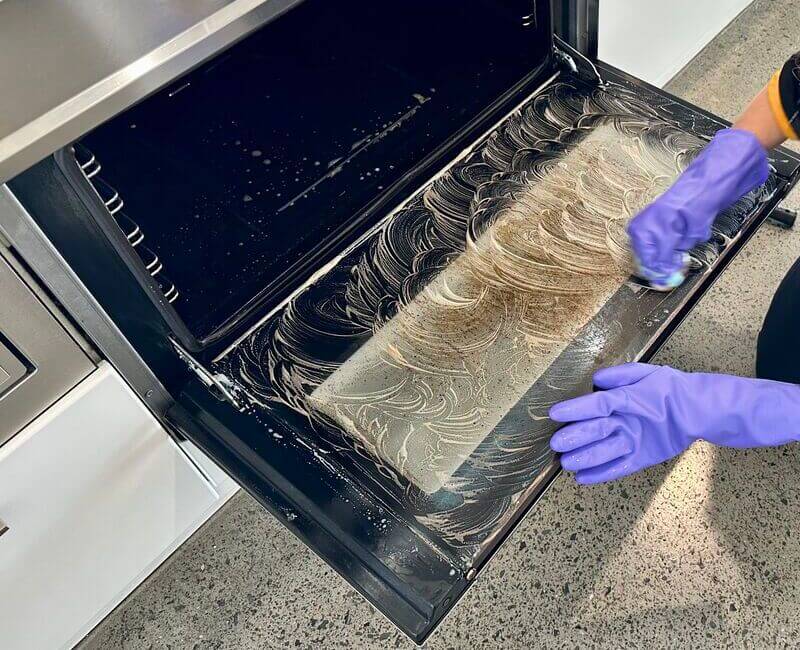
Mix 3 parts baking soda and 1 part water in a bowl, and add a squirt or two of dish soap for extra cleaning power.
Use a soft sponge or a microfibre cloth to spread the paste over the glass — the entire surface should be covered.
Let the paste sit for 15–20 minutes, or up to 30 minutes for heavier buildup. The baking soda will need time to react with and soften the baked-on grease.
Next, gently scrub the surface with a damp, non-scratch scouring pad or rag. Use circular motions, paying extra attention to tough buildup.
Wipe away all residue with a clean, damp cloth afterwards. Baking soda can leave behind a white haze, so you may need to go over the surface a couple of times until it’s completely clear.
Finish by drying the oven glass with a microfibre cloth for a streak-free shine!
How to Clean Oven Glass Without Baking Soda
Ran out of baking soda or just want a less messy method? Steam cleaning or a commercial oven cleaner can get the job done!
Option 1: Steam cleaning + dish soap
Steam is great for loosening baked-on grease and food residue on oven glass.
Fill an oven-safe bowl with water, and place it inside the oven. Heat to 100°C–120°C, then leave it for around 20 minutes so the steam can soften the buildup.
Turn off the oven and allow it to cool. Once it’s safe to touch, wipe away the loosened grime with a soft, damp cloth.
If any stains remain on the glass, spray them with a mix of warm water and a squirt of dish soap. Let it sit for 5–10 minutes, then gently scrub with a non-abrasive pad or an old toothbrush.
Rinse the surface with a clean towel dipped in plain water, then go over the oven glass dry with a separate rag.
TIP: Steam cleaning also loosens grease and residue buildup on oven racks and the inside of the appliance, so that might be a good time to refresh them, too!
Option 2: Commercial oven cleaner
For extremely stubborn grease, you may need a specialised oven glass cleaner.
Always read the label — some oven cleaners are not suitable for glass!
Most commercial formulas contain sodium hydroxide (caustic soda), which effectively removes heavy grease, burnt residue, or stuck-on food bits. However, it can also be too harsh and may etch the glass if left too long or not rinsed thoroughly.
Once you confirm that the product is safe for the oven glass, follow the directions to prevent any damage.
When you’re done, wipe the oven glass thoroughly with a clean, damp cloth to remove any chemical residue. Go over it again if needed, then dry completely before closing the oven door.
Cleaning Between the Glass Panes of an Oven Door
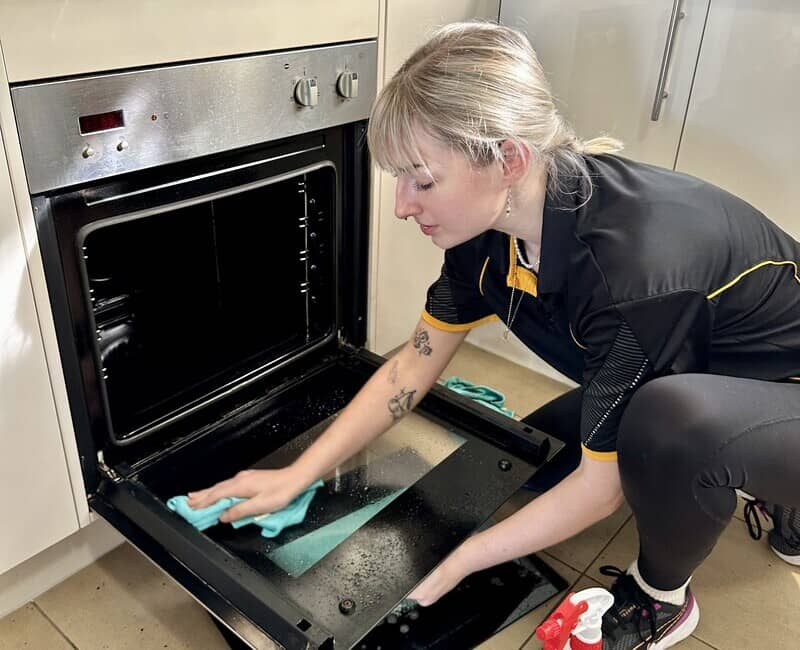
Most oven doors have two or three glass panes. Over time, moisture and grease can get trapped between the inner glass and the outer glass.
The panes are easier to clean if you disassemble the oven door. But if the area isn’t that dirty, you can clean it without taking the door apart!
Without removing the oven door
To clean between the oven glass with the door still attached, you’ll need a long, thin tool. A straightened wire hanger can work!
Wrap one end in a thin cloth or some paper towels, and secure it with a rubber band.
Lightly dampen it with warm, soapy water, but avoid soaking it — excess moisture can be hard to wipe off later!
Insert the tool through the slot or vent at the base of the door. Move it side to side, like a windscreen wiper, to lift dirt and stains.
When it’s time to rinse, swap in a clean, damp cloth and repeat the motion. Then replace it again with a dry, lint-free cloth to absorb any remaining moisture between the oven glass.
After disassembling the oven door and glass
Once you’ve removed the door and the glass, place them flat on a sturdy surface lined with towels.
You can use a thick baking soda paste or your chosen oven cleaner on the glass.
If you’re using baking soda, give it 15–20 minutes to sit. For commercial cleaners, follow the timing on the label.
Afterwards, start scrubbing the surface. Use gentle pressure so you don’t leave scratches or scuff marks.
Wipe everything down with a damp cloth, then follow up with a dry microfibre cloth to prevent water marks.
While the glass panes are drying, don’t forget about the frame! Use a soft-bristled brush or an old toothbrush to remove any dust or grime stuck in the grooves.
After that, lightly wipe the frame with a damp cloth. Try not to use too much moisture, though. It can get into tight spaces where it won’t dry out and corrode the material.
Allow everything to air dry fully before reassembling the oven door.
Cleaning the Outside of an Oven Glass Door
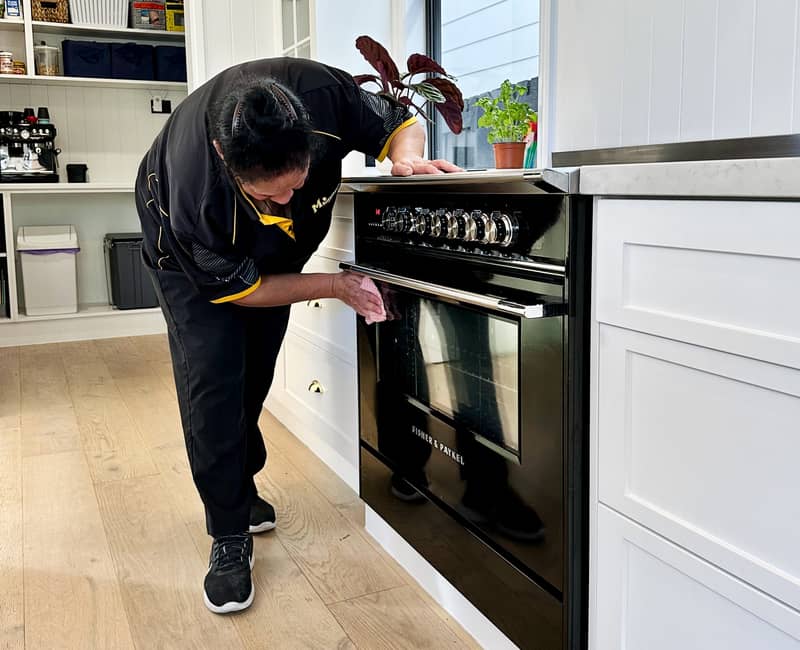
The outside of the oven door is usually the easiest to clean! A vinegar solution can handle most smudges and even make the surface shiny.
Mix equal parts vinegar and water with a few drops of dish detergent in a spray bottle.
Apply the solution onto a cloth or sponge. If you spray the surface directly, that risks moisture getting into crevices, which could lead to mould or rust.
Wipe down the surface, giving more attention to any greasy or sticky spots. For stains that won’t come off, spot clean them with a thick paste of baking soda.
Thoroughly rinse the surface with a damp rag, and dry it off with a lint-free cloth.
How to Remove Stubborn Stains From the Oven Glass
Still got brown stains on your oven glass? If another round of cleaning with baking soda or a commercial product doesn’t work, it might be time to physically scrape off the gunk.
But before you start, take some time to check the type of oven glass you have!
Checking your oven glass type
Take a moment to check your oven glass. Look up the oven model online, or read the manual.
If your oven has a self-cleaning function, it likely has a delicate protective coating. In that case, avoid scraping and stick with non-abrasive tools.
On the other hand, it’s usually safe to scrape or scrub plain tempered glass, so long as you use the right cleaning methods!
Using a magic eraser
A magic eraser can help with stubborn stains on the oven glass.
To clean the oven glass without scratching, make sure that the glass and the magic eraser are damp. This reduces friction and helps the eraser glide smoothly over the surface.
Rub the stains using light pressure. As you work, the eraser will crumble, so brush off the foam bits and any loosened stains frequently.
Once finished, give the oven glass a final wipe with a damp cloth to make sure no particles are left behind.
Using a cooktop scraper
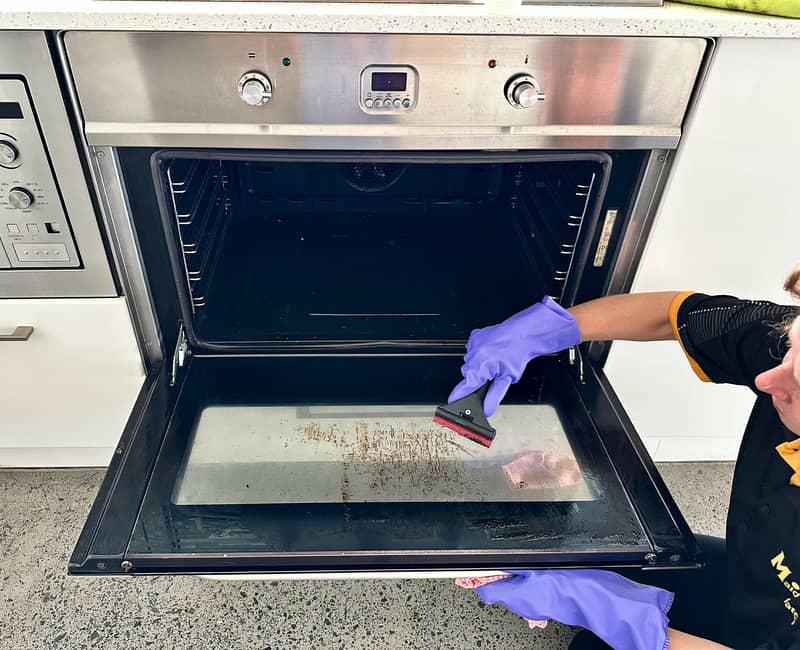
A cooktop scraper can safely lift heavily baked-on residue from oven glass.
If you don’t have one, a razor blade can work. Some people also use a plastic scraper, but it may not be as effective on stubborn grease marks.
Lightly dampen the glass and the scraper before you start.
Hold the scraper at a low angle (around 30°–40°). If it’s too steep or upright, you risk scratching the glass!
Use slow, steady strokes and do not press too hard. As the buildup lifts, wipe the blade regularly with a rag so you’re not dragging debris across the surface.
Once you’re done, wipe the oven glass clean and dry it thoroughly.
Using ultra-fine steel wool (grade #0000)
Ultra-fine steel wool — specifically grade #0000 — is another option for stubborn buildup. It’s fine enough to clean without scratching the glass.
Coarser steel wool is too abrasive, though, so double-check what you buy!
Spray the surface with warm, soapy water first, then lightly buff away the crusty spots.
As the residue loosens, brush it off the surface. Use a clean, damp cloth to remove any leftover debris, then dry the glass for a clear finish.
Tips to Keep Your Oven Glass Clean
Dealing with a very greasy oven glass isn’t easy, but a few small habits can make the cleaning process much simpler!
Splatters on the oven door usually come from fats and juices that pop off during roasting.
To cut down the mess, loosely cover the food with foil. You may also use a roasting pan with a lid.
A quick clean after using the oven also helps prevent grease and food particles from getting “baked” onto the glass. The best time to do this is while the oven is still slightly warm from cooking.
Wipe the oven glass with a cloth dipped in warm, soapy water. At this point, grease and food residue haven’t fully hardened, so they come off much more easily.
You can also steam clean the oven about once a week. And don’t forget to wipe the outside of the oven door every couple of days to stop dust and grime from accumulating.
FAQs About Oven Glass Cleaning
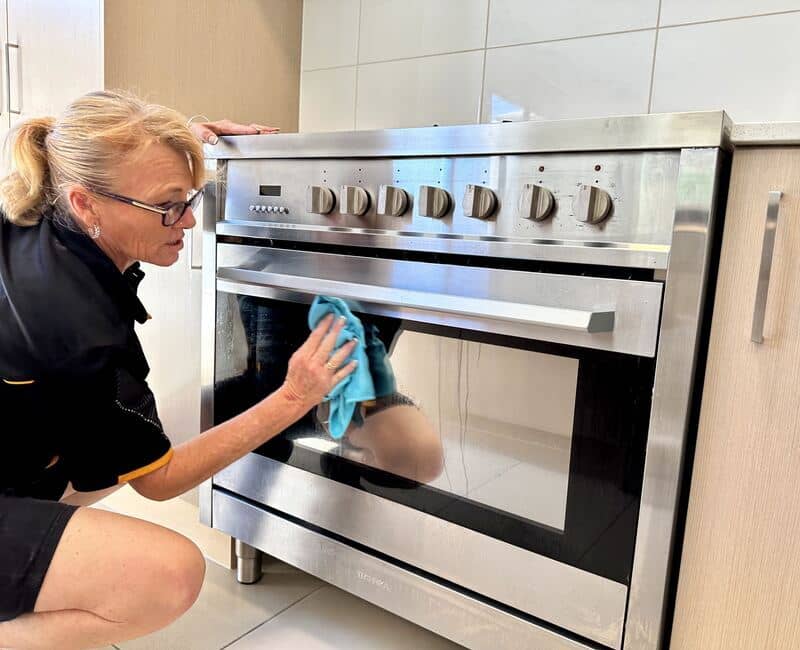
Wondering what else works on greasy oven glass? Here’s what to know!
Can you use sugar soap to clean an oven glass?
Yes — sugar soap is an alkaline cleaner, so it can cut through grease on oven glass. It’s a good option if you already have some at home.
Since it’s strong, dilute it first according to the label directions — typically about 1 part sugar soap to 10 parts water.
Spritz the solution onto a damp sponge or cloth, instead of spraying it directly onto the oven glass.
Gently scrub any greasy spots, then rinse everything with a damp, clean towel. Go over the glass a couple of times to make sure there’s no residue left behind.
Sugar soap can make the glass look hazy if it’s not rinsed thoroughly!
Can you use vinegar to clean an oven glass?
Yes, but it works best on light buildup!
White vinegar is acidic, so it’s not very effective at cutting through heavy grease. (This is also true for other acidic cleaners, like lemon juice.)
Mixing vinegar with baking soda is not effective, either — they will only neutralise each other when combined!
For light smudges and stains, a solution of 1:1 vinegar and water works. Simply spritz it onto the surface, let it sit for a few minutes, then scrub gently with a damp cloth.
Vinegar can also help give your oven glass some extra shine. It removes water spots or any residue from cleaning products, leaving the glass streak-free.
After scrubbing all grease buildup on the oven glass, rinse it with a damp cloth. This ensures that you’re not mixing vinegar with other cleaning solutions or chemicals.
Then, combine 1 part vinegar with 4 parts water in a spray bottle. Spray it onto a dry microfibre cloth, then buff the surface.
Can you use a glass cleaner on the oven door?
Yes, but only on the exterior!
A commercial glass cleaner is not suitable for the interior side of the oven glass, since it contains chemicals that may leave behind residues.
When heated, those chemicals can burn off and release toxic fumes directly into your food or into the kitchen.
It’s not effective on baked-on grease anyway, so it’s better to stick to gentler methods like baking soda.
Why does the oven glass still look dirty after cleaning?
This usually happens when residue from cleaning products hasn’t been fully rinsed off, or when grease has softened but not completely lifted!
You may need to do a final wipe and rinse. Spray the surface with warm, soapy water or 1:1 water and vinegar.
Wipe everything with a damp microfibre cloth, and dry the glass afterwards.
