
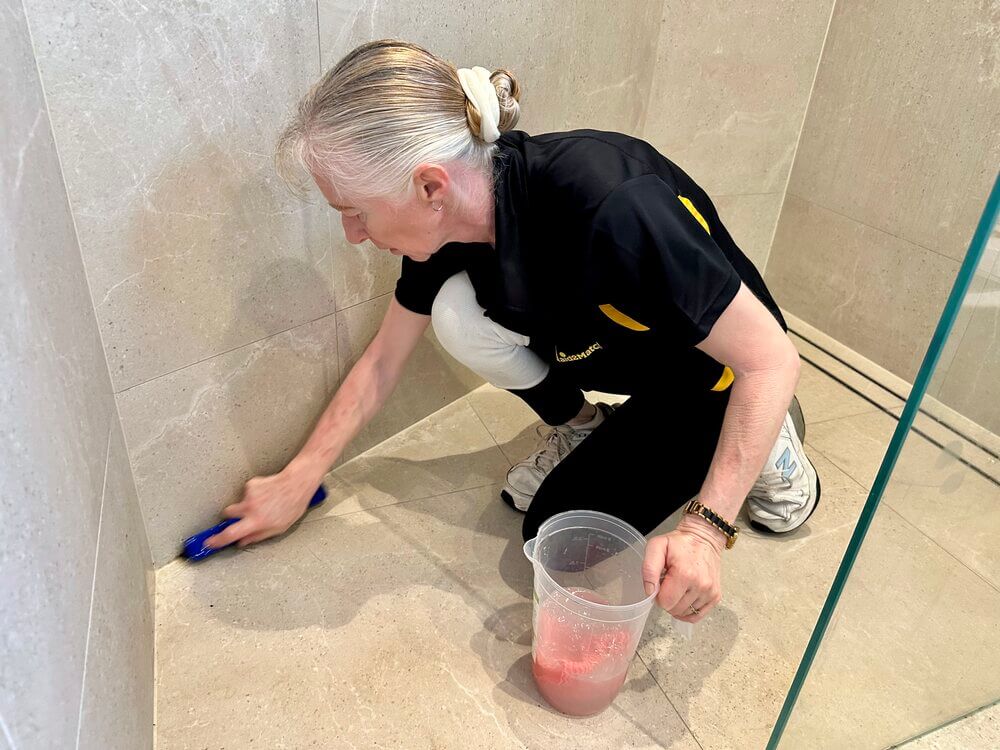
Floors can make or break the look of any space — including your shower. Even if all other surfaces are spotless, a grimy floor can still make the bathroom feel icky.
Unfortunately, shower floors get dirty fast. Water, skin cells, and soap can end up there, so they need regular attention.
But before you grab a brush, consider what your shower floor is made of to avoid any damage.
For most shower tiles, like ceramic or porcelain, a vinegar solution is suitable. But if you have natural stone floors, you’ll need a pH-neutral cleaner.
Looking for a step-by-step guide? This blog explains how to clean shower floors (and grout lines!), so your bathroom stays fresh and sparkling.
Grout Lines | Ceramic or Porcelain Tiles | Natural Stone | Pebble | Terrazzo | Plastic | Fibreglass | Wood
Why Clean Shower Floors
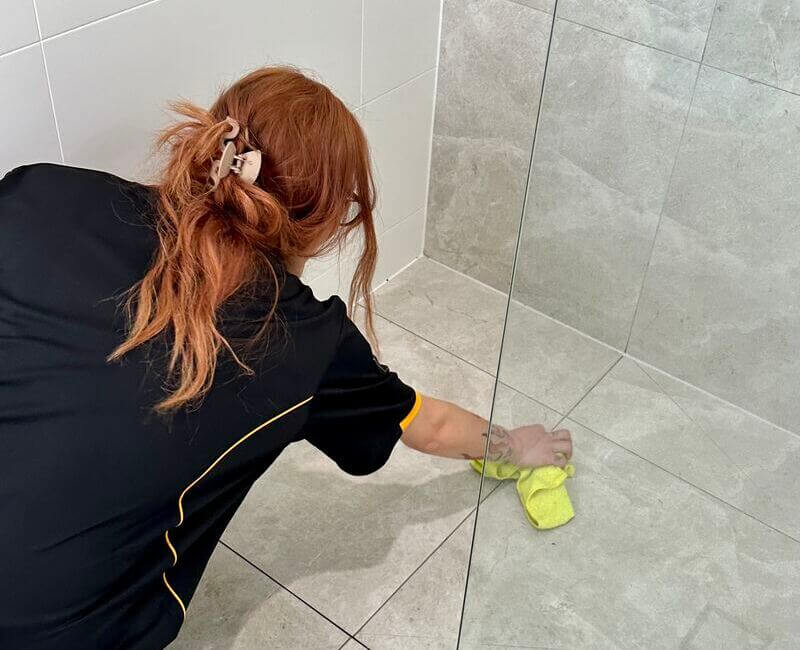
You might think that shower floors are always clean because they’re constantly rinsed with water. But nope, water cannot wash everything away!
Natural body oils, mineral deposits from hard water, and soap scum gradually build up on the floor and grout. Over time, these can lead to stubborn stains.
All that gunk also invites bacteria or mould, which may cause illness.
And honestly? No one wants to step into a grimy bathroom!
Cleaning every shower surface — including the floor — helps you maintain a welcoming and hygienic space.
How Often to Clean Shower Floors and Grout Lines
To keep buildup in check, spot clean shower floors and grout lines whenever you notice any stains.
Then, aim to scrub the entire floor at least once a week. Ideally, make it part of your shower maintenance routine!
Keep in mind that you might need to clean more frequently if you have hard water at home or if plenty of people use the bathroom.
Some shower floors (like pebble or other natural stone) can also get dirty faster, so they’d need more upkeep.
No time or energy for all that scrubbing? Leave it to professional house cleaners!
They can take care of the shower, bathroom, and everything else, so you can come back to a sparkling home.
Before Cleaning Shower Floors and Grout Lines
Before cleaning the bottom of your shower, take a moment to identify what it’s made of. This helps ensure that you’re using the right cleaning supplies!
You’ll also need to prepare the area first to make the process more efficient.
Consider the shower floor material
Shower floors can be made of different materials.
Ceramic and porcelain tiles are among the most popular. They’re both durable and non-porous, which makes them easy to clean.
There are also plastic and fibreglass shower floors. They require simple maintenance, but keep in mind that some finishes can dull or scratch easily.
Some showers may use natural stone (like granite or marble), pebble, or wooden floors.
These can be porous, especially if not properly sealed. That means highly alkaline or highly acidic liquids can seep in and etch the finish permanently.
To prevent damage, do not use vinegar, citric acid powder, or traditional all-purpose products. Instead, a specialised pH-neutral cleaner is usually the safest choice.
Choose the right cleaning tools and products
No matter what kind of floor you have, do not use abrasive scrubbers like steel wool or stiff brushes!
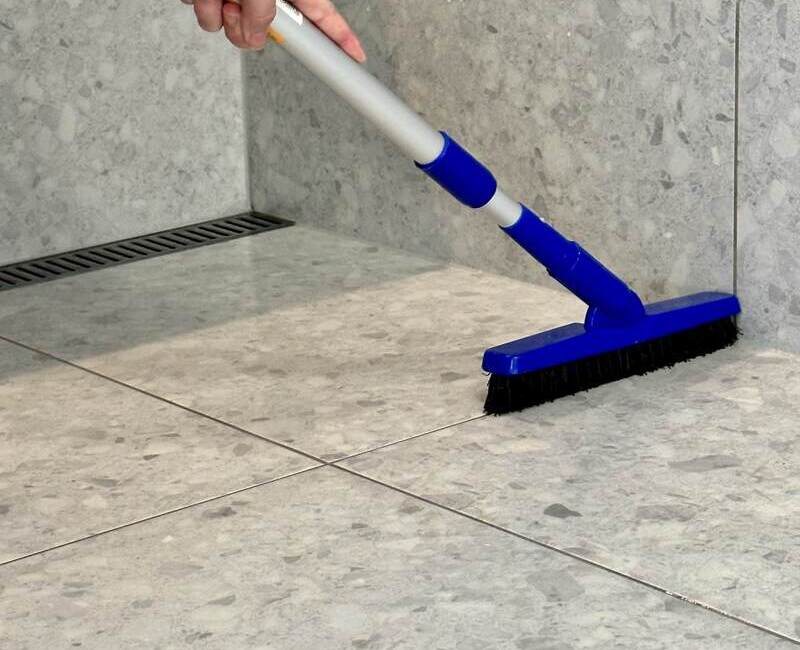
The best thing to clean a shower floor with is a soft-bristled brush, preferably one with a long handle. You’ll also need a floor mop and some microfibre cloths.
For grout lines, a grout brush or an old toothbrush works well.
As for cleaning solutions, avoid harsh chemicals like ammonia, bleach, or toilet bowl cleaners.
Whenever you’re unsure about a product, read any label first to confirm that it’s safe for your tiles and grout.
It also helps to do a quick spot test. Try a small amount of your cleaner in an inconspicuous area so you’re sure that it’s compatible.
Lastly, never combine different substances! For example, mixing bleach and vinegar creates a toxic gas that’s dangerous to breathe in.
If you need to use multiple solutions, rinse off the first one completely before applying another.
Finally, don’t forget to wear rubber gloves and a mask for your safety.
Prepare the area for cleaning
First, get some ventilation going. Open a window or turn on the exhaust fan, so any fumes from cleaning products dissipate quickly.
Clear the space so you have enough space to move around. Bring out bath mats, shampoo bottles, shower curtains, and towels — especially if you’re also tackling the rest of the bathroom.
Before getting the floor wet, give it a quick sweep. This removes all loose dust, debris, and hair so they don’t turn into a muddy mess later!
Next, check if the drain flows freely. If it’s clogged, clear the shower drain to avoid water pooling.
You also want to clean the upper areas first (like the shower head and shower glass), since any drips will naturally end up on the floor.
Cleaning Grout Lines on the Shower Floor
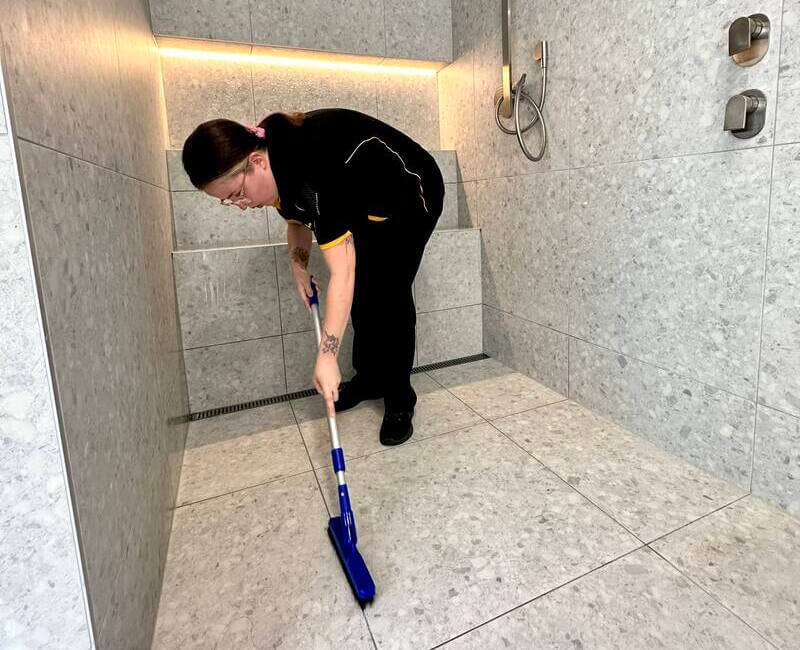
Ready to work on the shower floor? It’s more efficient to start by cleaning the grout, since any dirt can spread onto the tiles.
You don’t always have to do a full clean — spot treatments can go a long way!
Rinse the floor with warm water. Let it run for a few minutes to help loosen any stubborn stains.
Then, the cleaning method you’ll use on the grout depends on the type of floor you have:
- Ceramic, porcelain, plastic, or fibreglass floors: Use 1:1 vinegar and warm water
- Natural stone, pebble, or terrazzo floors: Mix 1 part 3% hydrogen peroxide and 2 parts baking soda
NOTE: Use baking soda paste alone for dark-coloured stone floors, as hydrogen peroxide can fade the finish!
Apply the cleaner directly onto the grout stains, and wait 10–15 minutes.
Gently scrub the marks with an old toothbrush. When the stains are gone, use the handheld shower head to rinse the surface.
You can also clean your grout without scrubbing if you’d rather skip the elbow grease. Just let the cleaning solution sit a bit longer, then rinse with warm water.
However, keep in mind that this may not work for tougher grime like orange stains or black marks on the grout.
Cleaning Different Types of Shower Floors
The best way to clean a shower floor depends on what it’s made of!
Non-porous materials can handle a range of cleaners, but porous surfaces like natural stone need a gentler approach.
How to clean ceramic or porcelain shower floors
What to use: Vinegar solution, all-purpose cleaner, or specialised shower floor cleaner
White vinegar is a highly effective cleaner that works on ceramic or porcelain shower floors.
Just mix equal parts white vinegar and warm water in a spray bottle. You can also add a few drops of dish soap to boost the solution.
Since vinegar contains acetic acid, it can break down hard water deposits and soap scum buildup.
Spritz the vinegar solution over the entire shower floor, then wait 10–15 minutes.
Gently scrub the surface with a soft-bristle brush. Work from one edge to the other, while paying attention to tough buildup.
(You can also clean shower tiles without scrubbing, especially if it’s not that dirty!)
Afterwards, rinse the floor thoroughly with fresh water. Dry the surface with a mop to avoid water spots.
How to clean a natural stone shower floor
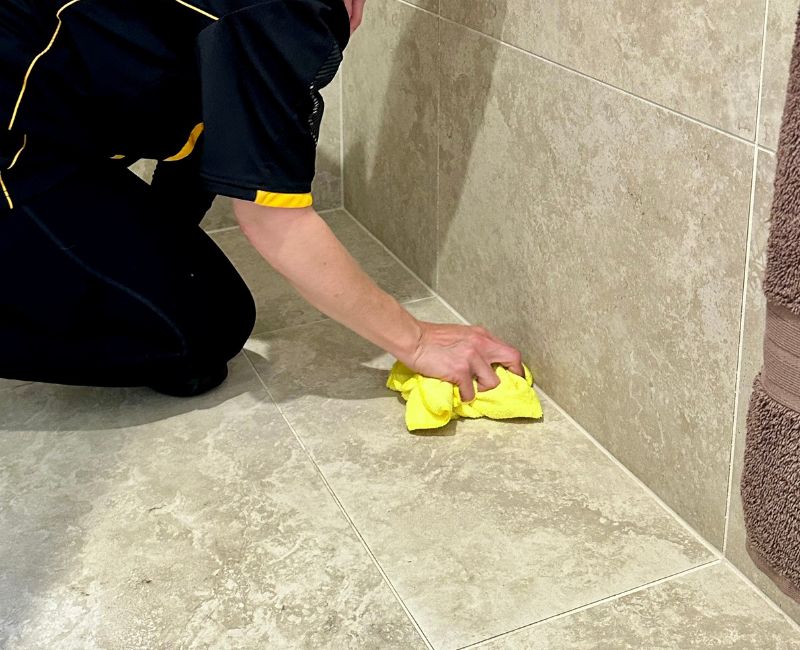
What to use: Very diluted dish soap or specialised pH-neutral cleaner
To clean stone shower floors like granite or marble, use a pH-neutral solution.
For regular upkeep, you can mix warm water with a few drops of mild dish soap in a spray bottle. But if the floor is heavily stained, you might need a specialised stone cleaner.
Apply your chosen solution onto the surface, and wait 10–15 minutes.
Wipe the shower floor with a gentle mop — save any light scrubbing for stubborn buildup.
Rinse everything well, and dry the surface with a clean towel to prevent water marks.
TIP: Natural stone floors need to be resealed regularly to protect the porous material underneath. Reach out to a specialist to keep your stone floor in great shape.
How to clean a pebble shower floor
What to use: Very diluted dish soap or specialised pH-neutral cleaner
Pebble floors add a spa-like feel to showers, but they’re notoriously hard to clean!
They’re essentially made from natural stone laid out on porous grout. Unfortunately, both the pebble and the grout tend to absorb stains.
A compatible cleaning solution for pebble shower floors is warm, soapy water or a pH-neutral stone cleaner.
Then, you’ll need a soft-bristle brush to loosen dirt. An old toothbrush also works well to get into tight crevices.
If you’re dealing with stubborn marks, switch to a slightly stiffer brush, but avoid anything that can scratch the stones.
How to clean a terrazzo shower floor
What to use: Very diluted dish soap or specialised pH-neutral cleaner
Terrazzo shower floors have a unique speckled appearance, as they’re made from a blend of different materials. That usually includes glass, natural stone, or quartz.
You can clean terrazzo tiles using a very diluted dish soap or a pH-neutral cleaner.
Apply the cleaning solution onto the tiles and leave it to work for up to 15 minutes. Mop the surface afterwards, spending a bit more time on tough stains.
Once you’re done, rinse and dry the floor thoroughly.
How to clean plastic shower floors
What to use: Vinegar solution, all-purpose cleaner, or specialised shower floor cleaner
Plastic flooring is typically made from acrylic or vinyl. These materials are durable, but they can still be sensitive to strong chemicals.
For regular cleaning, use 1:4 vinegar and warm water. An all-purpose cleaner also works, but check the label first!
Spray the solution onto the entire surface. Let it sit for several minutes to loosen heavy grime.
Use a soft brush over the surface, and take your time if you’re cleaning a textured shower floor. Finally, rinse clean and wipe everything dry.
How to clean fibreglass shower floors
What to use: Mild detergent, all-purpose cleaner, or specialised shower floor cleaner
Fibreglass floors are common in prefabricated shower units. They’re made from a blend of plastic and glass, and have a glossy, waterproof surface.
To protect that finish, use a gentle cleaning solution. Mix a small amount of mild detergent with warm water in a spray bottle, then spritz it evenly over the floor.
Gently go over the surface with a soft-bristled brush, taking care not to miss any spot. Wash off any residue, and dry the surface completely.
How to clean wood shower floors
What to use: Dish soap or pH-neutral wood cleaner
Unlike regular wood tiles that can be damaged by too much water, wood shower floors can handle constant moisture.
They usually have a waterproof finish, but harsh chemicals can strip off that layer!
If you have a slatted grate or wooden mat, they’re usually removable — take them out first so you can clean all sides.
Apply warm, soapy water or a pH-neutral wood cleaner onto the surface, and use a soft sponge to remove buildup. Rinse and dry thoroughly afterwards.
Occasionally, you’ll need to re-oil your wood shower floor to preserve the finish. You can use teak oil or another natural wood oil.
Read the label to confirm that the product is designed for wet environments, then follow the directions carefully.
How to Remove Tough Stains From Shower Floors
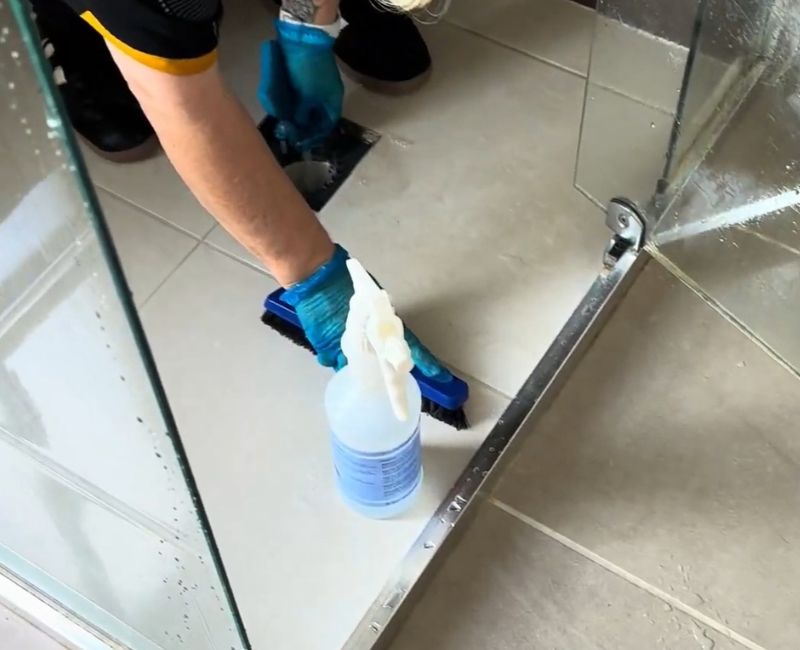
Even after a good scrub, some stubborn stains can remain on the shower floor.
Don’t worry, we’ve got tips to get rid of them! Just remember that most of these are suitable for non-porous materials like ceramic, porcelain, or plastic.
If you have a natural stone or wood floor, it’s best to use a specialised stain remover that’s labelled safe for that specific material.
Limescale
To get rid of limescale on shower floors, try a mixture of 1:1 vinegar and warm water with a few drops of dish soap.
Spray the solution onto the stained area. Wait 10–15 minutes to let it dissolve the buildup.
Gently scrub the marks until they disappear. Wash the surface with clean water, then dry everything with a fresh mop.
Mould
To remove mould from shower floors, use undiluted white vinegar!
Apply the vinegar directly to the mouldy part of the floor. Leave it there for about 1 hour to kill the fungi.
Scrub any leftover surface stains with a soft sponge or cloth. Once everything is clean, rinse and dry the shower floor thoroughly.
Rust
Rust stains are common in bathroom and shower tiles, especially if metal items are left on the floor.
They’re easier to clean when fresh, so tackle them as soon as you notice them.
Make a thick baking soda paste and apply it over the rust using a soft sponge.
Let it sit for a few minutes, then scrub in circular motions with a soft brush. Wipe away the residue with a damp cloth.
If the stain remains, switch to a specialised rust remover and follow the product instructions.
Soap scum
Citric acid powder can effectively remove soap scum from shower floors!
You’ll have to dilute it first — combine 1 part citric acid powder and 10 parts warm water in a spray bottle. Apply it onto the stain, and leave it for a few minutes.
If you don’t have citric acid powder, you can use fresh lemon juice. Cut a lemon in half, then gently rub it over the affected area.
Use a soft brush to loosen the grime, then rinse thoroughly. Citric acid can leave a whitish residue if not washed away completely!
More Tips to Keep Your Shower Floor Clean

It’s normal for shower floors to get grimy quickly, but there are simple ways to prevent a heavy buildup.
The golden rule is to dry the floor (and other surfaces) after you shower. This is especially important for porous materials like natural stone and pebble.
Start with vertical surfaces — run a squeegee over shower doors and walls, and push excess water on the floor towards the drain.
Let the exhaust fan run for a few minutes after using the bathroom, or leave the door open for a while. That way, the entire room can air dry faster.
It also helps to keep a cleaning caddy nearby so you can tackle any stains ASAP.
Finally, regularly sweeping and mopping between your weekly cleans can keep the shower floor looking great!
FAQs About Cleaning Dirty Shower Floors
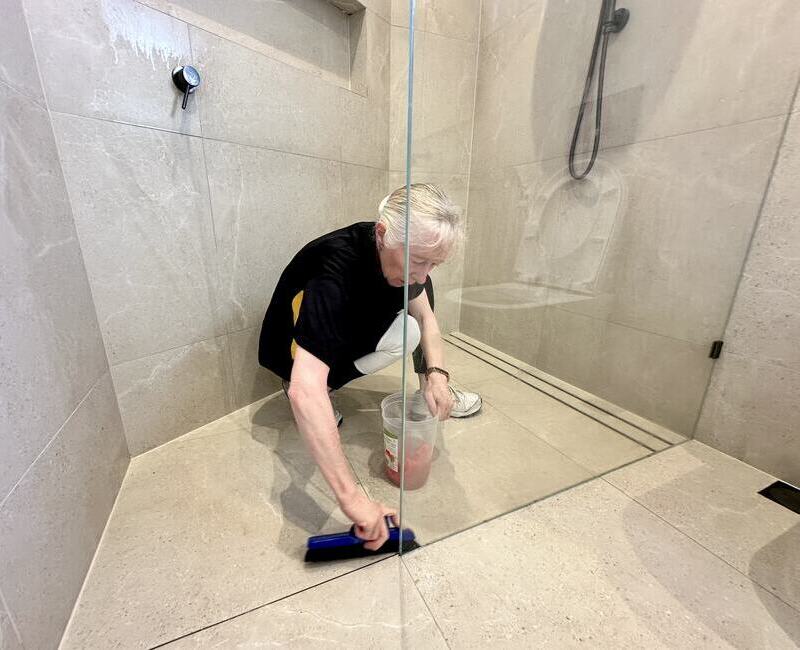
Need more cleaning tips for your shower floor? Here are a few more useful Q&As!
How to disinfect shower floors
You can disinfect shower floors with 3% hydrogen peroxide. This is safe for non-porous surfaces like ceramic, fibreglass, or plastic.
Spray it onto the surface, let it sit for 5–10 minutes, then rinse and dry.
For natural stone, you can use rubbing alcohol. Combine 2 parts rubbing alcohol and 1 part water in a spray bottle.
Apply it onto the surface, then wait for about a minute before wiping it off with a clean mop or cloth.
Can I use hot water for cleaning shower floors?
Warm water is usually enough for regular cleaning, since it’s safe for most shower floors. Plus, you don’t want to burn your skin while cleaning!
While hot water can help loosen thick grime, use it only when you really need to.
Even though most shower floors are heat-resistant, very hot water can still wear down the finish over time. It might also damage porous materials or floors with worn-out sealant!
Can I use a steam mop to clean shower floors?
It depends on the surface, but in many cases, it’s better to avoid it!
Steam mops usually heat water to 100°C–120°C. That high temperature can warp plastic flooring, weaken the sealant of natural stone, or damage grout.
However, you can use a steam mop on non-porous, heat-resistant flooring like ceramic or porcelain.
But even then, make sure first that the grout and the tiles are in good condition!
Can I use a pressure washer to clean a shower floor?
No, pressure washers are too strong for most indoor surfaces, including shower floors.
Even the lowest setting can damage grout or strip the finish of your tiles.
When cleaning a really dirty shower floor, it’s safer to use a specialised cleaner and a soft-bristle scrub brush.
