
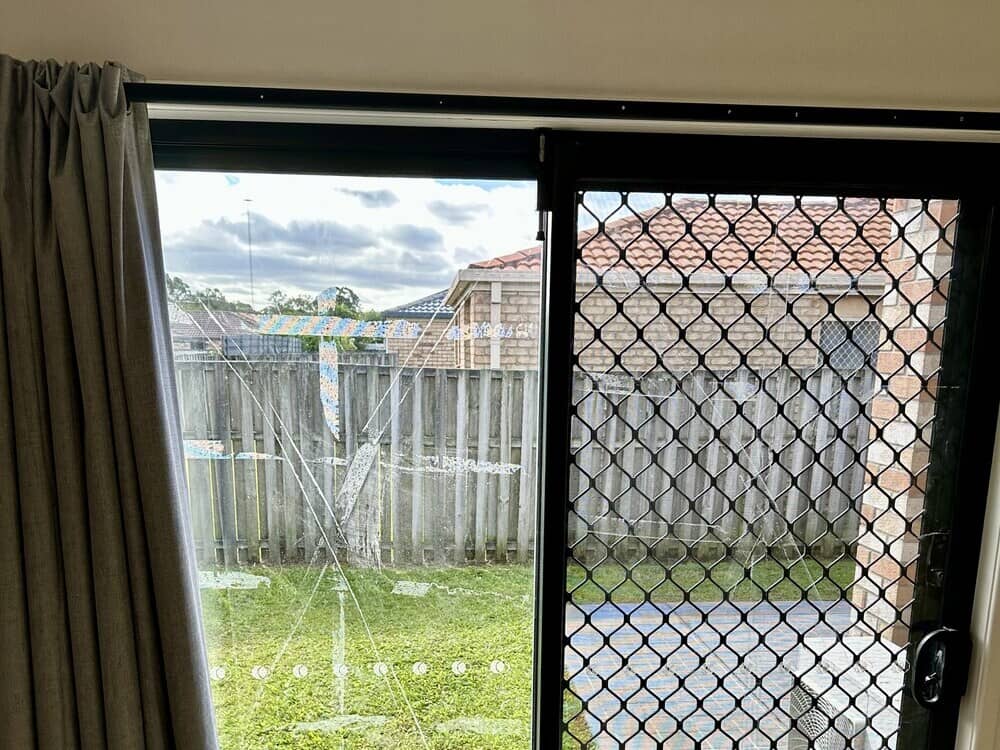
Security screens play a crucial role in your home. They keep out pesky bugs and burglars while letting fresh air flow in and giving you a good view outside.
When screens are really clean, it’s like they’re not even there! But just like everything else in your home, they can get dark and dingy over time.
Most security screens are fixed in place, but you can clean them without taking them down. Just run a vacuum cleaner over the mesh, then tackle heavy buildup with a soft brush and soapy water.
Ready to make your screens clear and bright again? Here’s a step-by-step guide on how to clean security screens (doors and windows)!
How Often to Clean | Before Cleaning | Cleaning Fixed Security Doors | Cleaning Security Window Screens | After Cleaning
Do Security Screens Need Cleaning?
Absolutely!
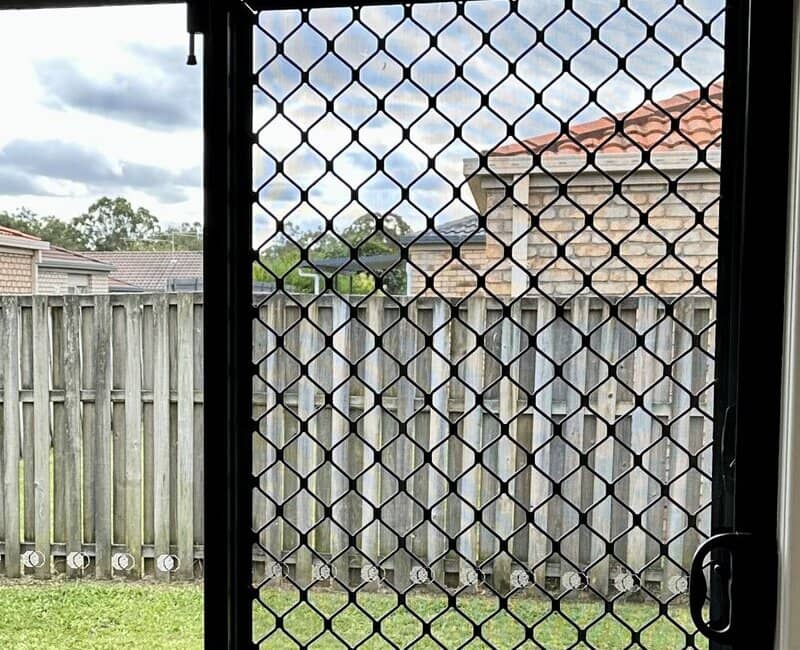
The tiny gaps in a security screen mesh are great for blocking insects, but they also trap all sorts of dirt. Dust, pollen, and even spider webs can get stuck onto the surface.
A dirty screen also affects the air quality indoors and blocks natural light, making your home feel less welcoming.
Sometimes, the buildup leads to permanent damage.
If you live near the coast, for example, sea winds can leave behind salt deposits in the mesh. These may speed up corrosion on stainless steel and other metals.
On the flip side, proper maintenance helps your screens last longer and saves you from pricey replacements!
How Often to Clean Security Screens
Vacuum or dust off your security screens at least once a month. Then, do a thorough wash every 3–6 months.
You might also need to clean your security screens more often during high-pollen seasons or if you live in a coastal area.
Rather rest than scrub? Let professional domestic cleaners handle the screens. They’ll also help you with other home cleaning tasks, so you’ll have more time to relax!
Before Cleaning Security Screens
Before you start cleaning, it helps to know how security screens differ from fly screens.
Gathering what you need and preparing the space properly will also make the task more efficient.
Security screens vs. fly screens
You might be wondering if security screens and fly screens are the same: they’re not!
Both of them keep bugs out while letting in more air and sunlight. However, fly screens are usually lightweight and can easily be taken down for cleaning.
On the other hand, security screens are typically fixed onto the door or window frame, since they’re designed for deterring intruders.
They’re also made from tougher materials (like aluminium and stainless steel) and can be heavier. That means you’ll usually need to clean security screens in place.
What you need to clean security screens
Gentle cleaning methods are best to prevent damage to the security screen’s protective coating!
Avoid abrasive cleaners that can scratch the finish, like steel wool or any stiff brush.
Skip harsh chemicals like bleach and ammonia, too. These can quickly discolour the surface, especially if you’re cleaning an unsealed metal screen door.
Instead, the best way to clean security screens is with a little dish soap mixed with warm water.
If you prefer other products (like specialised or multi-purpose cleaners), check the label or do a spot test first!
Try the cleaning solution on a tiny, inconspicuous area to make sure it’s safe for your security screen.
Then, keep these cleaning tools handy:
- Bucket
- Microfibre cloth
- Soft-bristled brush or soft sponge
- Vacuum cleaner with a soft brush attachment
How to prepare for cleaning security screens
Check if the security screen door is properly closed or locked so it won’t move while you clean.
As you work, dust and drips will likely land on the floor or the windowsill. To make cleanup easier, lay down some rags on those areas.
It also helps to wear a mask to avoid breathing in dust and allergens. And if you need to reach high areas, keep a ladder close by so you can work safely!
How to Clean Fixed Security Screen Doors
You can easily clean fixed security screen doors without removing them.
All you need is a vacuum cleaner for dusting, and a soft brush for deep cleaning!
Regular cleaning steps for security screen doors
A quick dry dusting is usually enough for routine upkeep. Use a vacuum cleaner with a soft brush attachment to remove all loose debris from the security screen mesh.
If you don’t have one, no worries — you can use a soft cloth or brush instead.
Work from the inside first. If you start outside, you might end up pushing more dust indoors.
Choose a low suction setting, then gently glide the vacuum over the surface. Use gentle, horizontal strokes, starting from the top and gradually working your way downwards.
Pay extra attention to corners and edges on your security screen door, as dirt tends to collect in narrow spots.
Once you’re done with one side, repeat the steps on the other so everything’s spotless!
Deep cleaning security screen doors
If it’s been a while since you last cleaned your security screen door, it probably needs a deeper wash.
Take care not to get the locks and handles too wet, though, as water can find its way inside the frame and cause rust.
First, vacuum both sides of the screen to remove loose dirt. This also helps you avoid smearing dirt and debris over the mesh surface.
Then, prepare your cleaning solution. Fill a bucket with warm water, add a bit of dish soap (or any mild detergent), and mix well.
Dip a soft-bristled brush into the soapy water, and squeeze out the excess moisture. The brush should be damp, not dripping!
Carefully scrub the mesh. It’s best to start at the top to make the cleaning process more efficient.
As you go, focus on any stubborn marks or buildup. For tiny crevices, an old toothbrush can be effective.
When you’re done with one side, switch over to the other.
Once the entire screen is spotless, rinse all soap residue using a cloth dampened with clean water. Gently pat the surface with a dry cloth to prevent water streaks, rust, and mould.
Finally, wait a few minutes to let everything air dry completely. You can also use a fan to speed things up.
How to Clean Security Window Screens
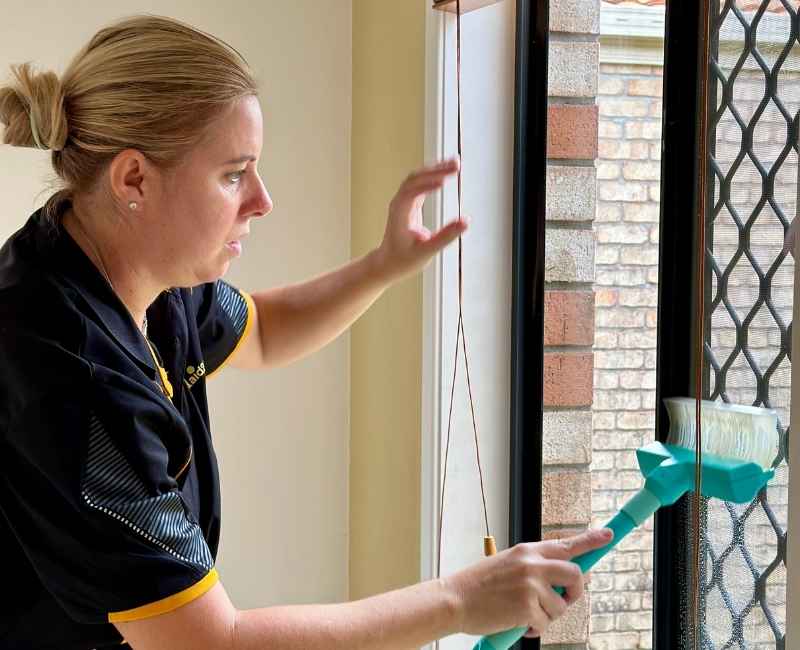
Need to clean windows with security screens? The steps are similar to how you clean screen doors.
You’ll need to clean them in place, since they’re usually fixed onto the window frame.
Start by vacuuming the mesh to remove loose dust. Then, you might need to go outside to work on the other side.
If the surface is very grimy, gently scrub it using a soft-bristled brush dipped in soapy water, focusing on stubborn spots.
Lightly scrub the screen with a damp, clean cloth to remove all remaining soap. Then, let it air-dry or wipe it with a clean towel.
Once you’re done with the screen, clean the window panels.
For sliding windows, remove them from the frame so you can access both sides of the glass. They usually lift out easily, but be careful as they can be heavy.
NOTE: If your windows are on an upper floor and you can’t reach the outside of the screen, don’t risk it! It’s best to call a professional window cleaner to ensure your safety.
After Cleaning Security Screens
After cleaning your security screens, a few quick steps can help keep them working perfectly.
Start by inspecting for rust, so you can get them out early.
Then, wipe down the hinges and fasteners with a lightly damp cloth. For sliding security doors, clean the tracks as well.
Afterwards, you can apply a silicone-based spray to keep everything moving smoothly.
If you notice any loose parts or damage that you can’t fix on your own, don’t hesitate to call a professional to have your screen repaired!
Don’t forget to tidy up the surrounding areas, too. Check the windows, floors, and nearby surfaces — some debris or drips might have fallen on them while you were cleaning.
Even walls could’ve gotten a little dusty or wet, so give them a quick wipe, too.
FAQs About Cleaning Security Screens
Still have questions about keeping your security screens nice and spotless?
Keep reading to learn more maintenance tips and common mistakes to avoid when cleaning!
How to remove security screens
If you need to remove your security screen for cleaning, contact the installer or check any manufacturer instructions first.
Security screens are usually secured in place and are not designed for easy removal. They’re meant to protect your home, after all!
If you’re taking the screen out, don’t do it alone. Security screens can be heavy, so make sure there’s someone to help you lift the frame.
How to clean Crimsafe screens
Start by removing loose dust and debris from the mesh. You can use a vacuum cleaner with a soft brush attachment or a dry microfibre cloth.
If a deeper clean is needed, grab a gentle brush dipped in a gentle cleaning solution, like soapy water. Carefully scrub the mesh, spending a bit more time on any heavy buildup.
Mop up any soap residue with a damp cloth, and wipe everything dry with a clean towel.
Can you use white vinegar to clean security screens?
Yes, but test it on a tiny, hidden area first, since vinegar can discolour some types of metal.
Once you’re sure it won’t cause damage, you can use it to spot clean stubborn marks or buildup on your security screen.
For general grime, mix 1 part vinegar and 4 parts water in a spray bottle. Apply it onto the stain, wait about 5 minutes, and scrub the surface with an old toothbrush.
For mould, use undiluted vinegar. Let it sit on the mouldy spot for an hour before wiping it off.
When you’re done, rinse the vinegar thoroughly using a clean, damp towel.
Can you use WD-40 to clean security screens?
You can use WD-40 on security screens, but only for small, stubborn spots!
WD-40 contains solvents that effectively break down tough buildup. Spray a tiny amount onto a soft cloth (not directly onto the mesh!), then gently scrub the stain out.
When the stain has come off, rinse away the WD-40 completely — any leftover oils will attract more dirt.
Wipe the area with a towel dipped in soapy water, followed by a separate damp cloth.
Then, check if the surface still feels slippery. If it is, repeat until all WD-40 residue is gone!
Can you use a garden hose to clean security screens?
It’s best to avoid using a water hose on security screens!
Even if you use a gentle spray setting, water can still seep into any tiny gaps in the frame and cause rust. Locks or other components may also get damaged if they stay wet.
Plus, most security screens are fixed in place, so you might end up spraying water everywhere, including the floors inside your home. That can make cleanup a real hassle.
(That said, you should also avoid using a pressure washer on security screens.)
Instead, use proper tools for cleaning, like a soft brush or a microfibre cloth.
