
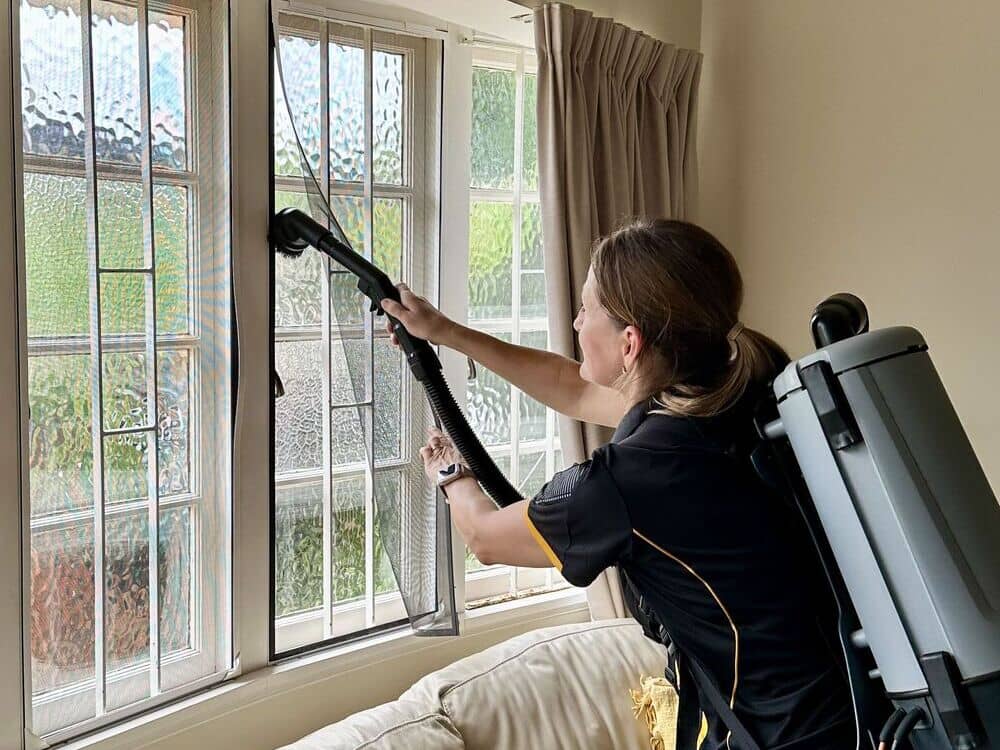
We all have chores we’d rather skip, like doing the laundry, scrubbing grout, and yes… cleaning fly screens.
It would be nice if they magically stayed spotless, but just like everything else in your home, they need extra care now and then.
But don’t lose sleep over it! Cleaning fly screens isn’t as tricky as it seems, whether you have a removable, retractable, or fixed type.
For removable fly screens, carefully take them out of the window frame and give them a good wash.
On the other hand, if you have a retractable or fixed fly screen, simply use a vacuum cleaner with a soft brush attachment, followed by a damp cloth.
If you need a step-by-step guide, here’s everything you need to know about how to clean fly screens on windows or doors!
How Often to Clean | Before Cleaning | Routine Cleaning | Deep Cleaning | Cleaning Fly Screens in Place | Cleaning Fly Screen Doors | After Cleaning
Why Clean Fly Screens
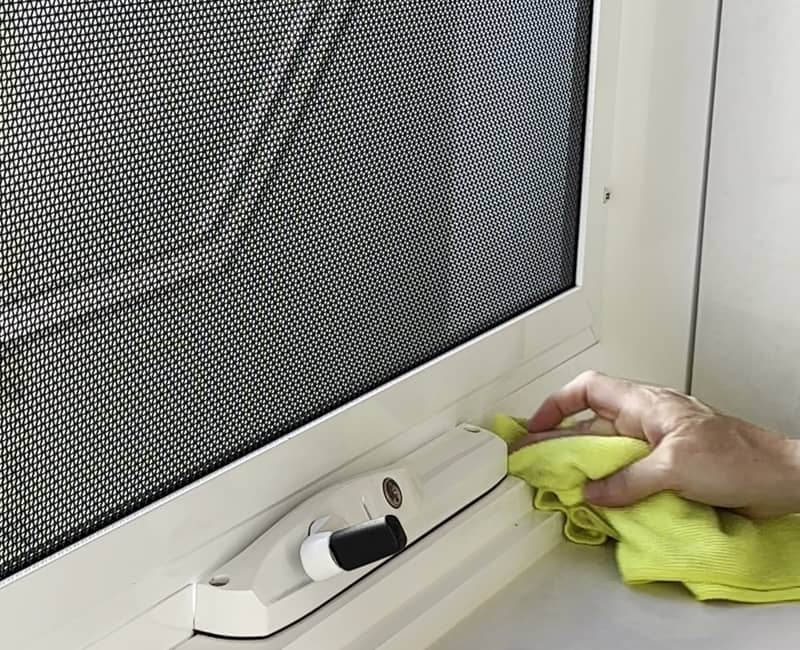
Fly screens collect dust, pollen, and other tiny particles over time, which can reduce airflow and lower the air quality inside your home.
Dusty fly screens can also block natural light and obscure the view outside.
The accumulated debris can also find its way indoors and settle on surfaces, so you might notice your house getting dirtier more quickly.
And if you’re renting, clean fly screens are necessary for your rental property inspection!
How Often Should You Clean Fly Screens?
Regular cleaning keeps your fly screens in good condition. Give them a quick dusting at least once a month to prevent dust and dirt buildup.
Then, aim to deep clean your fly screens every 3–6 months.
You might need to clean your screens more often if they’re sitting in humid areas like bathrooms or kitchens, or if they’re facing a busy road.
Don’t have the time (or patience!) for fly screen cleaning? Ask your local domestic cleaners to handle it for you, along with your windows and the rest of your home!
What to Know Before Cleaning Fly Screens
Before you start cleaning fly screens, it’s important to understand the type of screen you have and choose the right cleaning tools and methods.
The wrong approach can damage your screen permanently!
Are fly screens and security screens the same?
They might look similar, but fly screens and security screens are not identical.
Fly screens (often called insect screens) are designed to let fresh air into your home while keeping out house flies, mosquitoes, and other tiny bugs.
On the other hand, security screens are built to deter not only insects but also potential intruders.
That’s why the mesh and frame of security screens are usually thicker and more robust than fly screens.
This also means that the cleaning approach for each is a bit different.
Regular fly screens need gentler cleaning, as the mesh is typically thinner and can be easily stretched or torn.
What to clean fly screens with
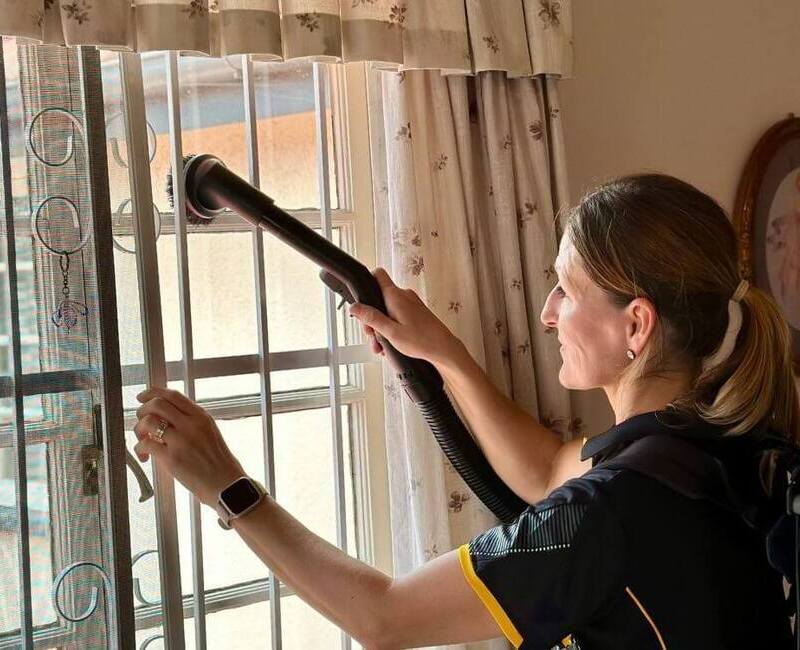
When cleaning fly screens, use gentle tools that won’t cause any damage to the mesh and frame!
Do not use abrasive cleaners like steel wool or stiff brushes, and harsh chemicals such as ammonia or bleach.
These can cause permanent tears in the mesh, and can scratch or discolour the frame’s finish.
Instead, the best thing to clean fly screens with is a mixture of warm water and a little dish soap or mild detergent.
You’ll also need the following:
- Soft-bristled brush
- Spray bottle or bucket
- Microfibre cloths (or any soft towels)
- Vacuum cleaner with a soft brush attachment
NOTE: Whenever you’re unsure about a cleaning product, test it on a small, hidden area first to make sure it’s safe for your fly screen!
How to Clean Window Fly Screens
The best way to clean fly screens is to start by removing all loose dust and dirt from the mesh and frame.
If the mesh needs a more thorough cleaning, you’ll need to scrub it with a soft brush and soapy water.
Routine cleaning steps for fly screens
For regular maintenance, a simple dusting is enough to keep your fly screens looking great.
Use a soft-bristled brush or duster to remove loose dust and debris from the mesh. Gently run the brush over the mesh, working horizontally from top to bottom.
Do not use heavy pressure to avoid bending or denting the fly screen!
You can also use a vacuum cleaner with a soft brush attachment. Keep it on a low suction setting to avoid deforming the mesh.
Deep cleaning fly screens
To clean dusty fly screens, take them out of the window frame so you can access the entire surface. That also keeps dirt from landing onto nearby surfaces.
To remove the fly screen, simply lift it slightly and tilt it out of the window frame. Bring it outdoors, like your lawn or garage.
Choose a flat surface, such as a large table or a garage floor. Line it with old towels to protect the fly screen (and the surface) from scratches, then lay the screen flat.
Gently remove all loose dirt and debris from both sides of the screen using a vacuum cleaner with a soft brush attachment.
Next, mix a little dish soap and warm water in a bucket. Dip a soft towel or brush into the cleaning solution, and squeeze out the excess moisture.
Carefully scrub the mesh, focusing on any stubborn dirt. To reach into tiny corners, an old toothbrush can help!
When you’re done, flip the screen to scrub the other side.
Afterwards, mop up any soapy residue with a separate damp cloth. Then, follow with a dry cloth to avoid water spots and rust.
Finally, let the window screen air-dry fully for a few minutes before reinstalling it. You can point a fan towards the screen for faster drying.
How to Clean Window Fly Screens Without Removing Them
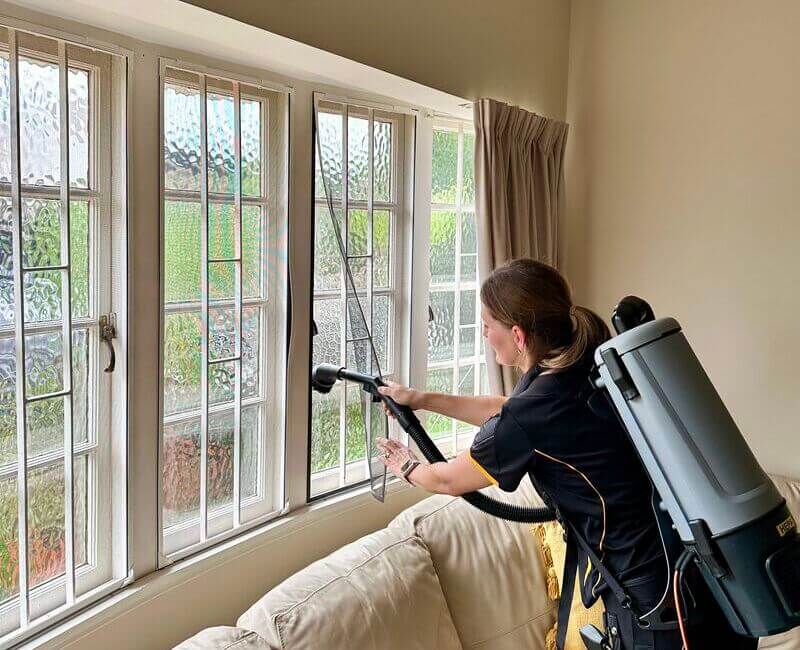
The easiest way to clean fly screens is to dust and wipe them in place, especially if you have a fixed screen (or you’d just rather not remove it).
This method also works for retractable fly screens.
Line the windowsill and floor with rags to catch any drips and debris while you work.
For retractable fly screens, fully extend them first until the mesh is taut.
Grab a vacuum cleaner with a soft brush attachment, and carefully run it over the mesh, starting from the top and going downwards.
In a spray bottle, mix a few drops of mild detergent and water. Spray the solution onto a soft towel to dampen it.
Use that to gently wipe the mesh and frame. Clean one side, then the other.
Next, remove any soapy residue from the surface using a separate cloth dipped in clean water.
Finish by wiping the screen with a dry rag, and let it air-dry before retracting it or closing the window.
How to Clean Fly Screen Doors
Sliding fly screen doors can usually be lifted out of their tracks for a more thorough cleaning.
But if the door is too heavy or too difficult to remove, you can clean it in place.
When cleaning, avoid soaking the screen door, particularly around knobs and locks, to prevent damage.
Start by vacuuming or wiping off any loose dust and dirt on the mesh and frame.
Use a spray bottle filled with soapy water to dampen a soft cloth, then carefully wipe the mesh. When you’re done with one side, make sure to clean the other as well.
Also, don’t forget to clean the frame and other parts of the door so that everything is spotless!
Afterwards, rinse off all remaining soap with a fresh cloth dampened with plain water.
Finally, go over the surface again with a dry rag, then allow the entire door to air dry completely before you close the door.
What to Do After Cleaning Fly Screens
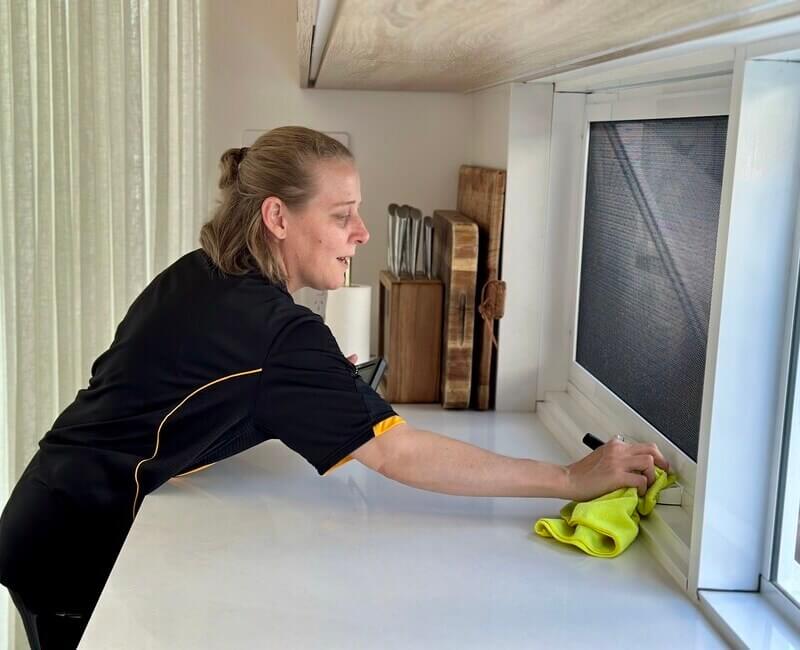
If you cleaned your fly screens in place, check the surrounding areas (like the windows and floor) for any dust or drips that might have landed on them!
Clean the windows and mop the floor if needed.
It’s also good to clean any sliding door tracks or window tracks, especially if you’ve already removed your fly screens!
That way, everything is fresh and spotless before you put the screens back.
FAQs About Cleaning Fly Screens
Looking for more tips to keep your fly screens in great condition? Discover other cleaning methods and learn what to avoid below!
Can you use a lint roller to clean fly screens?
Yes, a lint roller can help clean fly screens, especially for picking up loose debris and pet hair on the mesh!
It’s not a full substitute for washing, but it’s a handy option for quick touch-ups.
Can you use vinegar to clean fly screens?
Yes, a mixture of 1 part white vinegar and 4 parts water can help lift grime from fly screens.
You can also use undiluted vinegar to remove mould from fly screens. Spray it onto the affected area, and let it sit for an hour before wiping it off.
However, avoid using vinegar on aluminium frames if they’re not sealed, as it may discolour the finish.
Can you use a garden hose to wash fly screens?
You can, but it’s best saved for very dirty screens.
Excess water can find its way into the small gaps along the edges of the frame, which may lead to rust or corrosion over time.
If you do use a hose, make sure to keep it on a gentle spray or shower setting. A strong blast of water can deform the fly screen mesh!
Let the fly screen air dry thoroughly before reinstalling it.
Does WD-40 really clean screens?
You should avoid using WD-40 when cleaning fly screens.
While WD-40 can loosen some grime, the oily fluid leaves a residue on surfaces. That can act like a magnet for dust and pollen, which will make your screen dirtier, much faster.
It’s best to stick to a gentle and proven method, like using warm water mixed with a few drops of mild dish soap.
Can you use a pressure washer on fly screens?
Do not use a pressure washer to clean fly screens, or you’ll risk damaging them!
Even the lowest setting can force water through the fine strands of the mesh and warp the material.
Instead, it’s better to stick to gentle cleaning methods, like a soft brush or a microfibre cloth.
How to clean caravan fly screens
Cleaning a caravan fly screen is similar to cleaning a regular fly screen. However, you need to be even more gentle since caravan screens are usually thinner and lighter.
If the screen is removable, take it out of the track so you’re not spreading dirt inside the caravan.
If the screen is fixed, you can clean it in place. Just line the surrounding surfaces, like floors or upholstery, with towels to catch any debris.
Use a vacuum with a soft brush attachment to remove loose dirt from the mesh. If cleaning in place, hold a piece of cardboard behind the mesh for extra support while vacuuming.
Next, wipe the screen with a cloth dampened in soapy water, then follow with a separate damp cloth to rinse off any soap residue.
To clean mould off caravan fly screens, spray undiluted vinegar directly onto the affected area. Wait for an hour, then wipe off the vinegar with a damp cloth.
Make sure to dry the screen thoroughly before closing your doors or windows.
Finally, don’t forget to check the track and clean it if needed!
