
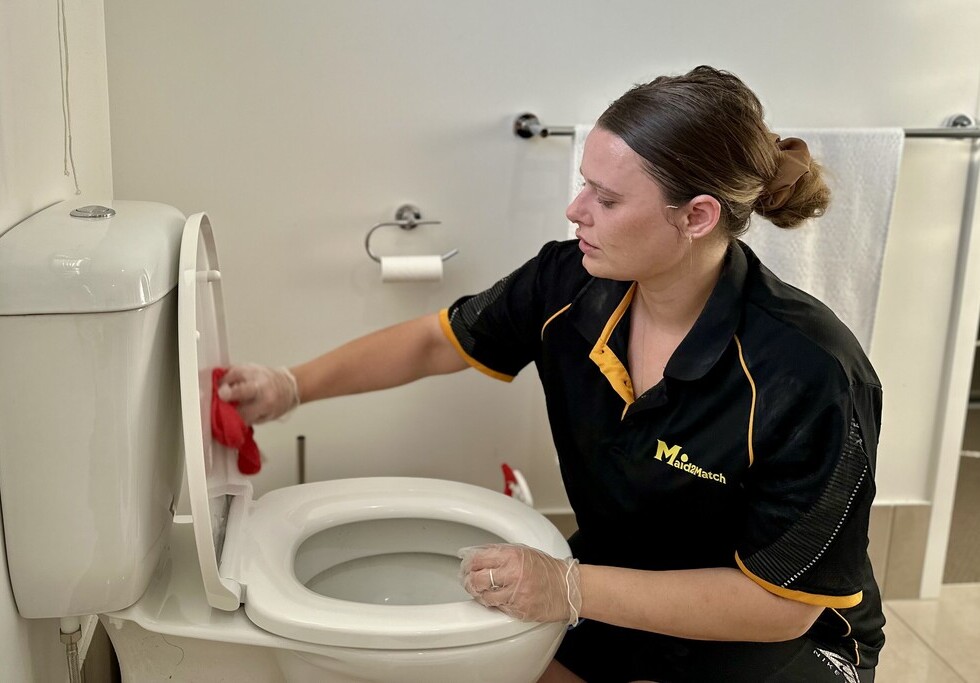
We all know toilets need cleaning, but no one really enjoys getting up close and personal with them. Still, with how much the “porcelain throne” gets used daily, keeping it germ-free is essential!
Toilets are constantly exposed to dirt and bacteria. If left unchecked, these can build up and become a health hazard. Plus, who likes sitting on a grimy toilet?
Cleaning the toilet doesn’t have to be overwhelming.
Simply use a good-quality toilet bowl cleaner or 3% hydrogen peroxide for disinfection. You’ll also need a toilet brush and a little elbow grease to lift stains.
Not sure where to start? This guide explains how to clean every part of a toilet (from the bowl to all exterior surfaces) so it stays fresh and hygienic.
Before Cleaning | Materials You Need | Deep Cleaning Steps | Removing Stubborn Stains | Cleaning a Clogged Toilet | Cleaning the Toilet Tank | After Cleaning | Maintenance Tips
How Often to Clean a Toilet
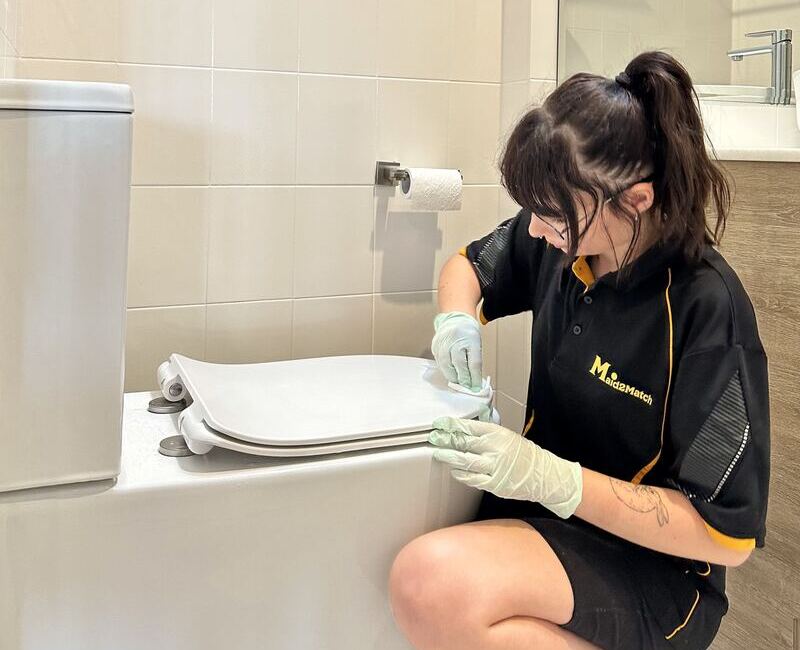
Thankfully, we don’t need to buddy up with our toilets every day!
It’s best to deep clean the toilet weekly. This should include disinfecting the bowl and exterior surfaces.
You can sometimes stretch this to fortnightly, but only if the toilet isn’t used as often and there are no visible stains.
For long-term maintenance, don’t forget to clean the tank. Scrub the inside of the toilet tank every 3–6 months to remove mineral deposits from hard water or other buildup.
If you’d rather spend your weekends relaxing rather than scrubbing, consider hiring a professional cleaner.
They’ll handle not only the toilet but also the entire bathroom, ensuring every part gets proper attention.
Before Cleaning the Toilet
Before you grab a brush, it’s worth knowing how to clean a toilet without stripping the shine or causing scratches.
Most toilets are made of glazed porcelain, which gives them a smooth and glossy appearance. Porcelain surfaces are highly durable, but you still need to handle them with care.
Skip harsh chemicals (like undiluted bleach or hydrochloric acid), particularly on the exterior, as repeated use can break down the shiny, protective layer.
Moreover, not all parts of the toilet are porcelain. The seat and lid are usually made of plastic, while flush buttons are often metal-plated. These parts can be more delicate, so they’ll need gentler solutions.
Finally, skip abrasive tools like steel wool or rough scrub pads. These can scratch or dull the finish over time.
What to Clean a Toilet With
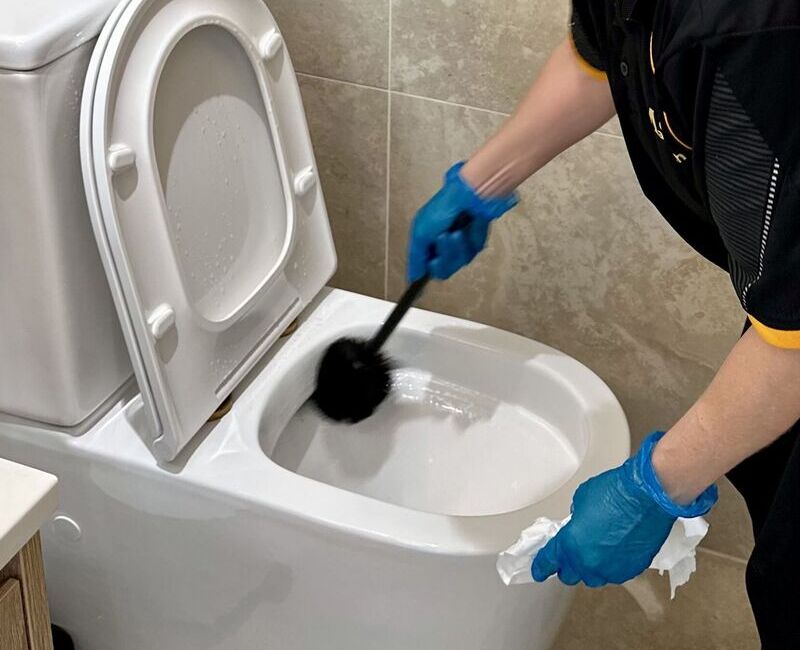
To make the cleaning process more efficient, take a few moments to prepare all the tools and supplies you need!
Commercial toilet cleaners
One of the best ways to clean the toilet bowl is with a dedicated toilet cleaner.
These usually come in a gel form and often contain chemicals, like bleach (sodium hypochlorite) or hydrochloric acid. As much as possible, use these sparingly to protect your plumbing and septic system.
A good approach is to alternate strong toilet cleaners with eco-friendly products or gentler, DIY methods.
Just make sure to use one cleaning solution at a time to avoid creating toxic combinations (like bleach and vinegar).
Also, most toilet bowl cleaners are too harsh for the exterior. For the outside of the toilet, you’ll need something milder, such as:
- Water with a small amount of dish soap (for quick cleans)
- All-purpose bathroom cleaner (for disinfection)
When using a commercial cleaner, always read the label to make sure that it’s safe for the specific material you’re using it on. It’s also smart to do a spot test first on a small, hidden area whenever you’re unsure.
Natural toilet cleaners
Eco-friendly toilet cleaners can be highly effective and are safer for septic systems. Plus, they’re unlikely to corrode toilet surfaces, so long as you use them correctly.
If you’d prefer something ready-made, there are plenty of options available in supermarkets. Many formulas use baking soda, citric acid, or lactic acid to lift grime and mineral buildup.
For a DIY alternative, here are a few natural solutions for cleaning toilets:
| CLEANING METHOD | FOR TOILET BOWLS | FOR EXTERIOR TOILET SURFACES |
| Baking soda | Sprinkle directly onto a damp bowl | Apply a thick paste onto stains |
| Citric acid | Mix 1:10 citric acid powder and water | Mix 1:20 citric acid powder and water |
| Hydrogen peroxide | Use a 3% solution | |
| White vinegar | Use undiluted vinegar | Mix 1:1 vinegar and water |
If you’re looking for a powerful disinfectant, 3% hydrogen peroxide is the most effective of the natural cleaners. It’s often recommended as a milder alternative to bleach, as it kills bacteria, eliminates mould, and neutralises bathroom smells.
Citric acid has disinfecting properties as well, so it can help keep the toilet germ-free. Its natural acidity also makes it highly effective for stubborn stains, like limescale and toilet bowl rings.
On the other hand, baking soda and white vinegar are not effective for sanitising. They’re only suitable for routine cleaning or for removing bad odours!
Baking soda is mildly abrasive, so it can work on a lightly stained toilet bowl, while white vinegar is a great choice if you’re dealing with mineral deposits.
NOTE: You might see blogs or video tutorials that suggest a mixture of baking soda and vinegar. However, they tend to cancel out each other, since baking soda is alkaline and vinegar is acidic. This means they become less effective for cleaning when used together!
Cleaning tools for the toilet
Aside from your cleaning solutions, you also have to get these tools ready:
- Toilet brush
- Spray bottle
- Paper towels
- Old toothbrush
- Microfibre cloths
How to Deep Clean a Toilet
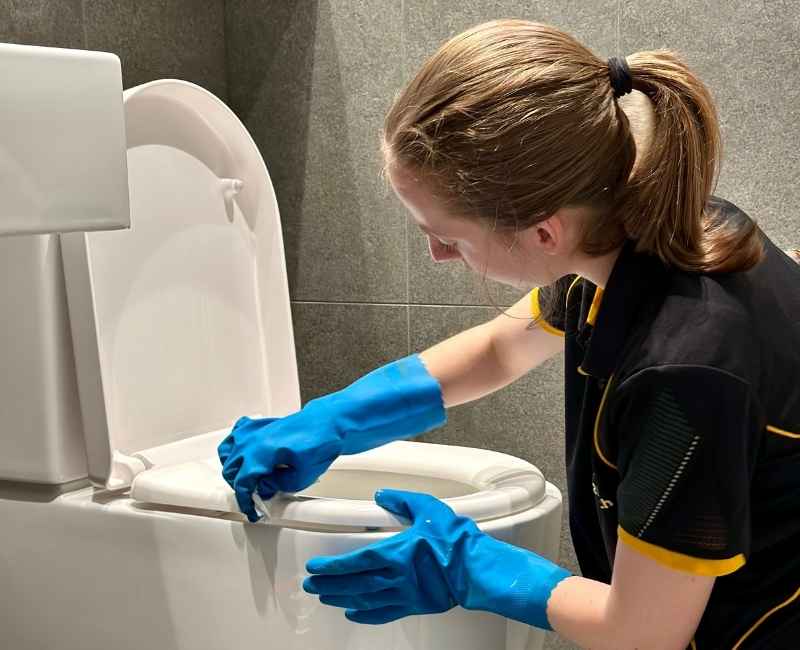
To deep clean your toilet, you’ll need to scrub and disinfect every surface. That includes the bowl, seat, rim, and exterior.
TIP: If you’re cleaning other parts of the bathroom as well, it’s best to work from top to bottom. Higher surfaces like benchtops or shelves should go first, so you can wipe any dirt or splashes that land on the toilet afterwards.
Step 1: Preparing for cleaning
Before you begin, make sure there’s enough ventilation in the bathroom. Open a window or switch on the exhaust fan, so fumes from cleaning products dissipate quickly.
Since many heavy-duty toilet cleaners contain bleach or other strong chemicals, wear rubber gloves and a mask to protect your skin and airways.
Begin by removing all surface dust from the toilet. Wipe all exterior surfaces with a dry cleaning cloth, so you don’t spread grime around later.
Next, flush the toilet to wash away loose debris and wet the inside of the bowl.
Step 2: Cleaning the toilet bowl
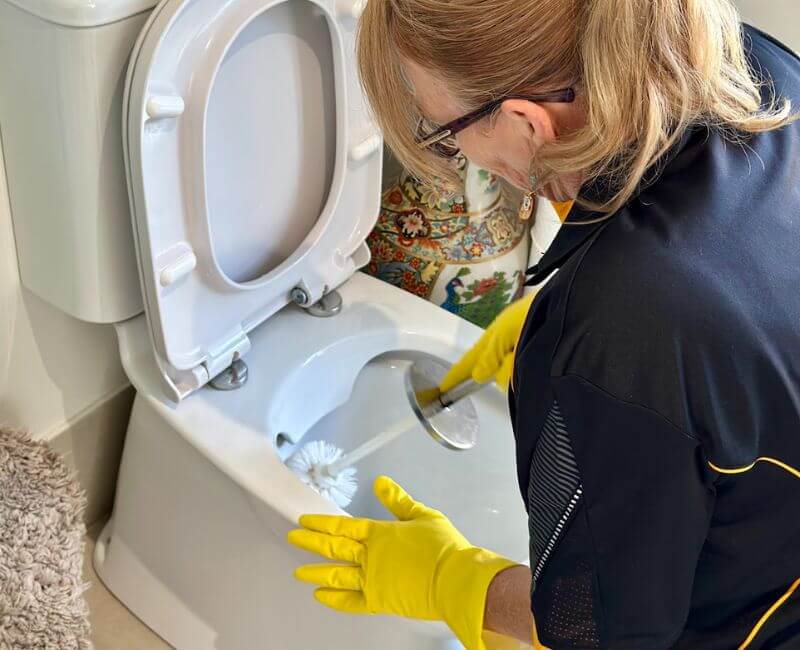
To clean the toilet bowl, start by assessing the stains that you need to tackle.
Then, apply your chosen toilet cleaner, ensuring that the entire interior is evenly coated.
Most commercial toilet cleaners have a curved spout. Point it under the rim and work your way around the bowl. If you’re using a DIY mixture such as a citric acid or a vinegar solution, use a spray bottle for easier application.
Let the solution sit for 15–20 minutes (or follow the label instructions) to allow it to loosen stains and kill germs.
Next, scrub the bowl thoroughly with a wet toilet brush. Begin at the sides, including beneath the rim, and work your way to the bottom. As you go, pay attention to visible buildup or stains.
Once everything is clean, flush the toilet again to rinse off the cleaner and any loosened dirt.
Step 3: Cleaning the toilet seat
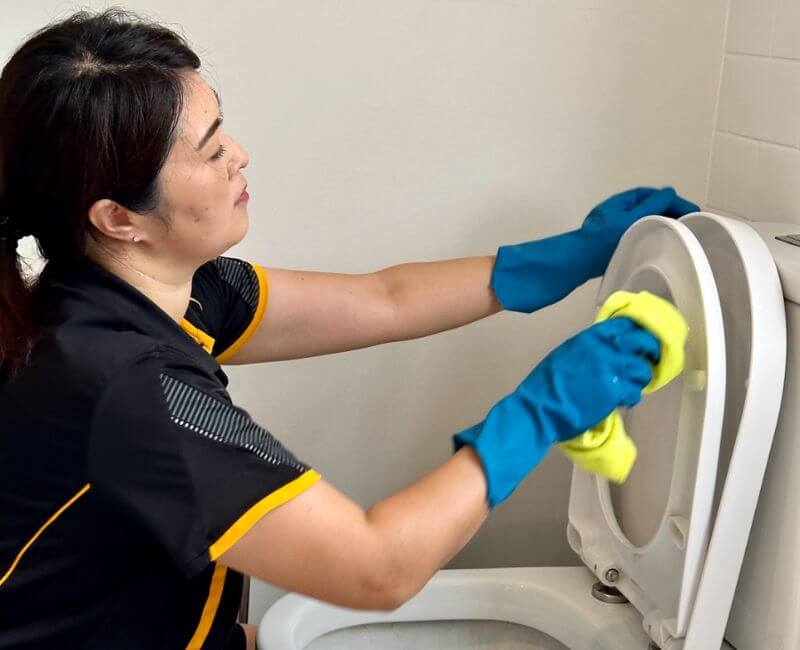
If possible, remove the toilet seat beforehand. Modern toilet seats can usually be detached easily, but check the manufacturer’s instructions to be sure.
That way, you can clean any grime that might have been trapped around the hinges.
Next, spray both sides of the lid and the seat with an all-purpose bathroom cleaner. You can also use 3% hydrogen peroxide or 1:1 vinegar and water. Let the solution sit for about 5 minutes.
Wipe the entire surface using a damp cloth. An old toothbrush is also useful for crevices and stubborn spots.
Once the toilet seat is clean, dry it thoroughly with a lint-free cloth or a paper towel.
Step 4: Cleaning the outside of the toilet
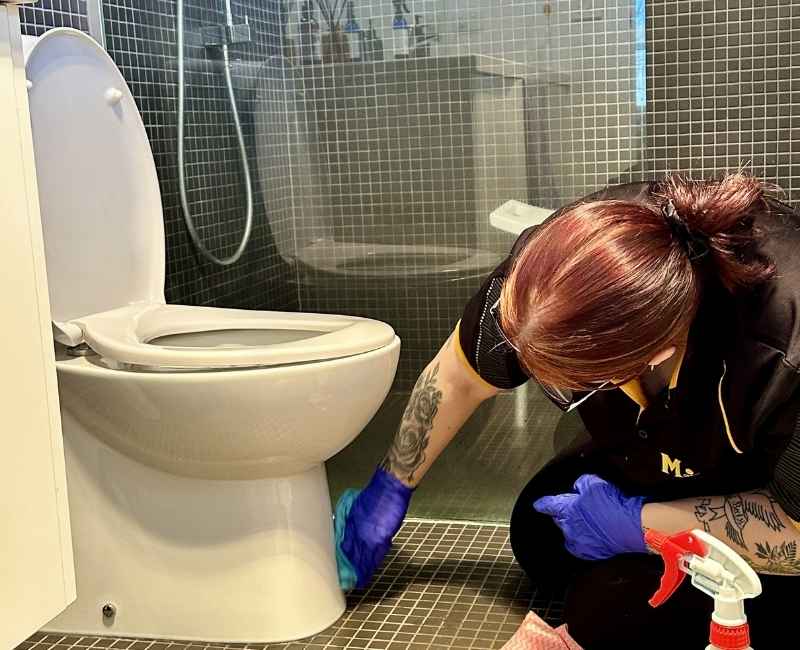
Now, it’s time to clean the exterior of the toilet! For this step, you can use 3% hydrogen peroxide or an all-purpose disinfectant spray.
Saturate all exterior surfaces — the top and sides of the tank, flush buttons, the bowl’s rim, and the base of the toilet. You’ll also need to include the seat and lid if they’re still attached.
Leave the solution for about 5 minutes, or check the directions on the packaging. For any metal components, wipe them sooner (after 2-3 minutes) to protect the finish.
Use a damp microfibre cloth to gently scrub all surfaces, starting at the top and working your way downward. Pay close attention to stains or corners where dirt can collect!
Rinse off all residue from the cleaning solution with a cloth dipped in clean water, and wipe everything with paper towels or a dry rag to avoid water marks.
If you removed the toilet seat and lid, replace them once all parts and hinges are completely dry.
How to Remove Stubborn Stains From a Toilet
Persistent or set-in grime on toilets is usually caused by bacteria, mould, or mineral deposits from hard water.
Here’s what you can use to remove tough toilet bowl stains:
| CLEANING METHOD | HOW TO USE | WORKS ON |
| Citric acid | Mix 1:10 citric acid powder and water. Apply onto the stain, and leave for 10 minutes. Gradually increase the concentration if needed. |
|
| 3% Hydrogen peroxide | Spray directly onto the stains. Let it sit for 5–10 minutes. |
|
| White vinegar | Soak paper towels in undiluted vinegar, and stick them onto the stains. Leave it for at least 1 hour. |
|
Once the stain lifts, rinse off all residue from the cleaner. Citric acid, in particular, can leave cloudy streaks if not washed off completely.
If the options above didn’t work, look for a specialised stain remover that’s compatible with porcelain.
You can also reach for a magic eraser or a pumice stone (always wet it and the bowl first!), especially for very old toilet bowl rings.
How to Clean a Blocked Toilet
Toilets can get clogged because of large wads of toilet paper, wipes, or other sanitary products.
If this happens, do not flush the toilet repeatedly, or the water in the bowl can overflow!
Before attempting to clear the blockage, pop on rubber gloves, a mask, and goggles to protect yourself from contaminated splashes.
If the water is too close to the rim, wait for it to settle first or carefully scoop out the water using a small container.
Option 1: Toilet plunger
A toilet plunger (aka flange plunger) has an extension at the bottom that fits into the drain. Note that it’s different from a flat sink plunger!
Lower the plunger into the toilet bowl, ensuring that it covers the entire hole.
To dislodge the blockage, push and pull the plunger at a steady rhythm for 15–20 seconds. Keep the rubber sealed over the drain the whole time.
Turn the water back on and give the toilet a flush to check if the clog is gone. Don’t forget to disinfect the plunger once you’re done!
Option 2: Toilet auger
For more stubborn clogs, you’ll need a toilet auger. Insert the cable into the opening until you hit the blockage.
Turn the handle clockwise to break up the obstruction, then pull back slowly. If any debris comes out, don’t flush it back down. Pick it up and dispose of it in the bin.
After clearing the buildup, try flushing the toilet to check if the water drains quickly.
How to Clean the Toilet Tank
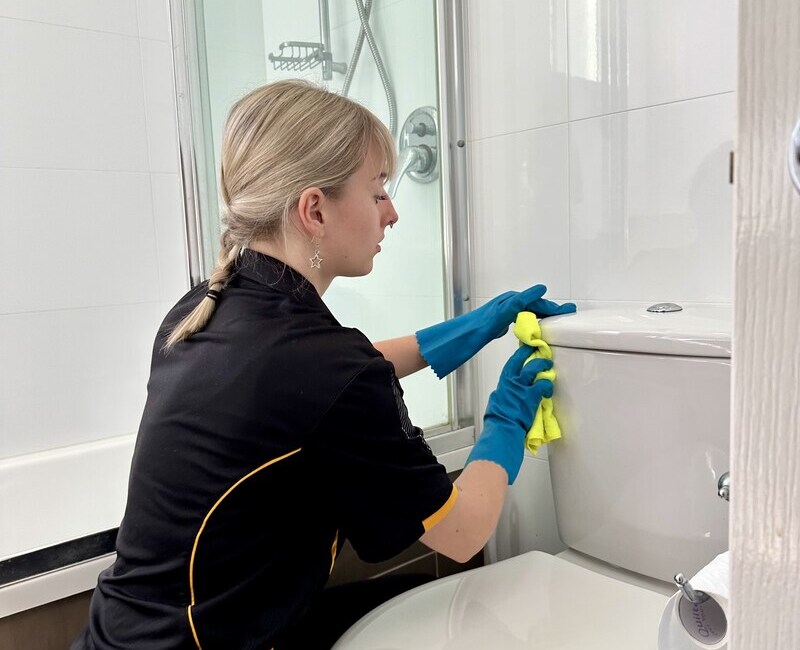
Most of us skip the toilet tank, but over time, hard water minerals, rust, or mould can build up inside. These can damage the flush components or even cause stubborn bowl stains.
You can clean the tank’s interior with white vinegar. Start by turning off the water supply valve (usually located near the base) and flushing the toilet to lower the water level.
Remove the tank lid — most types lift out easily, but some models use screws, so check what you have first.
Take a peek at the water inside the cistern. You need to add white vinegar to make a roughly 50:50 solution, so there should be enough liquid to soak the parts that need cleaning.
For tougher deposits or mould, empty the tank by scooping the remaining water with a small cup. Then, pour in undiluted vinegar.
Let the vinegar solution sit for 1 hour to loosen the stains. Avoid leaving it longer, especially if your flush system has metal parts.
Flush the toilet again to empty the tank. Use a soft-bristle brush to scrub the walls of the cistern, as well as any buildup on the flush components.
Once you’re done, turn the water supply back on to refill the tank. Rinse away any loosened debris by flushing the toilet.
Finally, deep clean the toilet bowl afterwards so any dirt or stains from the tank don’t set!
IMPORTANT: Avoid using toilet bowl cleaner or bleach-based tablets inside the cistern, as they can damage the rubber seals and metal parts inside the tank.
After Cleaning the Toilet
Once your toilet is sparkling clean, don’t forget the surrounding area, especially the floor.
Use a dry, clean rag to blot any splashes that landed on the bathroom floor. Then, vacuum or sweep the area to remove loose dirt.
Next, focus on the edges of the toilet base. Spray the area with warm, soapy water, let it sit for a few minutes, and scrub it gently with an old toothbrush. Once you’re done, rinse the leftover soap with a damp cloth.
After that, wipe the rest of the floor, including any gaps behind the toilet.
Finally, disinfect your cleaning tools to avoid bacterial growth.
Soak the toilet brush in a bucket of hot water with a small amount of bleach, or simply saturate it with a disinfectant spray and let it air-dry. Be sure to wash your cleaning cloths thoroughly as well.
That way, everything is ready for the next round of cleaning!
Tips to Keep Your Toilet Clean
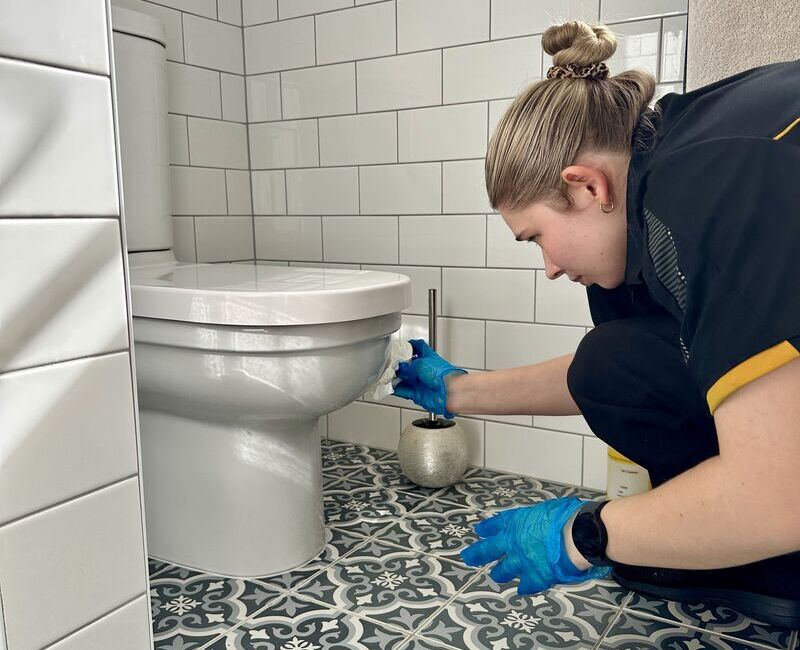
To keep the toilet fresh, don’t let stains sit for too long! Keep a small cleaning caddy within reach (like under the sink), so you can tackle stains ASAP.
Every few days, do a quick touch-up by wiping off loose dust from the external surfaces. Then, use disinfectant wipes to clean the seat, lid, and outer surfaces.
You can also place a cleaning tablet in the tank to reduce hard water buildup inside the cistern and the bowl. Just choose a bleach-free formula to avoid damaging rubber seals or metal components.
FAQs About Cleaning Toilets
From cleaning hacks to keeping your toilet smelling fresh, we’ve got your questions covered!
Can you leave bleach in your toilet bowl overnight?
You can, but a few minutes is usually enough to disinfect.
While porcelain can usually handle bleach, leaving it in too long can be harsh on your pipes and septic system.
Also, bleach isn’t as effective for tough stains like limescale or toilet rings. For these, acid-based cleaners like vinegar or citric acid work better.
Can you clean a toilet bowl without scrubbing?
Yes, but only if there are no visible stains.
Simply saturate the bowl with a toilet cleaner or 3% hydrogen peroxide, then wait a few minutes before flushing the toilet.
Others use cleaning tablets or drop-in gels to keep the bowl fresh.
However, if the toilet bowl has stubborn stains or rings, some elbow grease might be necessary!
How to remove bad smells from the toilet
A thorough scrub with an antibacterial toilet cleaner usually gets rid of most odours.
If the toilet still smells foul after cleaning, double-check the spots that you might have missed, like under the toilet seat, beneath the rim, or behind the toilet.
You can also place an open jar of baking soda behind or near the toilet to absorb any remaining smells.
Good air circulation makes a noticeable difference, too. Always run the exhaust fan when the bathroom is being used to prevent unpleasant smells from settling.
If nothing works, the problem might be the plumbing — whether from the toilet, sink, or shower drain. In this case, it’s usually a good idea to call in a professional.
How can you make a toilet smell nice?
If you’ve already cleaned the toilet and simply want to add a light, pleasant fragrance, try using essential oils.
Fresh scents like eucalyptus or peppermint are popular choices!
For an instant boost, add a couple of drops directly into the toilet water. If you prefer something more subtle and longer-lasting, place a small amount of the oil inside the cardboard core of the toilet paper roll.
Some people also use reed diffusers or bathroom scent fresheners. Just avoid heavy, artificial fragrances that can become cloying in small spaces.
IMPORTANT: Some essential oils are toxic to pets — including cats and dogs — so consult your vet before using them.
Why does my toilet keep getting clogged?
Toilets usually clog when non-flushable items, like toilet paper or wipes, get stuck inside the pipes.
Most of the time, a flange plunger or toilet auger can clear the blockage.
However, you may need to call a professional plumber in these cases:
- Recurring clogs
- Persistent foul odours
- Gurgling sounds from the toilet
- Multiple toilets in the house backing up
These can indicate a more serious issue that cleaning alone won’t solve!
