
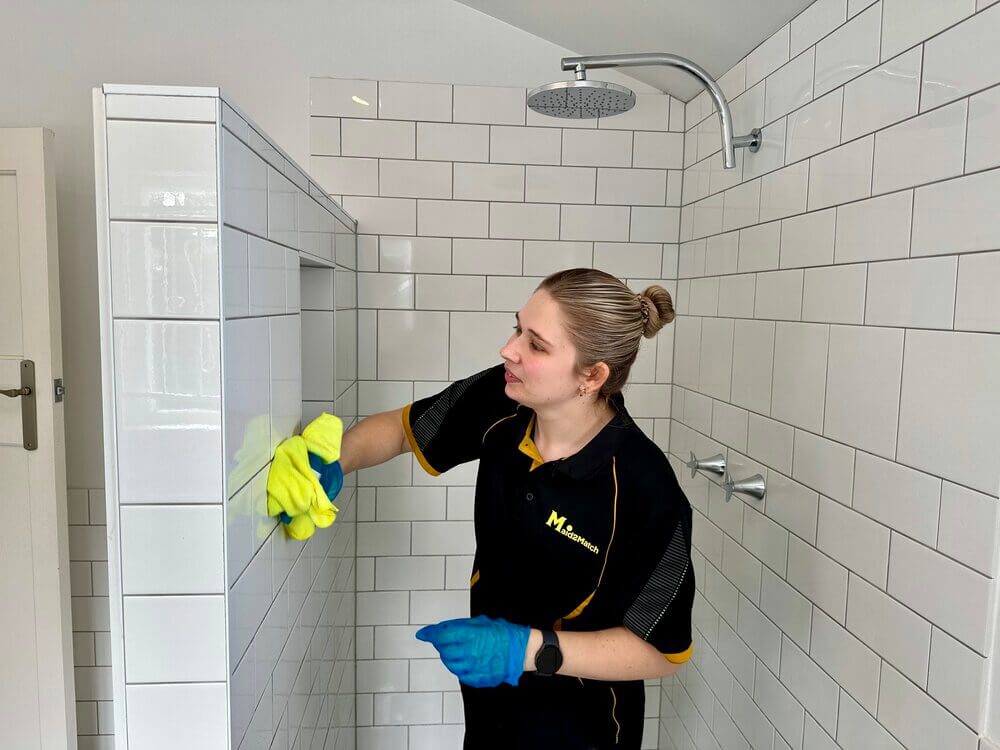
Cleaning tile floors or walls is pretty straightforward, but dirty grout? Not quite as easy.
Still, pristine grout lines make the floor look better and brighter. Unfortunately, that means scrubbing the dirt out… or does it?
If you’re asking how to clean grout without scrubbing, you’re in the right place. Some of the most effective methods include:
There are many reasons someone would struggle to scrub grout — maybe you’ve got arthritis, or strained a shoulder, or just don’t have the time. Let these easy methods do the hard work for you!
Why You Need to Clean Tile Grout
Simply put, your walls and floors won’t look clean if the grout isn’t!
A good tile cleaner will handle the tiles themselves, but if you don’t clean the grout as well, your floor will still appear dirty.
Built-up grime can also damage the seal or degrade the material over time. Regrouting or even replacing tiles is expensive and time-consuming, so regular grout cleaning helps prevent this.
For bathroom tiles in particular, moisture can get into the grout and lead to mould or mildew. This can cause respiratory issues, so clean grout is good for your health!
Before Grout Cleaning
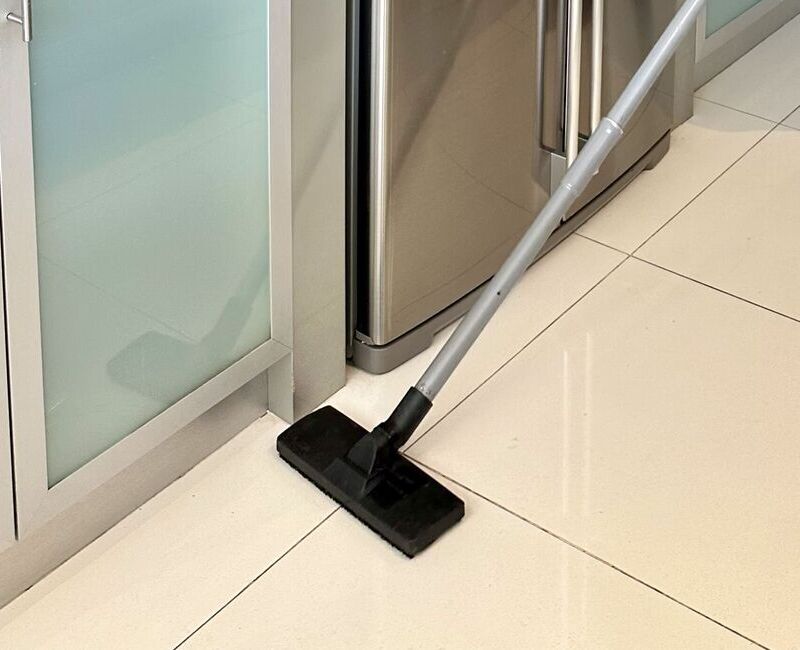
First off, sweep or vacuum the floors to remove loose dirt and dust, so you’re not pushing it into the grout. You can go over the floor afterwards with a mop and warm-to-hot water to help loosen grime as well.
Do a spot test with your chosen grout cleaner in an inconspicuous area so you’re sure it won’t damage the tiles or grout.
Lastly, make sure to wear rubber gloves and a face mask to protect your skin. Open the windows or switch on the exhaust fan as well, so you have good ventilation.
How Do You Clean Grout Without Scrubbing?
Scrubbing takes a lot of effort, so it’s not everyone’s cup of tea. If you don’t feel like working up the elbow grease, these are the best ways to clean grout without scrubbing.
Option 1: White toothpaste
BEST FOR: Spot cleaning grout
Toothpaste is a good, mildly abrasive cleaner, but save it for small stains or light dirt so you don’t need too much.
Use plain white, non-gel toothpaste so it doesn’t discolour the surface. Spread a small amount onto the dirty grout, then wait up to an hour.
Wipe off the residue with a damp cloth, then dry the grout.
Option 2: White vinegar
BEST FOR: Porcelain or ceramic tiles
Diluted white vinegar is a fast way to clean grout — as long as it’s sealed! Otherwise, the acid could wear down the grout material.
Skip this for stone tiles, since vinegar can permanently etch or discolour the surface.
(If you dislike the scent, lemon juice works just as well.)
Mix equal parts vinegar and warm water in a spray bottle, plus a few drops of dish soap. Spray the vinegar solution directly onto the grout lines.
Let it sit for 5–10 minutes, then rinse off with a microfibre mop or cloth dampened with water.
TIP: This is also a good way to clean shower tiles without scrubbing, since vinegar is effective on soap scum and limescale.
Option 3: Hydrogen peroxide
BEST FOR: Light-coloured porcelain, ceramic, or natural stone tiles
If you need to brighten up light or white grout, try using hydrogen peroxide! It naturally breaks down stains, and can also get rid of mould or mildew.
Avoid it on dark-coloured tiles since it can have a mild bleaching effect.
Mix 1 part hydrogen peroxide with 3 parts warm water in a spray bottle, then spritz it onto the grout lines. Alternatively, you can apply the solution with a soft sponge.
Wait up to 10 minutes, then wipe the surfaces clean with a damp cloth before letting the grout dry.
TIP: This is a great way to tackle orange grout stains on shower tiles.
Option 4: Baking soda paste
BEST FOR: Light-coloured porcelain, ceramic, or natural stone tiles
For extra oomph (especially with very dirty grout), combine hydrogen peroxide with some baking soda to make a no-scrub grout cleaner!
It’s best to use this to clean floor tile grout, since the paste can drip off vertical surfaces like walls.
Make a paste with 1 part hydrogen peroxide to 2 parts baking soda, plus 1 tsp of dish soap (like Dawn). Use an old toothbrush or a damp sponge to apply the paste to your grout lines.
Leave it for 10 minutes, then wipe off the residue with a damp mop or cloth. Note that this method can be a bit messy to clean up since it’s a paste with powder.
Do not store any excess cleaner! The buildup of carbon dioxide in a sealed container can cause it to break and release hazardous gas.
Option 5: Washing soda
BEST FOR: Porcelain, ceramic, and durable stone tiles
This is a much stronger solution that can tackle stubborn stains on tile grout without scrubbing.
It’s safe for durable stone tiles like granite, but don’t leave it for too long. Avoid using it for more delicate stone materials like marble.
Add 1/2 cup washing soda (or soda crystals) to 1/4 cup warm water to make a paste. Spread it onto the grimy grout with a damp sponge.
Let the mixture sit for up to 10 minutes, then carefully wipe off the residue with a dampened cloth or mop. Dry the surfaces afterwards.
Can You Use a Steam Cleaner on Grout Lines?
Steam cleaning is an effective way to clean dirty grout without scrubbing, as long as it’s sealed and the manufacturer allows it.
Do not use this on unsealed or cracked grout, as the heat and moisture from steam cleaners can cause damage or lead to mould.
If steam is safe to use, clean the tiles beforehand to remove any dirt that could block the steam or seep into the grout lines.
Switch on your steam cleaner to a low setting, then run it slowly but steadily over the grout. Use a grout nozzle or brush tool if your machine has one.
Work on one section at a time, and wipe away the dirty water immediately. Dry the tiles with a clean cloth or (for floor grout) a dry mop afterwards.
Tips for Maintaining Clean Tile Grout
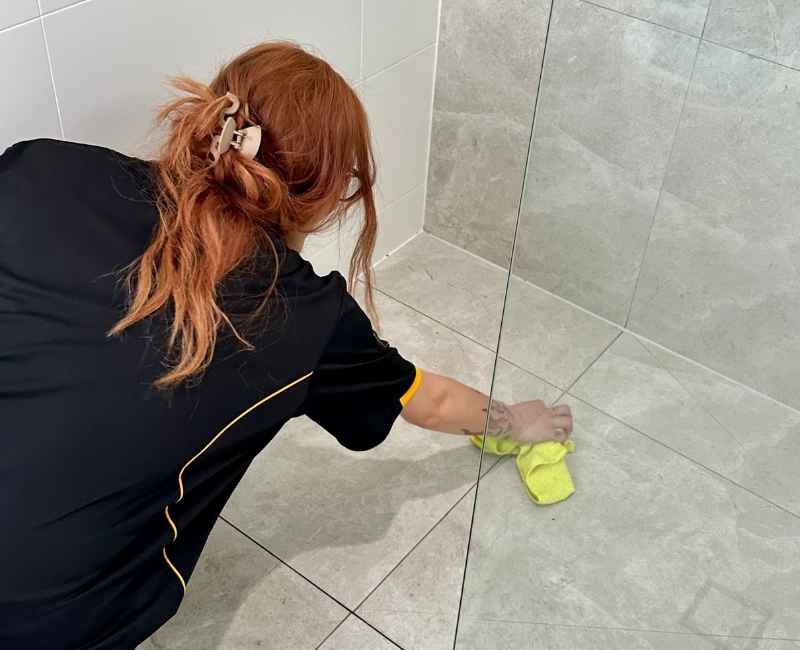
Keep a spray bottle with diluted vinegar under the sink so you can quickly clean shower grout and tiles at the end of each day. Just spray the shower walls, then wipe them down with a clean cloth to dry.
Regular sweeping or vacuuming keeps grime from building up on tile floors between deep cleans. You can also lessen tracked-in dirt by keeping floor mats at entrances.
Check with the manufacturer about how often you need to reseal your grout to protect it from moisture and stains. Generally, you’ll have to reapply the grout sealer once a year.
Avoid using harsh chemicals like bleach, which can wear down the sealant or the grout underneath.
Sometimes, though, your tile grout is too dirty and needs a deeper clean. If you still don’t want to start scrubbing, just use the real easiest way — get a professional house cleaner to do it for you!
