
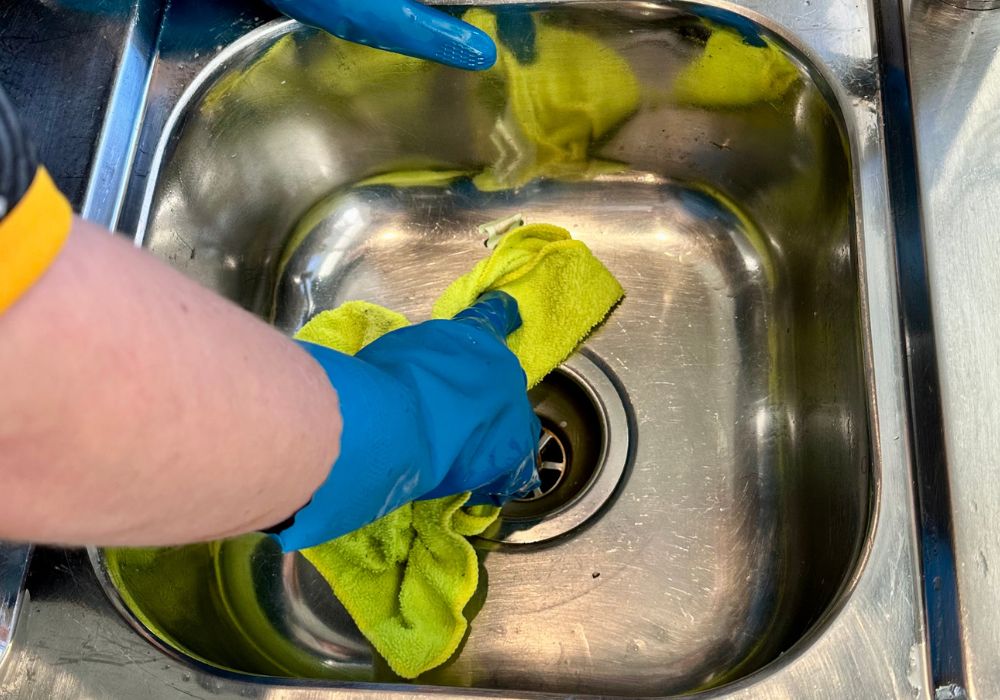
You lean over the kitchen sink to wash a plate, and there it is — a nasty waft coming from the drain!
The odd faint smell around the sink is normal; that’s where dishes, cutlery, pots, or pans are washed up after all. However, a strong or lingering odour is usually your sink’s way of telling you that something down the drain needs cleaning.
Fortunately, getting rid of the smell is often simple.
Start by cleaning the entire kitchen sink and drain with dish soap and baking soda. From there, you can try a few different methods to deodorise the drain, depending on the cause.
In this blog, we’ll help you work out why your kitchen drain smells and how to fix it for good!
Why Your Sink Smells Bad | Before Cleaning | Cleaning a Smelly Kitchen Sink Drain | What if the Smell Keeps Coming Back | When to Call a Plumber | Preventing Kitchen Sink Drain Smells
Common Kitchen Drain Smells and How To Fix Them: A Quick Guide
Need to tackle the smell fast? Below are the most common causes of a stinky sink drain, what each one usually smells like, and how to fix it.
| SMELLY DRAIN CAUSES | WHAT THE SMELL IS LIKE | HOW TO FIX IT |
| P-trap that has dried out | Rotten eggs or sewage | Run the tap for a minute to refill the trap |
| Food or grease buildup | Spoiled food or sewage | Clear the strainer; pour baking soda then hot water down the drain |
| Mould or mildew | Musty | Clean the sink and drain with 3% hydrogen peroxide |
| Bacterial growth | Rotting or dirt-like | Use an enzyme-based drain cleaner |
If you need more detailed instructions, we’ve broken down everything below!
Why Your Kitchen Sink Smells Bad
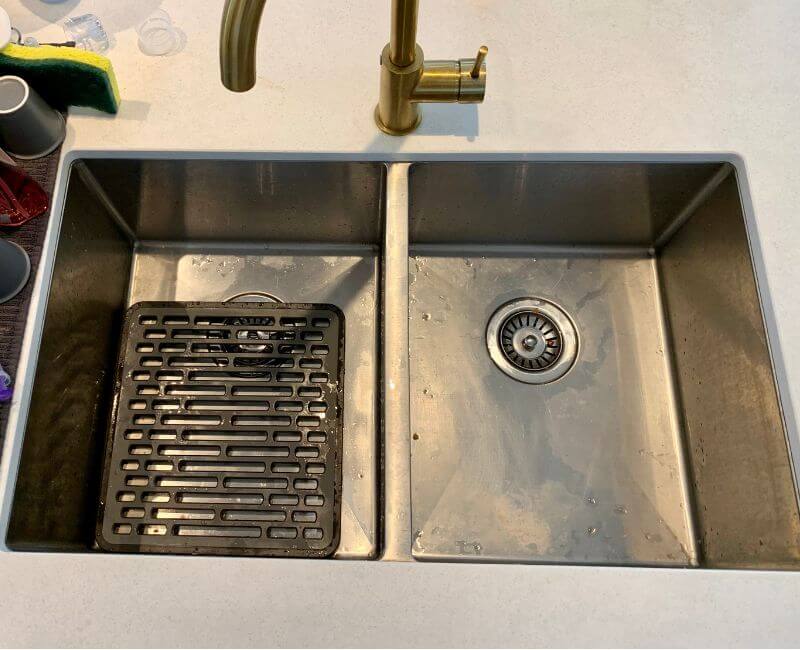
A smelly kitchen sink is usually caused by trapped food debris, mould or mildew, or stubborn bacteria. Sometimes, though, the culprit is simply a dry P-trap.
You might also notice the kitchen sink drain smelling worse when the water runs. That’s usually because the water disturbs whatever has built up inside the drain, releasing more of the odour into the air.
The type of smell can give you a clue about what’s causing it!
Why does my kitchen sink drain smell like rotten eggs?
A rotten egg smell coming from the kitchen sink is commonly due to a dry P-trap or trapped food debris.
Some people also describe the smell as sewage-like.
DRY P-TRAP: This can happen if your sink hasn’t been used in a while, or if you have a double sink and rarely use one side. The P-trap (the U-shaped pipe under the sink) holds water that prevents sewer gases from escaping into your kitchen. If that dries up, sewer smells can rise through.
FOOD AND OTHER DEBRIS: Food scraps, grease, or soap scum can collect around the drain over time. As they decompose, bacteria release sulphur compounds, which produce that distinctive rotten egg or sewage smell.
Why does my kitchen sink drain smell musty?
If your kitchen sink smells musty (like a wet, dirty rag), it usually points to mould or mildew growing around the drain.
These fungi thrive in dark, damp spots like the plughole or the underside of the sink strainer. Food and soap residue also give them something to feed on.
A sink that drains slowly is one of the most common causes. Standing water keeps surfaces damp for longer and invites fungal growth.
Why does my kitchen sink drain smell like rotten food?
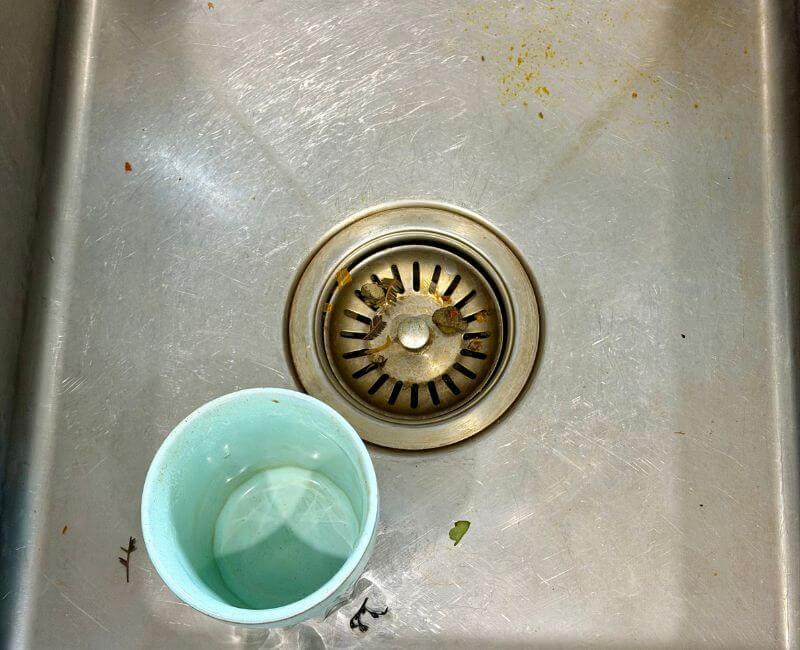
It’s often exactly what it smells like!
If you catch a whiff of spoiled leftovers every time you walk past the sink, food, grease, or oil particles are probably stuck around the drain or along the walls of the drain pipes.
Any food waste washed down the sink can also cause a clog over time, which can make the smell stronger.
If your sink has a garbage disposal, check if any residue is trapped in there, too.
Why does my kitchen sink drain smell like dirt?
The most common cause is bacterial buildup.
If it’s been a while since the kitchen sink and drain were deep-cleaned, a stubborn layer of bacterial growth (aka biofilm) may have formed around the drain or somewhere along the pipe.
This is also why kitchen sinks can smell bad even with no blockage.
Sometimes, though, the culprit could be rotting food — specifically coffee grounds or vegetable scraps.
Coffee grounds and other plant-based scraps don’t sour like dairy, meat, or other foods. Instead, they give off an earthy or dirt-like odour as they decompose. This also invites bacteria.
Before Cleaning a Smelly Sink Drain
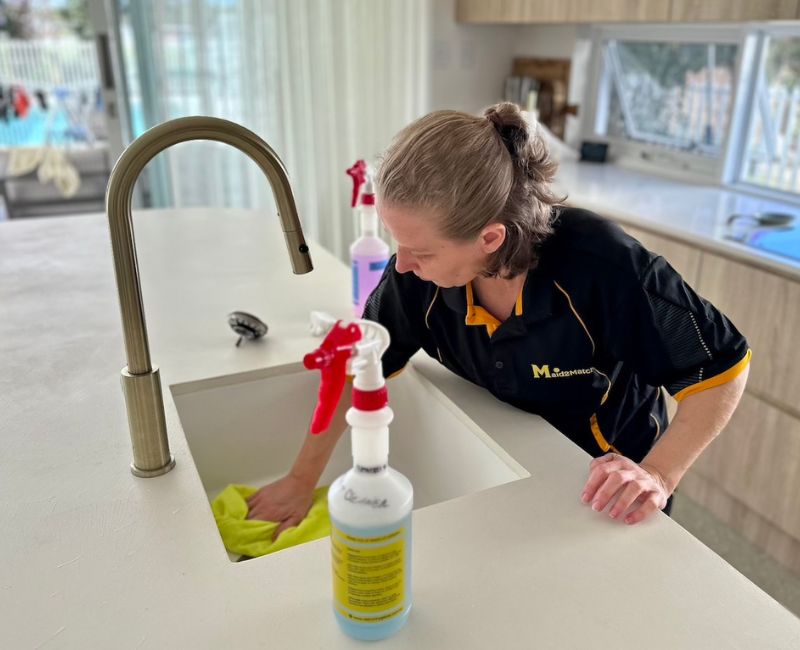
There are a few things to sort before you start so the cleaning process goes smoothly and safely!
Quick check: is it just a dry P-trap?
Before you clean anything, rule out the simplest cause. If you’ve been away and the kitchen sink has not been used in a while, the P-trap or U-bend may just have dried out.
The fix is easy: run the tap for about a minute. That refills the P-trap with fresh water to block any gases coming from the sewer.
After a while, the lingering odour should disappear. If the smell’s still there after an hour or two, a deeper clean is likely needed to deodorise the drain.
What to avoid when cleaning the kitchen sink drain
Do not reach for harsh chemical cleaners, no matter how strong the smell gets!
Skip bleach, caustic soda, lye, and acid-based solutions — these can do more harm than good.
Very strong products can throw off the balance of beneficial bacteria that keep your drain and plumbing system healthy. They might also damage older pipes.
Avoid mixing cleaning products, too.
For example, never combine vinegar and hydrogen peroxide, as they form a harmful solution called peracetic acid!
Instead, give each solution enough time to do its job, then rinse it away thoroughly before trying another. This helps prevent incompatible chemicals from mixing and producing dangerous fumes.
Also, don’t go straight to pouring boiling water! While it can soften fats, oils, or grease, check what your pipes are made of first.
Metal pipes can handle boiling water without trouble. However, PVC pipes might warp or soften when exposed to very hot water. If that’s what you have, keep the water to just around 50°C–60°C (or the hottest your tap gets).
How to Clean a Smelly Kitchen Sink Drain
Most smelly drains come down to a buildup of food, grease, mould, or bacteria, so you’ll usually start by cleaning the kitchen sink and drain thoroughly.
Pop on a pair of rubber gloves before you work. You’ll be reaching around the drain and handling gunk full of bacteria or mould, so make sure your hands are protected.
Wearing a mask also helps since the stink tends to get worse once the buildup is disturbed. Finally, handle hot water carefully to avoid burning your skin!
Step 1. Clean the kitchen sink
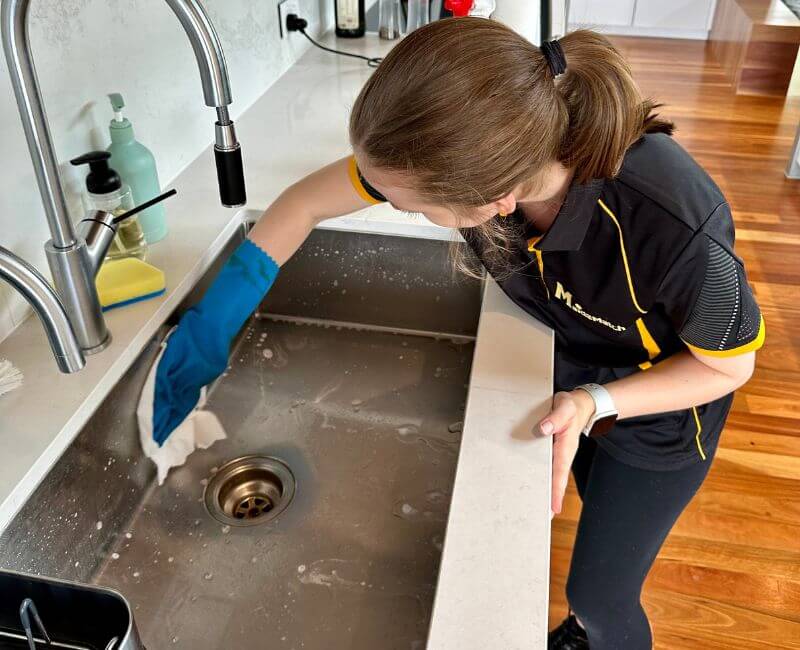
Pick up any debris from the sink basin, then wash it with warm water.
Squirt a generous amount of dish soap and sprinkle some baking soda over the surface. This is suitable for most types of sinks, including stainless steel, ceramic, or porcelain.
Next, work away any buildup with a microfibre cloth or soft sponge. When you’re done, rinse away all the residue with running water.
Step 2. Tackle the drain
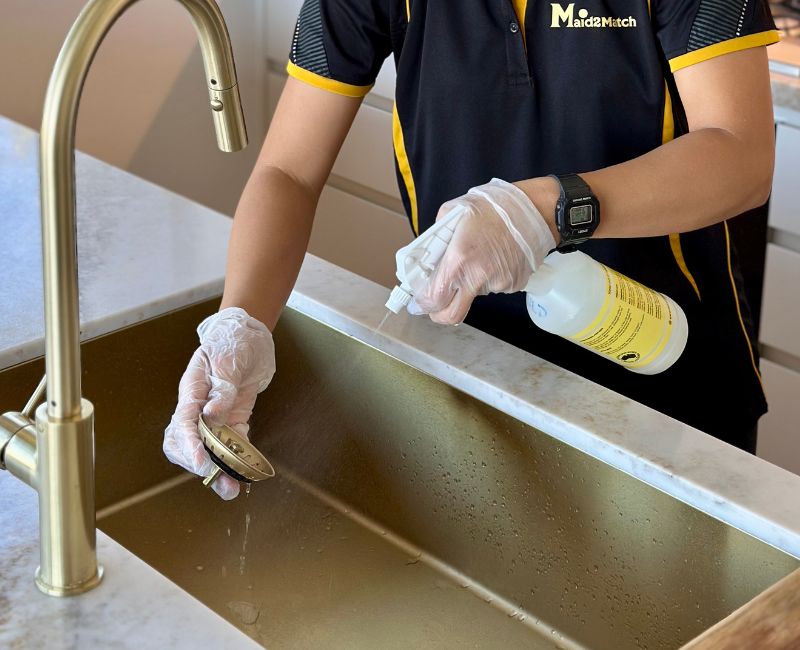
Lift out the sink strainer and any other removable parts — this is where the smell usually comes from. Pull out any trapped gunk and check for other buildup.
If you notice mould or mildew (they usually appear as dark or black stains), spray the parts with 3% hydrogen peroxide.
Didn’t see any mould spores? You can use hot, soapy water instead. Fill a bowl with hot water and a generous amount of dish soap. Soak the removable parts for about 10 minutes.
Don’t forget to sprinkle some baking soda around the damp drain opening as well. Wait about 10–15 minutes to allow the gunk to soften.
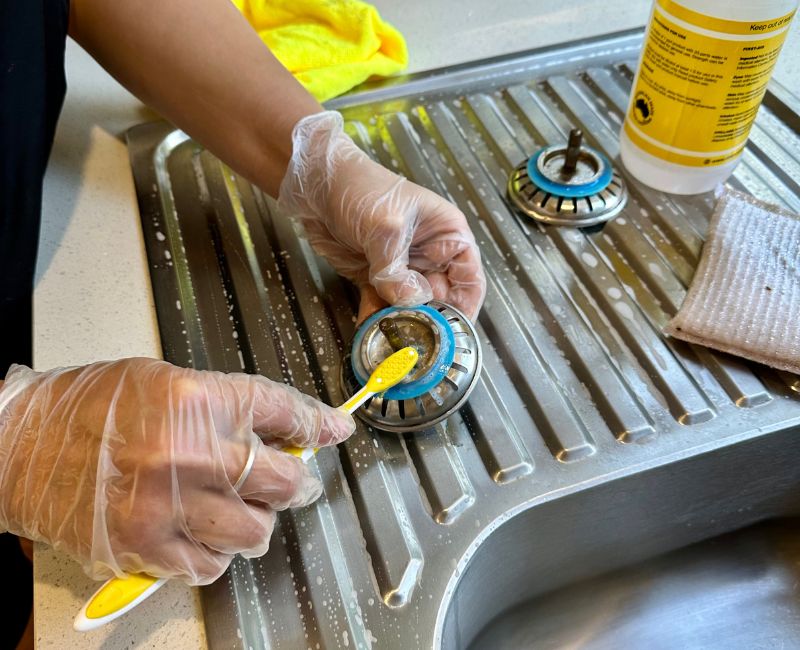
Grab an old toothbrush or any soft-bristle brush. Scrub around the drain opening and all the parts you removed, making sure to reach into any corners or crevices.
Rinse everything under running water to wash away any soap or baking soda residue.
Step 3. Deodorise the kitchen sink drain and pipe
Sometimes, a proper scrub is all it takes to fix a smelly drain! But if yours needs a little extra help, there are a few simple options to stop it from smelling.
The cleaning methods below don’t just freshen the drain, though; they also help dissolve minor blockages.
From mildest to toughest, here’s what you can put down the kitchen sink drain to deodorise it:
| CLEANING METHOD | BEST FOR | HOW TO USE |
| Dish soap | Everyday grease and light odours | Squirt a generous amount of dish soap down the drain. |
| Baking soda | Greasy buildup and general odours | Pour half a cup of baking soda down the drain. Leave it for 15 minutes to absorb odours. |
| Diluted white vinegar | Greasy buildup and general odours | Pour down equal parts vinegar and hot water. Leave for a few minutes. |
| 3% hydrogen peroxide | Mould, mildew, and disinfecting | Pour up to 1 cup down the drain and leave for 5–10 minutes. |
After using any of these methods, slowly flush the drain with hot water for about 30 seconds. You can use about 1 litre of water or so.
Also, do not mix baking soda and vinegar. That might be a popular cleaning hack, but they aren’t effective together.
Vinegar’s acidity neutralises baking soda’s alkaline properties, so they become ineffective when mixed.
What if the Kitchen Sink Smell Keeps Coming Back?
The best drain cleaner for a smelly kitchen sink — especially for stubborn odours — is an enzyme-based product.
A smelly drain that keeps returning is usually due to stubborn bacterial growth. It can stick to the pipe walls in deeper areas that a toothbrush can’t reach.
An enzyme-based drain cleaner uses enzymes and beneficial bacteria to break down grease, food residue, and other organic buildup that feeds the germs causing the odour.
It’s also safe for septic systems and won’t corrode PVC or old pipes.
Enzyme cleaners are easy to use as well. Read the label first — you’ll usually pour the liquid in and leave it overnight. Do not run the tap while the solution sits to allow it to work on the buildup.
You might have to use the product every few days at first, but over time the smell should improve noticeably and disappear.
When Should You Call a Professional Plumber?
If the smell persists no matter how much you clean the kitchen sink drain (and even after using an enzyme cleaner!), it’s time to reach out to a plumber.
These are signs that you’re likely dealing with a plumbing problem rather than a cleaning one:
- Gurgling sounds from the sink drain
- Slow drainage, standing water, or water backing up
- Multiple sinks smelling bad or draining slowly at the same time
These issues can point to a faulty P-trap, a blocked vent pipe, a gap somewhere in the pipework, or a problem further down the sewer line. In any case, they all require a professional drain cleaning service!
It’s also worth calling in a specialist for anything that requires getting deeper into drain pipes, like opening up the P-trap.
How to Prevent Kitchen Sink Drain Smells
The best way to deal with a smelly drain is to stop it before it starts!
Most kitchen sink drain smells start with what goes down the sink. Always scrape used plates and pans into the bin before rinsing. The same goes for coffee grounds. To be safe, place a strainer over the plughole to catch any debris that might get washed away.
Do not pour cooking oil down the sink, either. Once it cools, it sticks to the pipes and traps even more food particles. It’s better to dispose of used oil in a sealed container in the bin.
Of course, regular cleaning also goes a long way.
Wash the sink daily, using the hot tap and dishwashing liquid to flush away grease and residue before they have a chance to build up. Once a week, give the sink and drain a deeper clean as part of your kitchen cleaning routine.
And don’t forget to dry the sink after cleaning to prevent mould and mildew.
If staying on top of another chore feels impossible, book a regular cleaning service! A professional cleaner can keep your sink (and the rest of your kitchen) fresh, so you don’t have to think about it!
