
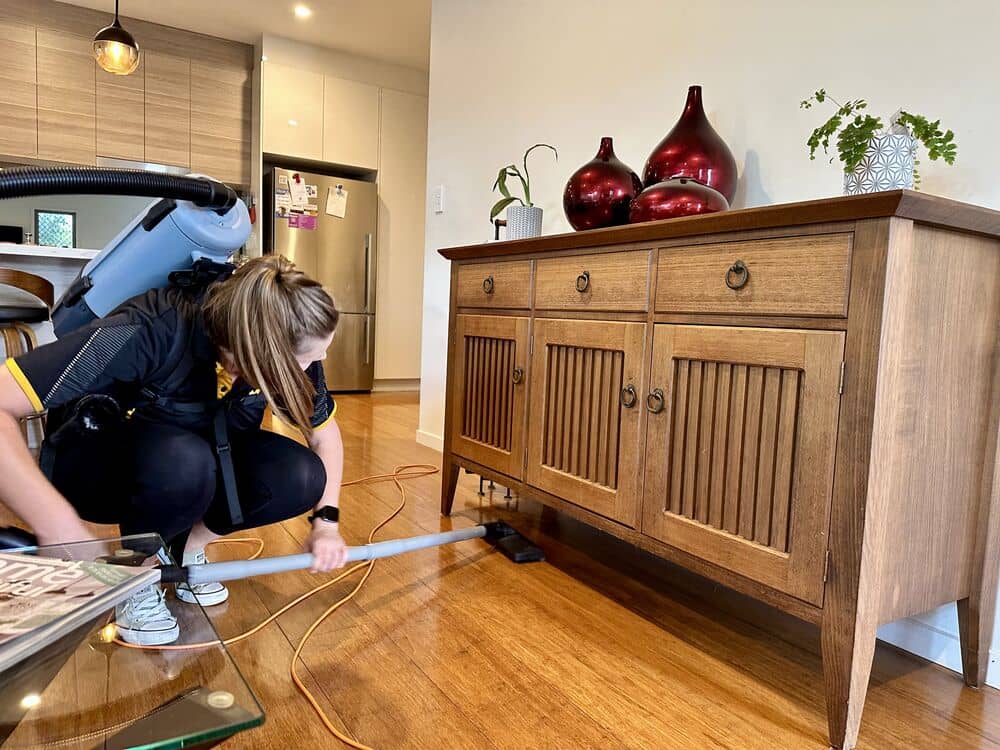
Bamboo is a great but underrated alternative to timber flooring. It’s just as durable as hardwood, while being eco-friendly and affordable — and easy to maintain.
Knowing how to clean bamboo flooring lets it look good and last a long time. The trick is to dry mop or vacuum regularly, and damp mop with a pH-neutral cleaner so you don’t damage the material.
A little extra care goes a long way to keeping your bamboo floors in good condition. With the right cleaning techniques, your floors will look bam-boo-tiful (ha!).
How Often to Clean | Before Cleaning | Routine Cleaning | Deep Cleaning | Floor Polishing | Removing Stains
What to Know About Bamboo Flooring
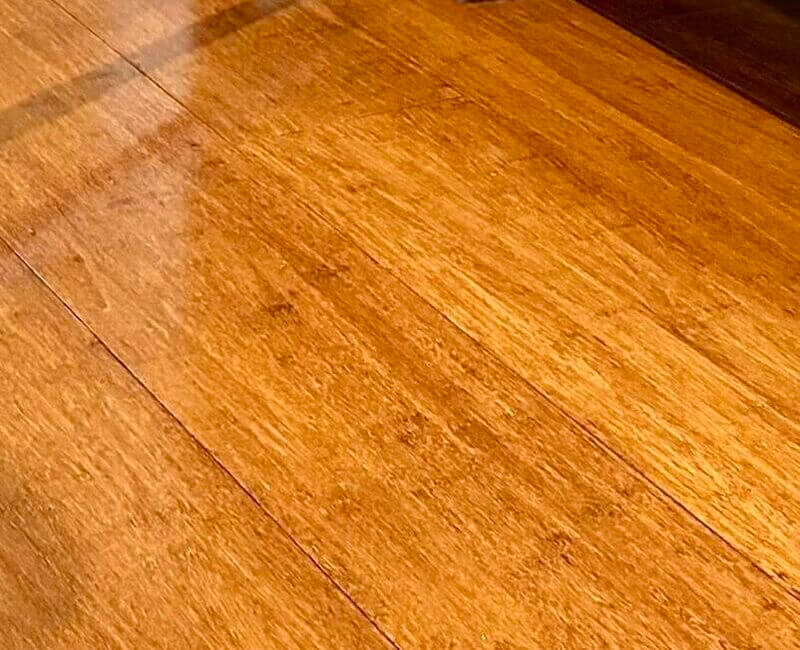
Modern bamboo floors are usually made of shredded bamboo fibres that are glued and compressed at high temperatures. You’ll typically find three varieties:
- Engineered bamboo flooring: Bamboo veneer with plywood or fibreboard core
- Strand-woven bamboo flooring: Has interlocking fibres to create a highly durable surface
- Water-resistant bamboo flooring: Fibres bonded to a waterproof base; can be more expensive
You can also find horizontal or vertical bamboo flooring, which is made of connected bamboo planks. These are less common in modern homes since they’re not as hard or durable as other options.
Many bamboo floors are installed as floating floorboards, though you can also get planks that are nailed or glued down.
Bamboo has better resistance to scratches than other types of timber flooring, but is similarly prone to water damage. It’s also sensitive to humidity (swelling) or dryness (cracking).
How Often to Clean Bamboo Floors
Dry mop or vacuum your bamboo floors 1–2 times a week to reduce dust and dirt buildup. For homes with small kids or pets, or high-traffic areas, vacuum more often.
Deep clean your bamboo wood floors by damp mopping once a week.
Blot and treat stains immediately so they don’t set into the surface. Bamboo is porous and can stain easily, especially if unsealed!
Depending on the manufacturer, you may have to refinish the floor once a year or so (except for engineered bamboo).
Before Cleaning Your Bamboo Floors
Bamboo flooring is low maintenance, but proper care will keep it in good condition! That includes knowing what to use and what to avoid when cleaning.
What you should clean bamboo floors with
Use a microfibre dust mop for removing dust and debris. It’s more effective than a soft-bristled broom, and can pick up even fine dirt like pet dander.
The best cleaner for bamboo floors is a pH-neutral wood floor cleaner. Look for one formulated for bamboo, but most non-acidic hardwood cleaners should work.
Otherwise, you can make a DIY bamboo floor cleaner with 1/2 tsp of mild detergent per 3 litres of warm water.
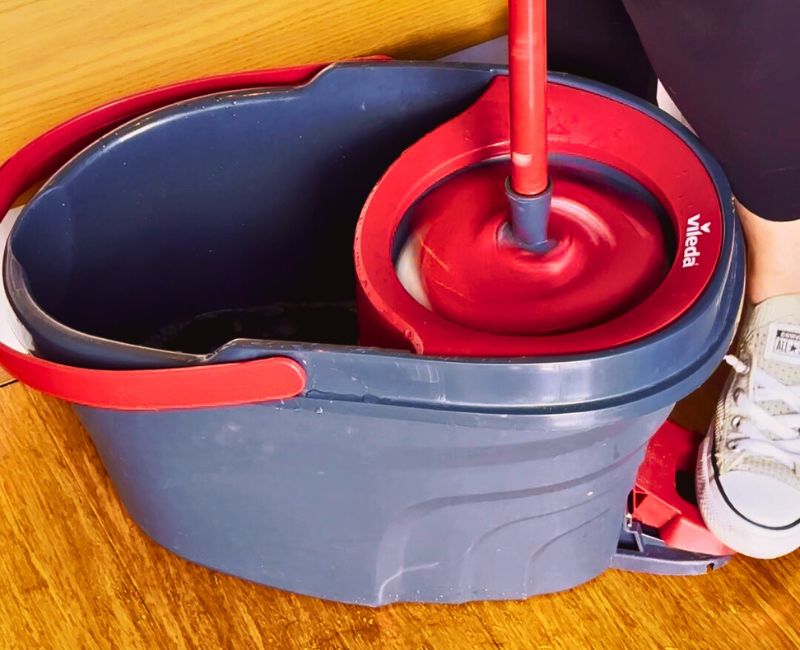
A microfibre spin mop is best for bamboo floors, since it’s more absorbent and lets you easily wring out excess water.
What can you not clean bamboo floors with?
Never use a steam mop or steam cleaner on bamboo flooring. The heat and steam can seep into the bamboo and lead to warping, swelling, or mould.
Avoid harsh chemicals like bleach or ammonia, which may damage the protective coating. Same with wax- or oil-based products, as they can leave a sticky residue on floors or dull the finish.
That includes any “wash and shine” products or oil soap like Murphy’s (not recommended for bamboo).
Only use vinegar for cleaning if the manufacturer allows it, as the acid can discolour or damage the floor material. Make sure to dilute it before use — about 1 part vinegar to 4 parts water.
Skip abrasive tools like steel wool or scrubbing pads, which may leave scratches that trap dirt. Stay away from string or sponge mops as well, since they can track water or leave streaks.
The Best Way to Clean Bamboo Floors
You can absolutely mop bamboo flooring, so long as you use minimal moisture! Alongside regular dry mopping, this will prolong the life of your floors.
Routine cleaning for bamboo floors
A few times a week, go over your bamboo floors with a dust mop to remove loose dirt. You’ll also need to do this before deep cleaning.
Start in one corner and push the mop across the floor in long, overlapping passes. Shake the mop over the rubbish bin every so often, and change the mop head if it gets too dirty.
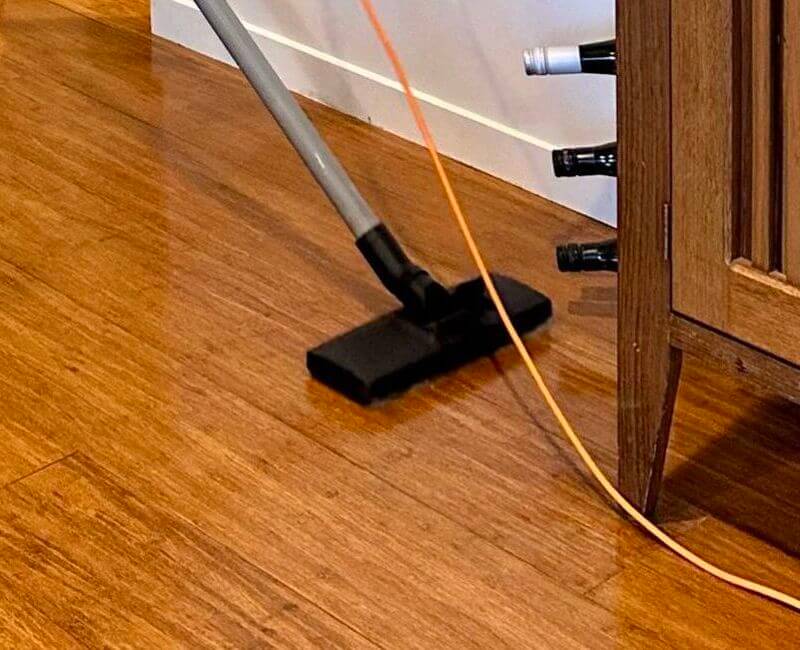
If you’d prefer to vacuum, make sure your machine has a hard floor setting or a way to disengage the beater bar. This helps reduce the risk of scuffing or scratching.
For spot cleaning, use a soft towel with a little water and dish soap. Dry the surface afterwards to prevent water spots.
Deep cleaning bamboo floors
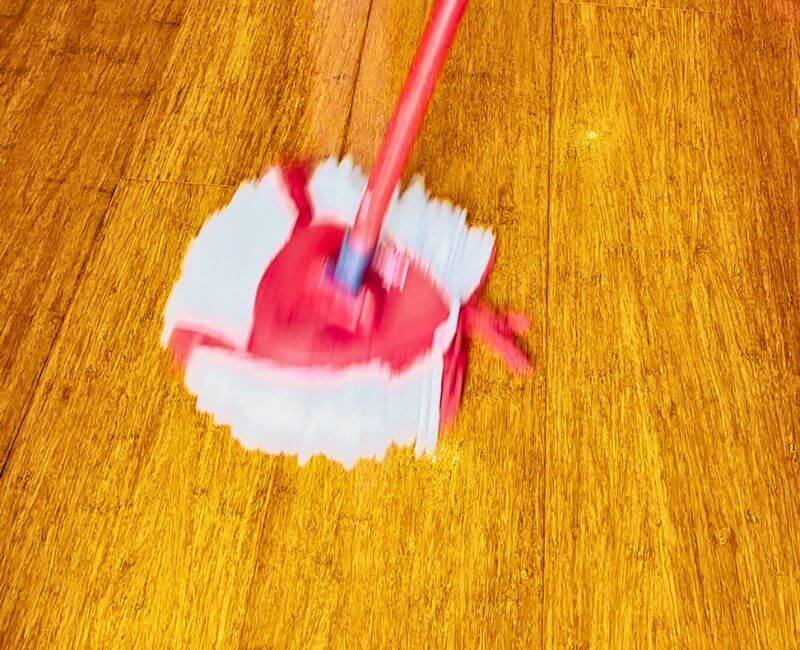
Besides routine maintenance, you’ll need to do more thorough cleaning to tackle deep-seated dirt and grime.
Mix your floor cleaner in one bucket, then fill another with clean water for rinsing. Dip your microfibre mop into the cleaning solution and wring it out so it’s slightly damp.
Mop the floor one section at a time, using back-and-forth strokes along the direction of the grain. Rinse the mop head regularly, and change the mop water or cleaner when it gets murky.
Wash off any residue with a fresh mop and clean water, then dry the surface right away for a streak-free finish.
How to Make Bamboo Floors Shine
You can use a floor polish to shine bamboo floors after cleaning if the manufacturer allows it!
Look for wood floor polish that’s compatible with bamboo. Your manufacturer may have their own recommended product.
Thoroughly clean and dry the surfaces beforehand. Apply the bamboo floor polish one section at a time, and do not use more than the recommended amount.
Let the polish dry completely before walking on the floors or returning heavy furniture.
Removing Stains from Bamboo Flooring
Stains tend to show up easily on light-coloured bamboo, so tackle any messes ASAP with the right cleaning methods.
Food stains
To remove food stains on bamboo floors, start by picking up any solids with a paper towel. Blot any liquid spills with a clean towel.
If the mess is fresh, wash it off with a soft cloth and some soapy water. Dry the floor immediately.
For stubborn stains, apply a thin paste of baking soda and water to the affected area. Wait a few minutes, then scrub the area with a damp cloth or sponge.
Wipe off the residue and dry the spot afterwards.
Pet stains
If your pet makes a mess indoors, clean it up immediately! Once urine sets into bamboo, it can be difficult to remove the stains and odours.
To clean cat or dog urine from bamboo flooring, start by blotting the mess with paper towels or clean cloths. If you have a wet/dry vacuum, this will help extract any moisture from the material.
For sealed floors, use an enzymatic pet stain remover that’s safe for wood, like Nature’s Miracle Stain & Odor Eliminator or Bona Pet Wood Floor Cleaner. Follow the product instructions for use.
For unsealed bamboo, try washing the area with a damp cloth and a mild detergent. You may need to repeat this a few times to get all the urine smell out.
Scuff marks
Scuff marks usually come from rubber items, such as furniture pads or shoe soles. The rubber drags across the surface and leaves a visible mark.
To remove scuff marks from bamboo flooring, apply a small amount of wood floor cleaner with a damp microfiber cloth. Carefully buff the spot in circular motions until the mark is erased.
You can also try gently rubbing the area with an old tennis ball or a pencil eraser.
Mould stains
If water has seeped into the bamboo, you may end up with mould or mildew stains. They’ll usually be a dark green or grey.
For mild mould stains, try spraying the area with 3% hydrogen peroxide or white vinegar (never both!). Leave the hydrogen peroxide to sit for 10 minutes, while vinegar needs at least an hour to work.
Wash the area with water and a mild detergent afterwards.
If that doesn’t work, though, you may need to have the floor professionally refinished.
Tips for Maintaining Bamboo Flooring
Do not use a wet mop on bamboo floors, since this can leave standing water on the surface. Stick to a barely damp mop to minimise moisture.
This is extra important when cleaning bamboo floating floorboards, as water can get underneath the planks.
Protect the floors by using felt pads under furniture legs, and keep your pet’s nails neatly trimmed. Additionally, place doormats by the entrances and use rugs or runners in high-traffic areas.
Of course, you can skip the worry and effort by leaving your floor cleaning to Maid2Match’s professionals!
FAQs About Bamboo Floor Cleaning
Got more questions? Here are a few other good things to know about maintaining your floors.
How to clean bamboo floors naturally
For an eco-friendly bamboo floor cleaner, use Castile soap! Follow the product instructions for dilution, and rinse off any residue afterwards with a damp mop.
How to keep dark bamboo floors clean
It can be trickier to maintain dark bamboo floors since dust shows up more easily, while stains are harder to spot.
Dry mop or vacuum a few days a week to prevent dirt buildup, and mop at least once a week. Avoid using acidic cleaners since these have mild bleaching properties and will discolour the floor’s finish.
How to clean bamboo floors without streaks
You usually get streaks on floors after cleaning due to leftover water or too much cleaning product.
Go over the floors again with a clean mop and warm water to remove any residue. Then dry the surface right away with a dry mop or soft towel, making sure to wipe with the grain of the wood.
