
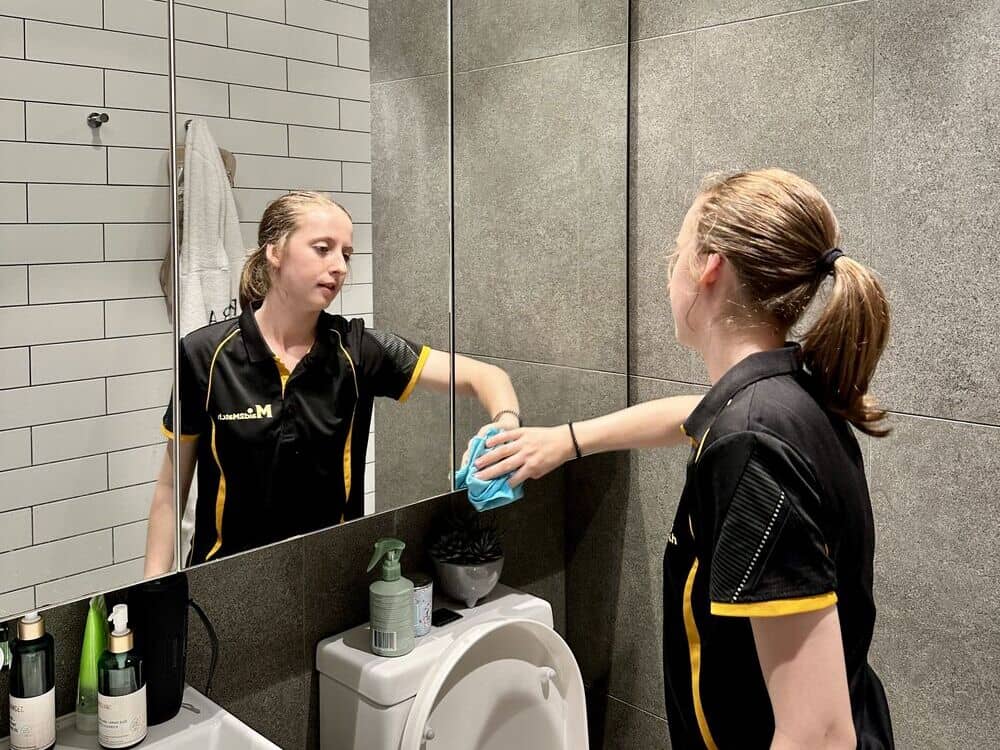
Cleaning can be a very rewarding job. You get to see the results of your work right away, from sparkling benchtops, to spotless floors, to happy clients!
Many cleaners also love the flexibility and work-life balance that cleaning roles can offer.
But the big question is: how much do cleaners really earn? Well, it mainly depends on your work setup.
If you’re an independent contractor, you have the freedom to set your own prices, since you operate as a small business.
For those employed by a company, your pay is set by Australia’s Fair Work Commission based on your employment type (full-time, part-time, or casual) and responsibilities.
In this guide, we’ll tell you all about cleaners’ pay in Australia, so you’ll know exactly what to expect!
Independent Contractors Rate | Employee Cleaners Pay Rate | Permanent vs. Casual: Who Earns More? | Other Factors that Affect Pay | Checking Your Pay
Understanding the Different Work Arrangements for Cleaners
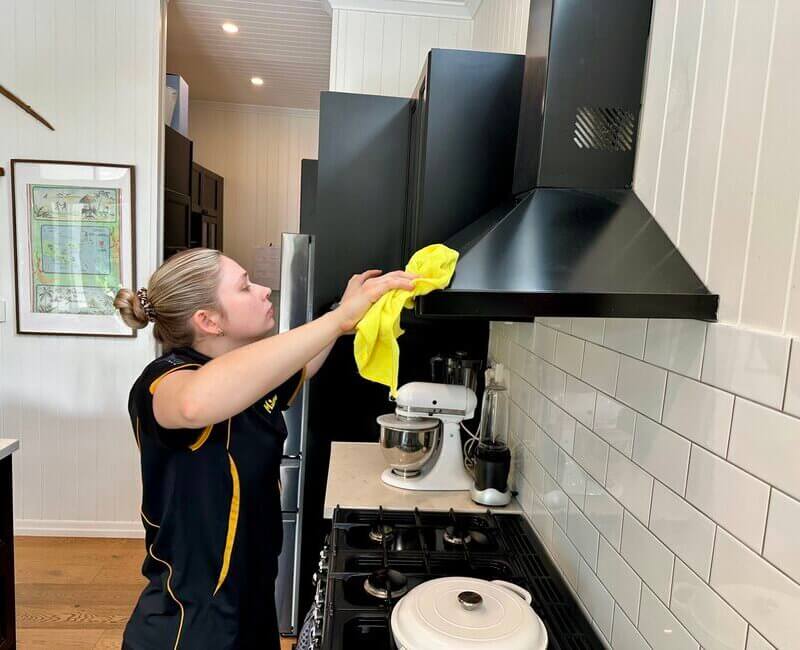
Before we look at the numbers, it’s important to understand the different ways that cleaners work in Australia.
Your work arrangement (whether you’re working for yourself or you’re employed by a company) affects the income and benefits you get.
Working as an independent contractor
So, what’s the difference between an independent contractor and an employee cleaner?
If you’re an independent cleaner, you work for yourself instead of a cleaning company.
That means you operate as a sole trader, which means running a small business and providing cleaning services directly to clients.
You’ll also be responsible for:
- Registering for an Australian Business Number (ABN) to issue invoices
- Paying for and managing your own cleaning supplies and equipment
- Handling marketing, sales, customer service, and scheduling
- Managing taxes and financial records
- Arranging public liability insurance
As your business grows, you can eventually start hiring your own team of cleaners.
Working as an employee cleaner
Joining a cleaning company like Maid2Match is usually the easiest way to become a cleaner in Australia.
If you’re employed by a company, you’ll usually fall under one of these arrangements:
| FULL-TIME PERMANENT EMPLOYEE | PART-TIME PERMANENT EMPLOYEE | CASUAL EMPLOYEE |
| Steady, predictable income | Steady, predictable income | Fluctuating income based on demand |
| Works 38 hours per week on average | Works fewer than 38 hours per week on average | No guaranteed weekly hours |
| With paid leave and superannuation | With paid leave and superannuation based on the number of hours worked | No paid annual leave |
Your exact responsibilities also vary depending on what you’re hired for.
Beyond general housekeeping, cleaners may handle specialised duties. You can become an NDIS cleaner (cleaning homes for people with disability) or provide services for elderly people through Aged Care cleaning.
There are also other types of cleaning services, like healthcare and industrial cleaning.
Your employment type and the complexity of your role will determine how much you’re paid as a cleaner.
How Much Do House Cleaners Earn In Australia?
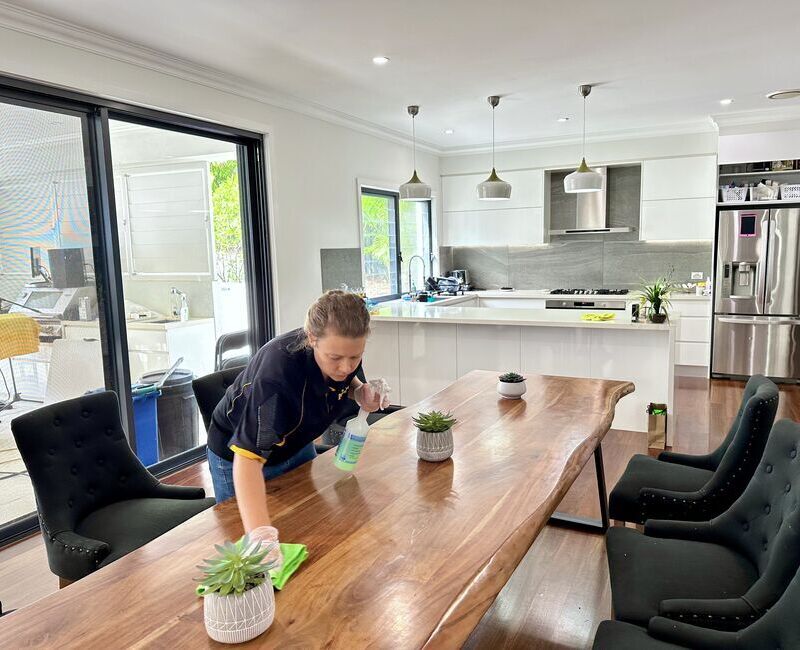
Apart from your work setup, your pay as a cleaner in Australia also varies depending on your experience and the type of cleaning you do!
How much can you earn as an independent contractor?
If you’re an independent contractor, you can typically charge your clients $30–$60 per hour.
Since you operate as a small business, you can set the prices for your cleaning services. Usually, the rates are based on:
- Target profit margin
- Average prices across the market
- Operating costs (e.g. cleaning supplies, travel, insurance)
- Type of cleaning service (e.g. regular domestic cleaning, bond cleaning, NDIS cleaning)
However, your income as an independent contractor can be unpredictable, especially if you’re just starting in the industry.
You also have the option to subcontract for cleaning companies.
In that case, the company gives you cleaning jobs but typically takes a portion of your earnings per job or charges a flat fee.
On top of this, you’re also responsible for calculating your own annual tax returns.
(This is one reason many former contractors who join us at Maid2Match choose to switch to employed roles, where taxes are automatically handled for them!)
All these factors — client demand, business expenses, subcontracting arrangements, and taxes — affect how much you ultimately earn as an independent cleaner.
How much can you earn as an employee cleaner?
The Cleaning Services Award from Fair Work sets the minimum hourly pay for employee cleaners, based on the type of employment and the skill level of the role.
Your job can fall under any of these levels, each with its own pay rate:
| JOB LEVEL | FULL-TIME PERMANENT CLEANERS | PART-TIME PERMANENT CLEANERS | CASUAL CLEANERS |
| Level 1 Cleaner | From $27.08/hr | From $31.14/hr | From $33.85/hr |
| Level 2 Cleaner | From $27.97/hr | From $32.17/hr | From $34.96/hr |
| Level 3 Cleaner | From $29.45/hr | From $33.87/hr | From $36.81/hr |
(These figures were updated as of July 2026.)
Generally, here’s what each level involves:
Level 1 Cleaner: You’ll handle basic cleaning duties like vacuuming, mopping, or dusting surfaces.
Level 2 Cleaner: You’ll take on more detailed or specialised cleaning work. They may also use equipment like steam cleaners or pressure washers.
Level 3 Cleaner: You may have supervisory or management duties, performing Level 1 and 2 tasks while overseeing the work of other cleaners.
At Maid2Match, we follow Fair Work guidelines to ensure you’re paid fairly for your skills and responsibilities.
Permanent vs. Casual Cleaners: Who Earns More?
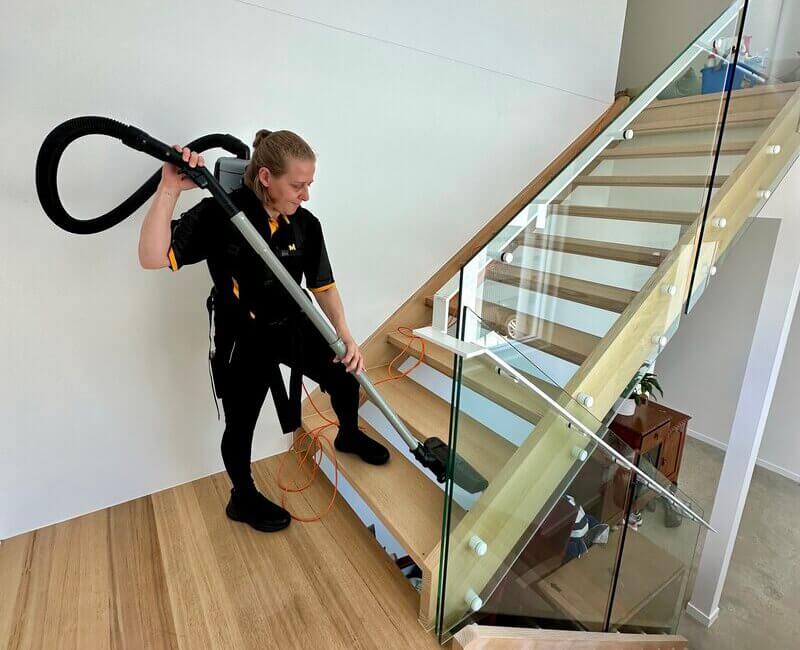
At first glance, casual employees seem to get paid more than permanent staff cleaners on a per hour basis.
However, permanent cleaners can earn just as much (or even more!) when you factor in all the benefits.
Why casual cleaners get a higher hourly pay rate
As a casual cleaner, your pay rates are usually higher than permanent cleaners because of the 25% casual loading added on top of the base rate.
That extra pay makes up for the lack of entitlements like paid annual leave.
However, keep in mind that you do not have guaranteed working hours, so your weekly income will often fluctuate.
You might also get fewer training or promotion opportunities, since you’re not employed permanently.
Lastly, you’re usually not entitled to notice of termination or redundancy pay if your job ends.
Casual work can be terminated at any time, although you’ll be paid for all the hours you’ve worked.
More benefits for permanent employee cleaners
If you’re a permanent employee cleaner, your hourly rate might be a little lower than that of casual workers.
However, you’ll receive plenty of benefits that add value to your total compensation:
- Paid sick leave
- Paid annual leave
- Employer-paid superannuation
As a full-time or part-time permanent cleaner, you’ll also get guaranteed working hours each week, so your income is steady and predictable.
Additionally, being a part of a company can open doors for career growth.
At Maid2Match, for example, high-performing Field Staff can move into leadership roles through the Pathways Program. This can help boost their pay.
You’re also entitled to notice of termination if the role is about to end.
And if you’ve been employed for at least a year by a company with 15 or more employees, you’re usually eligible for redundancy pay (if your role was made genuinely redundant).
Overall, working as a permanent cleaner gives you real job security and stability!
Other Factors that Affect Employee Cleaners’ Pay
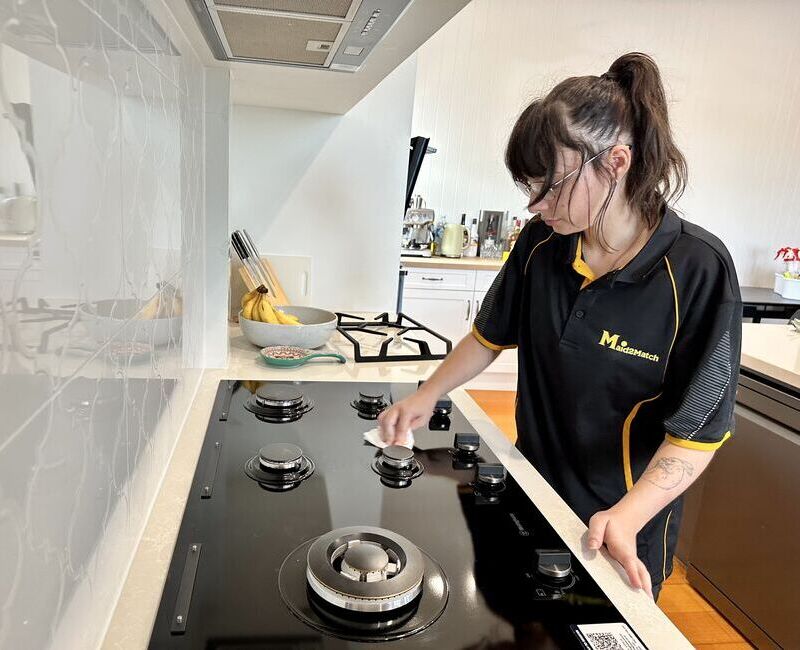
Many factors can affect the pay rates for domestic cleaners, such as promotions, location, or extra allowances.
Career progression
Starting as a cleaner with no experience might mean lower pay, but that doesn’t mean you’re stuck there.
With good performance, you can move up to higher positions and handle specialised responsibilities.
Of course, the company you’re with plays a huge part in your career growth, so it’s important to find a supportive workplace.
At Maid2Match, cleaning is not a dead-end job!
Through our Pathways Program, you’ll have the chance to advance your career and move into higher-paying roles.
Inexperienced permanent part-time cleaners start as Trainees (Level 1 Cleaners). At this stage, you’ll learn the basics of the job.
Once you complete your training, you’ll become a Regular Field Staff (Level 2 Cleaners). If you join us with 6+ months of experience, you will start as a Level 2 Cleaner.
As you gain more experience, you can step up to a Field Staff Trainer role. You’ll be paid a Level 3 rate for the time you spend training new team members.
When you’re ready to lead, you may be promoted to Assistant Field Team Leader, Field Team Leader, or Division Manager.
These roles generally come with a full-time salary that reflects your skills, experience, and leadership duties.
Location
The Fair Work Award sets the minimum cleaner salaries in Australia, and those apply to specific regions and cities, too.
But if you browse online job boards, you might notice that actual pay still varies depending on where you work.
That’s because cleaner wages are often influenced by local house cleaning rates, which businesses set based on:
- The area’s cost of living
- Demand for cleaning services
- Competition among providers
For example, if you live in a major city like Brisbane, Melbourne, Perth, or Sydney, you might earn more due to the higher cost of living and stronger client demand.
The same goes for rapidly growing cities like Adelaide, Newcastle, and Wollongong, where the market for cleaning services is becoming more competitive.
All these can lead employers to offer higher pay to attract more job applicants or retain experienced staff.
On the other hand, smaller cities like Cairns and Darwin may offer lower hourly rates for cleaners since there’s less demand for cleaning services.
Penalty rates
Under the Fair Work Award, cleaners are entitled to penalty rates when they work outside standard hours. That means you’re entitled to a higher hourly rate when you work:
- On weekends
- On public holidays
- Shifts that start before 6:00 AM on weekdays
- Shifts that finish after 6:00 PM on weekdays
- Permanent night shifts that end between midnight and 8:00 AM on weekdays
You’ll also earn extra for overtime hours worked beyond the standard 38-hour week.
And if your overtime falls on a weekend or public holiday, those rates go up even more.
Maid2Match operates on weekdays and within regular business hours, so you can enjoy steady work without needing to take on inconvenient shifts.
Allowances
Cleaners may also be given allowances for work-related expenses. These can include vehicle, travel, meals, or uniform costs.
At Maid2Match, our Field Staff are given a uniform, and complete cleaning equipment and supplies. We also provide car and travel allowances.
How to Tell if You’re Paid Fairly as a Cleaner
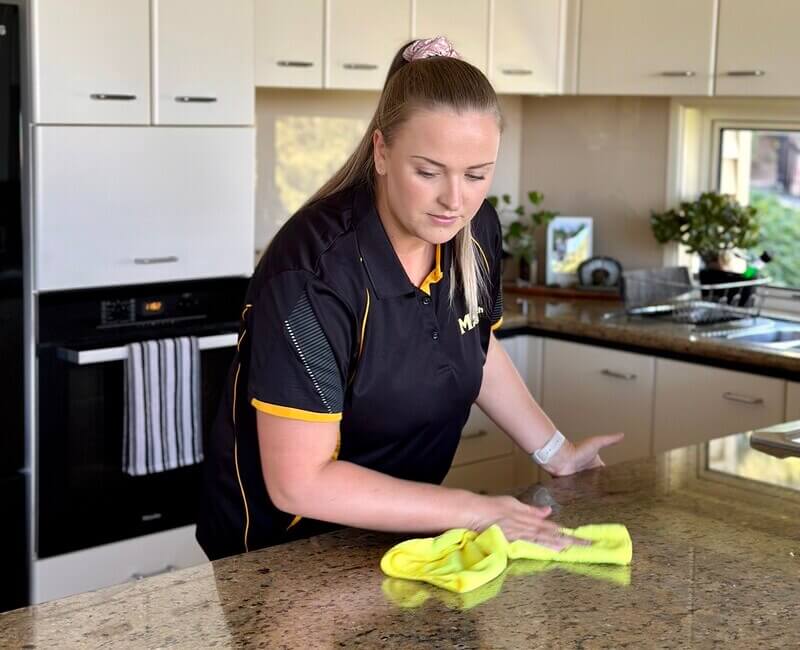
If you’re wondering if cleaning is a good job, pay is definitely one of the first things to consider!
To see if you’re getting a fair deal, you can compare your rate with the Cleaning Services Award.
Make sure you know how your job is classified (Level 1, 2, or 3) and whether you’re working full-time, part-time, or casual, since each setup has different rates.
It’s also a good idea to ask your employer (or potential employer, if you’re applying to a job) about how your pay is calculated.
Don’t be afraid to clarify any concerns you have, such as allowances, overtime, or penalty rates.
You can also browse job boards to see the rates for other cleaning roles in your area. That’ll give you a good sense of whether your pay is competitive.
And finally, remember that fair pay is not only about the hourly rate.
The non-cash benefits, like job security, guaranteed hours, and growth opportunities, make a big difference in how fulfilling a cleaning role can be.
Build a Rewarding Career at Maid2Match
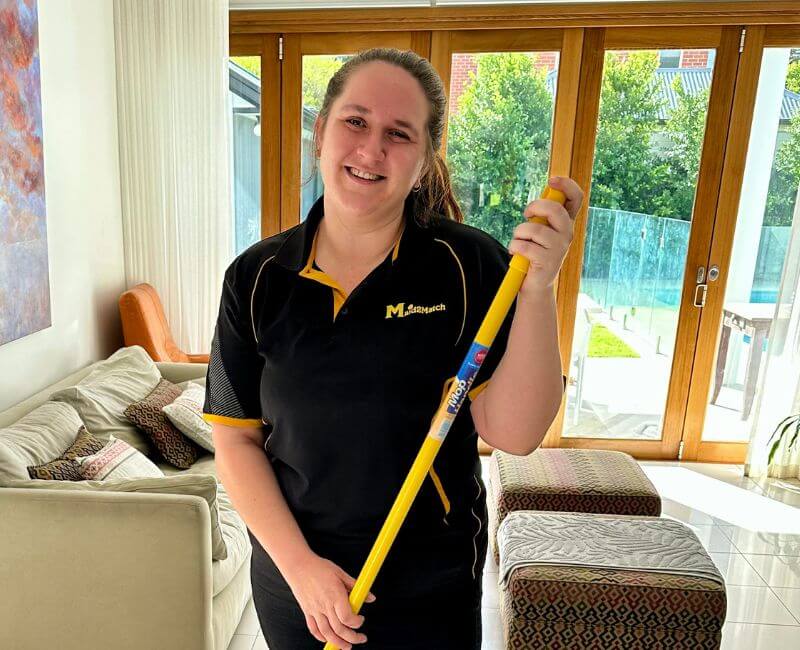
Cleaners deserve fair pay, transparency, and opportunities to grow, and these are exactly what Maid2Match offers.
We’re upfront about pay and are fully compliant with Fair Work standards, so you can feel confident that you’re being paid fairly for your work.
Our part-time permanent Field Staff also get guaranteed weekly hours, so you’ll always know what income to expect.
On top of that, we provide:
- Cleaning supplies and equipment
- A professional cleaning uniform
- Car and travel allowances
That way, you can focus on your work without worrying about extra expenses.
We’re also proud of our Pathways Program, a career development initiative that supports cleaners who want to step into training, supervisory, or leadership roles.
Check out the available cleaning jobs on our Careers page, where you can also get a feel of our culture and see our Field Staff in action!
