
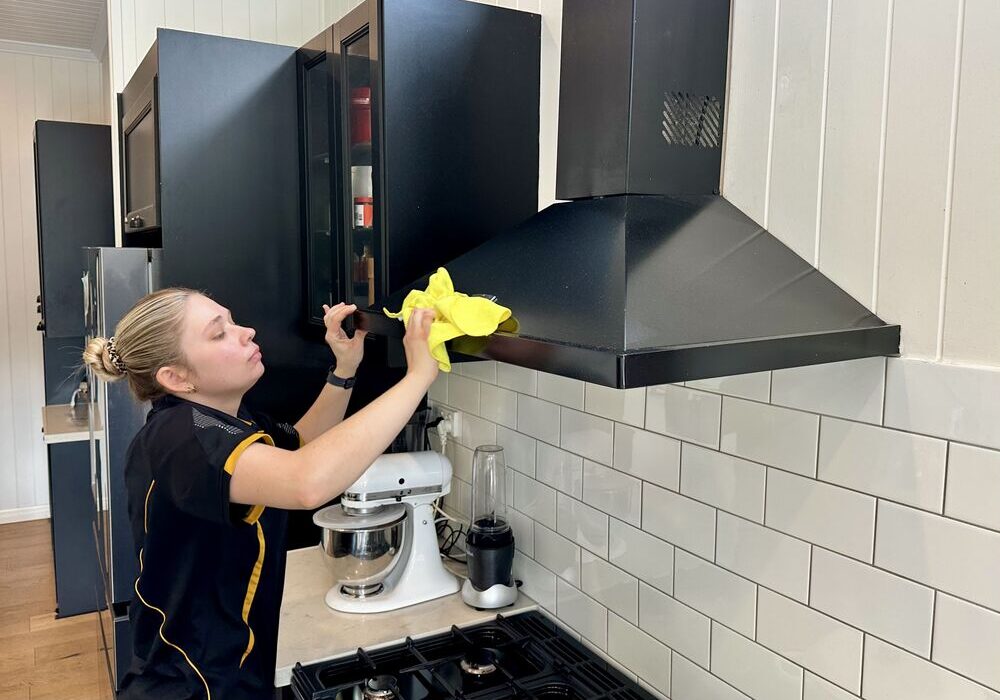
Rangehoods are like the lungs of your kitchen. They draw in grease, smoke, and steam while you cook, so your kitchen stays fresh and cool.
All they really ask in return is regular cleaning.
Maintaining your rangehood is essential for good air quality and ventilation. It also reduces fire risks, eliminates cooking odours, and keeps things hygienic — no one wants old grease dropping back onto their food!
Luckily, the whole task is simple. All you need is baking soda, a mild detergent like dish soap, and warm water.
Start by soaking those filters, then work through the interior, fan, light covers, and exterior.
Ready to deal with that sticky grease? Let’s get into it!
Knowing Your Rangehood | Before Cleaning | Deep Cleaning a Rangehood | Removing Stubborn Grease | After Cleaning | Maintenance Tips
How Often Should You Clean Your Rangehood?
You don’t have to clean every nook and cranny of your rangehood each time.
Different parts need attention at different times, since some areas get grimier faster than others. This routine will let you stay on top of the buildup:
| FREQUENCY | WHAT TO DO |
| Every week | Wipe down the rangehood exterior |
| Every month | Soak and scrub the filters |
| Every 3–6 months | Clean the interior and fan, check the lights, and replace any charcoal filters |
This is just a general guide, though. If you fry or cook on high heat a lot, grease builds up faster, so you’ll need to clean more frequently.
You can tell your rangehood is overdue for a good scrub if you notice:
- Visible stains
- Sticky exterior
- Rattling sounds
- Lingering smells after cooking
Don’t want to clean all that gunk yourself? You can always bring in a professional cleaner to refresh the whole rangehood for you!
Knowing Your Rangehood
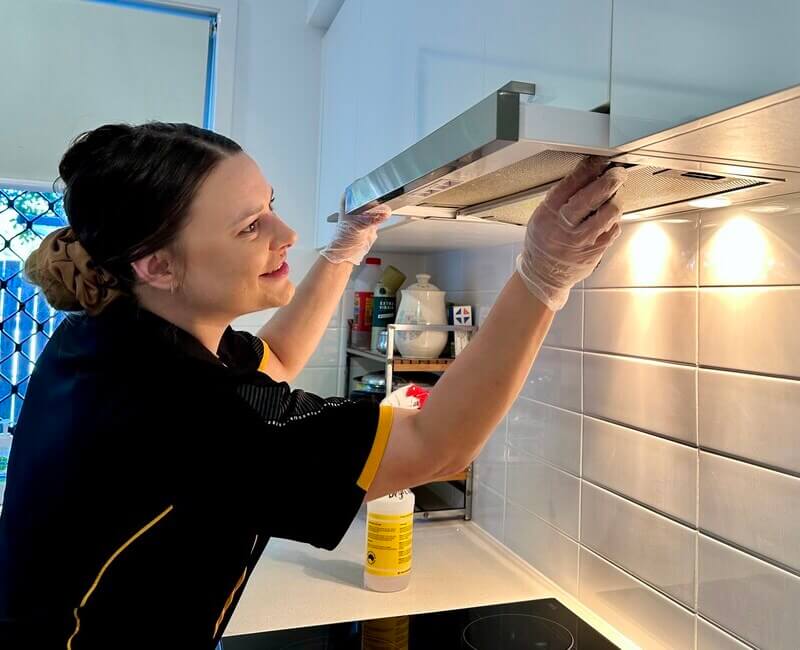
Rangehoods are made from different materials, and their parts aren’t all built the same.
You need to know what you’re working with, since the wrong cleaning method can damage the finish or components!
Is a rangehood the same as an exhaust fan?
No — they’re different!
A rangehood sits directly above your cooktop and draws in grease, moisture, and smoke while you cook.
An exhaust fan, on the other hand, is used for general ventilation. It’s usually installed in the ceiling or on the wall. And unlike a rangehood, it doesn’t have filters, and it’s not built to handle heavy cooking fumes.
Cleaning a kitchen exhaust fan is a bit different from cleaning a rangehood — though you’ll still deal with sticky grease buildup!
How to clean different rangehood materials
Stainless steel is one of the most common materials for rangehoods.
To clean a stainless steel rangehood, always wipe with the grain.
Avoid circular motions or going against the grain, since that can push residue into the tiny grooves between the lines. That might cause scuffs or streaks as you wipe.
Once clean, you can buff the surface with a light coat of stainless steel polish. This restores shine and prevents smudges from fingerprints or oil.
Other models use glass canopies. They can handle a range of cleaners but tend to show every spot and streak.
That means they need more frequent upkeep. You may also have to rinse multiple times and dry everything thoroughly to keep the surface clear.
On the other hand, black or white rangehoods are usually made of powder-coated metal. They need gentler care, so stick to dish soap and water. Avoid highly acidic cleaners like vinegar, which can dull the finish over time.
Which parts of a rangehood can you safely remove?
For a deep clean, you need to detach a few parts of your rangehood.
Rangehood filters and light covers are usually removable, but make sure you know how to take them out safely.
If you’re using a ductless (recirculating) rangehood, they usually have charcoal or carbon filters. These are not washable! Instead, replace them with new filters every 3–6 months.
The rangehood fan and its housing aren’t always designed to come off. Don’t force them, or it could void your warranty. The safest approach is to clean them in place.
Whenever you’re unsure about which parts are safe to remove and which aren’t, the product manual is your best guide.
Before Cleaning a Rangehood
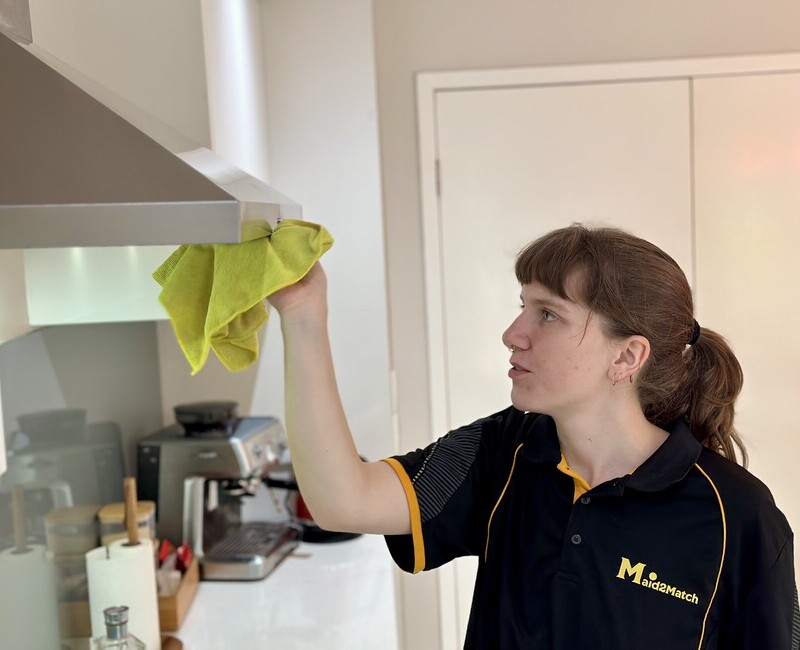
Before you start, it’s worth knowing what to use (and avoid), and what to keep in mind to protect both you and your rangehood!
General safety measures
Power off the rangehood and the main switch before anything else.
If you’ve just been cooking, give everything some time to cool. When cleaning around the lights, keep in mind that those areas stay hot for longer.
You should also open a window to let some fresh air in, or run the exhaust fan. That helps carry away any stale food smells, greasy odours, or fumes from cleaning products.
What do you need to clean a rangehood?
The best way to remove grease from a rangehood is with gentle alkaline cleaners like dish soap (or any mild detergent) and baking soda.
Diluted white vinegar can also remove light buildup or residue from cleaning solutions.
Here’s a quick guide:
| CLEANER | HOW TO USE | NOTES |
| Dish soap | Mix a small amount with warm water | Best for the interior and exterior |
| Baking soda | Mix 3:1 baking soda and warm water OR 1:1 baking soda and dish soap | Powerful against stubborn grease |
| Vinegar | Dilute with equal parts warm water | Removes light buildup; avoid on aluminium mesh filters |
Do not mix baking soda and vinegar, though. They’re useful on their own, but a base (baking soda) plus an acid (vinegar) gives you a neutral mixture with very little cleaning power.
Dedicated rangehood cleaners work, too, but read the label first to verify they’re safe for your rangehood’s material. Follow the instructions carefully to avoid damage.
It’s also smart to do a spot test whenever you’re unsure if a cleaning solution is compatible with the surface.
Aside from your cleaner, you also need to prepare some microfibre cloths and a soft-bristle brush, like an old toothbrush.
What should you not clean a rangehood with?
No matter how much buildup you’re dealing with, never use abrasive tools like steel wool or the green side of a sponge.
They’ll scratch stainless steel or glass rangehoods, or peel off powder-coated metals.
You should also avoid heavy-duty kitchen cleaners (like caustic oven cleaners), products with bleach, and other formulas that use harsh chemicals.
These are too strong for rangehoods and can discolour the surface permanently.
How to Deep Clean a Rangehood
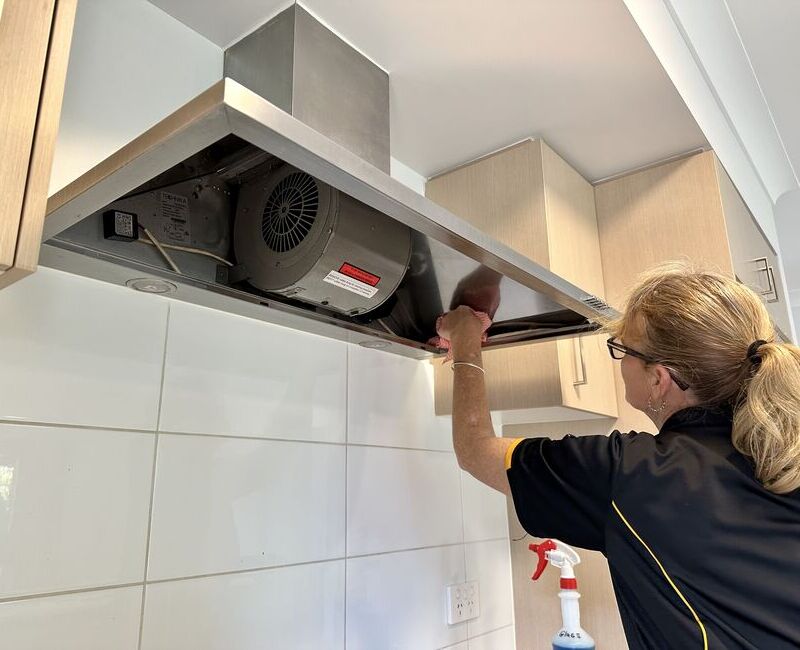
A full clean means you’ll be tackling every part of the rangehood!
Before you proceed, though, take some time to prepare, as this can make the entire task go faster.
Preparing for rangehood cleaning
Cover your stove top or other nearby surfaces with old cloths to catch any drips or falling debris. You can also use garbage bags.
Then, wear rubber gloves to protect your hands from grease, cleaning products, and any sharp edges. A sturdy ladder or chair also comes in handy if you can’t reach the rangehood.
Start by dusting the top — use a dry microfibre cloth or a soft-bristle brush to clear loose dirt. This stops you from mixing dust and grease when you add liquid.
Since the grease filters need soaking, prepare the solution first. (Some filters can go in the dishwasher, but be sure to confirm with the manual.)
Fill the sink or a large plastic tub with very hot water, 1–2 cups of baking soda, and a generous amount of dishwashing liquid. Stir well with a metal ladle or spoon (anything that handles high heat works).
Remove the filters and place them straight in. Let them soak for 20–30 minutes while you work on the rest of the unit.
For every part of the rangehood, the steps are about the same — wipe, rinse, and dry. Mix warm water and some dish soap in a bowl or spray bottle so your cleaner is ready to go.
To make the task more efficient, always clean inside to out, top to bottom.
How to clean the inside of a rangehood
The interior is the dirtiest part of your rangehood, after the filters. Once the filters are removed, you should be able to see and reach the inside.
Some models have exposed wiring, so never spray any solution directly inside. Instead, dip a microfibre cloth into warm, soapy water. Wring it out well so it’s not dripping.
Wipe the interior of the rangehood. Pay attention to the rim and the edges around the filter slot — beads of oil and grease love to collect there.
For tighter spots like corners or around screws, use an old toothbrush dipped in the same solution.
Rinse all soap residue using a cloth dampened with plain water. You may also do a final pass with a rag sprayed with equal parts vinegar and water to remove lingering smells.
Go over the surface with a dry cloth afterwards.
How to clean the rangehood fan
In many rangehoods, the fan sits behind a fixed housing, so in most cases, you’ll just be wiping the housing itself.
If the fan is accessible, you can clean it in place — only remove the housing or blades if the manual says it’s safe.
For removable fans, take a quick photo before disassembling so you can reinstall the blades correctly. Otherwise, your rangehood won’t run properly!
Use a cloth dampened with warm, soapy water, and gently go over the housing or blades. A soft-bristled brush or an old toothbrush works well for grease stuck between the blades.
Wipe everything with a damp cloth to rinse, followed by a dry rag.
How to clean rangehood light covers
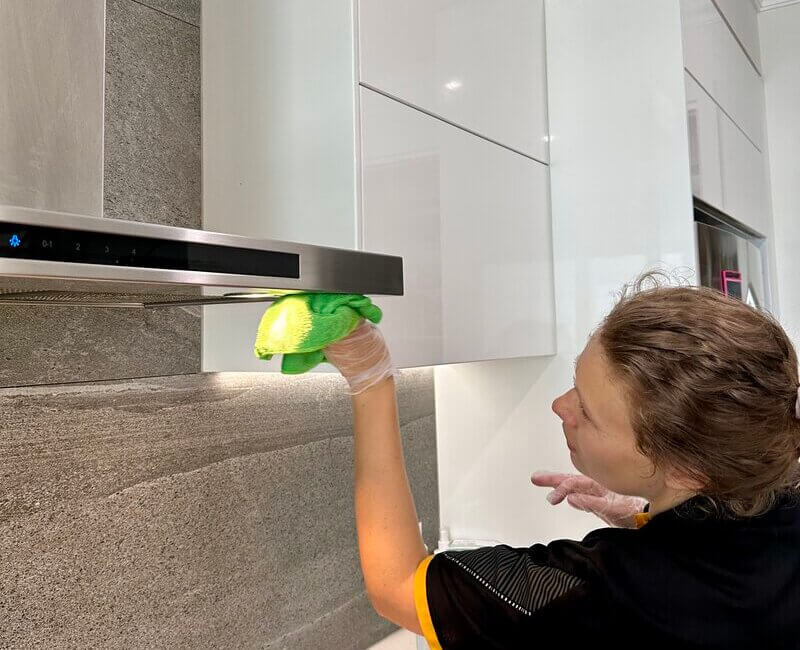
Cleaning the light covers can make a big difference. Grease can dim the light more than you’d think!
Make sure everything has cooled down before you start. The area around the lights stays hot for longer than the rest of the rangehood.
Remove the covers first. Some simply clip off, while others use screws.
Soak them in warm, soapy water with a bit of baking soda for 5–10 minutes. Wipe or gently scrub with a soft cloth, then rinse and dry.
For the rangehood light bulbs themselves, do not get them too wet. Just wipe carefully with a well-squeezed soft cloth dipped in equal parts vinegar and water.
Follow up with a lint-free cloth to dry.
How to clean the rangehood exterior
A mixture of dust and grease can take over the exterior of the rangehood. That often becomes sticky and stubborn over time, but cleaning it is simple!
Spritz soapy water onto a microfibre cloth or a soft sponge. Scrub the outside of your rangehood, spending more time on stains and greasy buildup.
Rinse with a clean, damp rag, and wipe dry to avoid water spots.
How to clean rangehood filters
Clean the rangehood filters once they’ve soaked in the baking soda and dish soap solution for at least 20 minutes. By then, most of the stubborn grease and oils have already softened.
Lift them out of the water, then gently scrub both sides of each filter with a soft-bristle brush.
Rinse under warm running water to wash away any loosened grime and remaining baking soda or soap.
Afterwards, lay the filters over a towel, or prop them against a wall to air dry. You can also take them outside to speed things up.
How to Remove Stubborn Grease on a Rangehood
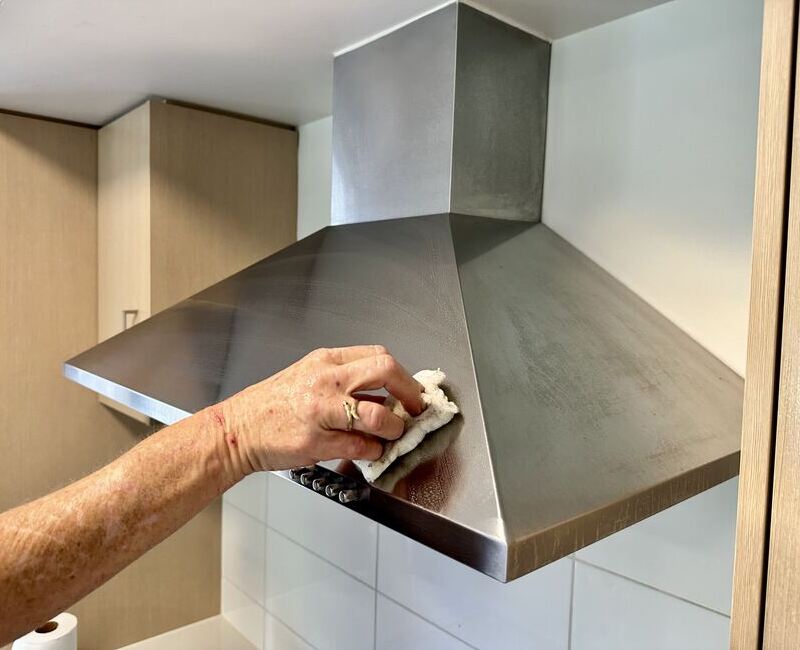
Cleaned every part of your rangehood and still dealing with tough grease stains? Try adding a bit of oil to loosen it first.
It sounds counterintuitive, but oil can soften hardened grease, making it easier to lift.
Apply a small amount of mineral oil or cooking oil to a soft cloth. Rub it firmly into the stubborn spot, and let it sit for a minute.
Then, make a thick paste using 3 parts baking soda and 1 part warm water. You can also use equal parts baking soda and dish soap if you need a stronger alternative.
Spread the paste over the problem areas, and allow it to further break down the buildup for around 10 minutes. Scrub with a soft brush, rinse with a damp cloth, and dry well.
If the stain is still hanging on, opt for a commercial rangehood cleaner or degreaser. Just make sure it’s suitable for your rangehood and follow the directions perfectly to avoid damage.
After Cleaning the Rangehood
Before reassembling, make sure every part of the rangehood is fully dry. That usually takes a few hours or even overnight.
Any leftover moisture can cause rust or mould. It can also lead to electrical issues!
As you put the parts back together, the rangehood should be unplugged or switched off. Take your time to fit everything back properly — filters, light covers, and any screws should be securely in place.
Run the rangehood for a few minutes to check that it’s working properly.
How to Keep Your Rangehood Clean for Longer
Small habits go a long way with maintenance. Wipe away oil or food splatters ASAP with paper towels — it’s much easier than dealing with hardened residue later.
It also helps to run the rangehood a few minutes before and after you cook, so all steam and grease are properly captured.
For high-heat cooking, use a higher fan setting to pull in all airborne particles and prevent them from landing on nearby surfaces. Plus, it keeps the kitchen air clean!
The way you cook plays a part, too.
Frequent deep frying or searing will naturally create more buildup. No need to avoid cooking what you like, but expect to clean a bit more.
Covering pots or pans while cooking may also minimise how much oil gets released into the air.
FAQs About Rangehood Cleaning
Need more tips on how to clean a rangehood or what to avoid? Check out these Q&As!
Does a rangehood vent need to be cleaned?
Yes — the rangehood vent or duct should be cleaned every 2–3 years by a professional for proper maintenance.
Over time, fine grease particles and moisture may make their way past the filters and settle inside the duct. This builds up into a sticky residue along the inner walls of the pipe, which can become a fire hazard.
However, the ducting usually runs through the ceiling, so it’s tricky to access on your own. That’s why it’s best left to a professional duct cleaning service.
The rangehood duct may be due for cleaning if you notice:
- Reduced suction power
- Oil dripping from the fan
- Visible stains around the exterior vent
Is it safe to use a steam cleaner on a rangehood?
No — steam cleaning can force moisture into electrical components. This may damage your rangehood and create safety risks.
A safer option is to use a cloth dampened with warm, soapy water. Wring it out well to avoid introducing excess moisture into the unit.
Can I use lemon or citric acid powder on a rangehood?
Yes, particularly for light buildup on the exterior or interior of the rangehood.
Citrus-based solutions can help cut grease and even leave a fresh scent. However, because they’re acidic, they’re less effective at breaking down grease compared to alkaline cleaners or commercial degreasers.
Also, they’re not safe for aluminium mesh filters!
Why does my rangehood still smell after cleaning?
Lingering smells on your rangehood usually mean a few hidden areas still have built-up grease or residue.
These are often easy to miss, such as the fan blades, inner corners, or tight crevices inside the unit.
In ductless rangehoods, stubborn odours can also mean that the charcoal filter needs to be replaced.
