
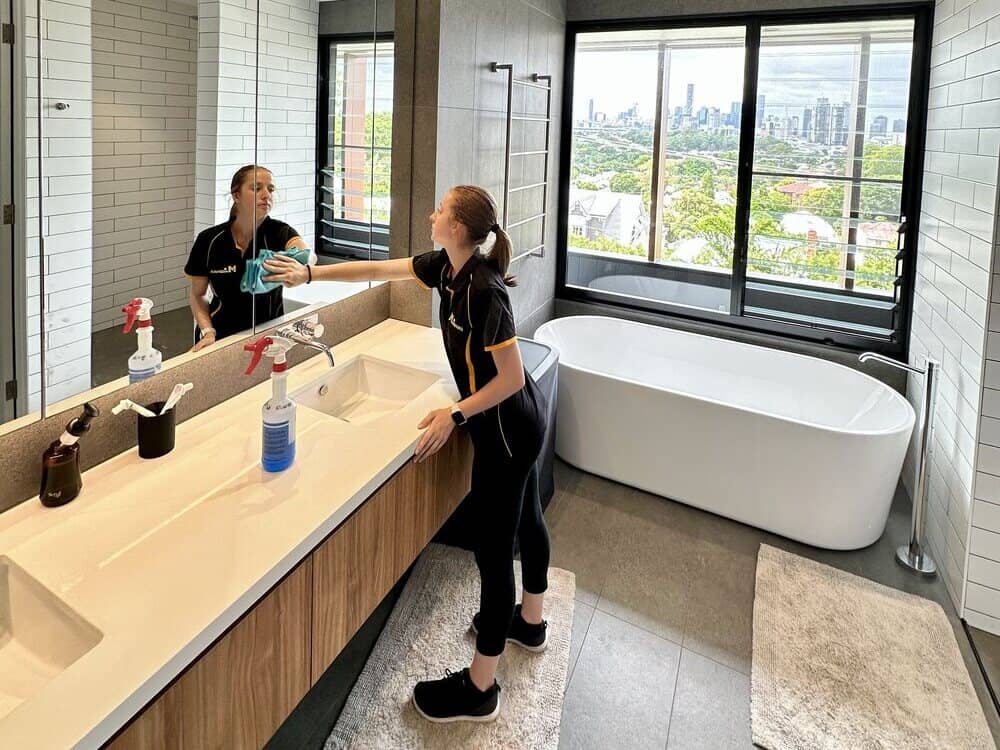
Scrubbing down the bathroom is not the most pleasant chore, but it’s essential! After all, how can you get yourself fresh and clean in a space that’s covered in grime?
You can make the cleaning process easier by working smart: take out all your bathroom items first, then work from top to bottom.
To deal with stains, all you need are simple household items like distilled white vinegar or dish soap.
But if you prefer quicker options, grab a dedicated cleaning product or an all-purpose disinfectant spray.
We’ll walk you through how to clean a bathroom from corner to corner, so you can make every surface sparkle!
Before Cleaning | Cleaning All Parts of the Bathroom | Removing Stubborn Stains | Disinfecting the Bathroom
Why Should You Clean Your Bathroom?
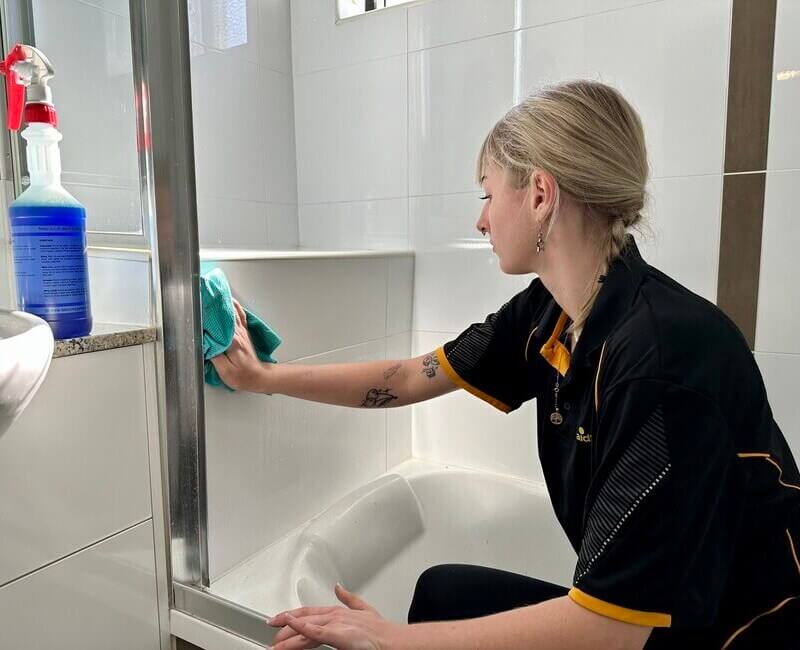
Regular bathroom cleaning keeps everything in great condition and prevents harmful germs from spreading.
The bathroom is one of the most-used spaces in your home, and it’s always humid. That makes it a perfect breeding ground for bacteria, mould, and mildew.
Add in everyday dirt and soapy splatters, and it doesn’t take long before the bathroom starts looking less than fresh.
All that grime can pose health risks to you and your loved ones!
Heavy buildup may also damage surfaces and plumbing systems, which can lead to costly repairs.
How Often Should You Clean Your Bathroom?
As a rule of thumb, a weekly cleaning routine will keep your bathroom fresh. For stains, though, tackle them ASAP to prevent buildup.
You can stay on top of the mess by following this bathroom cleaning checklist:
| Frequency | Tasks |
| Immediately |
|
| Daily |
|
| Weekly |
|
| Monthly |
|
Don’t want to spend your weekend scrubbing bathroom tiles? We’ll take over!
Maid2Match’s professional cleaners are meticulously trained to clean and disinfect every surface in the bathroom.
We’ll make sure your entire bathroom is fresh and spotless — from the shower, to the toilet, to the floor.
Before Cleaning the Bathroom
Cleaning your bathroom can become overwhelming if you’re not prepared!
Gather your cleaning materials and clear out any clutter beforehand to make the task more efficient.
Prepare your cleaning supplies
Getting everything ready in advance saves time and keeps you from shuffling back and forth.
Here’s what you’ll need to clean your bathroom:
- Dish soap
- White vinegar
- Toilet bowl cleaner
- All-purpose cleaner
- Soft sponges
- Toilet brush
- Grout brush
- Scrub brush
- Old toothbrush
- Microfibre cloths
- Vacuum cleaner
Be careful when using certain products, as they can damage some surfaces.
For example, never use vinegar and other acidic cleaners on natural stone like granite and marble to avoid etch marks!
Whenever you’re unsure, test your cleaning method on a small, inconspicuous area first.
Also, do not mix cleaning solutions. Some combinations (like bleach plus vinegar) can create a toxic mixture.
Avoid abrasive tools like rough sponges and steel wool, as they can leave permanent scratches.
It’s also best to have separate brushes for different areas — one for the sink, another for the floor, and one for the toilet. This helps prevent cross-contamination.
Lastly, don’t forget to wear protective gloves and a mask to avoid too much exposure to bacteria or strong cleaning products.
Ventilate and declutter the bathroom
Proper ventilation can help dissipate fumes from cleaning solutions and allow your bathroom to dry faster. For good airflow, open a window or run the exhaust fan.
After that, you’ll need to clear the bathroom.
Put away your shampoo, soap, and other products. And while you’re at it, it’s a good idea to sort through your personal care items.
Some of them may have already expired, so toss those straight into the bin!
Then, remove any dirty clothes, along with bathroom accessories like bath mats, towels, and the shower curtain. Take them to the laundry room for washing.
With the bathroom cleared out, you’ll have full access to all surfaces and more space to move around.
That also makes it easier to spot any dirt or stains that are hiding in corners.
How to Clean the Whole Bathroom
The best way to clean the bathroom is to work from top to bottom. That way, dirt and debris won’t fall on areas you’ve already cleaned.
Always start with dry cleaning methods. Dust or vacuum all surfaces to get rid of loose debris or hair so you’re not spreading them around later.
Once you’ve removed as much dirt as you can, proceed with wet cleaning, like wiping with a damp cloth and scrubbing.
Always dry surfaces thoroughly to prevent water marks and mould.
1. Bath mats and shower curtain
How often to clean: Weekly for bath mats; monthly for shower curtains
Clean with: Gentle washing machine cycle
Start with your bath mats and shower curtain before moving on to the rest of the bathroom.
For high-traffic bathrooms, wash bath mats weekly. Shower curtains should be cleaned monthly.
Bath mats and fabric shower curtains can usually go in the washing machine.
Check the care label first — they can typically be washed on a gentle cycle, with warm water and regular laundry detergent. Hang them out on a clothesline to dry.
If your shower curtain is vinyl or plastic, though, it’s not machine washable!
Instead, spray a mixture of equal parts vinegar and warm water onto stained areas, then scrub with a soft sponge.
Wipe with a damp cloth to rinse, and let the shower curtain air dry.
2. Hard-to-reach surfaces
How often to clean: Monthly
Clean with: Feather duster
Use a feather duster with a long handle to remove cobwebs in the ceiling corners of your bathroom. Dust light fixtures and the exhaust fan cover, too.
If the bathroom exhaust fan is extra grimy, dusting alone may not be enough. In that case, take it apart and wash the parts in warm, soapy water.
3. Shower area
How often to clean: Weekly
Clean with: Vinegar solution
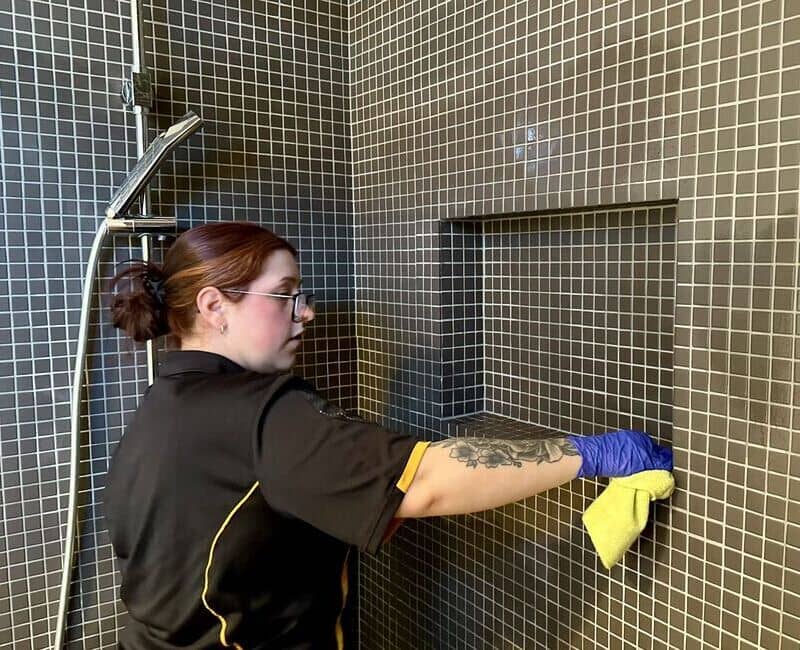
Cleaning your shower regularly keeps your entire bathroom looking and smelling fresh.
Pick up any hair and debris from the shower drain, then check if it’s flowing properly. The last thing you want is to flood the bathroom while you’re cleaning!
Next, tackle limescale and mineral deposits on the shower head.
Fill a plastic bag with a mixture of equal parts white vinegar and water, with a few drops of dish soap. Tie the bag around the shower head.
Leave it for about 30 minutes or overnight if there’s a heavy buildup. Afterwards, scrub the fixture gently with a soft-bristle brush, then rinse well.
For taps and other fixtures, spray the same vinegar solution, then scrub with an old toothbrush and rinse.
Now, move on to the main shower area.
Spray down the shower walls, door, and floor with your vinegar solution. This method also works for a bathtub.
Let the vinegar sit for about 15 minutes, then scrub the surfaces with a soft sponge and rinse thoroughly.
Wipe all surfaces dry with a clean cloth. You can also use a squeegee on glass shower doors and tiled shower surfaces.
4. Bathroom walls
How often to clean: Weekly
Clean with: Warm, soapy water
To clean bathroom walls, mix warm water with a few drops of dish soap in a spray bottle.
This gentle mixture works well for ceramic or porcelain tiles, painted walls, and natural stone.
For natural stone walls, you can also use a specialised pH-neutral stone cleaner.
Dampen a soft sponge or microfibre cloth with your cleaning solution, then wipe the bathroom walls. Work from top to bottom, and focus on any areas with buildup.
Don’t forget to clean the grout lines, too.
For tough stains, mix baking soda and water to create a thick paste. Dip a grout brush into the paste, then lightly scrub the stained parts.
When you’re done, use a cloth dampened in plain water to remove all soap or baking soda residue. Go over the walls again with a dry towel for a streak-free finish.
5. Bathroom shelves and cabinets
How often to clean: Every 1–2 weeks
Clean with: A damp, soft towel
Wipe your bathroom shelves and cabinets with a dry, soft cloth to lift loose dust and debris.
For a more thorough cleaning, use a cloth dampened with soapy water. Wipe all the surfaces of your cabinets — the top, front, sides, and interiors.
If your cabinets are made from wood, take care not to get them too wet, as excessive moisture can warp the material.
Always rinse any soapy residue with a separate damp towel.
For glass cabinets, a commercial glass cleaner is a good option. Alternatively, you can use a DIY mixture of 1 part white vinegar and 4 parts water.
Thoroughly dry the shelves with a clean towel before placing your bathroom items back.
6. Mirrors
How often to clean: Weekly
Clean with: Glass cleaner or vinegar solution
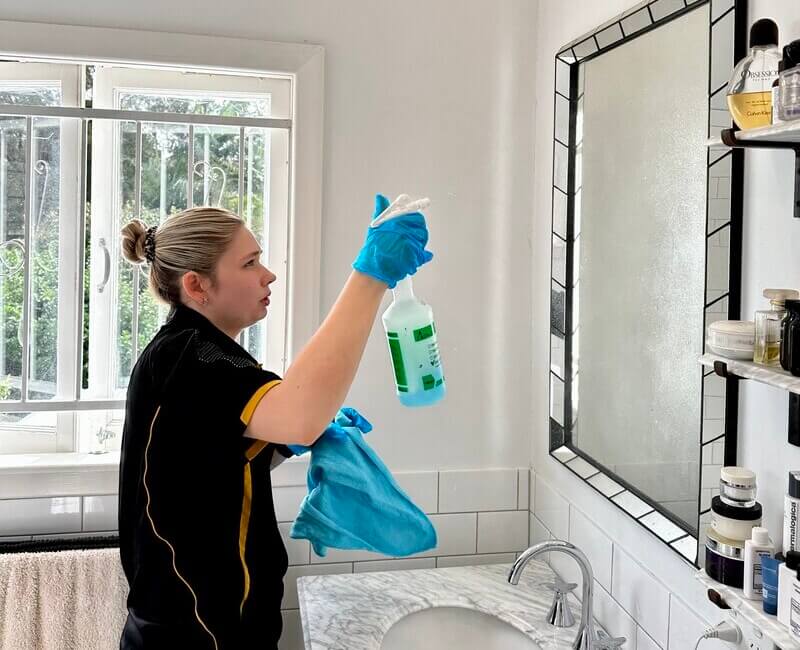
Bathroom mirrors can quickly collect water spots, fingerprints, and even toothpaste splatters. But fortunately, cleaning them is simple!
Gently wipe the mirror to remove dust and loose particles. Use a lint-free glass cleaning rag, like a microfibre cloth.
Then, mist the bathroom mirror with a glass cleaner or 1:4 vinegar and water in a spray bottle. Don’t overdo it to avoid too many drips.
Wipe the mirror again with a dry microfibre cloth, going in a zigzag or S pattern from top to bottom.
Check for any stain on the mirror’s frame as well — wipe these away with a damp cloth, then dry thoroughly.
7. Bathroom sinks
How often to clean: Weekly
Clean with: Vinegar solution or all-purpose cleaner
To clean your bathroom sink, the first step is to pick up any hair strands on the surface. Do not flush them down to avoid clogs!
Then, rinse the sink basin with warm water to wash away dust and stuck-on debris, like toothpaste.
Next, spray the surface with a general-purpose cleaner or 1:1 vinegar and water. Wipe gently with a soft sponge or a damp cloth, focusing on any stained areas.
Give the taps some attention, too. You can use the same solution you used on the sink, then scrub with an old toothbrush to reach corners. Rinse everything thoroughly.
For the bathroom sink drain, pour 1–2 cups of white vinegar followed by hot (not boiling!) water. This helps prevent smells and grime buildup inside the pipe.
Wipe the sink dry once you’re done!
NOTE: Some people sprinkle baking soda down the drain for cleaning, but this can lead to clogs over time.
8. Bathroom benchtops
How often to clean: Weekly
Clean with: Vinegar solution or soapy water
Most bathroom benchtops — including ceramic, porcelain, and acrylic — are durable and waterproof.
These can be cleaned with a 1:1 mix of vinegar and water or an all-purpose cleaner. Spray the surface lightly, and gently wipe with a damp cloth.
For granite or marble benchtops, use a pH-neutral stone cleaner or warm, soapy water to avoid damage!
After cleaning, dry the bathroom benchtop with a soft towel to prevent water spots and mould.
9. Toilet
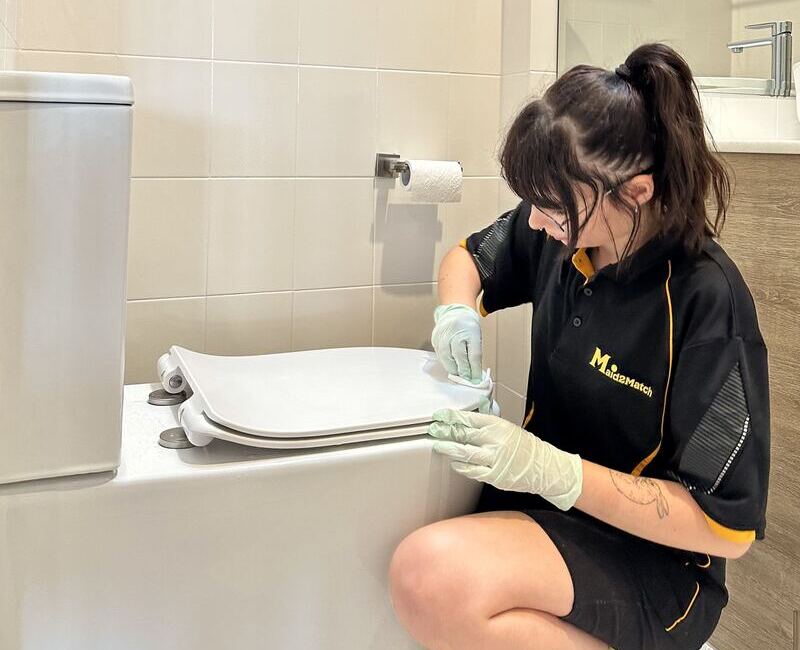
How often to clean: 1–2 times a week
Clean with: Toilet cleaner
The toilet is probably the last thing you want to get up close and personal with, but it’s also one of the most essential spots to clean!
Flush the toilet to wet the inside of the bowl.
Then, apply a toilet bowl cleaner — the spout should be pointed all the way up and under the rim. Squeeze the bottle, and go in a circle to coat the entire surface.
Leave the cleaner for about 10 minutes (or check the label instructions).
After the waiting time, grab the toilet brush. Scrub firmly under the rim — that’s where mould, bacteria, and mineral deposits tend to collect.
Move down the sides of the bowl, then give the bottom and drain opening a thorough scrub.
When you’ve finished, tackle the outside surfaces.
Spray everything — including the tank, toilet lid, seat, and base — with an all-purpose cleaner. Wait a few minutes, then wipe with a damp cloth.
Don’t forget to deep clean your toilet brush to prevent bacterial growth!
10. Skirting boards
How often to clean: Weekly
Clean with: Warm, soapy water
Bathroom skirting boards can get a lot of water splashes — regular care will prevent buildup!
Most skirting boards fitted in bathrooms are made from water-resistant materials (like tile or PVC), so they’re easy to wipe down.
First, remove loose dust and dirt with a vacuum cleaner or a dry microfibre cloth.
For a more thorough cleaning, mix 1 cup of vinegar in about 3 litres of water. Dampen a cloth with this solution, then wipe along the full length of the skirting board.
Finish by drying with a clean cloth to prevent streaks and damage from moisture.
11. Bathroom floor
How often to clean: Weekly
Clean with: Warm, soapy water
Last but not least is the bathroom floor!
Sweep or vacuum the floor, starting from the furthest corner and working your way to the entrance. Pay attention to nooks and crannies, such as behind the toilet.
Next, fill a bucket with warm water, then mix 1 tbsp of dish soap. For added cleaning strength, stir in a cup of vinegar (skip this step if your floor is natural stone).
Dip a mop pad or a rag into the cleaning solution, and wring out the excess water. For mop pads, attach them to the mop afterwards.
Use that to wipe the floor, working from one side of the bathroom to the other.
Check if the mop has gotten dirty after every few passes. If it’s soiled, rinse it in clean water and dampen it again with the cleaning solution before continuing.
For any remaining dirt and tough spots, use a scrub brush dipped into your cleaning solution.
Don’t forget the grout lines — clean stains with a grout brush and a thick paste of baking soda.
When all stains are gone, wipe everything with a damp towel to rinse any soap and baking soda residue.
Dry your bathroom floor with a separate rag for an extra shiny finish!
How to Remove Stubborn Stains in the Bathroom
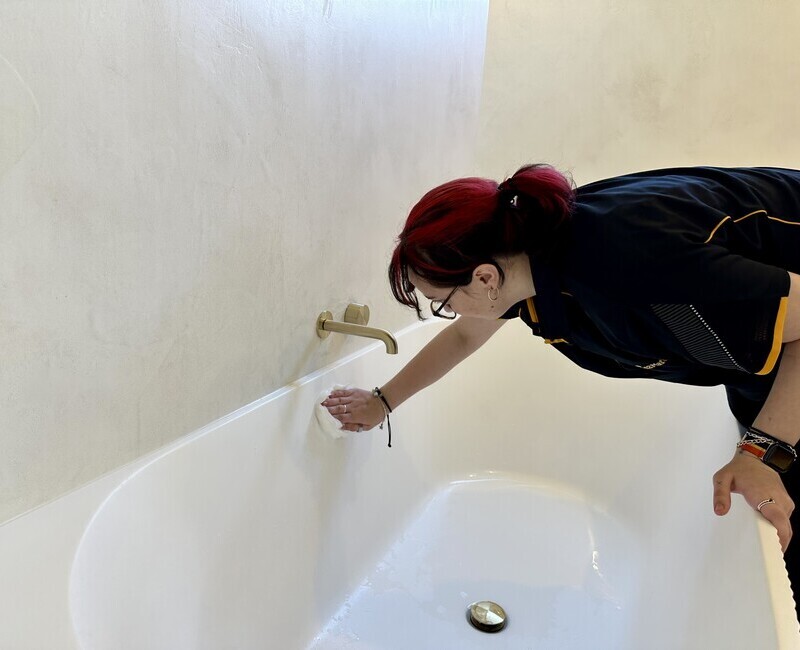
Bathrooms are constantly exposed to moisture, which makes their surfaces magnets for stains and buildup.
Tackle those stains immediately — ignoring them will only make them much harder to remove later!
Limescale
Over time, minerals from hard water can accumulate on bathroom surfaces and form a chalky buildup called limescale.
To remove it, use a solution of equal parts vinegar and warm water, then add a few drops of dish soap.
Spray the vinegar mix onto the affected surface. For tricky spots like taps, soak a towel in the solution and drape it over the area to break down mineral deposits.
Let it sit for at least 15 minutes, then scrub gently.
If that doesn’t work, try mixing 1 part citric acid powder and 10 parts water in a spray bottle.
Shake the bottle before use, then spray the solution onto the stain. Wait about 15 minutes, then scrub the area with a soft sponge or an old toothbrush if needed.
Wipe the surface with a damp cloth to rinse.
Mould
Mould often grows in areas that are constantly warm and humid — like bathrooms!
You can kill mould with undiluted white vinegar — apply it directly onto the affected area and wait at least 1 hour to let it do its job.
Another powerful method is 3% hydrogen peroxide. Leave it on for 15 minutes.
Then, scrub the mould out with a soft-bristle brush. Rinse with a damp cloth, and dry afterwards.
Rust
Getting rid of rust on tiles and other bathroom surfaces can be tricky, but a few simple solutions can help.
For fresh rust stains, try mixing baking soda and a small amount of water to create a thick paste.
Apply that to the rust stain with a soft sponge, wait 10–15 minutes, then scrub gently.
Besides baking soda, you can also try other options like citric acid or white vinegar.
If the rust is still there, use a specialised rust remover. Read the label first to make sure it’s safe for the surface you’re cleaning!
Soap scum
To remove soap scum from bathroom surfaces, an effective solution is 1:1 vinegar and warm water.
If you need something stronger, other options are undiluted vinegar or 3% hydrogen peroxide.
Spray your chosen solution onto the surface, then let it sit for about 15 minutes. Scrub with a gentle sponge, then wipe with a damp cloth to remove any leftover cleaner.
Water marks
Water can leave unsightly spots on bathroom surfaces, including glass, faucets, and other metal fixtures.
You can get rid of them using equal parts vinegar and water. Another option is 1 part citric acid powder to 10 parts water.
Spray your chosen solution onto the water spots. Wait about 15 minutes before gently wiping the surface.
Use a damp rag to remove any residue from the cleaning solution, then wipe everything dry.
How to Disinfect Bathroom Surfaces
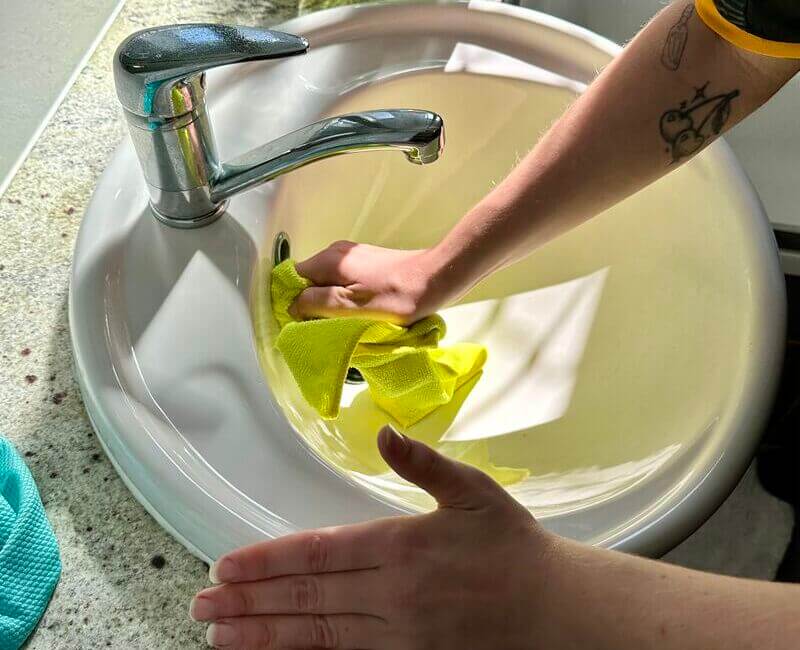
It’s not always necessary to disinfect every bathroom surface.
You’d only need to do a full disinfection if someone in your home has been sick, or if your bathroom was exposed to bodily fluids like blood or vomit.
That said, some areas in the bathroom must be sanitised at least once a week:
- Sinks and tapware
- All parts of the toilet bowl
- Soap dispensers and toothbrush holders
- High-touch areas like door handles and light switches
And remember: always disinfect after cleaning. Disinfectants are most effective on surfaces without visible dirt.
You can use 70% isopropyl alcohol or 3% hydrogen peroxide. Spray it on, wait 5–10 minutes, then wipe with a damp towel.
Other options are specialised bathroom cleaners and disinfectant wipes — these often contain germ-killing ingredients. Follow the label instructions for proper use.
Whichever product you go with, do a spot test first to make sure it’s safe for the surface you want to sanitise!
What to Do After Cleaning the Bathroom
After cleaning your bathroom, make sure that all surfaces are dry before putting your items back.
Keep the exhaust fan running for about 15 minutes, or let everything air dry while a window is open.
Wipe down your toiletries before returning them — you don’t want a grimy shampoo bottle on a clean shelf!
Then, refill your toilet paper holder and soap dispenser. You’ll also need to swap in fresh hand towels, bath mats, and a shower curtain.
Finally, empty the rubbish bin and put in a new liner.
Now, your bathroom is fresh, organised, and ready to use!
More Tips to Keep Your Bathroom Sparkling Clean
The secret behind bathrooms that always look so neat is not endless scrubbing. It’s quick touch-ups between deep cleans!
Keep your cleaning supplies close by (like under the sink) so you can tackle messes right away.
Also, avoid leaving wet towels in your bathroom to prevent mould. Hang them outside to dry instead.
These steps can make a huge difference, too:
- Spot clean stains as soon as you see them
- Sweep or vacuum the bathroom floor every 2–3 days
- Swipe a squeegee over shower surfaces after each use
- Place a hair or debris catcher over the shower and sink drains
FAQs About Bathroom Cleaning
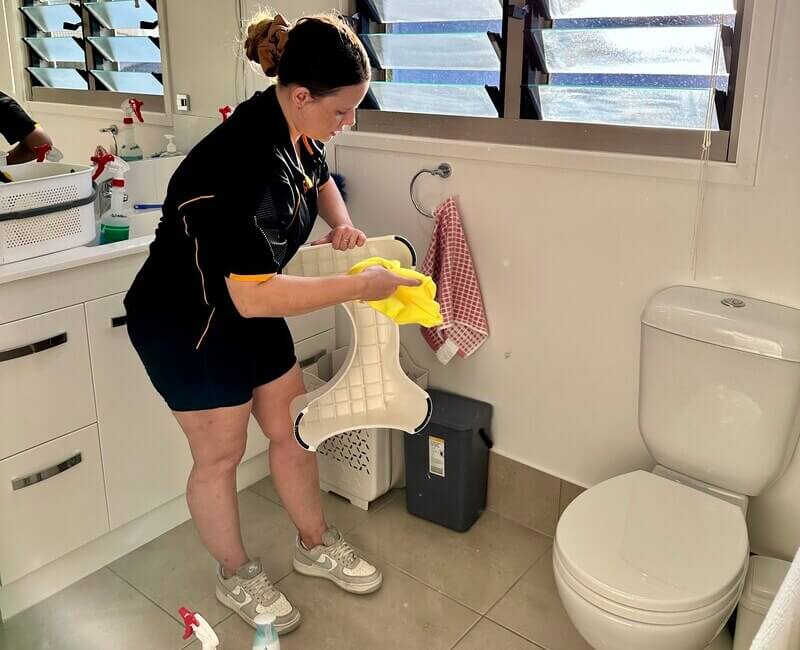
Need more bathroom cleaning tips and hacks? Scroll through the Q&As below!
How to clean bathroom tiles
When cleaning bathroom tiles, avoid harsh chemicals like ammonia or bleach, as these can dull the finish.
Also, use non-abrasive cleaning tools like a soft cloth or sponge to avoid scratches.
For porcelain or ceramic tiles, stick with a mild bathroom cleaner or a simple mix of warm water and a little dish soap.
If you have natural stone tiles, skip acidic cleaners like vinegar — they can etch the surface! A pH-neutral cleaner or warm, soapy water is also safe for natural stone.
Don’t forget the grout lines! Spot clean stains with a baking soda paste, or 3% hydrogen peroxide for tougher marks.
Why is my bathroom still smelly after cleaning?
If your bathroom still smells funky after cleaning, any of the following might be to blame:
- A loose toilet seal
- Hidden mould and mildew
- Gunk buildup in the shower or sink drain
Check any spots you might have skipped to clean — like under the toilet seat, behind the toilet, or beneath the sink.
Also, inspect the toilet for any leaks or a worn-out seal.
If the smell seems to be coming from the shower or sink drain, flush it with 2 cups of vinegar followed by hot (not boiling!) water.
Let the exhaust fan run for a few minutes. If there’s still a bad odour in the bathroom, it might be time to call a professional plumber.
Should you clean your bathroom cleaning tools?
Absolutely! Using dirty brushes, cloths, or sponges just spreads more germs around.
Soak your bathroom cleaning tools in hot water for around 10 minutes. Then, wash them with laundry detergent and some oxygen bleach for disinfection.
You can also toss rags into the washer. Then, let all tools dry completely before storing to prevent bacteria and mould.
