
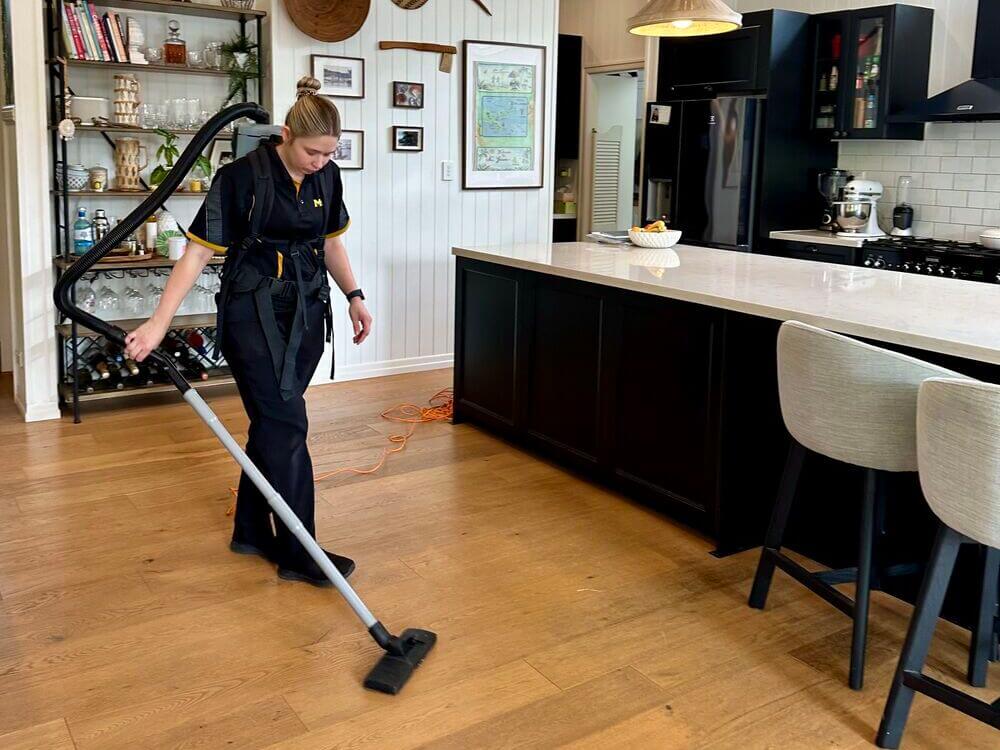
Floating floors are a popular choice in any home — they’re inexpensive and easy to install (even as a DIY project!). You can put them over various subfloors (like concrete) or old flooring (like wood).
Plus, maintenance is even easier than installation. Knowing how to clean floating floorboards properly prolongs their lifespan and keeps them looking good for longer.
Routine vacuuming and proper mopping, in particular, can make all the difference! Too many people use too much water or floor cleaner, which can warp the planks or dull the finish over time.
Whether you’re dealing with laminate, timber, or vinyl planks, here’s your guide to maintaining floating floors around your home.
How Often to Clean | Before Cleaning | Routine Cleaning | Deep Cleaning | Removing Stains | Polishing
What are Floating Floors?
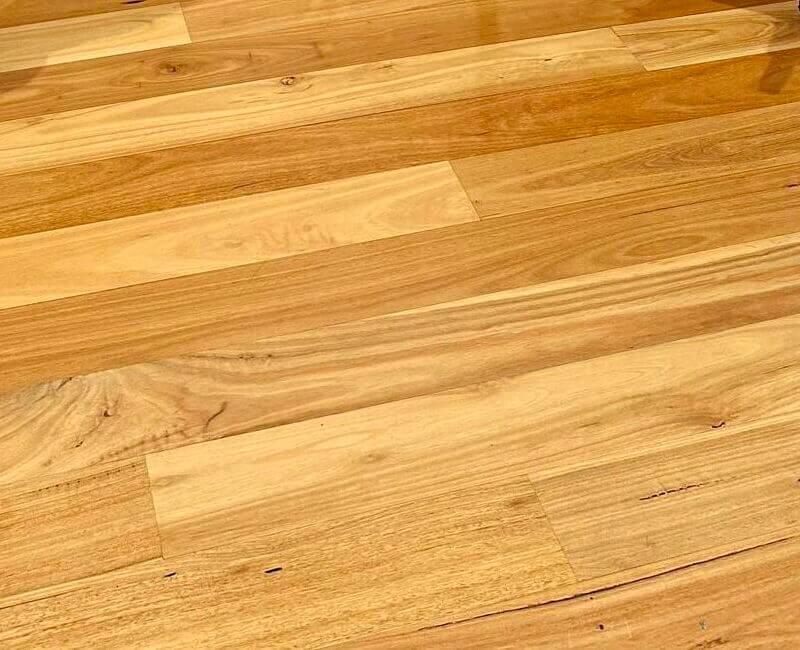
As the name suggests, these floorboards “float” on top of an underlayment, instead of being nailed or glued down! They usually interlock with a tongue-and-groove system to create one continuous surface.
There are three main types of floating floors:
- Laminate: Made of pressed, composite wood material that mimics real wood or stone
- Timber: Has a natural wood top layer with a plywood or fibreboard core
- Vinyl: Made from synthetic materials like PVC, with a design layer on top
However, floating floors may be prone to warping, gapping (spaces between planks), or peaking (edges pushing up). Water can also get into the spaces underneath and lead to mould or mildew.
How Often to Clean Floating Floors
Sweep or vacuum your floating floors a few days a week to prevent dust and dirt buildup.
If you have small kids or pets, you may need to vacuum more often. The same goes for high-traffic areas or rooms near the road.
Damp mop the floating floors once a week for a deeper clean.
Tackle any spills or stains immediately so they don’t seep under the floorboards or set into the material.
Before Cleaning Floating Floorboards: What To Know
What works for laminate may not work for timber, so choose the right cleaners and tools for floating floor maintenance.
What to clean floating floors with
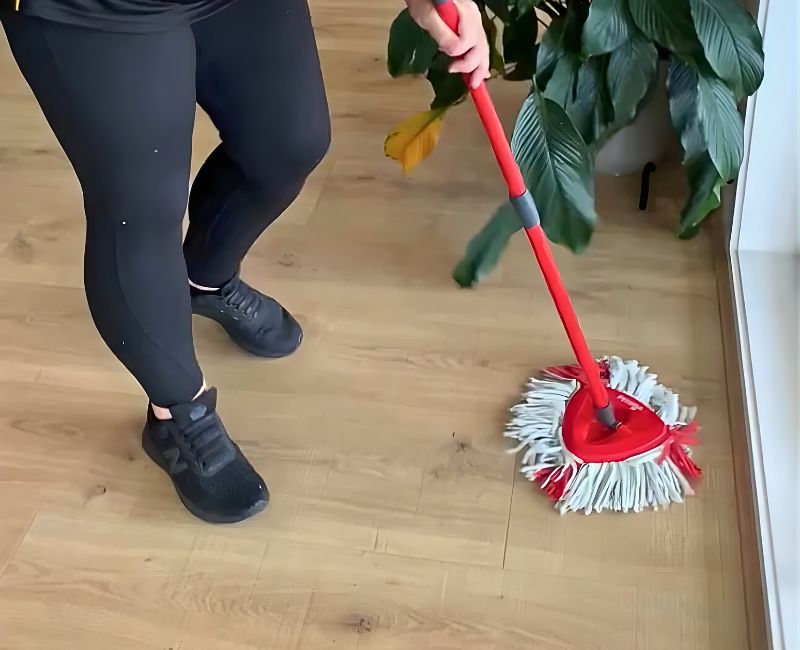
The best cleaning product for floating floors will depend on the material! Using a suitable floor cleaner ensures you don’t damage the floorboards.
- Laminate: White vinegar or laminate floor cleaner
- Timber: Engineered wood floor cleaner or mild detergent
- Vinyl: Mild soap or dedicated floor cleaner
You’ll also need the right tools. For everyday maintenance, choose a soft-bristled broom, a dust mop, or a vacuum with a hard floor setting.
Then, for deep cleaning, the best mop for floating floorboards is a microfibre spin mop. Microfibre mops are highly absorbent, and the spin mechanism lets you wring out any excess moisture.
You’ll also need buckets (one for your cleaning solution and one for rinse water), and soft cloths for drying or spot-cleaning stains.
What to avoid when cleaning floating floorboards
Avoid harsh chemicals like bleach or ammonia, and wax- or oil-based products. These can damage the finish or leave a residue on the surface.
Do not use abrasive cleaners like scouring pads or metal brushes — these can create scratches that trap dirt and moisture.
Try not to use sponge mops or string mops, since these tend to leave streaks or excessive moisture on the floor’s surface.
Routine Cleaning for Floating Floors
Regular sweeping or vacuuming lessens the buildup of dust and grime, and keeps things fresh between deep cleans!
Stick to a soft-bristled broom (with synthetic bristles) to minimise the risk of scratches. Alternatively, you can dry mop using a flat microfibre mop.
Dry mopping tends to be better for removing dirt that’s too fine for brooms — think pet dander or dust.
If you’re using a vacuum cleaner, make sure it has a hard floor setting or attachment, or a way to disengage the beater bar. This will prevent the vacuum from scratching the surface.
Spot-clean stains with a damp cloth and soapy water in a spray bottle, or a little rubbing alcohol.
The Best Way to Clean Floating Floorboards (By Type!)
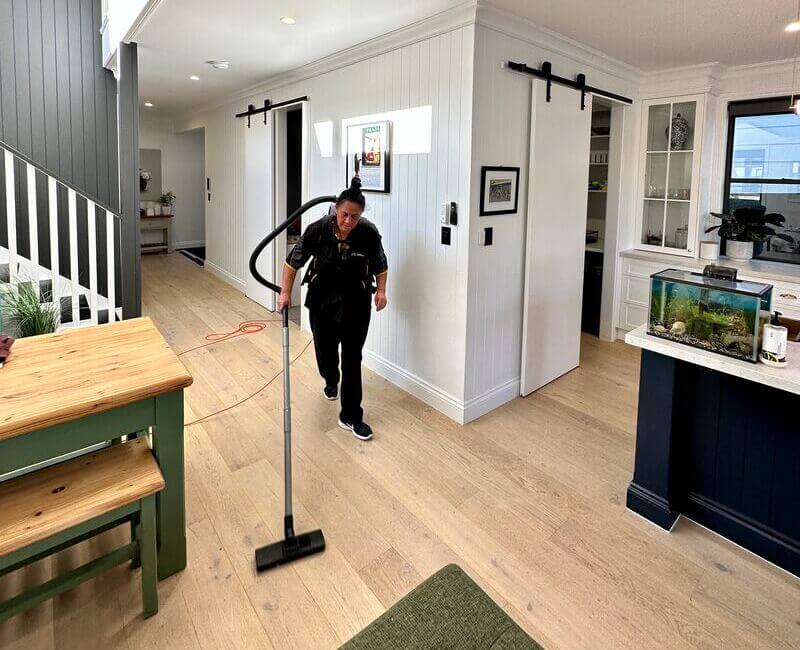
Deep cleaning lets you tackle any deep-seated dirt and grime in your floating floors. Just limit the water you use, as floating floors don’t like getting wet!
Always sweep or vacuum up loose dirt before you start mopping your floors.
How to clean floating laminate floors
Laminate flooring is typically made of several composite wood layers, such as high-density fiberboard. It isn’t as water-resistant as vinyl, so it’s better to dry mop or damp mop the surface.
When cleaning laminate floors, mix 1/2 to 1 cup of white vinegar per 3 litres of warm water. If using a commercial cleaner, dilute it according to the package.
Dip your mop into the solution and then wring it out so it’s just damp. Mop one section of the floor at a time, moving the mop in back-and-forth strokes.
Rinse the mop head frequently, and change the cleaning mix or water when it gets dirty.
After cleaning the whole floor, wash off the residue with a clean mop and fresh water. Then go over the floors with a dry mop or towel to remove excess moisture.
Let the laminate floating floorboards air dry afterwards.
How to clean floating timber floors
Floating timber floors are usually made of engineered hardwood, with a natural wood veneer on top. You’ll need to use as little water as possible when cleaning hardwood floors.
Look for a floor cleaner specifically for engineered wood. Otherwise, make a DIY floating floor cleaner by mixing 1/2 to 1 tsp of mild soap per 3 litres of warm water.
Dampen the microfibre mop with the cleaning solution, then wring out excess water. When mopping, work with the direction of the grain and apply gentle pressure.
Rinse off any residue with clean water, then dry the floating timber floors immediately.
How to clean floating vinyl floors
Vinyl floating floorboards usually consist of luxury vinyl planks (LVP) that “click” together. Vinyl is more water-resistant than laminate or timber, so it can tolerate more moisture when cleaning.
Opt for a dedicated vinyl floor cleaner, or mix 1/2 tsp mild detergent in 3 litres of warm water.
Dip the mop in the floor cleaner and wring out the excess wetness. Mop your vinyl floors in even strokes that follow the grain of the vinyl.
Afterwards, rinse off any residue with clean water. Then get a streak-free finish on your floating vinyl floors by wiping them dry!
Removing Stains on Floating Floors
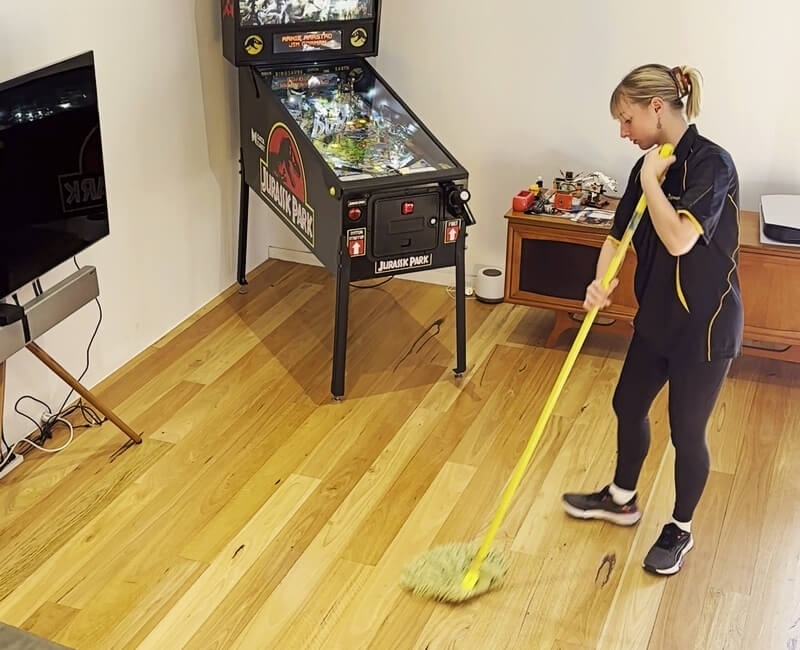
Clean up spills and stains ASAP — the longer they sit, the harder they are to get out!
Pick up solids with a paper towel, then blot any liquids with a clean cloth or mop. If the stain is fresh, try washing it off with some mild soap and water.
For more stubborn stains, try a bit of rubbing alcohol or a thin baking soda paste. Use a damp sponge to apply the paste to the affected area, then gently scrub the surface clean.
Wipe off any residue with a damp cloth before drying the floors.
For scuff marks, try buffing the area with a dry microfibre cloth or lightly rubbing the mark with a rubber eraser. Clean the spot afterwards.
Can You Polish Floating Floorboards?
Yes, you can polish your floating floors, especially vinyl or timber ones! Polishing is a great way to make your floating floors shine and improve a room’s appearance.
Always use a floor polish compatible with the material. This is especially important for timber floors, which have different finishes.
Test your polish on an inconspicuous area first to make sure it won’t damage the material. Then move aside any furniture so nothing’s in your way.
Clean the floors beforehand, then thoroughly dry the surface. Follow the instructions on the package for applying the polish to your floating floorboards.
You may need to lightly sand off any scratches, since polish works best on smooth surfaces!
Work in small sections so you can spread the polish evenly. Let the polish dry completely (check the instructions) before walking on the floors or returning furniture.
Tips for Keeping Floating Floors Clean and Scuff-Free
Following proper care keeps your floating floors looking pristine, no matter the material. Vacuum and mop regularly, or let a Maid2Match cleaning expert handle the maintenance!
Protect the finish of your floorboards by placing felt pads under the legs of heavy furniture. That way, they don’t dent or scuff the surface.
Avoid rubber pads or any floor covers with rubber backing, though — they can leave permanent marks.
Trim your pet’s nails regularly, or place rugs in areas they like to stay to avoid scratching.
Prolonged exposure to heat and direct sunlight may fade the colour or design of the planks. Use window covers to protect your flooring.
FAQs About Floating Floor Cleaning
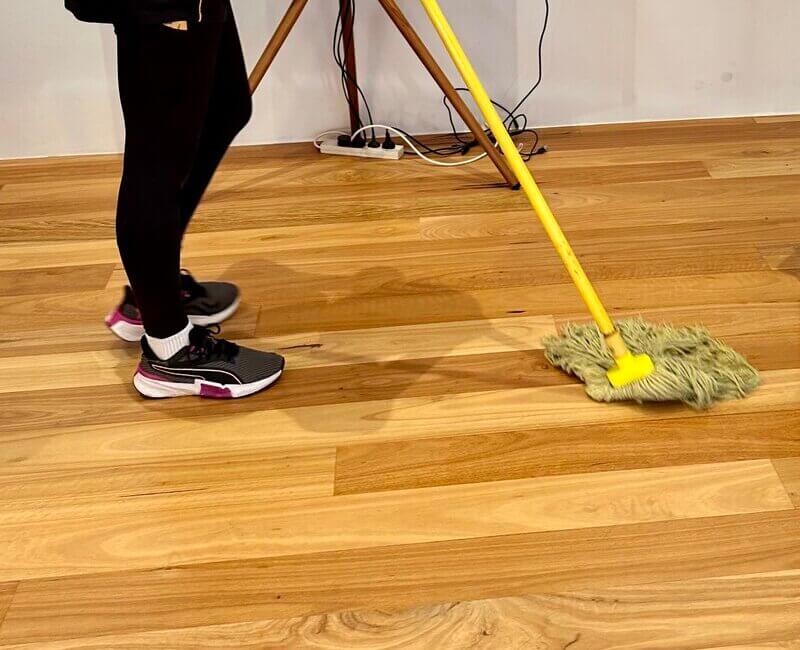
Got more questions about cleaning your floating floorboards? We’ve got you covered!
Can floating floors be mopped?
Generally, you can mop floating floorboards — just keep the moisture to a minimum. Excessive water can get into the planks and cause damage.
Can you use a steam mop on floating floorboards?
No, you cannot steam mop floating floorboards! The steam can seep into the floorboards, while the heat may cause swelling or warping.
Can you clean floating floors with vinegar?
You can clean some types of floating floors with vinegar, such as laminate flooring.
However, it’s better not to use it for timber floors since it can discolour or degrade certain finishes, such as wax. It may also damage unsealed wood.
