
There are many reasons to go DIY for cleaning products! Maybe you want to save money or use natural cleaners. Or maybe you just don’t want to buy another product to stash under the sink.
Lots of us make DIY cleaners for benchtops, cabinets, windows… and even tile grout!
Yep, you don’t need a dedicated product for those lines between the tiles that seem to attract all the dirt. Instead, just make your own solution at home.
The best homemade tile grout cleaners include:
- Castile soap
- Lemon juice and cream of tartar
- Baking soda and water
- White vinegar and dish soap
- Baking soda and hydrogen peroxide
- Washing soda
You can maintain clean grout with ingredients already in your kitchen (or bathroom). Combined with a little elbow grease, the results will have you floored.
Before Cleaning Tile Grout
Check the material of your tiles first! That will determine what cleaning solution you can use.
Porcelain and ceramic, for example, are more forgiving and can tolerate a variety of methods. On the other hand, natural stone tiles are more delicate, so avoid acidic cleaners like vinegar and lemon juice.
Test your homemade grout cleaner on a small, hidden spot first to make sure it won’t discolour or damage the tiles.
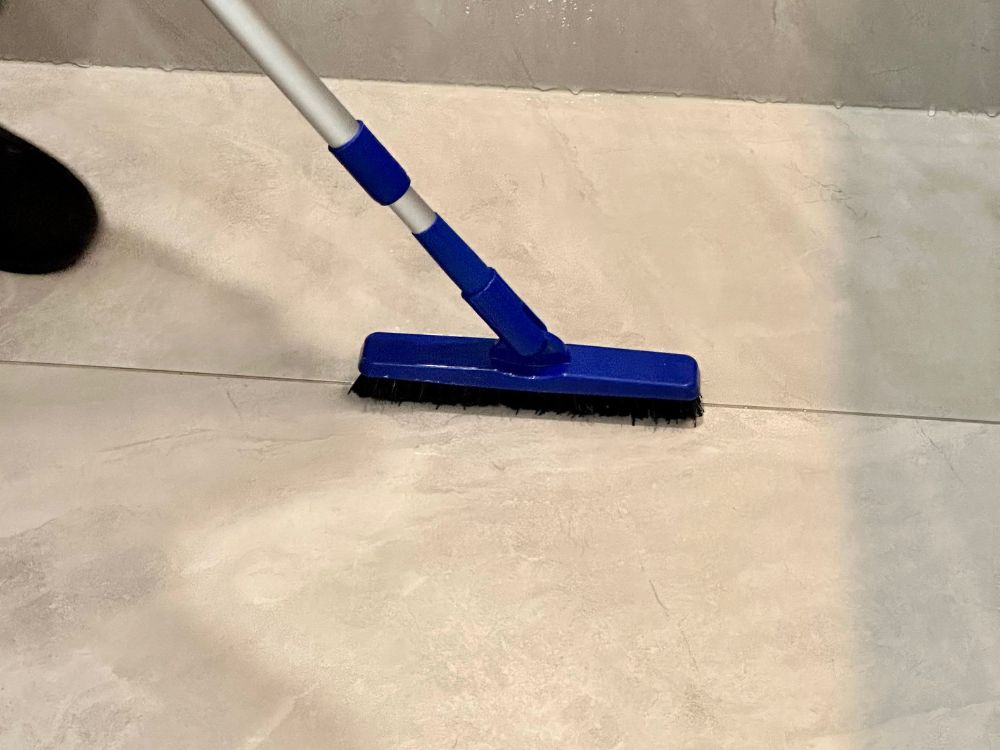
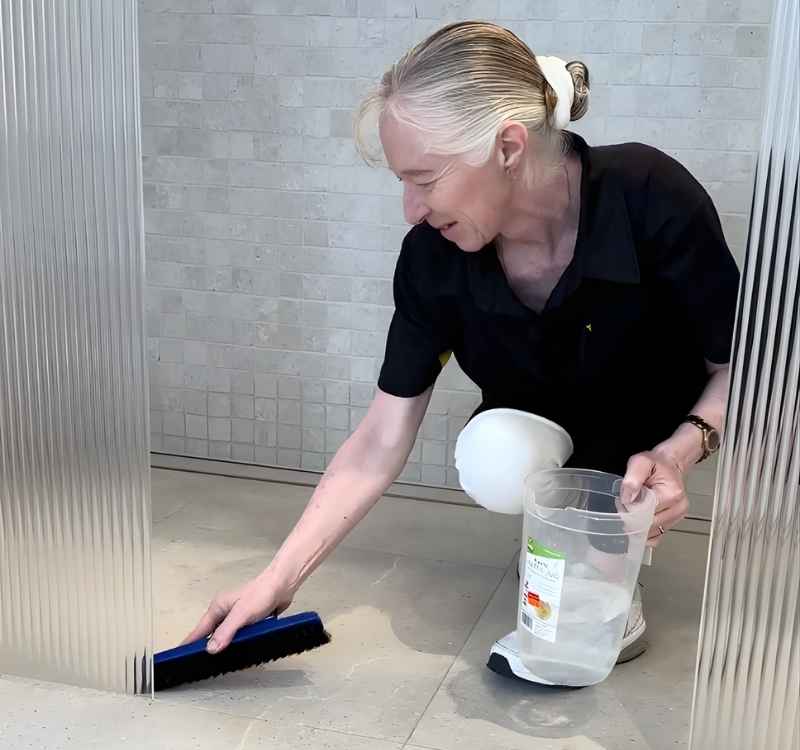
Use the right tools for cleaning grout! A grout brush will be more effective than an old toothbrush, though both will do the trick.
Don’t forget to wear rubber gloves and a face mask while you work. Open the windows or switch on the exhaust fan to ensure proper ventilation.
Sweep or vacuum then clean your tiles before you tackle the grout. Otherwise, you’ll be pushing dust and dirt into the grout lines — the opposite of what you want.
Our Top DIY Tile Grout Cleaners
Prefer natural cleaning methods for tile grout? Or don’t feel like buying an extra product?
Here are some of the best DIY grout cleaners, made with everyday ingredients.
Of course, you can skip all the mixing by leaving your tile floors in the hands of a professional housekeeper!
Castile soap
BEST FOR: Mildly dirty grout
CLEANING LEVEL: 1/10
Castile soap is great for everyday grime. This plant-based soap is highly versatile and can tackle everything from walls to floors.
Dilute the soap according to the package instructions. Dip a grout brush or old toothbrush into the solution, then scrub the grime off the grout.
Wash off any remaining soap with a soft cloth dampened with water, then let the surface dry.
Lemon juice and cream of tartar
BEST FOR: Spot-cleaning stains on porcelain/ceramic tiles
CLEANING LEVEL: 2/10
Lemon juice is a natural whitening agent, so it can lighten stains on grout. Meanwhile, cream of tartar will scrub off dirt without scuffing.
Don’t use this on an entire floor, though! Save it for spot-cleaning stubborn stains on sealed grout.
Make your homemade tile grout cleaner by mixing 1 tbsp cream of tartar with lemon juice to create a runny paste. Spread it onto the grout lines and let it sit for up to 15 minutes.
Work the paste into the grout with a damp sponge, then wipe away the residue and dry the area.
Baking soda and water
BEST FOR: Ceramic, porcelain, and stone tiles
CLEANING LEVEL: 3/10
Baking soda is a mild abrasive, so it can lift light dirt from sealed grout. And since it’s alkaline, it’s safe to use as a natural stone grout cleaner.
Mix equal parts baking soda and water to form a paste. Add more baking soda if it feels too thin.
Use a grout brush or damp sponge to apply the paste to the dirty grout. Leave for a few minutes before gently scrubbing the surface clean.
Remove any leftover paste with a wet cloth or mop, then finish by drying the surface.
White vinegar and dish soap
BEST FOR: Porcelain/ceramic bathroom grout
CLEANING LEVEL: 5/10
Diluted white vinegar makes a great homemade shower tile and grout cleaner, since it’s effective on soap scum and limescale. Vinegar also deters mould and mildew.
Combine equal parts white vinegar and warm water in a spray bottle, then add a few drops of dish soap. Spray onto the grout lines, then let sit for 10–15 minutes.
Wash off the vinegar solution with the shower head or wipe clean with a damp cloth. For tough stains, scrub the grout with a soft-bristled brush and a little soap before rinsing.
TIP: This solution also helps clean your shower tiles without scrubbing!
Baking soda and hydrogen peroxide
BEST FOR: Light-coloured tiles
CLEANING LEVEL: 8/10
If you need a tough DIY grout cleaner without vinegar (or lemon juice), level up the baking soda paste by adding hydrogen peroxide.
This is one of the best homemade grout cleaners for most tiles, including stone. Avoid using it on dark-coloured tiles as peroxide has bleaching properties.
Mix 1 part hydrogen peroxide with 2 parts baking soda and a teaspoon of dish detergent (like Dawn dish soap). It’ll get foamy, so be mindful of the mess!
A squeeze bottle makes applying the solution easier, but you can also use a soft-bristled brush to spread it onto the grout lines.
For a no-scrub grout cleaner, just let the mixture sit for 10–15 minutes. Wash it off with a damp cloth or mop afterwards.
For really dirty grout, though, scrub with the grout brush and a bit of extra dish soap.
Dispose of any excess cleaner ASAP. Do not store it, as carbon dioxide may build up and become a hazard.
Washing soda
BEST FOR: Extra-dirty tile grout
CLEANING LEVEL: 10/10
This is a very strong solution for tile and grout cleaning, so use with caution! It works on porcelain/ceramic and durable stone tiles, but avoid it for delicate stone like marble.
Create a paste with 1 part warm water to 2 parts washing soda (or soda crystals). Dip a damp sponge or cloth into the mixture, then apply it to the grout lines.
Leave the mixture for up to 10 minutes, then wipe away the residue with a clean cloth dampened with water. Dry the grout afterwards.
What NOT to Use for Cleaning Grout
Avoid cleaning grout with harsh chemicals like bleach or ammonia unless necessary. These can wear down the sealant or material with prolonged use.
For mould or mildew stains on grout, vinegar or hydrogen peroxide will be more effective.
Do not use metal or highly abrasive tools such as steel wool and scouring pads. You don’t want to chip, scratch, or otherwise damage the grout.
Be careful when cleaning coloured grout. Avoid vinegar or hydrogen peroxide, which can discolour or fade the material.
Tips for Using Homemade Grout Cleaner
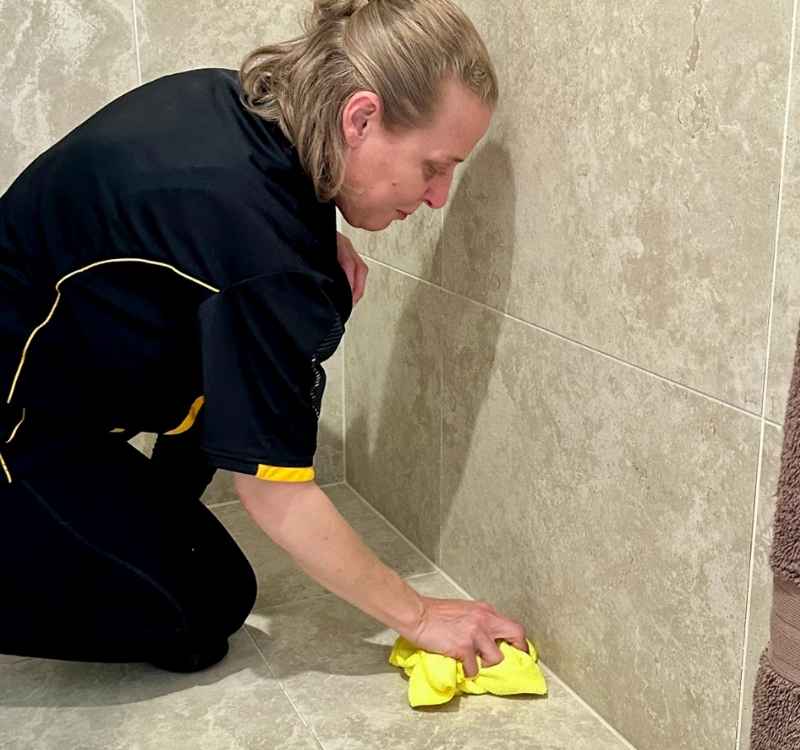
Grout is a porous material, so avoid using too much water when cleaning and dry the surface afterwards. Excess moisture may seep into the grout and lead to damage or mould.
Don’t let your grout cleaner sit for too long since it can wear down the sealant. As a general rule, leave the solution for at most 15 minutes.
Only make as much homemade cleaner as needed, and do not store any leftover. (The vinegar solution is an exception!) Gases can build up inside the storage container and cause it to break.
Avoid deep cleaning grout that is unsealed, cracked, or chipped, since you could cause further damage. Have the grout filled in or replaced first.
Check with the manufacturer about how often you need to reseal the grout. Don’t forget to clean the tiles before applying the grout sealer.
With a little care and the right ingredients, you can keep your grout fresh and clean — with things already in your home!
