

When you think of bathroom chores, scrubbing the toilet and cleaning the shower probably top the list. Then wiping mirrors, maybe decluttering the benchtop… And then you remember the shower curtain and liner.
They’re easy to overlook, since they just hang there. But shower curtains and liners are a prime spot for soap scum, mineral deposits, mildew, or that pinkish grime creeping along the bottom. (Gross.) The good news: cleaning them is pretty easy.
For routine wiping, a simple solution of vinegar and water is enough. Then deep clean your shower curtain and liner in the washing machine or by hand-washing, plus a mild detergent. Whatever method you use, they must air dry, either in the bathroom or outdoors.
This guide will show you how to clean a shower curtain and liner, so you’ve got no excuse to leave them dirty! Or at least try not to put the chore off for another 3 months.
How Often to Clean | Shower Curtain Cleaning | Shower Liner Cleaning | How to Dry | Cleaning Without Taking Them Down | Removing Mould
Shower Curtains and Liners: What’s the Difference?
You’ve probably seen these terms used interchangeably, but they’re not the same thing!
A shower liner hangs inside the shower or tub. It’s made of waterproof material like polyester or vinyl, and is designed to keep water from splashing outside.
A shower curtain, on the other hand, hangs outside the shower or tub. It’s meant for privacy or decor, since it blocks people from seeing inside and matches the bathroom’s style. They can be made of fabric (e.g. cotton or linen), vinyl, or plastic.
The fabric versions are not waterproof and are meant to be used with a liner inside.
Wondering if you need both a curtain and a liner? Not necessarily, but it’s a better setup — the curtain acts as decor, while the liner keeps water from splashing. But there are waterproof curtains or opaque liners that let you stick with just one.
How Often to Clean a Shower Curtain and Liner
Grime builds up quickly on bathroom surfaces, especially your shower curtain or liner.
Here’s a good cleaning schedule to aim for:
| A few times a week | Spray the curtain and liner with diluted white vinegar, then quickly wipe down |
| Once a month | Deep clean the shower curtain and liner |
Add the curtains and liners to your shower cleaning routine! Or if you’re sick of never-ending grime buildup, your Maid2Match cleaner can wipe the shower curtain and liner when they work on your bathroom.
How to Wash a Shower Curtain
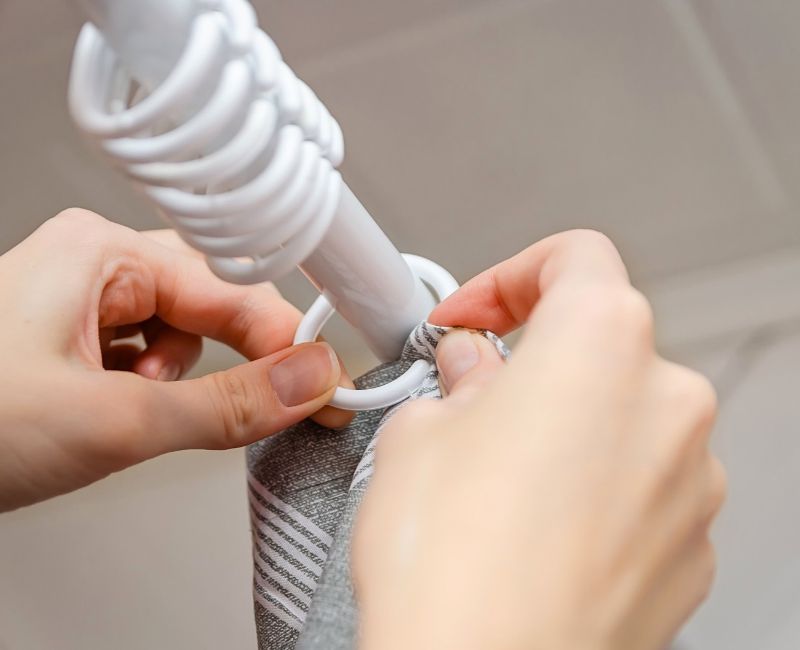
There are two main ways to clean a shower curtain: in the washer or by hand.
Using the washer is faster and less hands-on, while hand-washing is better for delicate materials. (Or if the curtains are too big for your machine.)
Before you start, check the care label for specific instructions. If there isn’t one, which can happen with budget curtains, opt for a gentler cycle.
Washing a shower curtain in a washing machine
You can clean most fabric, vinyl, or plastic shower curtains in the washing machine. The process will be similar for all types!
NOTE: This works best with front loaders or top loaders with an impeller. Standard top loaders with agitators could stretch, tear, or warp the curtain, especially on higher settings. If you must use a top-loader with an agitator, use the lowest spin setting.
Always remove the curtain rings before washing. Keeping them attached will damage both the curtain and the washing machine. If they can’t be removed, hand-wash your shower curtains instead.
| How to clean a fabric shower curtain | Machine wash on a gentle cycle with warm water and mild laundry detergent. Add 1/2 cup of distilled white vinegar to the rinse cycle to remove detergent residue and soften the fabric. |
| How to wash a plastic shower curtain | Machine wash on a cold cycle with mild detergent. Add some old towels to increase friction, and half a cup of baking soda to tackle odours. |
| How to clean a vinyl shower curtain | Machine wash on a cold-water cycle with mild detergent plus a half cup of washing soda to tackle deeper grime. Toss in some towels to add scrubbing action. |
You can also add a half cup of vinegar to the rinse cycle for vinyl or plastic curtains! It’ll neutralise odours and help get rid of any mildew. But it’s most effective on fabric curtains, since it gets into the fibres to remove detergent residue.
Hand-washing a shower curtain
If machine washing isn’t an option, it’s easy to clean your shower curtain by hand.
Fill your bathtub or laundry sink with warm water, then stir in 1–2 tbsp of laundry detergent. If you’re dealing with mildew or stains, add 1/2 cup of oxygen bleach. Mix everything so it’s sudsy.
Submerge the shower curtain and slosh it around to get it saturated. Then let it soak for 10–20 minutes before agitating it manually or using a soft-bristled brush.
Drain the tub or sink, then rinse the shower curtain in clean water. Hang it up to air dry.
Cleaning shower curtain rings
Check if you can remove the curtain rings, since that makes them easier to clean.
If you can’t, wipe them in place with a damp cloth and a dab of dish soap.
But if they are removable, take them off and use one of these cleaners:
| Plastic shower curtain rings | Soak in a bowl with equal parts vinegar and water for 5 minutes. Scrub clean with a soft brush, then rinse and wipe dry. |
| Metal shower curtain rings | Wipe with a cloth dampened with a 1:1 mix of vinegar and water. Dry immediately afterwards to prevent rust. |
If your metal rings have rust (common in a damp room), soak them in undiluted white vinegar for just 3–5 minutes. Be mindful of soaking time; acetic acid breaks down rust, but can eat away the cheap metal with prolonged exposure.
After soaking, go over the rings with a soft brush, then rinse and dry them straight away.
However, if the rust doesn’t come off with a soak, you’re better off replacing the rings instead.
TIP: Don’t forget to wipe the shower rod with a damp microfibre cloth, too!
How to Wash a Shower Liner
Shower liners are made of durable and waterproof materials, such as polyester or vinyl. That makes them easier to maintain, though they can be bulky or heavy.
Try to tackle just 1–2 liners at a time; if you pack them in, they’ll be more difficult to clean.
Machine washing a shower curtain liner
You can usually clean a shower liner in the washing machine. (Check the care label to be sure.) Use a gentle cycle and cool water, plus your regular laundry detergent. For very dirty liners, pour half a cup of washing soda or oxygen bleach into the washer tub.
Like with shower curtains, remove the rings first. If you can’t do that, stick to hand-washing.
For buildup of soap scum or mineral deposits (limescale) on the liner, add a half cup of white vinegar to the rinse cycle. Don’t add it to the main wash, since it’ll get neutralised by the detergent.
Do not use a hot water cycle, and skip the drying if your washer has that feature — all that heat in an enclosed space could warp the material.
Cleaning a shower curtain liner by hand
Alternatively, you can wash a shower liner by hand! Stir 1–2 tbsp of laundry detergent and a half cup of washing soda or oxygen bleach into a tub or laundry sink full of lukewarm water. Let the liners soak for 10–20 minutes to strip off dirt.
Once time’s up, carefully swish and agitate the liners or scrub them with a soft sponge or brush. Drain the water, then rinse using the showerhead or tap. Hang them up afterwards to dry.
If you’ve got stubborn limescale or soap scum, do a pre-soak with lukewarm water and 1/2 cup of white vinegar OR 1/4 cup citric acid per 4 litres of water before you do any washing. (So before the detergent soak.) The acid will dissolve the buildup.
How to Dry a Shower Curtain or Liner
You should not put a shower curtain or shower liner in the dryer. The heat can warp or otherwise damage the material, especially plastic and vinyl.
Instead, hang the shower curtain back up and leave it spread open to air dry. Keep the doors and windows open and switch on the exhaust to improve air circulation.
If you’ve got a laundry drying spot outdoors, that’s even better — the fresh air helps dissipate odours and prevents mustiness. The sunlight ensures thorough drying, and also has a mild lightening and antimicrobial effect.
How to Clean a Shower Curtain Without Taking It Down
Just need a quick clean, or find it too difficult to take down the shower curtain and liner? You can clean them while hanging in your bathroom!
Always ensure proper ventilation by opening windows or exhaust fans, and wear rubber gloves if vinegar irritates your skin.
In a spray bottle, combine equal parts white vinegar and warm water. Spread the curtain open and thoroughly saturate it with your solution.
Let the vinegar sit for 3–5 minutes so it can dissolve any soap residue, limescale, and other grime.
Wipe the shower curtain clean with a microfibre cloth or towel, then leave it open to dry.
How to Remove Mould from a Shower Curtain
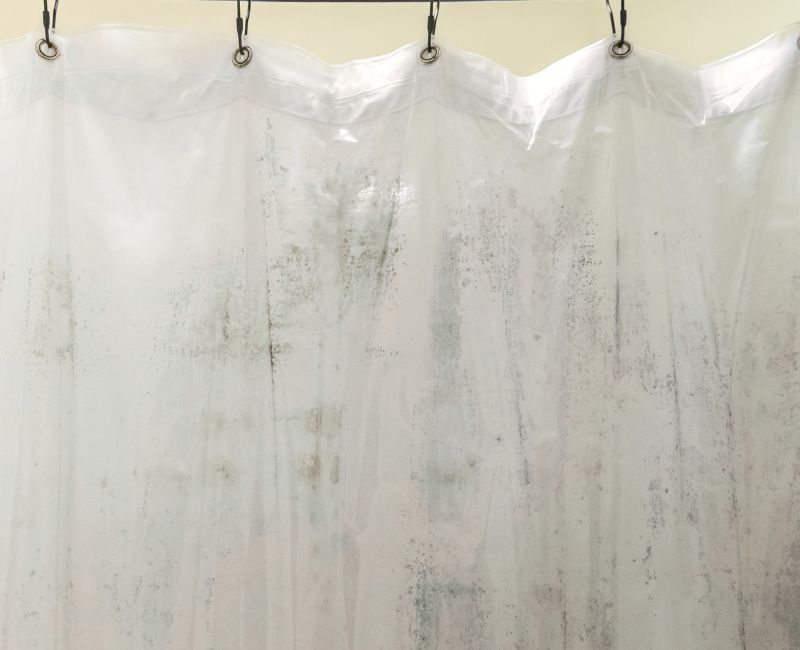
Mould and mildew thrive in warm, damp environments, which makes your bathroom the perfect hotspot.
Regular cleaning (at least monthly) helps prevent mould on shower curtains and liners, but poor air circulation or inadequate drying can lead to ugly mould stains.
Using white vinegar
White vinegar is the simplest way to clean a shower curtain with mould. Plus, it’s safe for fabric, vinyl, and plastic materials.
If you’ve got enough vinegar, soak the curtain or liner in an undiluted solution for at least 1 hour. Scour off the mould with a brush or sponge, then rinse the material or run it through a quick, cool wash.
But if you don’t want to use a sink’s worth of vinegar, pour some into a spray bottle (undiluted). Lay the curtain on a flat surface and thoroughly saturate the mouldy spots. Don’t let the vinegar dry off fully, since it needs at least an hour to effectively kill mould.
Scrub the shower curtain or liner clean, then rinse and wipe off excess moisture before hanging up to dry.
Using hydrogen peroxide
3% hydrogen peroxide is also an effective mould remover! It’s generally safe for shower curtains or liners, though do a spot-test first, especially for coloured curtains. (Peroxide has a mild bleaching effect.)
Take a spray bottle with hydrogen peroxide and coat the mouldy spots. Let the peroxide sit for at least 10 minutes before scrubbing off the mould.
Rinse the curtain or liner, then wipe it dry with an old, clean towel. Spread the curtain open to air dry.
Using bleach
Both chlorine and oxygen bleach can tackle mouldy shower curtains, although they’re less effective than vinegar on porous surfaces (like fabric). Bleach is a very harsh cleaner, so use proper precautions.
If cleaning with bleach, wear protective gear and ensure the bathroom is well-ventilated.
Do not combine bleach with vinegar, hydrogen peroxide, or other cleaners — it’ll trigger a dangerous reaction. Only ever use water.
| Removing mould with chlorine bleach | 1 cup of chlorine bleach per 4 litres of cool water in a laundry sink | It should be cool water, since heat breaks down the sodium hypochlorite. Soak the shower curtain or liner for 10–15 minutes to kill the mould. Remove the mould with a sponge, then rinse the curtain and fully dry. |
| Removing mould with oxygen bleach | 1 cup of oxygen bleach per 3 litres of hot water in a laundry sink OR in a standard wash cycle | Heat activates oxygen bleach faster, so it’s fine to use with hot water. Soak the curtain or liner for 10–20 minutes, scrub clean, then rinse and allow to dry. |
How to Keep a Shower Curtain Clean

Regular cleaning is important, but good bathroom habits help prevent mould and lessen grime buildup on shower curtains and liners.
Both during and after your shower, keep the exhaust fan running and open windows (if possible). Good ventilation prevents steam and moisture from building up inside and makes everything dry faster. A dehumidifier helps as well.
Keep a spray bottle of white vinegar in the shower. Use it to spritz the shower at the end of the day, from the shower glass to your liners. If you dislike the vinegar smell, look for a dedicated product like Astonish Daily Shower Cleaner.
After showering, leave the liner fully spread out for 5–10 minutes so water can drip off and dry. Keeping the liner bunched up traps moisture, which can leave mineral deposits or lead to mould.
Finally, a good shower curtain or liner should last you months if properly maintained. So long as it’s in good condition, there’s no need to change it yet.
A general rule is to replace a shower liner every 6–12 months and a shower curtain every 1–2 years.
However, if there’s severe mould or mildew — especially on fabric shower curtains — replace the item ASAP.
FAQs About Cleaning Shower Curtains and Liners
Here are a few other questions people often ask about cleaning a shower curtain and liner.
What’s the best thing to clean a shower curtain with?
Your best shower curtain cleaners will be a diluted white vinegar spray or cool to lukewarm water and mild laundry detergent.
Vinegar is best for wiping down or tackling mildew, while detergent and water work for thorough washing.
Can you put shower curtains in the washing machine?
You can run most shower curtains through the washing machine, though check the care label just in case! Some brands may advise against it, especially for thinner materials that could tear or warp.
If you’re unsure (or there’s no label), stick to gentle cycles with cool water, or a good old-fashioned hand-wash in the laundry sink.
How to clean a white shower curtain
Dirt and stains show up easily on white shower curtains or liners, so they need thorough cleaning. Fill the laundry sink with lukewarm water and add a half cup of oxygen bleach OR citric acid for a pre-soak. (Not both; they’ll just neutralise each other.)
Both oxygen bleach and citric acid can brighten white fabrics or vinyl, and lift stains from the surfaces. Then air-dry the shower curtains in the sun for additional lightening.
How to get black mould out of a shower curtain
Undiluted white vinegar (at least 4.2% acetic acid, but ideally 5% or more) is your best option for getting black mould out of a shower curtain. Soak the entire curtain in the vinegar for at least 1 hour so the acid can penetrate the mould.
However, black mould is serious and shower curtains are inexpensive. In these cases, it’s better to dispose of the shower curtains properly and buy replacements instead. Black mould is a health hazard, and no shower curtain is worth that risk!
