
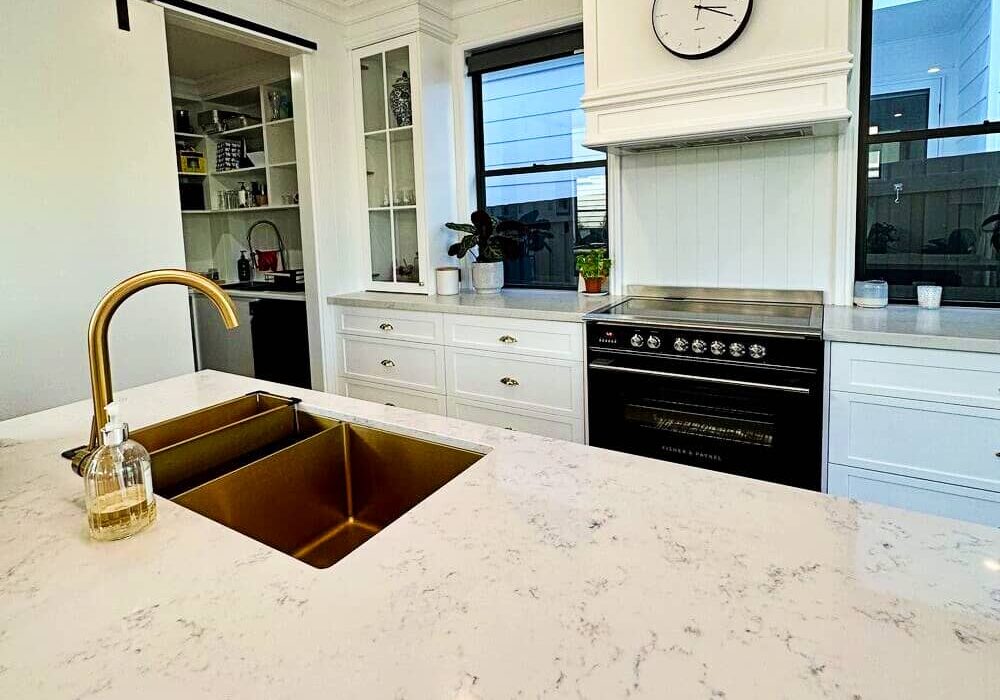
There’s no denying that marble looks stunning. The unique, natural veining and shiny finish instantly add character to any room.
That said, marble has a reputation for being high-maintenance.
Because it’s a natural stone, it’s softer and more porous than many other surfaces, so it responds differently to most cleaning products.
You don’t need anything fancy or expensive to clean marble, though.
Warm water with a few drops of mild dish soap is often all you need for everyday upkeep. But if you prefer, you can use a dedicated marble cleaner.
Below, we cover how to clean all marble surfaces in your home — from benchtops to shower tiles. We also explain how to tackle stains, and give tips to protect the stone.
Time to get your marble looking sleek and polished!
Benchtops | Tables | Floors | Shower Tiles | Black Marble | Treating Stains | Removing Haze | Maintenance Tips
Before Cleaning Marble
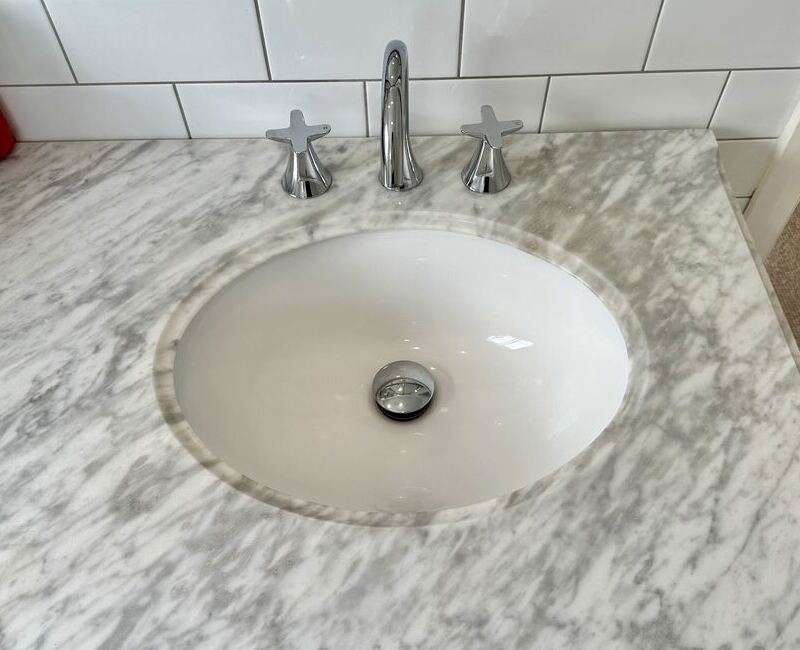
Proper cleaning matters to keep marble looking its best for years.
Before you get started, it’s important to understand what the surface can and can’t handle!
Is marble hard to clean?
Not really — cleaning marble is fairly straightforward. However, it’s more sensitive than most other surfaces in a home.
Many cleaning products that are suitable for ceramic, porcelain, stainless steel, or even engineered stone can permanently damage marble. The glossy surface can also be easily scratched.
This means you need to make sure that every solution and cleaning tool you use won’t damage the surface!
What to clean marble with
The best marble tile cleaner is a pH-neutral solution.
To make your own, warm water with a few drops of mild dish soap in a spray bottle. This is good enough for everyday cleaning.
Ideally, use distilled water to prevent mineral deposits from building up, especially if you live in a hard water area.
If you prefer a store-bought option, dedicated marble cleaners are also available. Most are formulated to dry without leaving streaks, but double-check the label instructions to be sure.
You’ll also need non-abrasive cleaning tools, like microfibre cloths and a soft-bristle brush (like an old toothbrush) for stubborn stains.
Can you use hydrogen peroxide on marble?
Yes, but with caution and only on white or light-coloured marble, such as Carrara or Calacatta.
Hydrogen peroxide is a gentler alternative to bleach. It can lift many types of stains from marble, including food or drink spills, and mould.
Opt for a 3% concentration and use it as a spot treatment, rather than an all-over cleaner. You can also use it to disinfect the surface by diluting it with an equal amount of water.
However, avoid using hydrogen peroxide on dark marble.
Because it’s a bleaching agent, it can whiten or “ghost” the surface, especially if left too long or allowed to dry on the surface.
Whether for light or dark stone, always patch test in an inconspicuous area first, and rinse and dry thoroughly after use.
What should you not clean marble with?
Marble is mostly made of calcium carbonate, which means it reacts badly with highly acidic cleaners! They can cause irreversible damage by etching the surface.
Harsh chemicals may also discolour the finish or break down the marble sealer. And because marble is relatively soft, any abrasive products easily scratch marble.
Here’s what to keep away from marble:
| ACIDIC CLEANERS | STRONG CHEMICALS | ABRASIVE TOOLS |
| Lemon juice
White vinegar Citric acid powder Nail polish removers Commercial descalers |
Bleach
Ammonia Oven cleaners Toilet cleaners Glass cleaners All-purpose sprays |
Pumice stone
Magic erasers Standard steel wool Stiff-bristled brushes Rough scouring pads |
This isn’t everything, though. When in doubt, check the label of your cleaner or do a spot test!
Etching vs staining: what’s the difference?
Before trying to clean any “stain” on marble, check if it’s actually a stain or an etch.
Here’s how to tell the difference:
| ETCHING | STAINING |
| Caused by acids like lemon or vinegar | Often caused by food, drinks, mould, or rust |
| Only visible from certain angles | Visible from all angles |
| May feel rough or sunken | Usually feels smooth (or sticky, if fresh) |
| Permanent | Can be treated |
Etching is a chemical reaction that happens when an acidic substance eats into the calcium carbonate in the stone. That means the surface has already been dissolved.
Unfortunately, no amount of scrubbing will remove an etch! Instead, you’ll need to reach out to a stone care professional for restoration.
On the other hand, stains are simply discolourations.
They happen when coloured liquids seep into the pores of the stone, especially if it’s not properly sealed. Mould and rust are common culprits as well.
Luckily, stains can often be lifted using a marble-safe paste or a pH-neutral cleaner.
How to Clean Different Marble Surfaces
The cleaning approach is similar for all marble surfaces in a home.
However, those in kitchens and bathrooms usually need more frequent upkeep. You may also come across different types of stains depending on how the space is used.
Prefer to just hand this chore over? A professional house cleaner can help — they’re trained to handle different surfaces, even delicate ones like marble!
How to clean marble benchtops
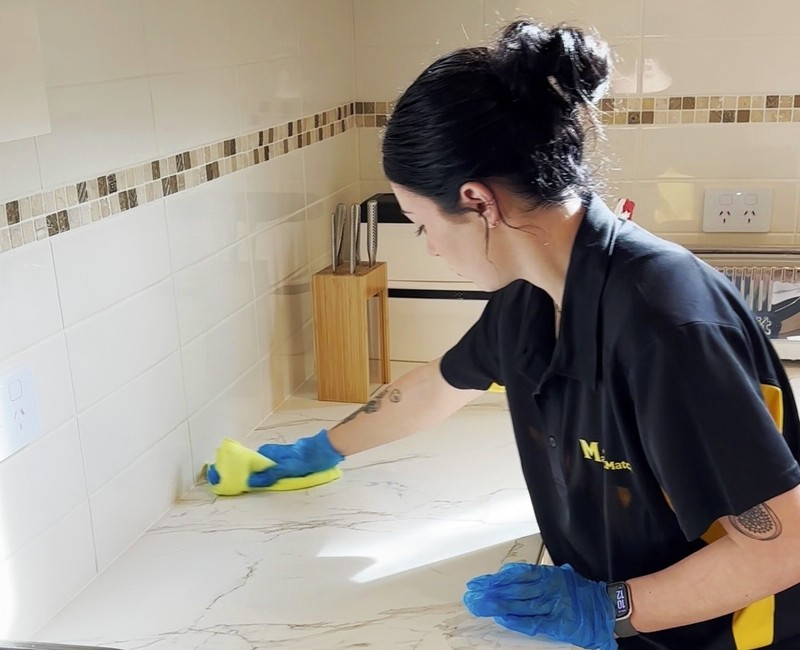
| How often to clean | Wipe after each use; deep clean weekly |
Benchtops take the brunt of daily kitchen messes. They’re more exposed to spills, heat, and moisture than most surfaces in your home.
Cleaning your marble benchtop regularly keeps it looking pristine!
Food or liquid spills: Pick up any solid debris, and blot any liquids straight away with paper towels. Do not wipe, as that spreads the mess further.
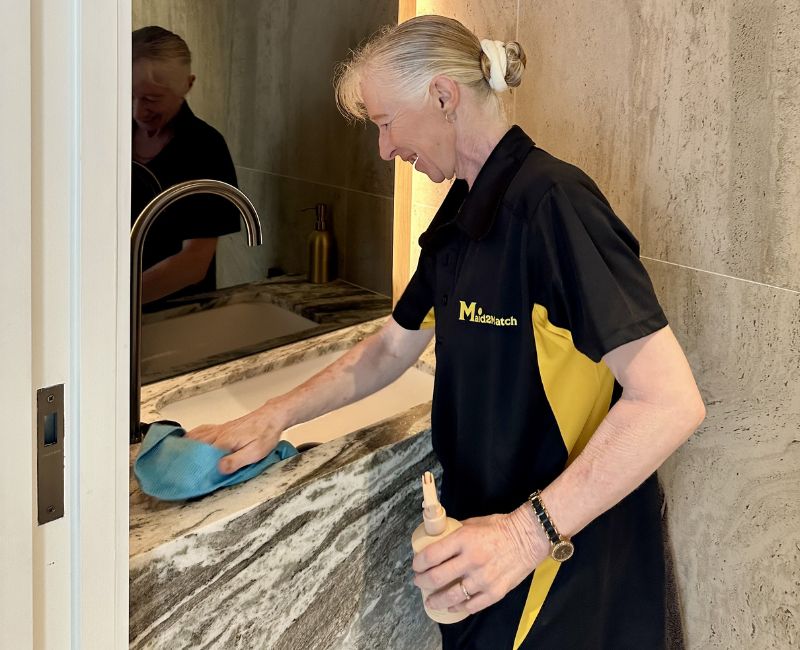
Regular cleaning: A quick wipe with a microfibre cloth dampened with warm, soapy water is enough. Follow up with a clean, damp rag to rinse all soap residue, then a dry towel to prevent water spots.
Disinfecting: If you handled raw meat or someone at home has been unwell, mix equal parts water and 70% isopropyl alcohol in a spray bottle. Lightly spritz the marble benchtop, let it sit for about a minute, then rinse and dry.
Deep cleaning: Remove all items and appliances (like a toaster or a coffee maker) sitting on the benchtop. Wipe the entire surface to prevent grime from building up.
How to clean a marble table
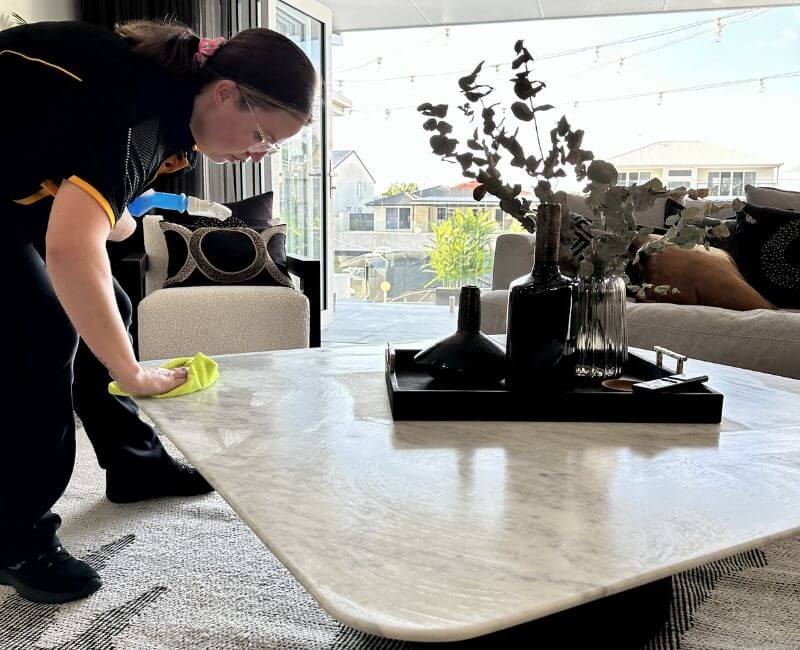
| How often to clean | After each use |
Dining tables and coffee tables aren’t as heavily used as benchtops, but they still need regular care.
Some marble tables come with a resin coating, which makes them more forgiving.
However, harsh products or aggressive scrubbing can wear that protective layer down over time, so it’s best to use gentle cleaning methods.
Common stains on marble tables include food mess, fingerprints, smudges from oily skin, and rings from the bottom of glasses. The goal is to keep the surface streak-free!
Spills: Pick up any food scraps and brush away crumbs. Blot (don’t wipe!) spills immediately with paper towels or a dry cloth.
Regular cleaning: Remove all plates, glasses, and other objects. Clean the marble table top with a well-wrung cloth dipped in warm, soapy water, focusing on smudges. Rinse with a damp cloth, then buff dry in circular motions for a spotless finish.
How to clean marble floors
| How often to clean | Dry mop every few days; wet mop weekly |
Grit is the biggest enemy of marble floors, especially in high-traffic areas like entryways and hallways. Dirt and dust from shoes can act like sandpaper and gradually dull the surface.
Always remove dust and loose dirt before mopping, so you’re not dragging grit all over your marble floor.
Dry dusting: The best tool to use is a microfibre dust mop or a soft broom. Work in sections to cover the entire floor.
A vacuum also works, but use the hard floor setting or switch off the beater bar to avoid scratching the floor. Clear any trapped debris from the wheels, too.
Mopping: Mix warm water with a few drops (3–4 are enough!) of dish soap in a bucket. You can also use a pH-neutral marble cleaner, preferably a no-rinse formula — be sure to follow the label instructions.
Use a microfibre flat mop or a spin mop. Dip it into your cleaner, then squeeze out the excess water so it’s not soaked. Mop the floor in one direction.
Now and then, rinse the mop in clean water and dampen it again with the cleaning solution, so you’re always wiping with a fresh mop.
When you’re done with the whole floor, swap in a clean mop head dampened with plain water to rinse the surface. Dry with a clean mop or towel to prevent streaks.
Cleaning marble floors without streaks: Mopping with hard water, using too much cleaning solution, or not rinsing properly can lead to streaky floors. Rinse and dry the floor again, and repeat if needed.
How to clean marble tiles in the shower
| How often to clean | Squeegee after every use; deep clean weekly |
Marble shower floors are usually trickier to maintain than walls, since water and dirt tend to remain on the surface longer.
Either way, both are constantly exposed to moisture, soap, shampoo, and body oils. That means buildup can happen fast. The damp environment also encourages mould in corners and grout lines.
After each use: Squeegee the tiles after every shower. It takes about 30 seconds and prevents water spots, soap scum, and hard water deposits.
For weekly cleaning: Pre-rinse the tiles with warm water. Then, spray the surface with a pH-neutral stone cleaner or a mixture of warm water and mild dish soap.
Let it sit for a few minutes, then gently scrub the surface with a soft cloth.
Clean the grout lines with a gentle, non-abrasive brush as well. Rinse everything with running water and dry with a squeegee or a towel.
How to Clean Black Marble
Black marble like Nero Marquina brings a bold, striking look to any space.
The downside is that dust, fingerprints, water spots, and other imperfections show easily on dark marble compared to light-coloured marble. This makes thorough rinsing and drying even more important.
You should also be extra careful when handling anything acidic. Etching usually appears as a white or light grey spot on black marble.
Regular cleaning: Blot spills immediately to prevent permanent damage. For routine care, wipe the surface with a soft cloth dampened with a mixture of distilled water and a little dish soap. A dedicated stone cleaner works well, too.
After wiping, never let moisture air-dry on the surface. Follow up with a clean, damp cloth to remove any residue, then buff dry with a clean towel.
What to avoid: Skip hydrogen peroxide (or dilute it and do a spot test first!), as it can lighten or bleach the stone.
How to Clean Marble Stains
The number one rule is: don’t let any stain sit! Tackle them right away while they’re still fresh and easier to lift.
Always start with gentle cleaning solutions like a pH-neutral product or warm, soapy water before trying anything stronger.
Organic stains
Food and drink spills (like coffee, sauces, tea, or wine) can all leave marks on marble if they sit too long. As soon as the stain happens, pick up any debris and blot the area right away.
New stains will usually come off with your regular marble cleaner or a very diluted dish soap.
For old or deep stains, make a paste using 1 part 3% hydrogen peroxide and 2 parts bicarb soda. Apply it to the mark, then cover with plastic wrap.
Leave it for a few hours or overnight, then rinse and dry thoroughly.
Oil stains
For fresh oil stains on marble, blot the splatters with paper towels immediately.
Sprinkle some cornflour over the affected area, making sure it’s fully covered. Let it sit for at least 20 minutes so the powder can draw out the oil.
Wipe away the residue with a damp cloth, then dry with a soft towel.
For oil stains that have set in, mix 1 part acetone with 2 parts cornflour to form a thick paste.
Make sure to use 100% pure acetone — you’ll typically find it at hardware stores. Commercial nail polish removers with acetone are highly acidic and can etch marble!
Apply the paste to the stain, cover with a cling film, and leave it for an entire day. Afterwards, remove the cover, then rinse and dry completely.
Mould
Mould loves damp and humid areas. If your marble is in the bathroom, shower, or kitchen, it’s more prone to mould and mildew.
To tackle mould on your marble, use undiluted 3% hydrogen peroxide. Spray it directly onto the affected area and let it sit for at least 10 minutes.
Rinse with a damp towel, then dry the surface thoroughly.
Rust
Getting rust out of marble can be tricky. Most commercial rust removers contain oxalic acid or phosphoric acid, which can etch the stone!
Your best chance of lifting rust from marble is to treat it while it’s still new.
Use a paste made of 2 parts baking soda and 1 part 3% hydrogen peroxide.
Spread it over the rust stain, cover with plastic film, and wait for a few hours or overnight. Then, rinse thoroughly and dry the surface.
For persistent stains, use a rust remover specifically formulated for natural stone. Follow the label directions to avoid damaging the marble.
Soap scum
Soap scum — a combination of body oils, hard water minerals, and soap residues — can accumulate on marble floors and shower tiles over time.
For light buildup, a pH-neutral cleaner or warm, soapy water is usually enough.
For thicker, stubborn layers of soap scum, make a thick paste using 3 parts baking soda and 1 part water.
Apply it to affected areas with a soft sponge or cloth. Let it sit for 5–10 minutes to break down the residue, then gently work over the surface with a soft brush.
How to Remove Haze From Marble
Dealing with a hazy appearance on marble? Before you reach for a cleaner, it helps to figure out what’s actually causing it!
That cloudy look is usually caused by leftover cleaner residue, grout cement, or incorrect sealing.
The “haze” could also be tiny surface scratches, particularly if abrasive pads or harsh cleaners were used.
Once you know what you’re dealing with, you can bring back marble’s natural shine.
| CAUSE OF HAZE | WHAT TO USE | CLEANING INSTRUCTIONS |
| Cleaner residue | 50:50 mix of rubbing alcohol and water | Spritz the surface lightly, and buff with a dry towel. |
| Grout cement | Stone-safe grout haze remover | Check the label to confirm that it’s marble-safe. Follow the use directions. |
| Marble sealer | 100% pure acetone (not commercial nail polish remover) | If professionally sealed, contact the installer. Otherwise, apply 100% pure acetone on a cloth and wipe the surface. |
| Tiny scratches | Specialised marble polish | Follow the instructions on the packaging. For larger sections, opt for professional restoration. |
If you’re unsure about doing things yourself or the haze isn’t improving, contact a stone care specialist.
Tips to Maintain Marble
Occasional polishing, regular resealing, and a few daily habits can help preserve marble’s finish!
Polishing marble
You can polish marble yourself if the surface has started to look slightly dull or faded. However, only do this when needed, as excessive polishing can gradually wear down the finish over time.
Clean the surface thoroughly with your regular stone cleaner.
Then apply a marble polishing product, following the product instructions carefully.
Usually, you’ll apply a small amount of polishing powder to the dull areas and add a little water to form a paste.
Gently buff the surface in circular motions using a microfibre cloth or a handheld buffer fitted with a felt pad.
When you’re done, rinse away any residue with a clean, damp cloth and wipe the marble dry.
Resealing marble
Marble sealant protects the porous stone from heat, moisture, and stains. It doesn’t last forever, though — the sealant wears down gradually with use and cleaning.
As a general guide, marble benchtops and shower tiles need resealing every 6–12 months. Surfaces that don’t get much use can be resealed less often, around every 1–2 years.
Not sure if it’s time to reseal? Try pouring a small amount of water on the marble surface.
If it beads up, the seal is still doing its job. If the stone darkens within a few minutes, it’s time to bring in a specialist.
Protecting marble surfaces
Aside from resealing and polishing, small habits can make a big difference in maintaining marble!
For countertops: Wipe spills immediately, especially acidic liquids like coffee, wine, and citrus juice. Use chopping boards, coasters, and trivets to protect your stone benchtop from sharp knives or very hot cookware.
For tables: Lift bowls and plates instead of dragging them to avoid scratches. Place felt pads under decorative objects, and avoid leaving wet glasses or bottles sitting directly on the surface.
For floors: Use mats at entrances to reduce the amount of grit that lands on the surface. If possible, ask everyone to take off outdoor shoes to keep the floor clean.
For bathroom or shower tiles: Use liquid body wash instead of bar soap. After using the shower, always squeegee marble tiles to prevent soap scum and mineral deposits. Letting the exhaust fan run a few more minutes after showering also helps surfaces dry faster.
FAQs About Cleaning Marble Surfaces
Still have questions about caring for marble? We answer the most common ones below!
How to clean marble naturally
When treating stains, a bicarb soda and water paste works as a gentle paste. It’s non-toxic and mild enough for marble when used for spot cleaning!
For everyday touch-ups, a safe DIY option is warm water with a small amount of pH-neutral dish soap. It’s not entirely natural, but it’s gentle and effective for everyday cleaning.
Many natural cleaning ingredients — like vinegar, lemon juice, and citric acid — are acidic, so they can etch the surface.
Can you steam clean marble?
No, steam cleaning is not safe for marble!
Both the high heat and pressurised moisture can break down the protective sealant and expose marble’s porous layers. That makes marble more prone to staining over time.
High temperatures can also cause tiny cracks in the surface.
Is it safe to use disinfectant wipes on marble?
No — most disinfectant wipes contain bleach, citric acid, or other ingredients that can permanently etch or damage marble.
What can you use to disinfect marble?
One option is equal parts 70% rubbing alcohol and water. Spritz the marble surface, and wait for about a minute before wiping with a soft cloth.
Another option is equal parts 3% hydrogen peroxide and water. Let it sit for at least 5 minutes, then rinse and dry thoroughly.
Can you grade #0000 steel wool on marble?
It’s not recommended!
You might come across advice suggesting very fine steel wool (grade #0000) for hard water stains or stubborn rings, but it’s still a risk.
Even if it feels gentle, steel wool can scratch the finish or wear down the sealant, especially if you scrub too hard.
Safer tools include a non-scratch nylon pad or a plastic scraper. For dull patches or buildup, a dedicated marble polish can also restore shine without damaging the stone.
Can you use car wax to polish marble?
Do not use car wax on marble!
While it can give marble a temporary shine, the coating can scuff easily, turn yellow, or attract more dirt over time.
It may also trap moisture underneath, which isn’t great for porous stones like marble.
