
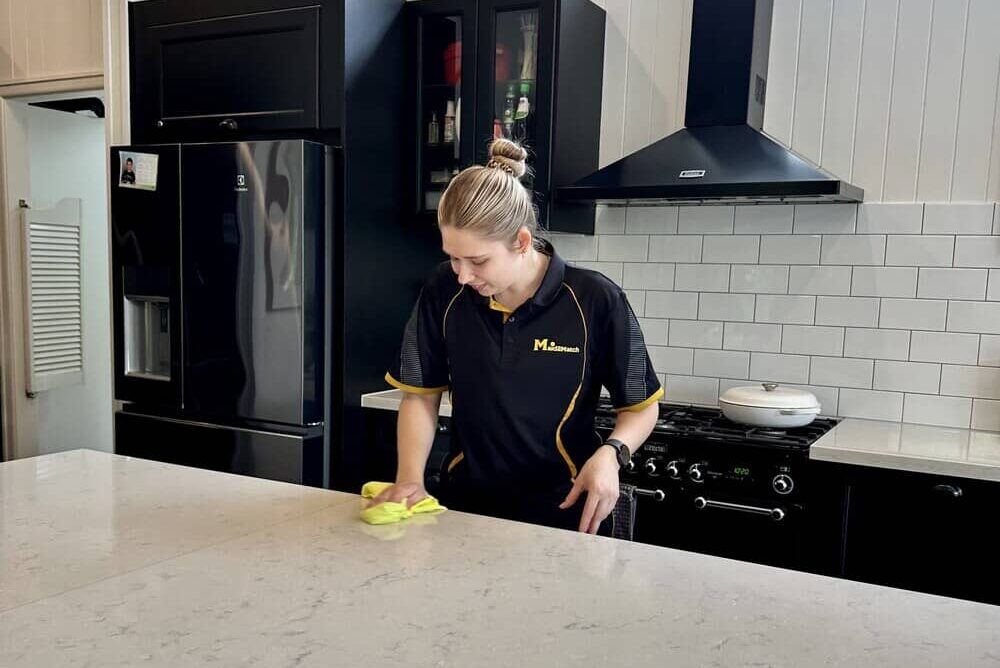
Spilt coffee on your Caesarstone benchtop? Or do you need to tackle those greasy splatters after cooking?
Caesarstone surfaces are built to handle daily wear. However, even the non-porous and durable finish can get damaged if you’re not cleaning it the right way.
Whether you have an older quartz countertop or a newer, silica-free Caesarstone benchtop, the cleaning process is pretty much the same.
For routine maintenance, warm water and mild dish soap are usually all you need. You can also use a pH-neutral cleaner specifically made for natural or engineered stone.
We’ll walk you through how to clean Caesarstone benchtops and keep them looking spotless!
How Often to Clean | Before Cleaning | Routine Cleaning Steps | Disinfection | Removing Stains | Maintenance Tips
About Quartz and Caesarstone Benchtops
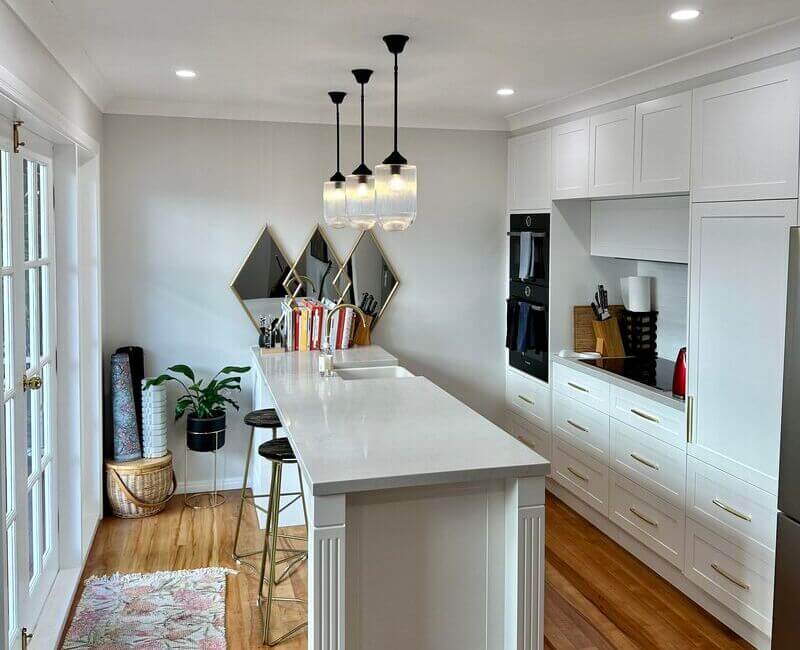
When people say “Caesarstone benchtop,” they’re probably thinking of a quartz benchtop!
In Australia, “Caesarstone” is actually a brand. Since it’s so popular, it has become the catch-all term for quartz benchtops, even if they might be from a different manufacturer.
However, since quartz is now banned in Australia, Caesarstone has begun offering other types of surfaces.
What to know about quartz benchtops
Quartz or engineered stone benchtops are made from a blend of natural quartz, pigments, and resins.
Many homeowners love quartz, as it’s usually more affordable than natural stone like marble or granite. They also have a similarly elegant appearance!
Moreover, quartz benchtops are non-porous. They don’t absorb spills or stains easily, so they’re simpler to maintain.
In comparison, you’d need to be extra careful when cleaning marble benchtops, as they’re porous and more delicate.
Quartz also handles heat well and is scratch-resistant, making it ideal for kitchen countertops.
Why is quartz banned in Australia?
As of July 2024, traditional engineered stone or quartz is not allowed in Australia.
This is because it can release plenty of silica dust when cut or drilled. It may cause serious lung problems, particularly among stone workers.
However, if your quartz benchtop was installed before the ban, it’s safe to keep using it. Just avoid DIY drilling, as that can expose you to silica.
What are newer Caesarstone benchtops made of?
If you have a Caesarstone benchtop that was installed after the quartz ban, it’s most likely made from a different material.
Caesarstone now offers silica-free surfaces, including mineral-based and porcelain options.
Like traditional engineered stone benchtops, these are non-porous, heat-resistant, and highly durable.
How Often to Clean a Caesarstone Benchtop
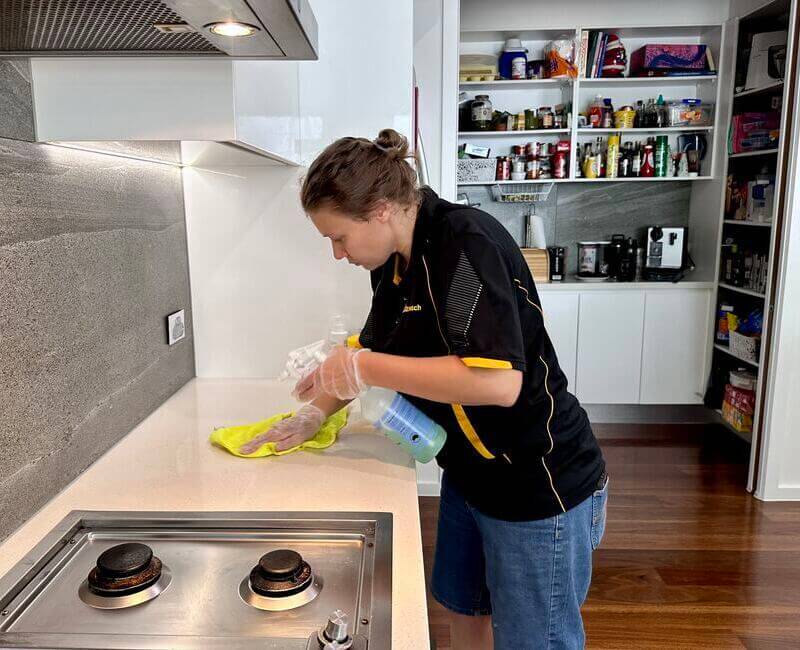
To keep your Caesarstone benchtop in good condition, regular cleaning is a must!
As much as possible, don’t let stains and spills sit. Tackle them immediately before they set and become tougher to remove.
Then, give your benchtop a good wipe after each use or at least once a day.
You’ll also need to do a deeper clean weekly as part of your kitchen maintenance routine. This includes wiping under any appliances or other items sitting on the benchtop.
Got too much on your plate or simply want to get your weekends back? Hire a domestic cleaner — they’ll make sure that your benchtop and entire kitchen stay fresh!
Before Cleaning a Caesarstone Benchtop
Before you start cleaning, check what your Caesarstone benchtop is made from, and refer to the care instructions to avoid damaging the surface.
What to clean a Caesarstone benchtop with
The best way to clean a Caesarstone benchtop is with a simple solution of warm, soapy water. This is usually enough for everyday cleaning!
Here’s a list of all materials you need to prepare:
- Warm water
- Spray bottle
- Paper towels
- Soft cloth or sponge
- Mild detergent or dish soap
As an alternative to dish soap, you can also use a specialised, pH-neutral cleaner designed for natural stone surfaces. To be safe, always read and follow the packaging directions.
IMPORTANT: Whenever you’re unsure about a cleaning product, do a spot test on a tiny, hidden area and watch for any signs of damage!
What to avoid when cleaning Caesarstone benchtops
When choosing a cleaning method, keep in mind that Caesarstone countertops usually can’t tolerate very harsh chemicals.
That means you should never use highly alkaline products, like ammonia, bleach, or oven cleaners. These can dull the finish or leave cloudy patches.
Acidic solutions are not advisable either, so skip lemon juice and white vinegar. You should also avoid cleaners with oxalic acid. Letting these sit too long can break down the resin binders on your benchtop.
Moreover, do not use steel wool or heavy-duty scouring pads, since they can cause scratches.
Routine Cleaning Steps for Caesarstone Benchtops
Whether you’re cleaning a Caesarstone quartz surface or a silica-free material, the steps are largely the same.
STEP 1: Pick up any food debris or peelings from the benchtop.
STEP 2: If there’s a spill, grab a few paper towels and place them over the liquid to absorb it. Do not wipe straight away, as this will just spread the mess!
STEP 3: After clearing the benchtop, mix warm water and a few drops of dish soap in a spray bottle.
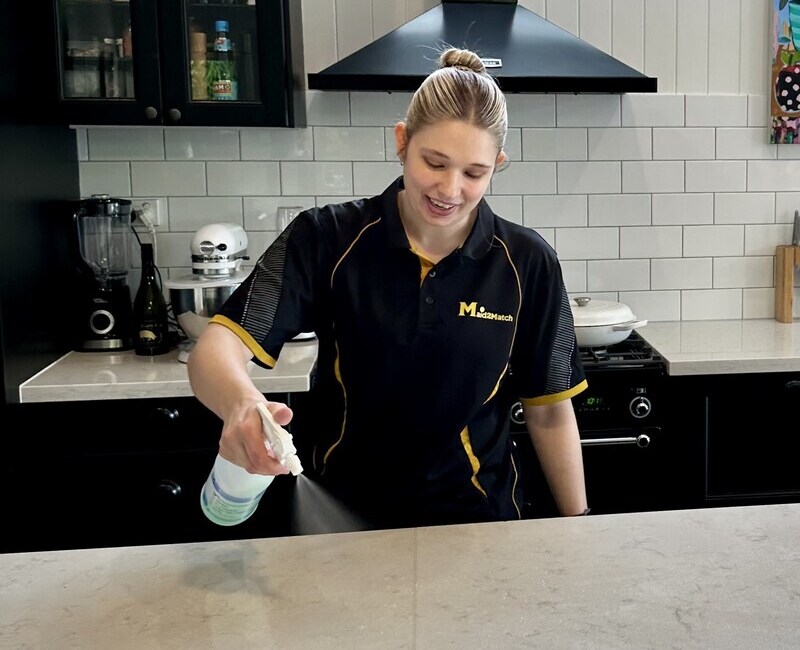
STEP 4: Spray the solution over the benchtop. Gently wipe the surface with a soft sponge or damp rag, focusing on stubborn spots.
STEP 5: Thoroughly rinse all soapy residue with another clean, damp cloth.
STEP 6: Finally, dry the benchtop with a lint-free cloth to avoid water spots and streaks.
How to Disinfect Caesarstone Benchtops
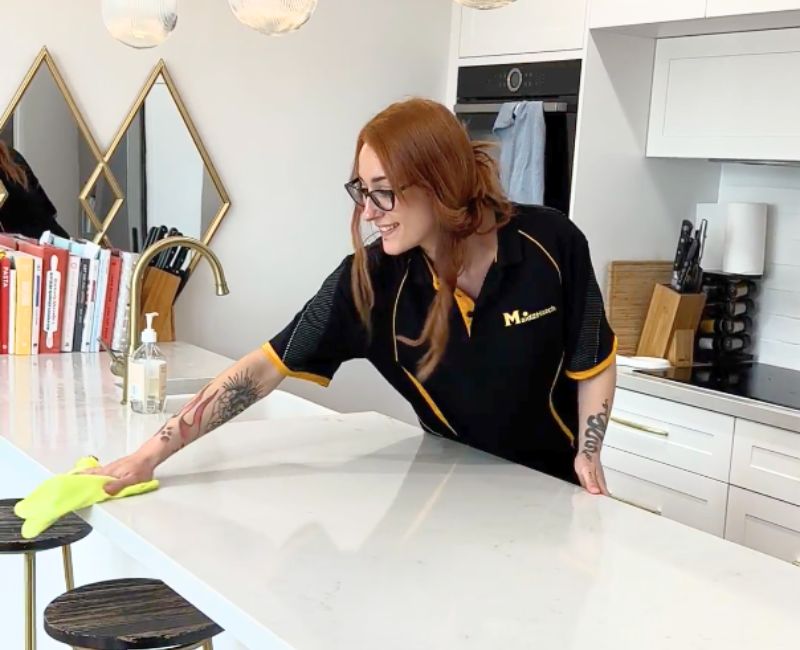
For regular cleaning, warm water and dish soap are usually enough to keep your benchtop hygienic.
Extra sanitising is only needed if you worked with raw meat or seafood, if someone in your home was sick, or if the surface was exposed to house pets.
To disinfect, combine 2 parts 70% rubbing alcohol and 1 part water in a spray bottle. Apply the solution over the benchtop, and allow it to sit for at least 1 minute.
Rubbing alcohol evaporates quickly, but you can buff the surface with a dry cloth afterwards for extra shine.
Alternatively, you can use disinfectant wipes or antibacterial spray cleaners designed for quartz and other Caesarstone surfaces.
How to Remove Stubborn Stains on Caesarstone Benchtops
While Caesarstone benchtops are usually easy to clean, stains can still set if they’ve been neglected for too long.
To avoid damage, try the gentlest methods first before moving on to stronger options.
Just keep in mind that you may need to reach for a specialised cleaning product if homemade solutions don’t work!
When you’re done, don’t forget to wipe your benchtop with a dry cloth for a streak-free finish.
Food stains
To remove food stains and spills (like coffee, sauces, or wine) from your Caesarstone benchtop, try baking soda!
Mix baking soda and a small amount of water to create a thick paste. Spread some over the stain, and let it sit for 5-10 minutes.
Using small, circular motions, gently scrub the stain with a soft sponge. Once the stain lifts, remove the baking soda residue with a damp cloth.
Oil stains
Fresh oil splatters come off easily from Caesarstone benchtops. Simply blot them with paper towels, and wash the surface with warm, soapy water.
However, older oil stains can be tougher to remove. In that case, combine equal parts baking soda and dish soap.
Dip a sponge into the mixture, then apply the paste over the affected area. Allow it to work for 20–30 minutes.
For tougher marks, place a damp paper towel over the area and leave it for a couple of hours.
Lightly rub the stain with a well-wrung-out sponge. Then, rinse the benchtop with a clean, damp towel.
Rust
For new or small rust marks, start with baking soda mixed with a little water.
If you need something stronger, make a paste using 2 parts baking soda and 1 part hydrogen peroxide. Just be careful when using this on dark-coloured Caesarstone benchtops, as the peroxide can have a mild whitening effect.
Apply the paste over the affected area, and leave it for 10–15 minutes. Use a soft sponge to further loosen the stain.
Once the rust is gone, remove all residue from the surface with a damp rag.
Water marks
You can treat light water stains on your Caesarstone benchtop with warm, soapy water.
If that doesn’t work, you’ll need a mild abrasive, like a baking soda paste. Use a soft sponge to apply it onto the marks, and let it sit for 5–10 minutes.
Scrub gently with a soft brush or damp towel, then rinse well.
How to Keep Your Caesarstone Benchtop in Great Shape
The number one rule is to avoid stains in the first place. Ideally, clean up spills as soon as they happen, rather than letting them sit on your benchtop.
Coasters and trays can also help catch drips from bottles, jars, or wet glasses.
Do not place hot items directly on your Caesarstone benchtop, either.
Instead, use heat-resistant pads or even a thick towel under freshly used pots or pans. This helps prevent discolourations or cracks caused by extreme heat.
When chopping, always use a cutting board to avoid scratches.
With these simple habits, you can keep your Caesarstone benchtop pristine for years!
FAQs About Cleaning Caesarstone Benchtops
Dealing with tough marks or simply looking for more ways to care for your Caesarstone benchtop? Check out these FAQs!
Can you use methylated spirits on Caesarstone benchtops?
Yes, methylated spirits can help lift stubborn stains on Caesarstone benchtops. They can work on:
- Heavy grease
- Paint splatters
- Adhesive or glue marks
Keep in mind that methylated spirits are highly toxic and flammable, so handle them carefully and store them somewhere safe!
If there are hardened or stuck-on residues on the benchtop surface, scrape them first with a plastic spoon.
Mix 1 part methylated spirit and 10 parts water in a spray bottle. Apply it onto a microfibre cloth — not directly onto the benchtop. Gently scrub the affected area until the mark disappears.
Afterwards, wipe the surface with a damp cloth and dry it thoroughly.
Can you use glass cleaner on Caesarstone?
Most glass cleaners contain ammonia or other chemical additives, which are not recommended for Caesarstone surfaces.
They can also dull the benchtop’s finish over time.
If you’re unsure about a product, check the label to confirm it’s compatible with the material, or do a quick spot test first!
Why does my Caesarstone benchtop look cloudy after cleaning?
That might be because you didn’t rinse the surface thoroughly! Residue from soap or spray cleaners can make your Caesarstone benchtop look hazy.
To fix this, wipe the entire surface with a cloth dampened with clean water.
Dry it immediately afterwards with a lint-free towel to prevent streaks.
Do Caesarstone benchtops need to be resealed?
Unlike natural stone, Caesarstone benchtops typically do not need resealing.
Engineered quartz and modern Caesarstone surfaces are non-porous, which means they resist moisture and are less prone to staining.
If your benchtop starts to look dull or you’re dealing with tough marks, check the specific care guidelines or contact the manufacturer.
