
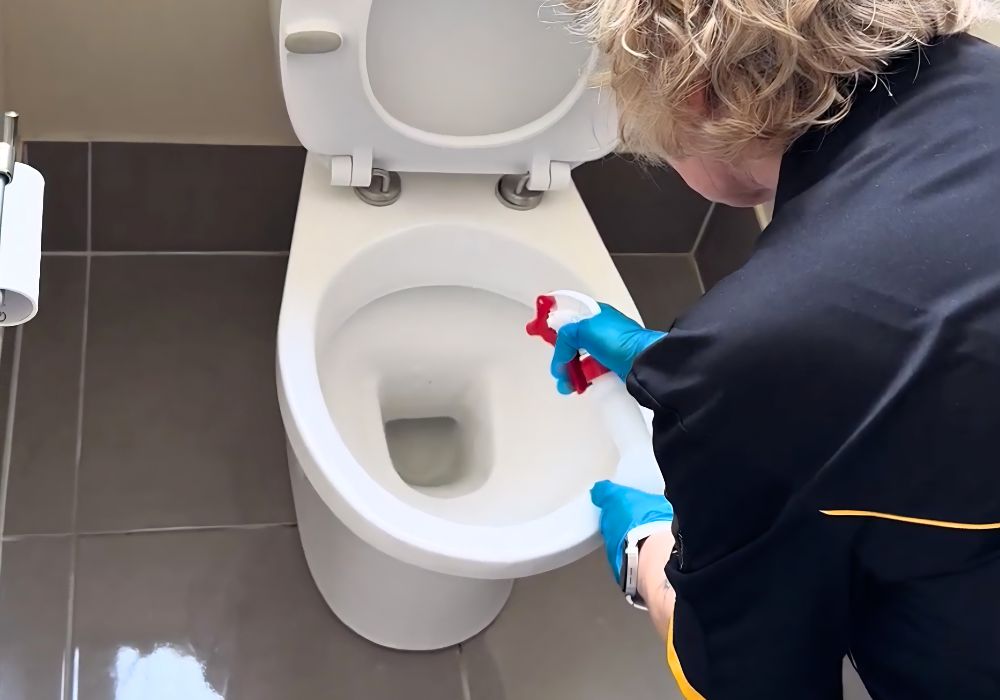
The toilet is one of the most-used items in any home, so it should be one of the most frequently cleaned, too!
Because they’re exposed to so much dirt and moisture, toilets see a lot of buildup from urine, hard water, or even bacteria. Tackle the stains right away, or they’ll become more difficult to remove (or even pose a health hazard).
How to clean toilet bowl stains depends on what’s creating them. Once you’ve identified the cause, you can choose an effective cleaning solution.
No one wants to sit on a dirty dunny, so keep your porcelain throne pristine — like it’s fit for royalty.
How Often to Clean | How to Remove Stains | Cleaning Without Scrubbing | After Cleaning | Will This Work?
What Causes Toilet Bowl Stains?
The colour of a toilet bowl stain can tell you a lot about what caused it!
Identifying the source is step one to removing it effectively, so use this table to work out what you’re dealing with.
| TYPE OF STAIN | WHAT IT LOOKS LIKE | WHAT CAUSES IT |
| Black stains | Very dark green to greyish-black blotches | Not black mould! Instead, these are often caused by high manganese levels in water, mineral buildup, or some types of bacteria |
| Blue stains | Greenish-blue discolouration | Usually comes from highly acidic water that contains traces of copper. Contact your water supplier to be sure |
| Brown stains | Tan to dark brown streaks, often appearing at the water line or on the bowl | Can be from incomplete flushing, iron or manganese in water, or mineral deposits mixed with bacteria |
| Fake tan | Orange or tan blotches on the toilet bowl and seat | Product spills or splatter from applying fake tan in the bathroom, or sitting on the toilet after applying the tanner |
| Limescale or hard water | Chalky white deposits, but can appear yellowish or grey | Limescale comes from the high mineral content (such as calcium) in the water |
| Mould or mildew | Dark green or brown stains around the bowl and the base, sometimes with a funky odour | Warm, moist conditions and a lack of ventilation can lead to mould or mildew growth, especially if not cleaned regularly |
| Pink stains | Orange or pink blotches that may feel slick | Also called pink mould, it’s caused by bacteria called Serratia marcescens, which is generally not hazardous |
| Rust | Dark reddish-brown or orange discolouration | Often comes from corroding pipes or high levels of iron in water |
| Urine | Yellow to brownish-yellow stains, especially along the water line; may have unpleasant odour | Buildup from prolonged exposure to urine, especially if not flushed often |
How Often to Clean a Toilet Bowl
It’s best to clean your toilet at least once a week to maintain good bathroom hygiene. Regular cleaning also minimises buildup and prevents unpleasant odours.
However, treat any stains immediately to prevent them from setting and becoming harder to remove.
Of course, if you’d rather not get up close with the dunny, an experienced domestic cleaner in your area can handle it!
Before You Clean Stains Off a Toilet Bowl
Always prep before tackling toilet stains so you can work efficiently! Make sure you open the windows or exhaust fan for ventilation, and wear rubber gloves and a face mask.
Gather your tools for cleaning toilet stains, including:
- A good toilet brush
- Preferred cleaning solution
- Cleaning rags or disposable scrubbing pads
Once you’re ready, shut off the water valve first. Then flush the toilet to lower the water level. You can also pour a bucket of water into the bowl for a manual flush.
How to Remove Stains from a Toilet Bowl
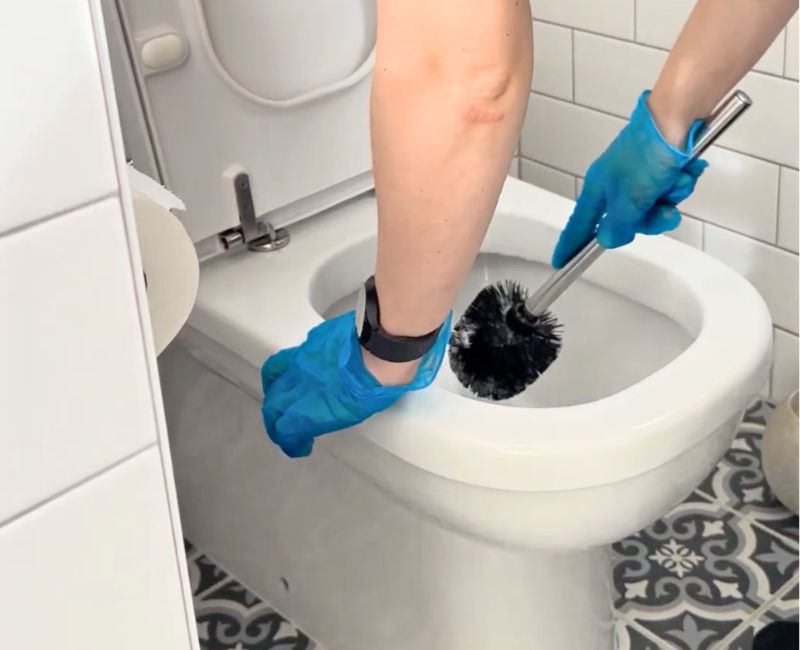
Once you’ve identified the type of stain, getting it off becomes much simpler. Match your issue with the right cleaning method, then be ready to scrub.
Keep in mind that you may need several applications and some elbow grease to fully remove the grime.
How to clean black stains from a toilet bowl
WHAT TO CLEAN WITH: White vinegar, citric acid, or borax
This may need some trial and error if you can’t identify what’s causing the black stains. If one method doesn’t work, rinse it off and wait a day before trying again.
Mineral or manganese deposits can be removed with vinegar or citric acid. Thoroughly spray the surface with some vinegar, or spread a thin layer of citric acid paste. Leave for 10–15 minutes before buffing off the grime with the toilet brush.
If an acidic cleaner doesn’t do the job, the stain is likely bacterial. Coat the surface with borax, then use your toilet brush to wash off the grime after a minute or two.
How to remove blue stains from a toilet bowl
WHAT TO CLEAN WITH: Baking soda and vinegar
Blue discolouration (aka copper stains) comes from acidic water with copper. The baking soda will act as a mild abrasive, while the vinegar helps remove any residue.
Don’t mix the two, since they’ll neutralise each other! Instead, start by making a paste of baking soda and water, then apply it with a cloth or paper towel. Wait a few minutes, then work the cleaner into the stain with a brush.
Afterwards, generously spray vinegar over the area. (Be mindful of the fizzing!) Let that sit for another 10 minutes before scrubbing the toilet clean.
How to clean brown stains in a toilet bowl
WHAT TO CLEAN WITH: Toilet bowl cleaner or oxygen bleach
Brown stains are usually easier to get off, so start with your regular toilet bowl cleaner! Apply according to the product instructions and scrub off the grime with the brush.
For more set-in marks, opt for oxygen bleach. Thoroughly rinse off any previously-used cleaner and wait a day before using the bleach so you don’t cause any hazardous reactions!
How to get fake tan stains off a toilet
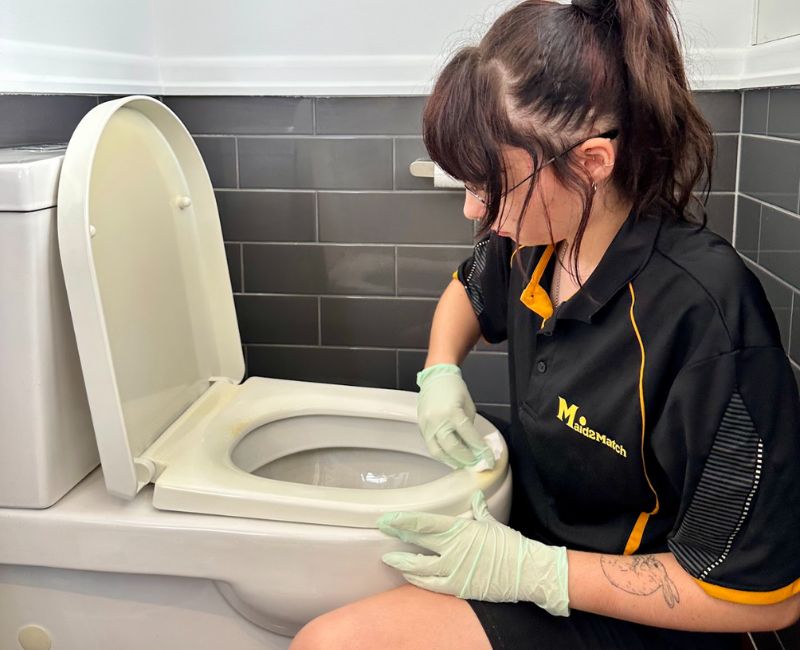
WHAT TO CLEAN WITH: Baking soda paste or magic eraser
Fake tan (aka self-tanners) can leave orange or tan stains on the toilet seat and bowl, thanks to the colouring agent dihydroxyacetone (DHA). You’ll need to act fast so it doesn’t set into the porcelain!
For a DIY solution, mix equal parts dish soap and baking soda. Dab on the paste with a paper towel, then let sit for 10–15 minutes. Use the toilet brush or scrubbing pad to work the paste into the stain until it’s lifted.
A magic eraser helps with more stubborn stains, since it can buff away the layer of fake tan. Moisten it with water, then use it to scrub the product off the porcelain.
NOTE: You can also try these methods to remove other stains like hair dye!
How to remove mould from a toilet
WHAT TO CLEAN WITH: Hydrogen peroxide or white vinegar
If mould or mildew is growing around your toilet, you need to deal with it straight away. Both vinegar and peroxide work well for this task.
Be sure to wear protective equipment and keep the bathroom well-ventilated!
Saturate the affected area in either undiluted white vinegar or 3% hydrogen peroxide. Do not mix the two, as it could create a hazardous reaction.
Leave the hydrogen peroxide on for at least 10 minutes, while vinegar needs at least 1 hour as it works more slowly. As a hack, soak a couple of paper towels in the cleaner and spread them onto the surface for maximum contact!
Scrub off the mould with a brush or scouring pad, and reapply the solution as necessary.
How to remove toilet limescale
WHAT TO CLEAN WITH: White vinegar or citric acid
Both white vinegar and citric acid are great for removing limescale from a toilet. The acid reacts with the metal compounds in hard water, breaking up the stain.
When using vinegar, pour enough into the bowl to cover the affected areas. If it’s nearer the rim, transfer the vinegar to a spray bottle so you can saturate the surface.
When cleaning with citric acid, mix 1 part powder to 10 parts water in a spray bottle, then apply to the stains. For more stubborn deposits, spread a paste of citric acid and water directly onto the surface.
Let it sit for up to 15 minutes, then use a damp toilet brush to scrub the surfaces clean.
How to remove pink stains in toilet
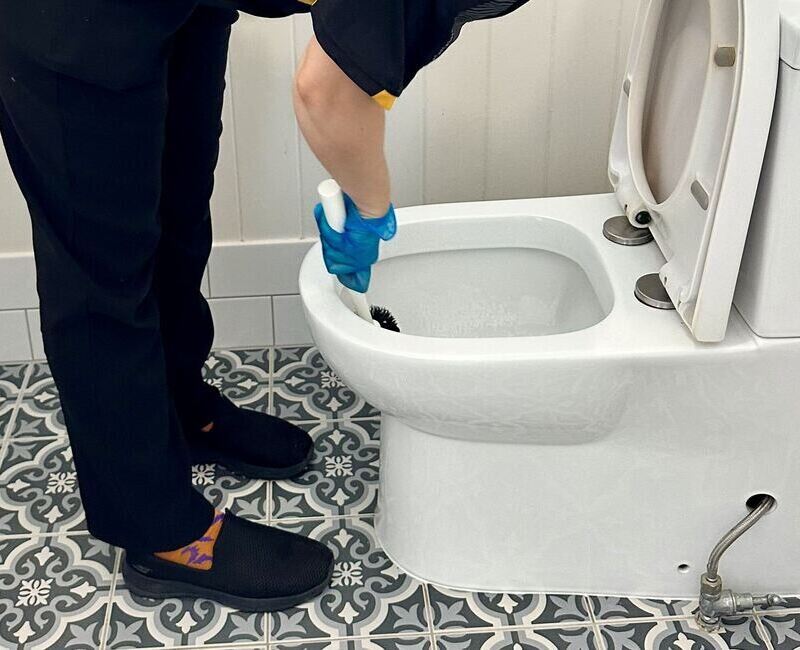
WHAT TO CLEAN WITH: Borax or hydrogen peroxide
Both borax and hydrogen peroxide have antibacterial properties, so they can tackle the orange or pink stains from Serratia marcescens. There’s no need to mix the two — one cleaner will do the job!
Make a paste with borax and water, then apply it to the affected area, or sprinkle borax directly onto the surface. Work it into the stain with your brush after a few minutes.
For hydrogen peroxide, saturate the stained area or make a thick paste with some baking soda and spread it on. Let it sit for at least 10 minutes before using a brush to scour the surface clean.
For very tough pink mould, opt for oxygen bleach. Follow the package instructions for dilution and use, and do not mix it with anything except water.
How to remove rust stains from a toilet bowl
WHAT TO CLEAN WITH: Lemon juice, citric acid, or rust remover
Lemon juice contains citric acid, which also reacts with rust to make it easier to remove. You can also use a commercial rust remover like CLR Bathroom & Kitchen.
Cut a lemon in half and use that to buff the rust from the porcelain. For extra cleaning power, put some salt or cream of tartar on the cut end.
Alternatively, make a paste with citric acid and water. Apply it to the stain, then scrub it off with the brush after a few minutes.
If you’re using a commercial product, follow the package instructions.
How to remove urine stains from the toilet bowl
WHAT TO CLEAN WITH: Pumice stone or white vinegar
For mild urine stains, a pumice stone is usually enough to get them off! Always make sure the stone is wet so it doesn’t scuff or scrape the porcelain.
For more stubborn stains, pour 2–4 cups of vinegar into the bowl — enough to cover the discolouration.
Leave it to sit overnight, then clean the toilet with the brush the next morning. You can use a pumice stone for extra scrubbing power.
If that doesn’t work, try a commercial cleaner like CLR.
How to Clean Toilet Bowl Stains Without Scrubbing
Most types of toilet stains need some scrubbing, there’s no getting around it. But for milder stains (especially around the water line and bowl surface), there are no-scrub options!
Look for descalers like Scalex, which can treat hard water deposits and other mineral buildup. Add 1–2 tablespoons into the bowl and let it sit overnight, then flush the toilet in the morning.
If you prefer a more natural route, vinegar is similarly effective. Pour 2–4 cups into the bowl, leave overnight, and flush in the morning.
Keep in mind that you may need to repeat this several times for stubborn buildup.
After Cleaning Toilet Stains and General Maintenance
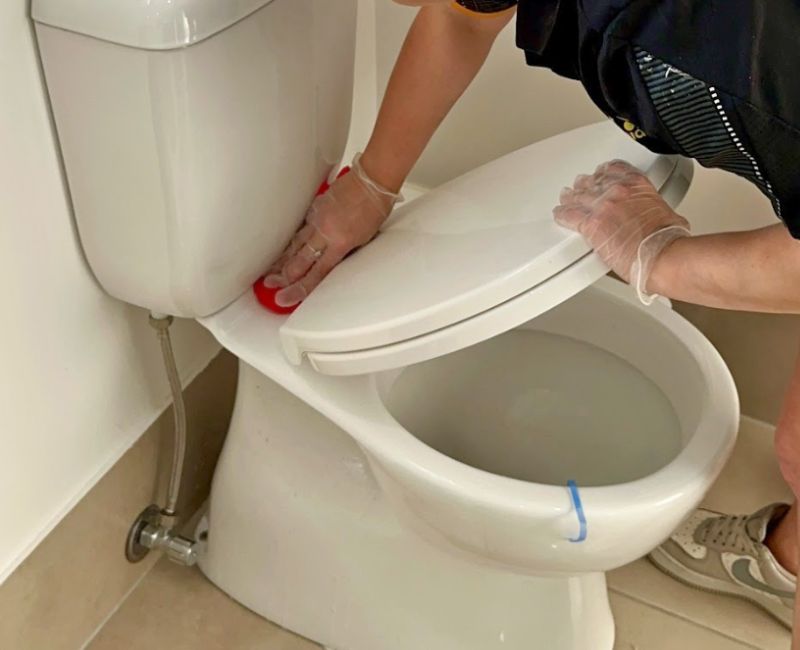
Once you’ve tackled the stains in the bowl, wipe off any residue with a damp cloth, then switch on the water valve to let the tank refill. Flush once or twice to rinse the bowl and refill the water.
Blot off any grime on the seat and cistern with a soft cloth and some all-purpose cleaner. For the floor, mop up any spills.
Proper toilet maintenance goes a long way towards minimising stains and discolouration. Wash the toilet regularly and consider keeping a disinfectant spray handy for quick wiping.
Don’t forget to clean your toilet brush and toilet plunger! That keeps them in good condition and prevents bacteria or mould growth.
If you live somewhere with a hard water supply, consider installing a water softener. It won’t get rid of limescale completely, but it helps minimise buildup.
If certain stains persist — like black, copper, or rust — the issue may be with your plumbing. Contact a local plumber to take a look!
Will This Clean My Toilet?
You may have seen viral cleaning hacks or online tips saying that everyday household items will clean stains off a toilet.
Before you go pouring something into the bowl, find out if it actually works!
Will vinegar and baking soda clean toilet stains?
Vinegar and baking soda can separately handle different types of toilet stains.
Vinegar is particularly good for mineral deposits or mould, thanks to its acidity. On the other hand, baking soda is alkaline and mildly abrasive, so it can scrub off grime like fake tan.
When combined, though, they neutralise each other to create salt and water. Stick to using them separately, not at the same time!
Will WD-40 clean toilet bowl stains?
Yes, but with a caveat — WD-40 is not greywater- or septic-safe, so you can’t flush it down. But it can treat limescale or rust!
Dab a small amount to the affected area, and wait a few minutes so the WD-40 softens the buildup. Buff the toilet clean with your toilet brush, then wipe off the remaining residue.
Can you clean toilet stains with Coca-Cola?
Coca-Cola is acidic, with a pH level similar to vinegar. The acidity and carbonation can remove some grime if poured into the bowl (like limescale), but it’s not a recommended cleaner.
The sugars and other compounds in a Coke will leave a residue that you need to wash off, and could lead to mould or bacterial growth. It’s also not a disinfectant.
Since you’ll need extra effort and products alongside a Coca-Cola, it’s not worth using. Save your soft drink as a treat for after cleaning!
Can I clean toilet stains with bleach?
Oxygen bleach is effective for some types of toilet stains — namely brown ones or pink mould. Meanwhile, chlorine bleach can work on mould, though vinegar or peroxide are often more effective and less harsh.
However, you should not use bleach for rust and other mineral-based stains, as it can cause them to set permanently!
More to Know About Cleaning Toilet Stains: FAQs
Still have questions about tackling toilet stains? Let’s break down some common concerns.
Why does my toilet get stained so quickly?
Stains that build up quickly (and return quickly) are usually due to:
- Infrequent flushing
- Slow-filling toilet tank
- High levels of minerals
- Poor bathroom ventilation
If one toilet in your home is staining more frequently, check for a leaky cistern or issues with the nearby pipes.
How do you clean a badly stained toilet?
Start by identifying the stain type and use the appropriate cleaning solution (see above). Heavy buildup will need repeated applications and a lot of elbow grease.
If there are multiple types of stains, tackle one at a time, then rinse and wait at least a day before using a different cleaning product.
How to remove stains from the bottom of your toilet bowl?
You’ll need to lower the water level so you can access the bottom of the bowl. The easiest way is to switch off the water valve (behind the toilet) then flush the bowl once or twice so it empties.
Soak up any remaining water with a few rags or manually scoop it out.
Coat the bottom of the bowl with your chosen cleaner, let it sit for the recommended time, and scrub things clean with a toilet brush or pumice stone.
Are toilet bowl stains harmful to health?
Toilet stains like fake tan, limescale, and other minerals are mostly cosmetic! They look bad, but aren’t hazardous to your health.
However, mould or bacteria can pose health risks, especially for people with weakened immune systems or respiratory issues. When flushing, particles can become airborne and spread in the damp environment.
No matter the stain, though, it’s best to tackle them immediately to keep your toilet in good condition.
