
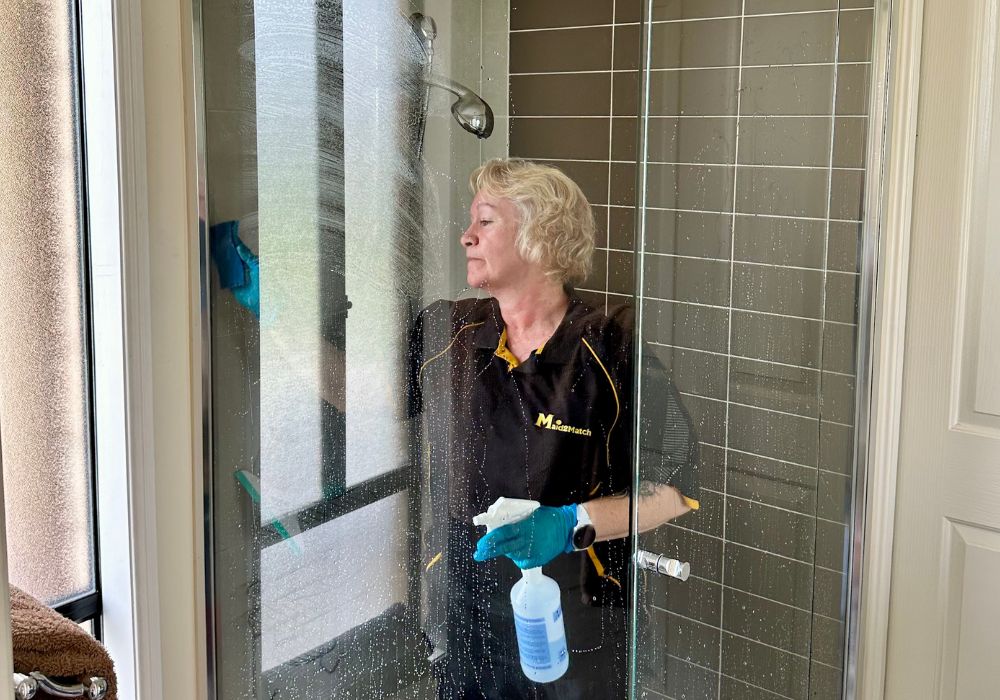
You’re trying to clean the bathroom, but no matter how much you scrub, that waxy, yellowish buildup just won’t budge.
That’s probably soap scum — and yes, it can become stubborn if it’s been neglected for a long time.
For weeks-old or lighter buildup, diluted vinegar or citric acid usually does the trick!
However, older soap scum is a different issue. If it has been sitting on a surface for years, it might have already “calcified” and bonded tightly to the material.
You don’t always need to replace your shower glass or tiles, though. The same acids can still work, but they need to be used at a higher strength and left on longer.
We’ll walk you through how to clean years of soap scum, so you can restore your bathroom’s sparkle!
Why Clean Soap Scum | Before Cleaning | Cleaning Different Surfaces | Cleaning Light Soap Scum | Removing Stubborn Soap Scum | Prevention Tips
What Is Soap Scum?
Soap scum forms when the fatty acids in bar soap react with hard water minerals like calcium and magnesium.
(It’s often mistaken for limescale, another common bathroom stain. However, limescale is made up of mineral deposits alone and doesn’t contain soap residue.)
Over time, that buildup traps body oils and dead skin cells. Even everyday dust and grime add to the mix, making the layer thicker and harder to remove.
You’ll often see soap scum on bathtubs, glass doors, tapware, or shower walls — basically anything that gets splashed with soap and water.
Why Clean Soap Scum
Since it contains body oils, soap scum can become a breeding ground for bacteria and mould. These may impact indoor air quality or cause illness.
It could also make floors or tubs very slick, which increases the risk of accidents.
Moreover, what starts as a small stain can become much tougher (or more expensive!) to fix later.
Soap scum can calcify if left untreated for too long. This buildup is hard and rough, unlike the usual waxy film, so it’s usually very difficult to remove!
The minerals in soap scum can also etch shower glass or tiles permanently, so you might be left with no choice but to replace them.
What to Know Before Cleaning Soap Scum
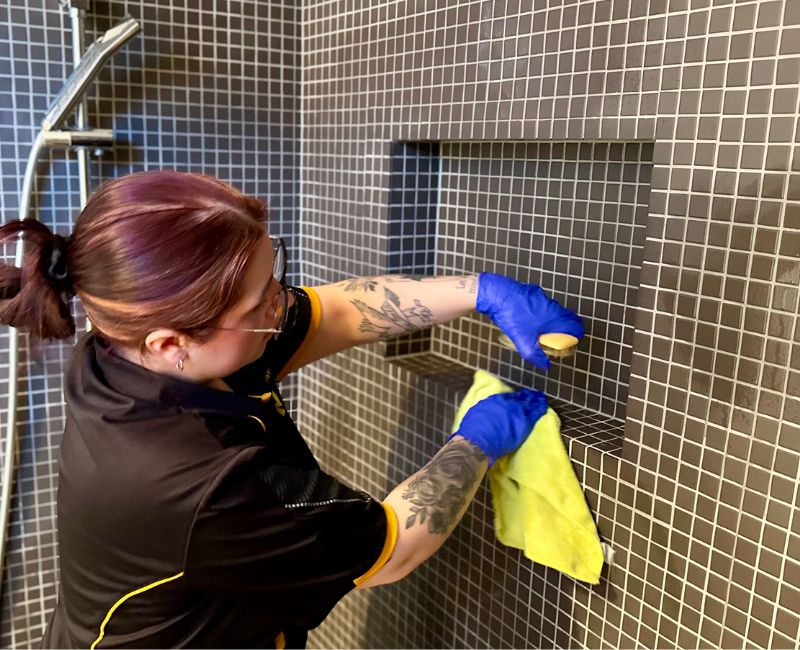
Before you start scrubbing, it helps to know what actually works on soap scum so you can prepare everything you need.
What dissolves soap scum?
Soap scum is mostly alkaline. To dissolve it, you’ll need acidic cleaners, such as:
- Vinegar
- Lemon juice
- Citric acid powder
- Hydrogen peroxide
That said, some surfaces (like natural stone) can be damaged by acids. To be safe, spot test any cleaning method on a small, hidden area first.
If acids aren’t an option or you’re dealing with calcified soap scum, you may need a heavy-duty commercial cleaner.
Check the label to make sure that the product is safe for the material you’re working with, and follow the instructions closely.
Aside from your cleaning solution, you also need something to scrub the stain with.
Opt for gentle tools that won’t scratch the surface, such as:
- Soft sponge
- Old toothbrush
- Microfibre cloth
- Soft-bristled scrub brush
Safety precautions when cleaning soap scum
Before you begin, ensure your bathroom is well-ventilated. Opening a window or running the exhaust fan can help keep the air flowing.
Do not use abrasive tools like green scouring pads, wire brushes, or steel wool. These can easily scratch glass or chip off your tapware’s finish.
Skip harsh chemicals such as bleach or ammonia, too. They’re often too strong and can strip the protective coating on shower surfaces.
Also, do not mix cleaning products. If you need to try multiple cleaners, always rinse the area thoroughly before applying a new one.
Some combinations (like vinegar plus hydrogen peroxide) can create harmful fumes!
Finally, don’t forget your safety gear. Pop on a pair of rubber gloves and a mask to protect your hands and lungs while mixing ingredients and cleaning!
Cleaning Soap Scum on Different Bathroom Surfaces
How you clean soap scum depends on the surface you’re working with.
Porous materials are usually more delicate and need a gentler approach, while non-porous surfaces are often easier to clean.
Bathtubs
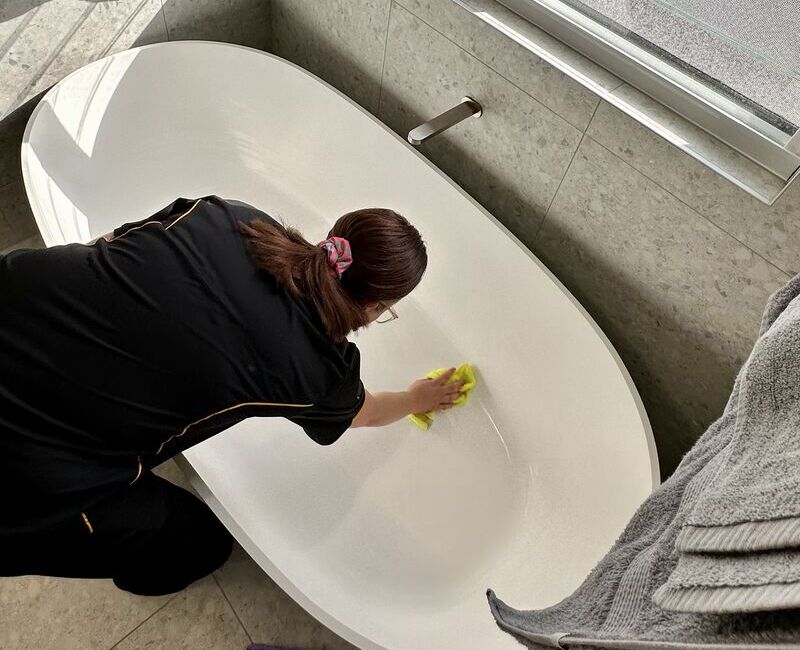
Most bathtubs are made from acrylic, fibreglass, or porcelain. Generally, these are durable and can handle acid-based cleaning solutions.
On the other hand, tubs made from cast iron or natural stone are more sensitive. On these surfaces, opt for warm water with a few drops of dish soap.
For tougher buildup, you may need a pH-neutral, commercial soap scum remover instead.
Glass shower doors or screens
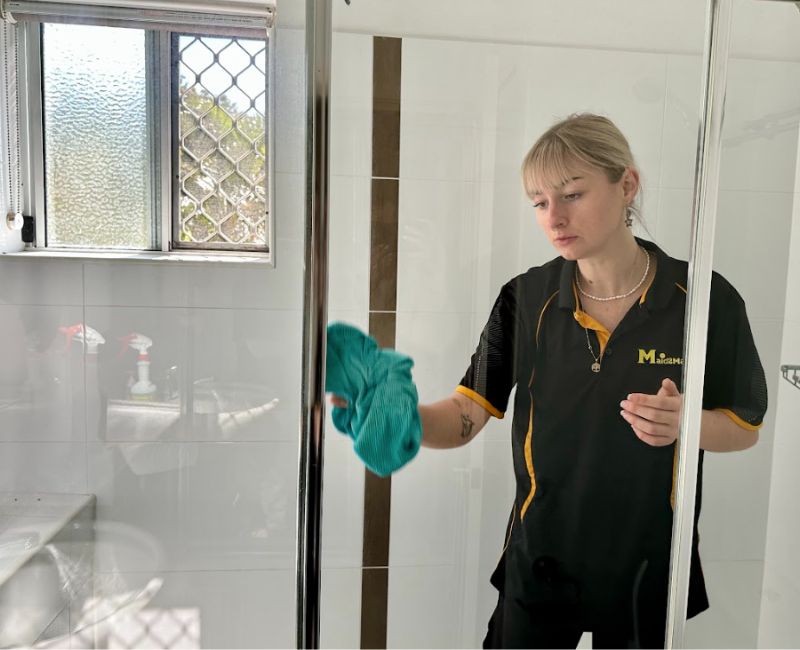
Glass is non-porous and can tolerate most cleaners, including mild acids. The main thing to watch out for is scratching the finish!
It’s tempting to scrub really hard when cleaning years of soap scum on glass, but it’s best to use a gentle sponge or cloth.
For stubborn soap scum, ultra-fine steel wool (grade 0000) can help. Keep the glass damp to lessen the risk of scratching, and always test on a tiny area first.
Keep in mind that if the stain has been on your shower glass too long, it may already be etched. The surface might remain cloudy, and no amount of elbow grease will clean it!
In that case, you’ll need to call a professional to restore or replace it.
Metal fixtures
When tackling soap scum on metal fixtures (like faucets, shower heads, or soap holders), the type of finish matters.
Chrome, copper, and stainless steel usually hold up well to gentle, acidic cleaners. Just avoid leaving the solution too long, as prolonged exposure might dull the shine.
If you have matte black tapware, these can be damaged by acids. Stick to a pH-neutral cleaner or warm, soapy water instead.
You can apply your chosen solution onto the surface using a spray bottle.
For tougher spots, soak a cloth or paper towel in the solution and wrap it around the fixture.
Another option is to fill a small plastic bag with the cleaning solution and secure it around the tap or showerhead.
Tiled walls or floors
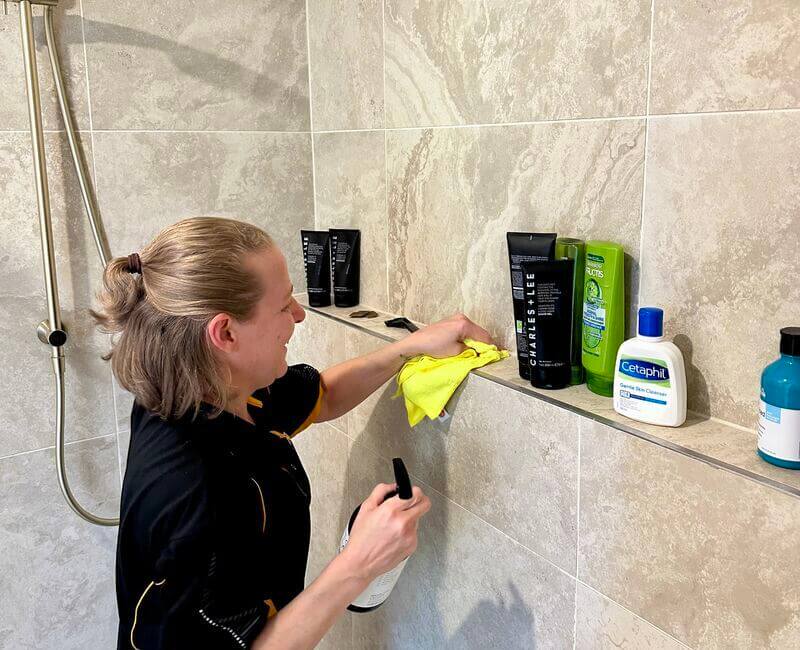
Before removing soap scum from shower tiles, check what type you have!
Ceramic and porcelain tiles are non-porous and durable, so most cleaners are safe to use.
Natural stone tiles, such as marble, granite, or terrazzo, require special care. Acidic cleaners like vinegar can etch the surface, especially if the sealant isn’t intact.
For stone tiles, use a specialised pH-neutral cleaner or warm, soapy water only.
How to Clean Light Soap Scum Buildup
If you’re dealing with light soap scum buildup, you’re in luck — homemade cleaning solutions or everyday products often work well!
Here are your options:
- WHITE VINEGAR: Mix equal parts vinegar and warm water
- LEMON JUICE: Mix equal parts lemon juice and warm water
- CITRIC ACID: Mix 1 part citric acid powder and 10 parts warm water
- HYDROGEN PEROXIDE: Use a 3% solution
You can also use warm water with a few drops of dish soap for surfaces that are sensitive to acids.
Pour your chosen solution into a plastic spray bottle, and apply it directly onto the soap scum. Let it sit for 15–20 minutes (or a bit shorter on porous surfaces).
Afterwards, gently scrub with a soft brush or sponge to help lift the buildup.
Once the soap scum is gone, rinse off all residue with running water. Citric acid powder, in particular, can leave behind whitish streaks if not thoroughly washed off.
When you’re done, dry the area with a squeegee or microfibre cloth to avoid water spots and streaks.
How to Remove Stubborn Soap Scum
When cleaning years’ worth of accumulated soap scum, keep in mind that it can be very stubborn, especially if it has calcified.
It might not come off in one go, so you may need to clean the area a second (or even a third!) time.
It’s also a good idea to use different methods if the first one didn’t work completely. Just take care not to mix cleaning products in the process!
Option 1: Vinegar
To remove stubborn soap scum, spray undiluted vinegar onto the affected area.
For something even stronger, you can use cleaning vinegar — this is different from regular white vinegar. It has a higher concentration (usually 6%–8%) and is not suitable for eating.
Warm the vinegar slightly in the microwave first.
Then, pour it into a spray bottle and saturate the surface. You can also soak a cloth or paper towel in it and place it over the affected area.
Leave it for 30–60 minutes to allow it to cut through the calcified layer.
Scrub gently with a soft-bristle brush to help lift the stubborn buildup. When you’re done, rinse the vinegar off, then squeegee the surface or dry it with a soft cloth.
Option 2: Citric acid solution
For most stains, a 10% citric acid mix is usually enough. However, if you’re dealing with tough buildup, a 20%–30% concentration works better.
That means you’ll need to mix 1–2 parts citric acid powder and 5 parts warm water, either in a bowl or a spray bottle.
Apply the mixture onto the soap scum, and let it sit for 15–30 minutes.
Lightly brush the stain to loosen the calcified soap scum. Once it has come off, rinse the surface thoroughly.
Finally, wipe everything dry for a streak-free shine.
Option 3: Specialised soap scum removers
The best soap scum removers usually contain citric acid, lactic acid, or phosphoric acid. These can soften the hard layer of calcified soap scum and make it easier to lift.
They’re also usually safe for common bathroom surfaces, like ceramic, glass, or porcelain.
You’ll also find pH-neutral soap scum cleaners, which are compatible with delicate surfaces like natural stone or matte black metals.
Always refer to the product label or do a spot test to confirm that it’s safe for the material you’re cleaning!
Apply the product onto the area with tough soap scum, following the directions on the packaging. Scrub lightly, then rinse off any residue from the cleaning solution.
Run a squeegee over the surface or use a dry cloth to remove excess moisture.
How to Prevent Soap Scum in Your Bathroom
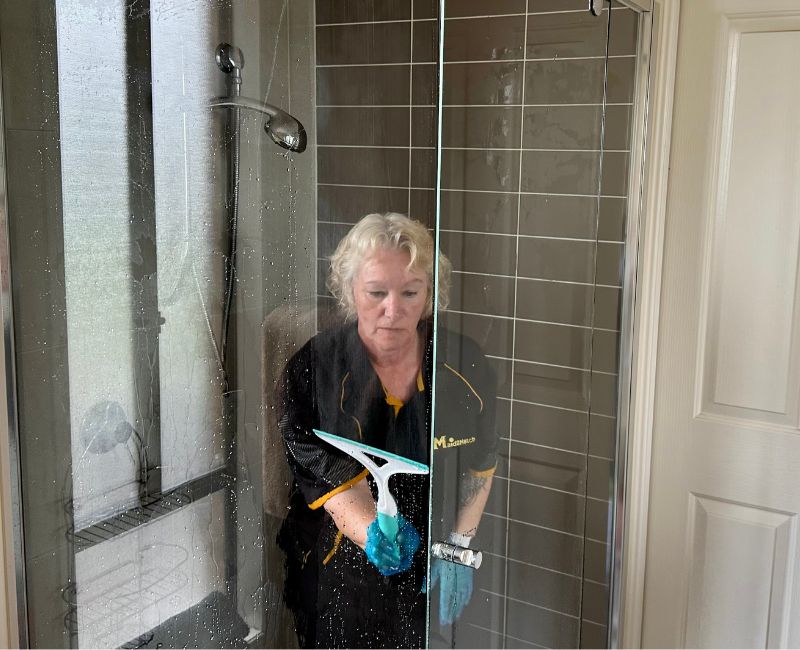
Preventing soap scum buildup is way easier than scrubbing layers of hardened residue later!
If you can, ditch the bar soap. It contains more fatty ingredients than liquid body washes, which contribute to soap scum formation.
Those who have hard water may also install a water softener. This can help reduce minerals like calcium and magnesium that can combine with soap.
Most importantly, stick to a regular cleaning routine.
To keep your shower fresh, squeegee the walls and floors after use. This helps remove hard water or soap residue.
Then, aim to clean bathroom surfaces at least once a week. You don’t need harsh chemicals for routine upkeep — a mild soap solution or a gentle bathroom cleaner is usually enough for everyday stains.
If you find that cleaning keeps slipping down your to-do list, book a professional housekeeping service. They can help keep your shower, bathroom, and living spaces in good shape — week after week!
FAQs About Tackling Soap Scum
Looking for more ways to combat soap scum? Check out these FAQs!
Can you use baking soda to remove soap scum?
Since baking soda is alkaline, it’s not usually the first choice for soap scum. However, its mildly abrasive texture can still help with very light soap buildup.
In a bowl, mix baking soda and a little water to form a thick paste.
Dip a sponge or cloth into the baking soda paste, and apply it to the areas with soap scum. Leave it for a few minutes, then scrub gently.
When you’re done, rinse off all residue and dry the area well.
Do dryer sheets work on soap scum?
Surprisingly, yes! Dryer sheets contain surfactants and fabric softening ingredients that help break down the fats in soap scum.
They’re usually safe to use on non-porous surfaces like ceramic, glass, or porcelain.
Either a new or a used dryer sheet will work. Lightly dampen it with warm water, then rub it directly onto dry soap scum using circular motions.
As you clean, a whitish or foamy residue may form — that’s the dryer sheet doing its job.
Once you’re done, rinse thoroughly and dry the surface with a clean cloth.
Does WD-40 remove soap scum?
Yes, WD-40 can help. Because it works as a solvent and a lubricant, it can loosen soap scum and make it easier to wipe away.
Just keep in mind that it’s less effective than acidic cleaners and works best on light buildup.
Spray WD-40 onto dry soap scum, and leave it for 5–10 minutes. Wipe the area with a non-scratch sponge or cloth to lift the scum.
Afterwards, wash the area with warm water and dish soap to remove any greasy residue. Follow up with a final rinse with plain water, then dry the surface.
Can I use a pumice stone to scrub soap scum?
You can, but only as a last resort! Pumice stones are very effective on soap scum (even the calcified kind), but they can permanently damage surfaces.
They may leave dull scratches on acrylic or fibreglass tubs, glass doors and screens, and metal fixtures.
They’re a bit safer on toilet bowls and ceramic tiles, but always do a spot test first!
If you decide to use a pumice stone, wet the stone and the surface first and keep them damp throughout.
Lightly scrub the area using a back-and-forth motion. A grey paste will appear as you work — rinse this off frequently.
Don’t forget to wipe the surface dry when you’re done.
Does bleach remove soap scum?
No, bleach does not work on soap scum.
It’s excellent for killing bacteria and mould, but soap scum is a different issue, as it’s made of soap and hard water minerals.
If you spray bleach onto soap scum, it may whiten the area, but it won’t dissolve the buildup itself.
Instead of bleach, reach for an acidic cleaner or a dedicated soap scum remover!
How can I tell if soap scum can’t be removed?
If soap scum still doesn’t lift after you’ve tried several cleaning methods, it’s usually a sign that the surface has been damaged permanently.
On glass, wet the surface and take a closer look. Soap scum usually becomes less visible when the glass is wet. If it still looks cloudy, the glass is likely etched, and not just stained.
On acrylic or fibreglass, check if the yellowed area has lost its shine. A dull finish can mean that the material has become porous, usually due to heavy scrubbing. That can allow soap scum to soak in.
On natural stone, soap scum might have become permanent if it appears to sit deeper into the surface, rather than on top.
At this point, more cleaning won’t help. It’s best to contact a professional who can check the surface and help you with restoration or replacement.
