
The oven is a kitchen powerhouse, able to cook everything from delicious pastries to perfect roasts.
But while the oven and racks inside can build up dirt over time, it’s the oven trays that take the brunt of the cooking mess! Food debris, grease splatters, sauce residue… those pans go through a lot.
A warped or scratched-up tray may need replacing, but usually, it just needs some TLC! So don’t head to the recycling just yet, as these methods for how to clean oven trays can help them last longer:
Got dirty trays from your last batch of cookies? Grab some cleaning supplies and get ready to (c)rumble.
Types of Oven Trays
An oven tray is any sheet used to cook in an oven! It’s called different things: baking tray, baking sheet, oven pan, or even sheet pan.
Oven trays have a raised rim all around to prevent leaks or spills. That sets them apart from a cookie sheet, which has no rim to allow cookies to slide off easily.
Then there’s an oven rack, which is a metal grille “shelf” in your oven. The trays typically go on top of the rack when cooking.
There are several types of oven or baking trays made of different materials:
| TYPE OF TRAY | ABOUT | CLEANING TIPS |
| Aluminium trays | Aluminium is the most common material for oven baking trays, since it’s lightweight and distributes heat evenly. Typically not non-stick. | Scratches and scuffs easily, so use mild to non-abrasive cleaners |
| Enamel trays | Metal with a porcelain-enamel coating (like a stovetop). Has excellent heat transfer and stain resistance. | Can tolerate mild abrasives or mildly acidic cleaners |
| Glass trays | Typically have higher rims so you can serve food directly in the glass pan. It takes longer to heat up, but retains that heat for longer. | Relatively easy to maintain so long as you avoid abrasive tools |
| Non-stick trays | Non-stick baking trays are metal with a non-stick coating, like Teflon or titanium-ceramic. The coating prevents food from sticking, even in high heat. | Avoid anything abrasive or scrubby, which can wear down the coating |
| Stainless steel trays | Less common and more expensive than aluminium. Look for ones with an aluminium core for better heat distribution. | Less delicate, but still avoid harsh cleaners |
Do You Really Need to Clean an Oven Tray?
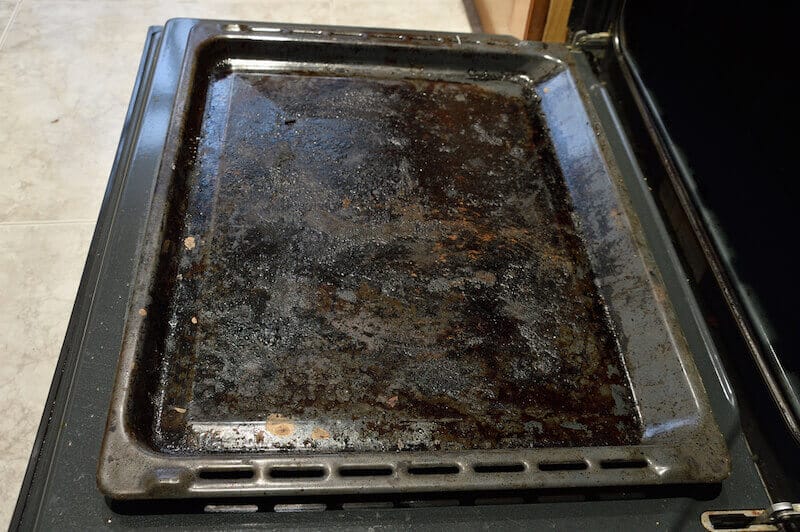
The big thing you need to keep in mind about baking trays is that some discolouration is normal.
Over time, oils will bake onto the tray and create a “patina,” or a protective sheen on metals. It’s just like the seasoning that develops on cast-iron pans with regular use.
This seasoning helps the pan absorb heat more and creates a more non-stick surface — better for cooking!
However, you still need to wash your baking trays to remove burnt-on food, grease, and other residue. Leaving these on can add unpleasant tastes or odours to your food, and can eventually lead to mould or fire hazards.
How Often to Clean Oven Trays
Ideally, wash your oven trays after every use. This lets you remove any food gunk ASAP so it doesn’t harden on the tray and become difficult to get off.
However, if you regularly use parchment paper or similar liners, you can get away with a quick wipe with a damp cloth. Then deep clean the tray once a week or so.
Before Cleaning Your Oven Trays
Always wait for oven trays to cool down before cleaning. Not completely cold, though — food residue is easier to remove when the trays are just warm to touch.
Start by removing excess grease and food debris with some paper towels.
Check the manufacturer’s manual or label for any specific cleaning instructions, especially for what not to use. When in doubt, stick to soft sponges or cloths.
If you’re unsure, test the cleaner on a small spot first. Watch for discolouration or etching!
For convenience, wash your baking trays in the kitchen sink. If you need to soak them, try the laundry sink or a large watertight container lined with an old towel.
Lastly, wear rubber gloves while working, and a face mask for stronger methods like oven cleaner.
Routine Oven Tray Cleaning
For light or everyday grime, all you need is hot, soapy water!
Start by filling the sink (or plastic tub) with hot water and a few drops of dish soap. Let the trays soak for at least 10 minutes to loosen the grease and grime.
Using a non-abrasive sponge or cleaning pad, gently scrub the trays clean. Rinse thoroughly and dry with a clean cloth.
Best Ways to Clean Oven Trays
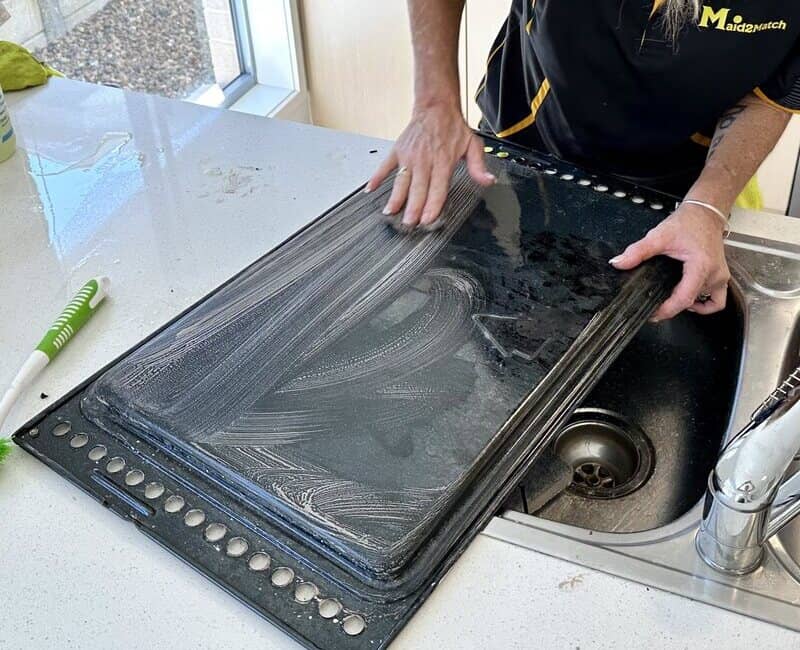
There are a couple of methods for cleaning your trays, depending on how dirty they are and what you have on hand.
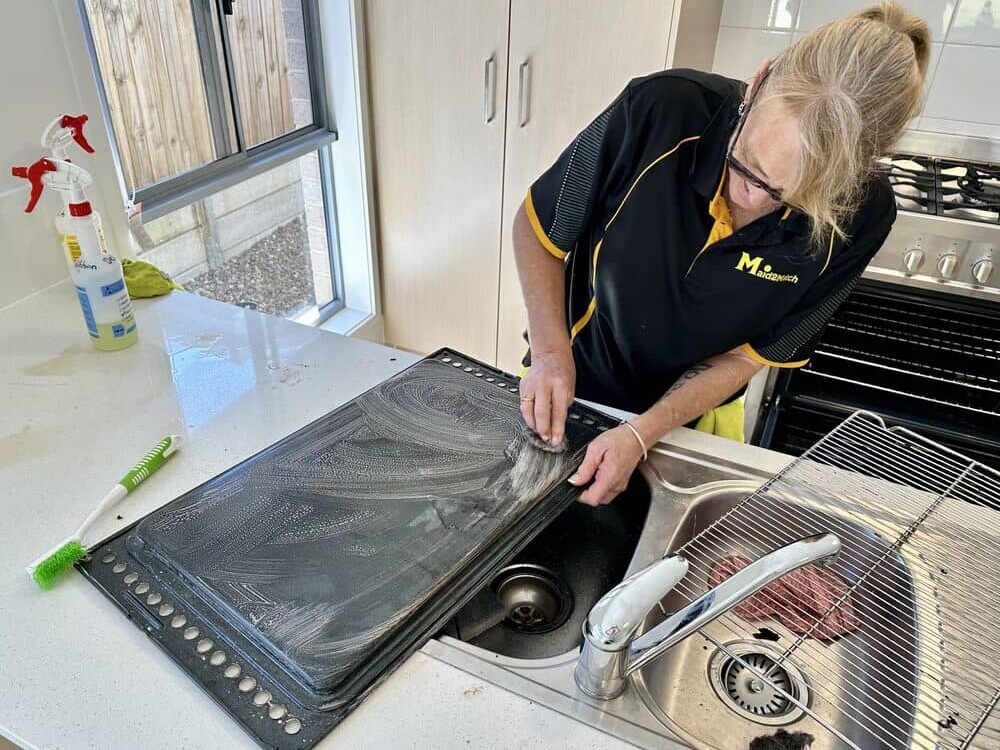
But if it feels like too much elbow grease to get rid of cooking grease, a Maid2Match house cleaner can wash your oven trays when they tackle the rest of your kitchen!
Cleaning an oven tray with a dishwasher tablet
STRENGTH: Low
EFFORT: Low
You can clean your dirty oven trays in a plastic tub or laundry sink with a dishwasher tablet! They have more cleaning power than regular dish soap thanks to their active ingredients (like enzymes).
Line the bottom of the tub with old towels to protect the surface, then position the trays inside. Pour enough hot water to cover the trays and add 1–2 tablets, making a solution that will loosen the dirt.
Leave the trays to soak until the water has come down to room temperature. Then give them a good scrub with a soft sponge before rinsing and drying.
Steam cleaning an oven tray
STRENGTH: Moderate
EFFORT: Low
If you need to clean baked-on oven trays, give steam cleaning a try! It works best for deeper trays, since you need the tray to hold water.
Preheat the oven to 190ºC (375ºF). Separately, pour water into the baking tray, about 1–2cm deep. It’s optional, but you can add half a cup of white vinegar for extra cleaning power.
Place the tray inside the oven and wait for it to start boiling and creating steam. Then switch off the oven and leave the tray inside for 30–60 minutes. The hot water will loosen any baked-on food debris.
In this next step, be careful and wear oven mitts, as the tray could still be warm! Take the tray out afterwards and give it a good wash in the sink. For glass trays, wait until they have completely cooled first so you don’t “shock” and break them.
Cleaning an oven tray with baking soda
STRENGTH: Moderate
EFFORT: High
Baking soda is only mildly abrasive, so it works for most materials. It’s also really effective on greasy baking trays!
Just keep in mind this method can get messy, so you’ll want to work in the sink.
To clean oven trays with baking soda, mix it with warm water and a bit of dishwashing liquid to form a thick paste. Spread it over the tray, then let it sit for 30 minutes.
Carefully scrub off the dirt with a damp sponge or a ball of scrap aluminium foil. Very dirty trays will need more time and effort.
You can also sprinkle a layer of baking soda over the bottom of the tray, then carefully pour boiling water over it. Wait a few minutes before scrubbing the trays clean.
Rinse off the surface, then dry with a soft cloth.
TIP: You can lightly spray some vinegar to help clean off all the baking soda residue!
Cleaning an oven tray with white vinegar
STRENGTH: Moderate
EFFORT: High
No baking soda here! Instead, this cleaning method combines white vinegar with a different mildly abrasive powder, cream of tartar.
Since this solution is acidic, you don’t want to leave it too long on aluminium trays so it doesn’t oxidise or etch the material. The same goes for enamel trays.
Sprinkle cream of tartar over the bottom of the oven tray, then spray on a good amount of vinegar. Leave it on until the solution dries, then work it over the dirty surface with a damp sponge.
Wash off the residue with soap and water, then dry.
Using Bar Keepers Friend
STRENGTH: High
EFFORT: Moderate
Bar Keepers Friend contains oxalic acid, which helps scour off baked-on food residue. It’s stronger than baking soda or white vinegar, but not as caustic as oven cleaner.
This method is most effective on aluminium, enamel, and stainless steel trays. Just be sure to use either the Powder Cleanser or Cookware Cleanser, since they’re less abrasive. Skip this for nonstick trays, though.
Follow the product instructions for applying BKF — generally, you’ll need to apply BKF all over a dampened tray and let it sit for a minute. Afterwards, scrub the trays clean with a damp sponge or soft cloth.
Give the trays a good wash with soap and water to remove any residue, then dry them fully.
Using oven cleaner
STRENGTH: High
EFFORT: Low to moderate
Important note: Avoid using this method unless absolutely necessary, and only use it on enamel or aluminium trays. Don’t leave the oven cleaner for more than the recommended time, since it can damage aluminium with prolonged exposure.
Still, this is the easiest way to clean baking trays without scrubbing!
Before you start, test the product on a small spot first to ensure it won’t cause damage. Make sure to work outdoors or in a well-ventilated room to help the fumes dissipate.
Place the trays inside a large rubbish bag and spray them with an oven cleaner. Tie the bag loosely and leave the trays for up to 20 minutes.
Once time is up, wipe off the loosened gunk with a paper towel. Then wash the trays thoroughly in warm, soapy water before drying.
How to Clean Burnt Oven Trays
If you’re trying to salvage burnt-on oven trays, try Bar Keepers Friend! Use the Powdered Cleanser or the Cookware Cleanser, which are safe for cooking surfaces.
Do not use this method on non-stick trays, though, as it can damage the coating. Stick to the baking soda method instead.
Follow the product instructions to make a paste and apply it over the burnt spots. Wait the recommended time before scrubbing the surfaces clean with a damp sponge or cloth.
Wash off all the residue afterwards, and repeat as necessary.
Tips to Keep Baking Trays in Good Condition
Keep your oven or baking trays in good condition by using protective liners. Lining paper, silicone baking mats, or aluminium foil all minimise the oils and residue that get onto the tray.
Clean your trays regularly to prevent food from hardening and becoming tougher to remove. A quick wash in soapy water lessens the buildup of grease and food debris.
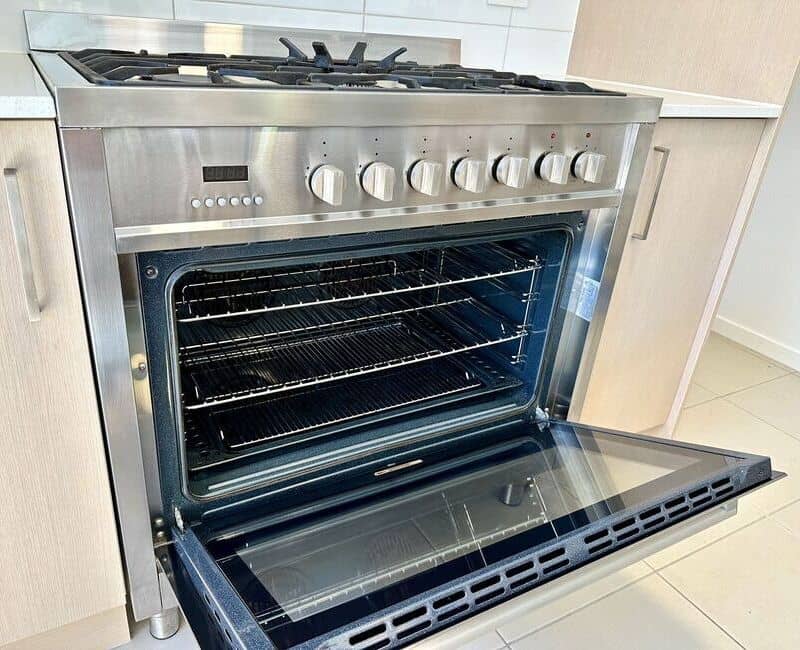
And of course, don’t forget to clean the entire oven and the oven racks, too!
Skip abrasive tools like scouring pads, steel wool, and wire brushes. These leave scuffs or scratches on the trays, which will trap more dirt over time.
More to Know About Oven Tray Cleaning: FAQs
Got more questions about cleaning baking trays? We’ve got you covered!
Can you clean baking trays with hydrogen peroxide?
Generally, household hydrogen peroxide (3%) is not food-safe, so avoid using it on cooking surfaces unless necessary. It can also oxidise aluminium.
However, you can use hydrogen peroxide to clean burnt-on oven trays if nothing else works. Sprinkle a layer of baking soda over the bottom, then spray on some 3% peroxide.
Leave the solution to sit for a few hours before scraping off the residue and gunk with a sponge or cooktop scraper. Wash the tray thoroughly in hot, soapy water to remove any residue.
Can the self-cleaning function work on baking sheets?
Do not use the self-cleaning function to clean oven trays unless the manufacturer allows it.
The extremely high heat (about 500ºC) can warp or otherwise damage the trays.
How to remove baked-on grease from an oven tray?
Steam cleaning or baking soda paste are your best bets to clean oven trays with baked-on grease.
The hot water and steam can loosen oily residue, while baking soda is great for grease stains.
How to get rust off baking trays?
If there’s rust on your baking trays, try scrubbing it off with the baking soda paste!
Let the paste sit for 20–30 minutes before working the paste into the rusty spots with a damp sponge. Rinse and repeat until the rust lifts.
