
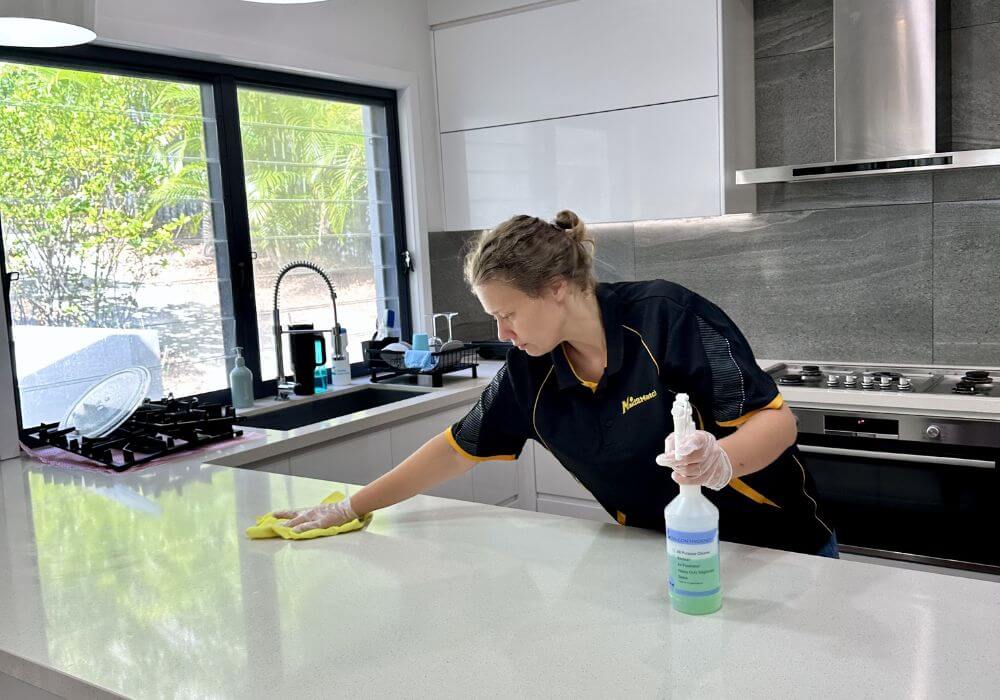
Thinking about booking a house clean? You might be curious what a cleaner will do in your home. Will they dust the skirting boards? Wipe inside the microwave?
Or maybe you’ve had a clean before and found the oven untouched. Meanwhile, your neighbour swears their cleaner does everything.
You might assume that some cleaners are more thorough, but that’s not always the case. The cleaning tasks included actually depend on the specific service you chose.
In this guide, we’ll clear up the confusion about what cleaners usually clean, what costs extra, and which jobs fall outside the scope of domestic cleaning. By the end, you’ll know exactly what to expect for your service!
Fixed Price Cleaning | Hourly Rate Cleaning | Why Inclusions Vary Between Providers | What’s Outside the Scope of Domestic Cleaning | What’s Reasonable to Ask Your Cleaner For | How to Tell if the Cleaner Did a Good Job
What Cleaners Do in a Home (and Why Every Service Is Different)
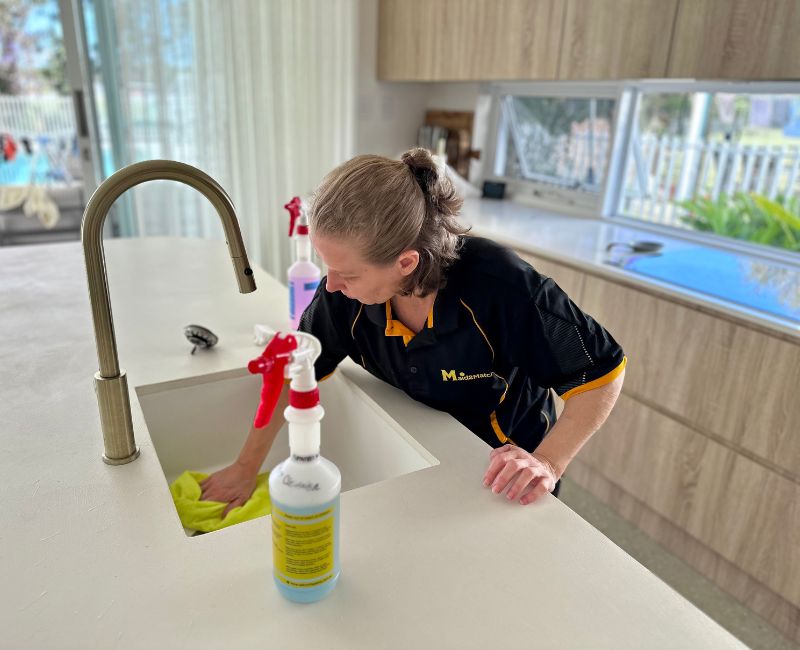
Most providers cover the same general tasks that keep a home well-maintained. If you’re planning to have the whole house cleaned, the service includes wiping or scrubbing surfaces, vacuuming, and mopping across every room.
But because it’s done by a professional, it’s a more thorough and efficient version of the weekend tidying that many people do themselves.
However, the exact inclusions all come down to what you booked.
There are different types of cleaning services. Providers typically offer either flat rate (fixed price) or hourly rate cleaning, or both. To know more about how pricing works for each option, see our Flat Rate vs Hourly Rate Cleaning guide.
The service you choose not only affects the price, though; it also shapes what gets covered.
Here’s how flat rate and hourly rate cleaning compare:
| FLAT RATE (FIXED PRICE) CLEANING | HOURLY RATE CLEANING |
| You book your whole home for a fixed price | You book a set number of hours |
| The cleaner completes the agreed tasks or checklist, however long it takes | You set the priorities, and the cleaner works through them until the time runs out |
| Optional extras let you add tasks that are not part of the standard service | Extras typically don’t apply because the cleaner focuses on your instructions |
| Best if you need the whole house cleaned or want consistent results | Best if you only need a few priority chores or specific areas done |
Keep in mind that every cleaning provider has their own way of doing things, and checklists can vary. Some businesses may not have a standard list of inclusions, too.
What to Expect From a Fixed Price Cleaning Service
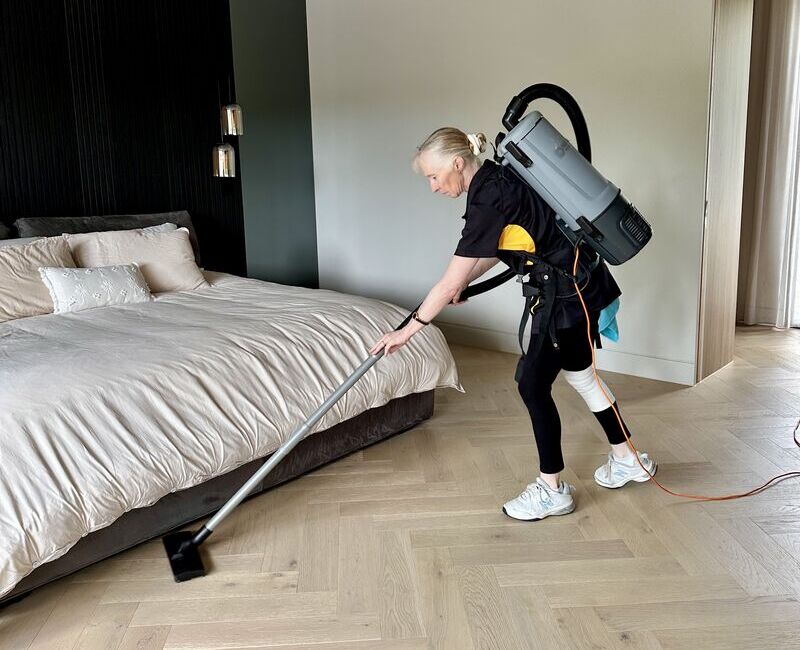
A fixed price (or flat rate) cleaning service typically covers the whole house. The cost is based on the number of bedrooms and bathrooms you want cleaned.
Some providers also let you book a specific zone with its own bedroom and bathroom, like the upstairs only or a self-contained granny flat.
The service usually follows a set checklist. You can also choose between a standard clean and a deep clean, or book additional services or extras on top of your usual service.
What gets cleaned in a standard full house cleaning service?
A standard house clean is all about keeping your home in good condition. The cleaner works through every room: the kitchen, bathrooms, living spaces, and bedrooms.
Here’s what a house cleaner usually does based on the checklist we use at Maid2Match:
KITCHEN
- Clean and shine the sink, taps, and other fittings
- Wipe down benchtops
- Clean the stovetop (including burners and knobs if they’re detachable)
- Clean the outside of the rangehood
- Wipe the oven door, handles, and exterior glass
- Clean the microwave inside and out
- Wipe down the exterior of the fridge, toaster, and other large appliances
- Wipe accessible surfaces inside cabinets or around any items inside
- Wipe cupboard doors and fronts, splashbacks, and tiled or semi-gloss walls
- Clean towel rails and other fixtures
- Empty the bins and replace the liners
BATHROOM
- Scrub and sanitise the toilet, including the bowl, outside surfaces, around the base, and behind it
- Clean the bathtub
- Scrub shower walls and floors
- Clean the showerhead, tapware, and other shower fixtures
- Clean the shower screen or curtain
- Wash the sink and tapware
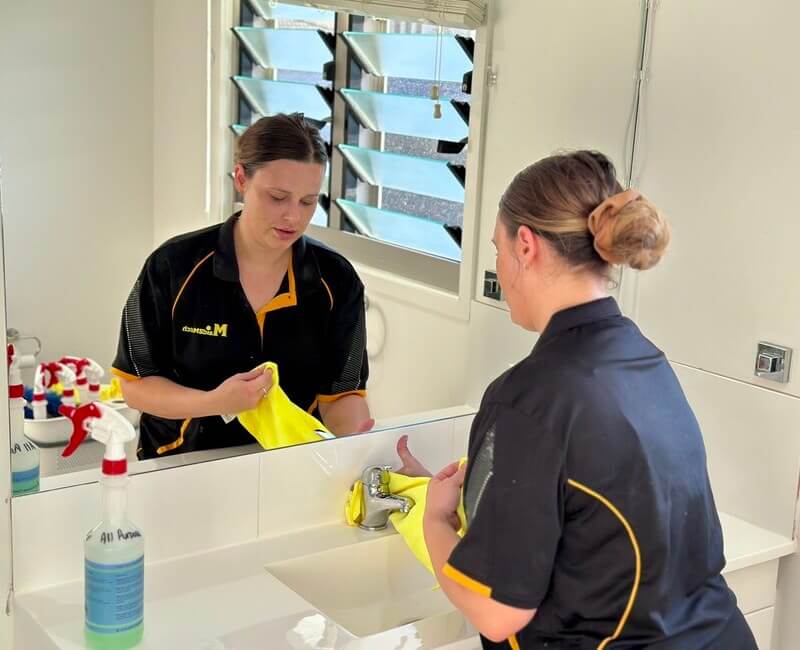
- Refresh mirrors and wipe benchtops
- Clean inside medicine cabinets
- Wipe towel racks, toilet paper holders, and all exterior surfaces of cabinets
- Vacuum bathroom mats
- Empty the bin and replace the liner
LIVING SPACES AND BEDROOMS
- Dust and wipe all furniture, shelving, and drawers
- Dust lamps, decor, and other items
- Make beds
- Spot clean walls to remove marks and fingerprints
- Clean mirrors
- Wipe window sills, tracks, and frames
- Vacuum floors, skirting boards, and mats
GENERAL CLEANING ACROSS THE WHOLE HOME
- Clean ceiling fans and light fittings within reach using a two-step ladder
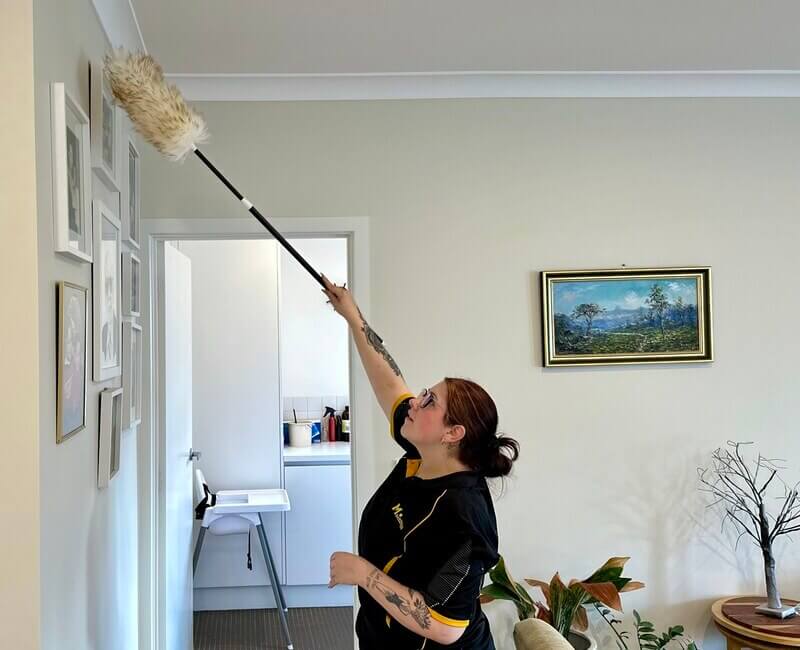
- Remove cobwebs from ceilings and corners
- Dust surfaces and reachable fixtures (including lifting light items to clean underneath)
- Wipe doors and doorknobs, light switches, and power points
- Wipe skirting boards, blinds, and window ledges
- Vacuum and mop all floors (objects that are not too heavy can be lifted to clean underneath)
This checklist is excellent for routine maintenance.
However, every home sometimes needs a more thorough reset, which is where a deep cleaning service comes in.
What’s the difference between a standard clean and a deep clean?
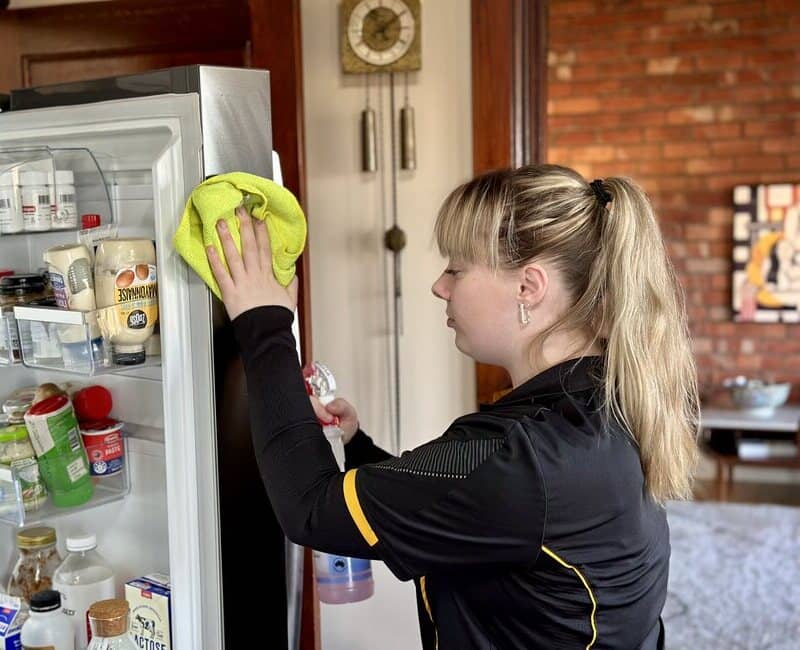
Ever booked a clean for the whole house and it wasn’t as thorough as you’d hoped? It might be because your home needed a deep clean rather than a standard clean.
| STANDARD CLEAN | DEEP CLEAN |
| Focuses on regular cleaning and upkeep | Includes more detailed cleaning |
| Best for homes that are in fairly good condition | Best for homes with built-up dirt and grime |
| Covers the standard room-by-room cleaning checklist | Includes everything in a standard clean plus detail-focused tasks |
A deep clean is more intensive. It tackles heavier buildup or neglected areas that a standard clean isn’t built to handle. The cleaner also spends more time on surfaces that have collected dirt and stains.
Additional tasks that are not part of a standard clean are covered as well. These usually include:
- Spot cleaning walls in all rooms, where they’re safely reachable
- Deep cleaning the fridge, which involves taking out the contents, wiping shelves and drawers, and putting all items back
- Cleaning inside cabinets and drawers, including taking the contents out, wiping the interior, and putting everything back
We recommend starting with a deep clean if it’s been a month or so since your last professional clean, or if you’ve never had one.
Many of our clients also find a deep clean helpful if they’re:
- Preparing to sell the house
- Getting ready for a routine rental inspection
- Moving into a property that hasn’t been cleaned beforehand
- Dealing with heavy buildup or stubborn stains (like thick grease, soap scum, or limescale)
Once the home has been thoroughly reset, our clients then shift to a standard clean every week or fortnight. From there, keeping the home in good shape becomes easier and more efficient.
If you’re not sure whether your home needs a standard or a deep clean, tell your provider as much as you can about the condition of your home. That way, they can point you to the right service.
Which cleaning tasks are treated as extras?
As you settle into a recurring cleaning schedule, you’ll find that some surfaces or appliances need a more detailed scrubbing now and then.
Extras can be added to a standard flat rate service, also for a fixed price.
These are jobs that need:
- Occasional cleaning (such as every 3–6 months)
- Specialised cleaning products, like kitchen degreasers or glass cleaners
- Additional time and effort (including soaking, extra scrubbing, and detailed work)
The most common extras for fixed price cleaning services are:
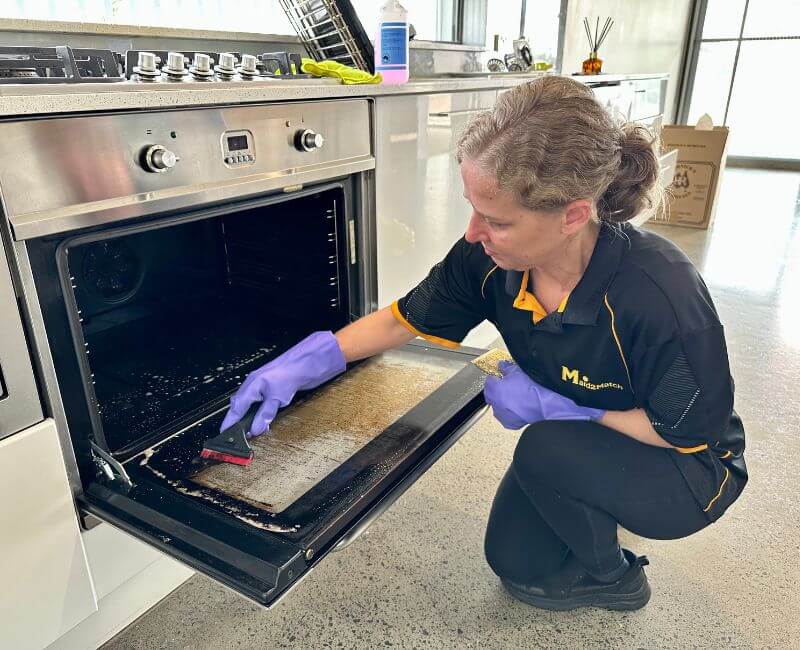
OVEN CLEANING: The oven’s exterior (the glass door, handles, and stovetop) is often covered in a standard clean. However, deep cleaning the inside of the oven is a separate job because it requires degreasers, more time for soaking, and extra scrubbing to break down baked-on residues.
INSIDE THE FRIDGE: Your cleaner wipes down the outside of the fridge during a standard clean. If you need the inside of the fridge refreshed, it’s usually an extra. The task involves removing all the contents, wiping all shelves and drawers, and replacing the items neatly.
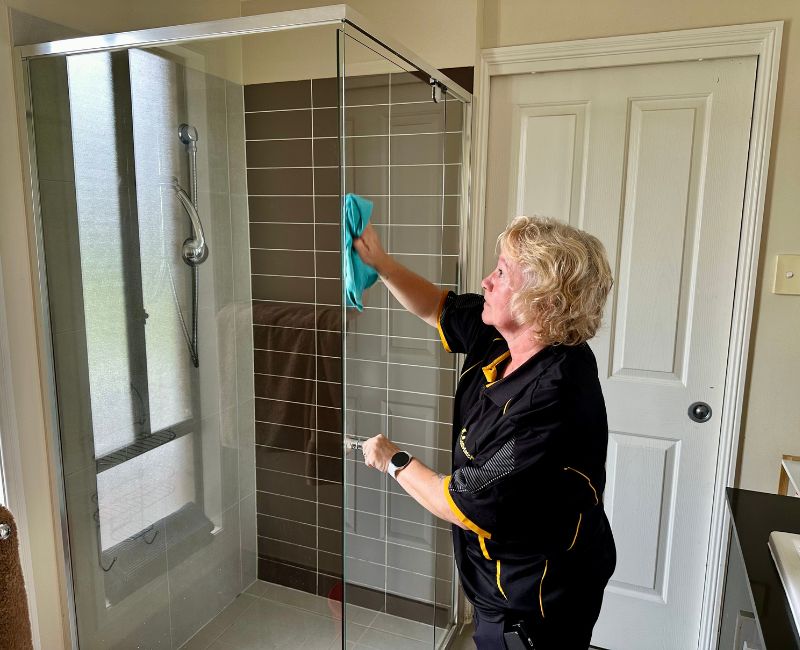
INTERIOR WINDOWS: Window sills, tracks, and frames are usually included in a standard clean. The glass itself is often treated as an extra because careful technique is needed to remove smudges and achieve a streak-free finish. Cleaning windows also takes plenty of time, especially in large homes.
INSIDE CABINETS AND DRAWERS: A standard clean includes the exterior of cabinets and any easily accessible surfaces inside. Emptying cupboards, wiping them down, and putting things back are typically separate.
ADDITIONAL ROOMS: This covers extra rooms like a second living room, movie room, rumpus room, or study that need an occasional reset.
HOUSEKEEPING TASKS: These are everyday tidying tasks rather than heavy cleaning. Examples are running a load of laundry, washing dishes, folding clothes, or changing bed sheets.
How long does a flat rate clean take?
Unlike an hourly rate cleaning service, there’s no strict time limit for flat rate cleans. Instead, your cleaner works until the agreed checklist is properly completed.
How long that takes comes down to:
- The size and condition of your home
- Booking a deep clean vs. a standard clean
- Any extra services added
For example, a deep clean for the first booking naturally takes longer than a well-maintained home that gets professionally cleaned every week. Having the same regular cleaner also makes the service more efficient over time.
Some providers also send a cleaning team instead of just one person, which helps get the work done faster.
For a detailed breakdown, read our guide on how long it takes to clean a house professionally.
What to Expect From an Hourly Rate Cleaning Service
An hourly rate clean means you’re paying for the time a cleaner spends in your home.
We recommend it for partial house cleans (like the kitchens or bathrooms only) or specific tasks (like dusting, vacuuming, and mopping) rather than a top-to-bottom service for the entire home.
What gets cleaned in an hourly rate cleaning service?
Hourly rate services are more flexible than flat rate cleans. Rather than using a set checklist, the cleaner focuses on the tasks and rooms you want prioritised.
Here’s how an hourly rate clean works:
- You book a fixed number of hours.
- You provide a checklist and decide what gets cleaned first.
- The cleaner works through your list in order of importance.
When our clients book an hourly clean, we find out their priorities upfront. We then pass those instructions on to our cleaners so they’d know exactly what to do in each home.
Since the service runs on the clock, it’s worth being clear about what matters most to you.
Many customers prioritise the trickier areas, like the kitchen or bathrooms. You can also include jobs that are typically considered extras, such as cleaning inside the oven or fridge. There’s no separate fee for those, as you’re paying for the hours instead of the task itself.
Whether extras apply to hourly services varies between providers, though, so always check beforehand to avoid any surprises.
What if the cleaner finishes your checklist early?
If your cleaner gets through your checklist and there’s still some time to spare, you can have them move on to other areas that need attention.
That’s also why staying home during the service can be useful. If the cleaner wraps up early, you can redirect them to other chores.
That’s optional, though, and most providers will let you leave detailed instructions when you book. You can include lower priority tasks that the cleaner can handle with the remaining time.
If you’re on the fence, our guide ‘Should You Stay Home Or Leave When Your Cleaner Comes?’ will help you weigh the pros and cons of each option.
What happens when the booked time ends?
With an hourly clean, the cleaner wraps up when the booked time is up. That means not everything on your list may get done. This can happen in larger homes or if certain tasks take longer than expected.
For example, a bathroom with heavy soap scum buildup will need more time than one with lighter stains.
Or if you’ve asked the cleaner to prioritise bigger tasks (like cleaning the inside of your cupboards), that might leave less time for other chores.
So if you notice that a few areas were left untouched, it doesn’t necessarily mean the cleaner did a poor job. They simply may not have enough time for everything you requested.
Our cleaners usually let clients know if there’s anything they couldn’t get to. If you left a checklist at home, they can leave a note on it or mark what they finished.
Otherwise, they’ll call our support team, who then give you a heads up about what was completed (and what wasn’t) during the service.
Why Inclusions and Services Vary Between Cleaning Providers
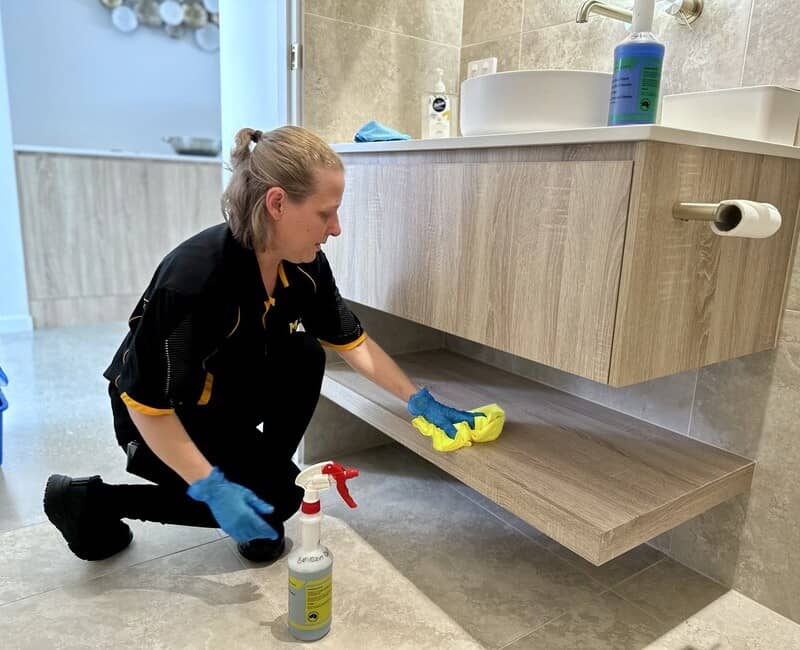
We’ve walked you through what’s generally included in house cleaning services. However, there’s no single checklist that every provider uses.
Every cleaning business handles quality and pricing differently. How services are delivered varies too, so the same type of service from two providers may not include the same tasks.
If you prefer to know what’s included upfront, a service with a detailed checklist might be the better choice. Established providers can show you a list of inclusions, so you know what to expect.
However, whether the checklist is followed every visit is another matter.
Cleaning companies with their own staff usually offer more consistency. Because cleaners are employees, companies can train every staff member, meaning there’s a standard process for every service.
With permanent employees, it’s also easier to send the same regular cleaner to each home.
On the other hand, agencies with contractors rather than employees have less control over how cleaners work.
Contractors operate independently. This means the agency can’t legally direct how exactly they should clean. Agencies can’t provide detailed training, either.
Many agencies also rotate their staff. If you don’t get the same person each time, keep in mind that each cleaner has their own approach, so how well the clean is done varies as well.
We have a full guide on how to find a good house cleaner if you’re still deciding between your options!
What’s Outside the Scope of Domestic Cleaning?
Tasks that pose safety risks, require specialist training, or involve anything outside the home are not part of a standard house cleaning service.
This often catches customers by surprise. You might expect the cleaner to remove the black mould spreading across the bathroom ceiling or wipe the exterior of your windows, only to find that those jobs aren’t included.
It’s not because they were intentionally skipped, though.
What a house cleaner can do is strictly shaped by workplace safety regulations across Australia, and insurance policies like workers’ compensation and liability insurance.
If a cleaner does any work outside the proper safety guidelines, it could result in an injury that workers’ compensation may not cover. It may also affect the liability insurance cover that would otherwise apply if something in your home gets accidentally damaged.
1. Jobs that pose a safety risk
Domestic cleaners aren’t insured or equipped to take on work that poses a genuine safety or health risk. This includes:
LIFTING OR MOVING HEAVY ITEMS: Shifting couches, dining tables, or big appliances like washing machines isn’t part of the job because of the risk of injury. Your cleaner can clean around or underneath them if the space is reachable with a vacuum or mop.
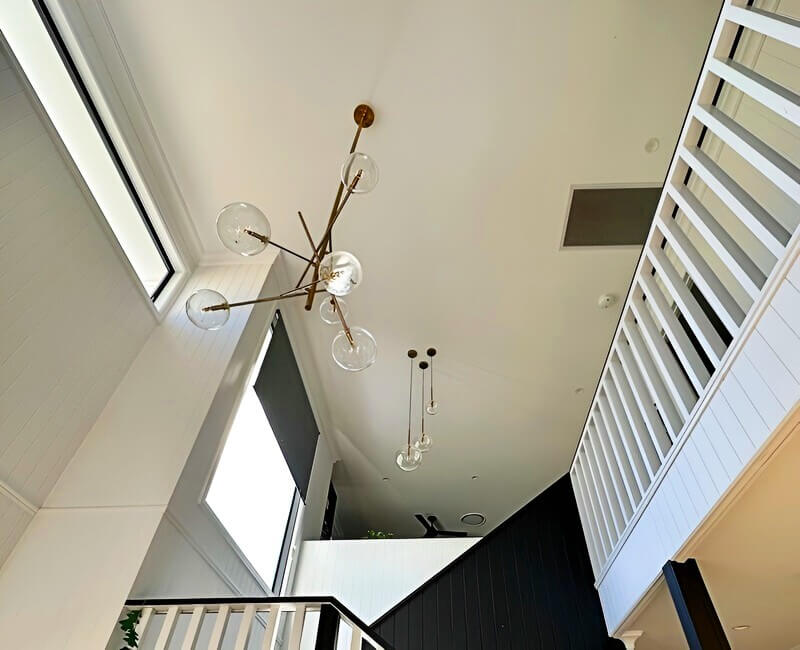
ANYTHING TOO HIGH TO REACH SAFELY: Cleaners are generally expected to work from ground level or a small step stool. Anything out of reach is usually off the table, such as high ledges, chandeliers, or marks too high up a wall.
HEAVY OR WIDESPREAD MOULD: A routine bathroom clean covers light mould stains, but heavy or spreading mould is a different matter. It takes a separate professional with specific training, protective equipment, and stronger products.
BIOHAZARDS: Animal waste and litter trays, human waste, or bodily fluids all need proper hazardous material handling, protective gear, and sanitising chemicals.
2. Jobs that need specialist equipment or training
Some jobs are a trade of their own. They call for equipment or chemicals that you won’t find in a domestic cleaner’s kit.
DEEP CLEANING CARPET AND UPHOLSTERY: Your cleaner can vacuum carpets and upholstered furniture as part of a standard clean. However, lifting deep-set dirt and stains takes professional extraction machines.
APPLIANCE SERVICING: Cleaning inside an air conditioner or washing machine involves taking the appliance apart. It’s considered maintenance rather than cleaning, so it’s best left to someone who knows the appliance inside and out.
UNCLOGGING DRAINS: A blocked drain is considered plumbing work, so it’s one for a licensed plumber.
CLEANING DUCTWORK: Cleaning the ducting connected to a rangehood or a clothes dryer requires specialised tools that can reach deep into the system. Plus, it should be done by someone who understands fire safety and ventilation systems.
POST-CONSTRUCTION CLEANING: Cleaning up after a renovation is very different from a standard or deep house clean. Fine dust, paint splatters, grout haze, and construction debris require specialised equipment, cleaning products, and protective gear to clear safely.
DISASTER RESTORATION: After a flood or fire, a home can be left with soot, contaminated water, or mould. This kind of damage needs to be dealt with by a specialist restoration company with the right training to make your home safe again.
3. Jobs outside the home
House cleaners focus on the inside of your home. Once the work moves outdoors, you’re usually looking at a different type of cleaning service.
EXTERIOR WINDOWS: Your cleaner may do the interior side of the glass as an optional extra for a flat-rate service. Cleaning the outside of the windows, especially on upper floors, must be handled by window cleaning specialists.
DRIVEWAYS, GARAGES, AND PATIOS: These areas typically need pressure washing to remove built-up dirt, moss, or stains, which falls outside routine house cleaning.
ROOFS AND GUTTERS: Cleaning roofs and gutters involves significant safety risks and is usually offered by specialist exterior cleaning services.
EXTERIOR WALLS: Removing stubborn stains, mould, or mildew from exterior surfaces often requires specialised methods.
What’s Reasonable to Ask Your Cleaner For?
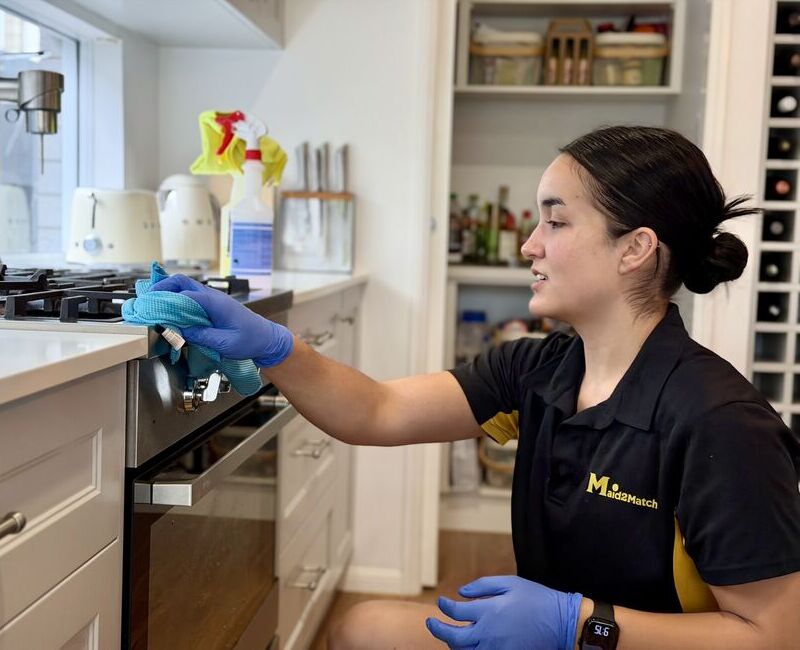
Still unsure about what you can and can’t ask for? Don’t worry, we hear that a lot, especially from clients booking a professional clean for the first time.
Here’s a good rule of thumb: if it’s dusting, wiping, or scrubbing a surface you can easily see and reach, it can be included.
Just keep in mind that your cleaner can’t lift heavy objects, work beyond a two-step ladder, or take on anything outside the home.
Aside from that, there are a few things to remember when booking your house clean:
FLAT RATE CLEANS: Tasks that take significantly more effort or time are usually optional extras. Think cleaning inside the oven or fridge, or the inside of your windows.
HOURLY CLEANS: Extras typically don’t apply. Simply tell the cleaner what you’d like done, and they’ll work through your instructions within the time booked.
CLEANING PRODUCTS: If cleaning supplies are provided, you can request gentler products, especially if you have kids or pets, or if a family member has allergies. You can also tell your provider about any delicate surfaces like marble or timber so they can use the right solution.
If anything’s unclear, just ask when you book! A good provider will welcome your questions and explain what’s included.
Most cleaning services are also flexible. We have clients whose bookings vary from visit to visit. They might book a flat rate service for a two-bedroom home one week and ask us to include a third bedroom the next. Others have rotating priorities, particularly for hourly bookings.
Being open about what matters to you helps you get the clean you’re after. It also helps your cleaner understand your expectations.
We encourage you to read our blog ‘What To Expect When You Hire A Cleaner For The First Time’ if you’re wondering what the whole experience is like from start to finish.
How Can You Tell if Your Cleaner Did a Good Job?
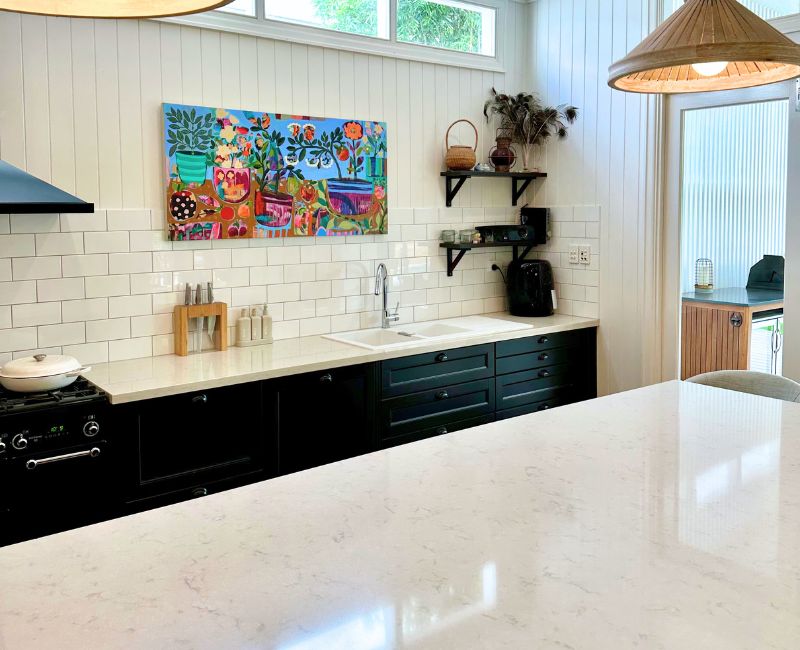
You now have a good idea of what a cleaner usually does in a home. But once the clean is finished, how do you know if it was done properly?
A fair way to judge the result is to look at what’s actually included and how well those tasks were done.
With a flat rate clean, the whole checklist should be covered. However, an hourly clean is different, as time may run out before everything can be completed.
For tasks that are genuinely included, pay attention to the finish. Glass, mirrors, benchtops, and floors should be free of residue and streaks. Everything should also be put back where it belongs.
Just bear in mind that very old or heavy stains may not come off. They may need multiple treatments, or they could be permanent damage to the surface itself.
If some tasks were done halfway or skipped entirely, don’t hesitate to speak with your cleaner.
A good cleaning provider will communicate what they did in your home and why certain areas may not have improved. They’ll also let you know what you can look forward to in future visits.
Getting the Right Clean for Your Home
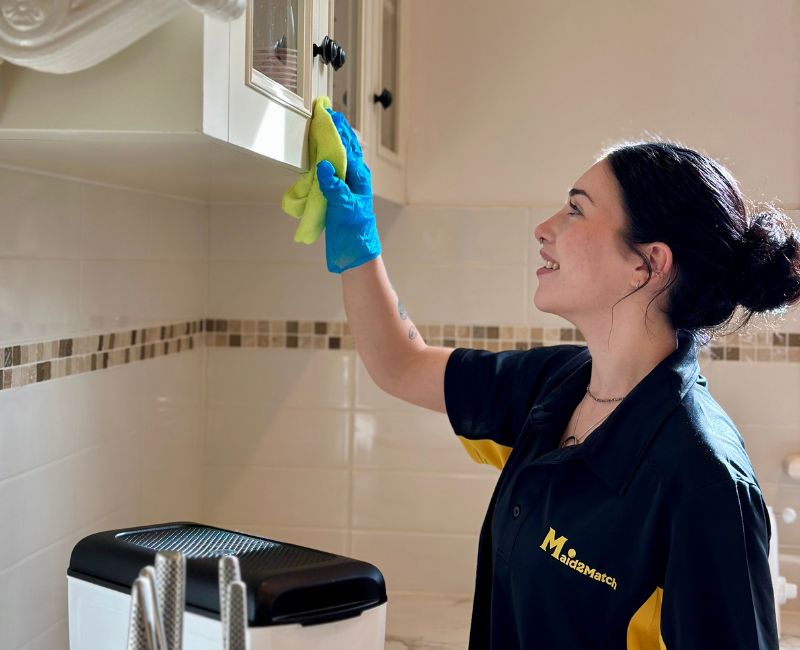
If a past clean left you wondering why your cleaner had “missed” something, it’s not always about how thorough they are.
Sometimes, the task might be outside your booking. Other times, you and your cleaner may not have been on the same page about what to prioritise.
Knowing what’s included makes it easier to pick the right cleaning service for your home. It also helps you tell the difference between a clean that fell short and one that simply covered what was booked.
Still not sure where to start? A good cleaning provider will be transparent from the outset.
At Maid2Match, we’ll tell you upfront what your booking covers and what results you can expect. Take a look at our house cleaning services to see how we can help!
