
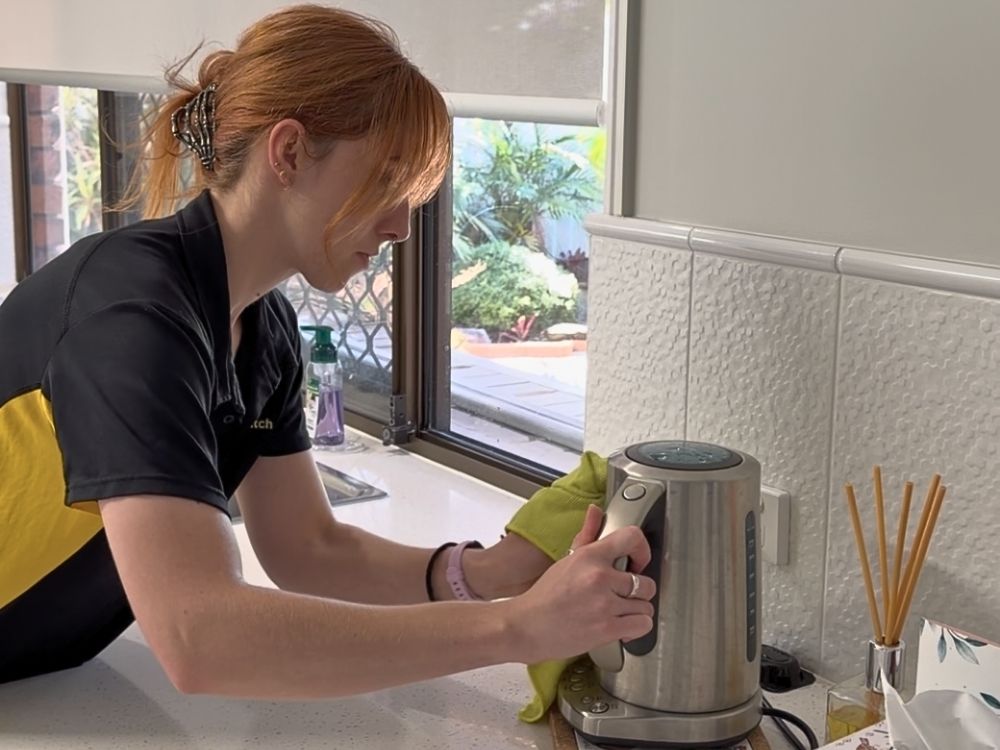
We all have that friend who can’t get through a day without their morning coffee or evening mug of tea. And a clean kettle is an essential ingredient to a good brew.
You may think that you only put water in your kettle, so it can’t get that dirty. But for many of us in Australia, the hard water supply does leave a certain type of grime: limescale. That means descaling (removing limescale buildup) is a key step in kettle maintenance.
As for how to descale your kettle, some easy methods are:
Don’t compromise your cup of chamomile with calcium carbonate! (Say that 3 times really fast.) After you’ve steeped your tea, grab your descaler — the process is easy-peasy.
How Often to Descale | Descaling Naturally | Using Descaler | Descaling the Filter | Treating the Exterior | Tips for Preventing Limescale
What to Know About Descaling Kettles
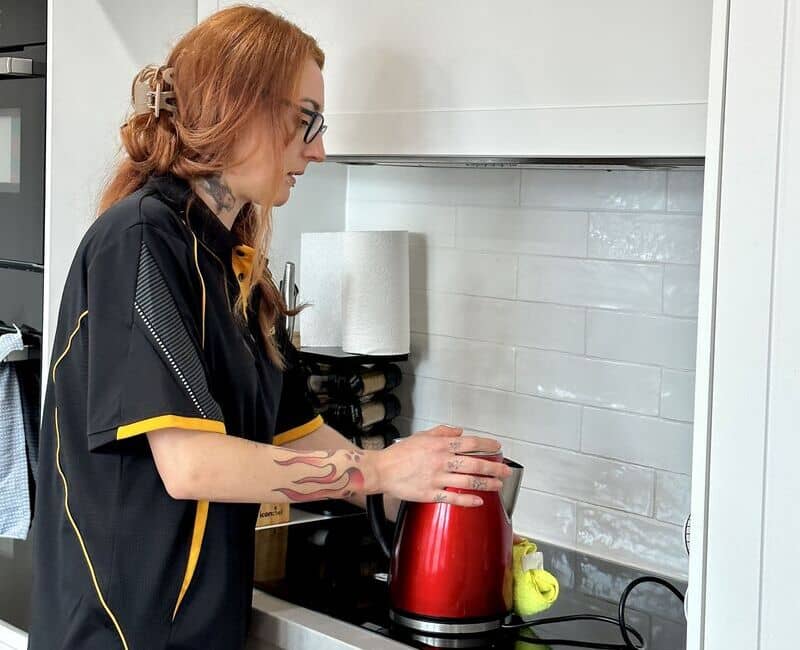
Before you start boiling water in the kettle, we’ll go over why you should descale regularly and how your kettle type affects the process.
Why descale your kettle?
Limescale buildup is a bit inevitable, especially if you live in a hard water area.
Limescale comes from minerals (like calcium and magnesium) left behind when hard water dries. The mineral deposits build up on surfaces over time, forming a white, chalky residue. It’s sometimes called kettle furring!
While limescale by itself isn’t harmful to your health, it does affect the taste of the water and looks unappealing. If not treated, limescale can become a hotspot for bacteria or mould to grow, particularly if you often leave standing water inside the kettle.
Moreover, heavy mineral buildup can shorten the lifespan of your kettle and filter, as it becomes too tough to remove.
Does the type of kettle matter for descaling?
The descaling process is the same for both electric and stovetop kettles! Just remember that for electric kettles, you shouldn’t get the base wet since moisture can get into the heating element or electrical parts.
The material of your kettle is a factor, though. Limescale builds up more easily on metal, ceramic, and glass kettles. On the other hand, plastic kettles are less likely to accumulate mineral deposits. (They still do, to be clear — just not as quickly.)
Materials also affect the dwell time of your descaler. Glass, plastic, and glazed ceramic can handle longer exposure to acids since there’s little risk of etching. However, you’ll need to control dwell time for metals like stainless steel — usually 3–5 minutes to be safe.
For stubborn buildup, do not extend the time for metal kettles. Instead, rinse the interior surfaces and repeat the application.
How Often to Descale a Kettle
Your descaling “schedule” will depend on how often you use your kettle, and how “hard” your water is. More frequent use or very hard water leads to increased limescale buildup.
Here’s a good schedule to aim for:
| FREQUENCY OF KETTLE USE | HOW OFTEN TO DESCALE |
| Frequent/everyday | Every 2–3 months |
| Less frequent/a few times a week | Every 4 months (at least) |
Don’t forget the filter, too, if there is one! Since limescale can clog the mesh if untreated, you’ll want to descale the kettle filter every 1–2 months.
However, there are a few signs your kettle needs descaling ASAP:
- Water that tastes flat or mineral-y after boiling
- Hardened mineral deposits on the kettle spout
- Visible white, crusted minerals on the kettle interior
How to Descale a Kettle Naturally
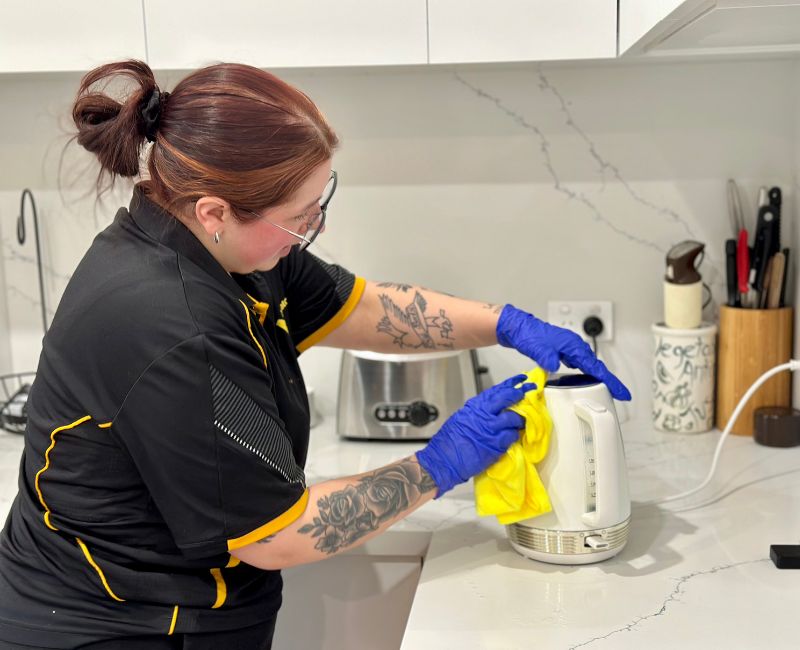
It’s best to descale your kettle when you don’t need it for a while, like at the end of the day. You’ll need to give the kettle descaler time to break down the residue.
If you’ve just finished using the kettle, no need to empty it! Just top up water as needed and use that.
Mild acids — like white vinegar, lemon, and citric acid — are best for tackling limescale, since they react with the minerals and make them easier to remove.
Then alongside your chosen descaler, you’ll need:
- A soft-bristled brush (like a bottle brush)
- A non-abrasive sponge
- Soft cloths
Descaling a kettle with vinegar
Distilled white vinegar is the easiest descaler for kettles, since it’s cheap and likely already in your kitchen! However, boiling vinegar creates a strong odour, so open the windows and run the exhaust if you use this method.
Fill the kettle halfway with equal parts white vinegar and water. Bring that to a full boil, then take the kettle off the stove or turn it off and unplug. Let the vinegar solution sit for 3–5 minutes for stainless steel, or 10–20 minutes for glass and plastic kettles.
Once time’s up, use the soft brush with a few drops of dishwashing liquid to scrub off the mineral deposits. Pay close attention to the grooves and ridges inside of a kettle, where limescale tends to “cling.”
Empty the dirty liquid, then rinse the kettle before boiling fresh water to remove the lingering smell and taste. You can add 1–2 tbsp of baking soda after the water has stopped boiling, to neutralise the vinegar smell. (Not while it’s actively boiling and bubbling, since it could fizz up!)
Leave the water to sit for 10–20 minutes before pouring it out. Finally, wipe the kettle with a dry cloth to prevent water spots.
Descaling a kettle with lemons
Lemons give off a better smell than vinegar, and you can use them in two ways: as lemon juice or leftover lemon slices.
Fill your kettle halfway with water mixed with one of the following:
| Lemon juice | 1 part lemon juice to 2 parts water |
| Lemon slices | Half a lemon, sliced up |
Set the kettle to boil, then remove it from the heat or switch it off. Give the lemon water 3–5 minutes to work before you scrub (gently!) the limescale off with a soft brush and some dishwashing liquid. For glass and plastic, you can leave the solution for up to 20 minutes.
Pour out the mixture afterwards, then boil a batch or two of plain water to rinse out the lemony taste. Dry the kettle with a clean cloth.
Descaling a kettle with citric acid
Citric acid is excellent for descaling your kettle (and for cleaning lots of things around the house, too).
For this method, though, avoid boiling the citric acid powder or adding it directly to boiling water. It could react with the minerals in the hot water, then fizz up or even overflow.
Instead, boil a kettle half-full of water and let it switch off or remove it from the stove. Wait a few minutes so the water cools slightly before stirring in 1–2 tbsp of citric acid until it dissolves. Leave the mixture for 3–5 minutes (or up to 20 minutes for glass and plastic).
Follow with a soft sponge or brush and a dab of dishwashing liquid to scrub the kettle’s surfaces. Rinse away any residue, then boil some clean water to get rid of any leftover taste. Wipe excess moisture with a dry microfibre cloth afterwards.
Using a Commercial Descaler on Kettles
One other easy descaling method is to use a commercial descaler! Make sure it’s formulated for kettles — no using products meant for large appliances, like dishwashers, which are typically stronger.
Follow the product instructions on the descaler. You’ll typically dissolve a preset amount (whether powder, liquid, or tablet) in water, then bring that to a full boil and leave the solution to soak. After the recommended time, rinse out your kettle, then wash it with soap and water to remove residue.
Lastly, dry the surfaces with a microfibre cloth.
How to Descale Your Kettle Filter
Many kettles, especially electric ones, have a filter sitting inside the spout. And since we often forget to dry this tiny part, minerals accumulate easily on the mesh surface.
It’s best to descale your kettle’s filter every 1–2 months.
Remove the filter from the spout — usually, you’ll pop it out from inside the kettle. Let it soak in a shallow container with equal parts vinegar and hot water for 5–10 minutes.
Following that, scrub the filter clean with a soft sponge and some dishwashing liquid. Rinse under running water, shake off the excess moisture, then set aside to air dry.
Removing Limescale From a Kettle Exterior
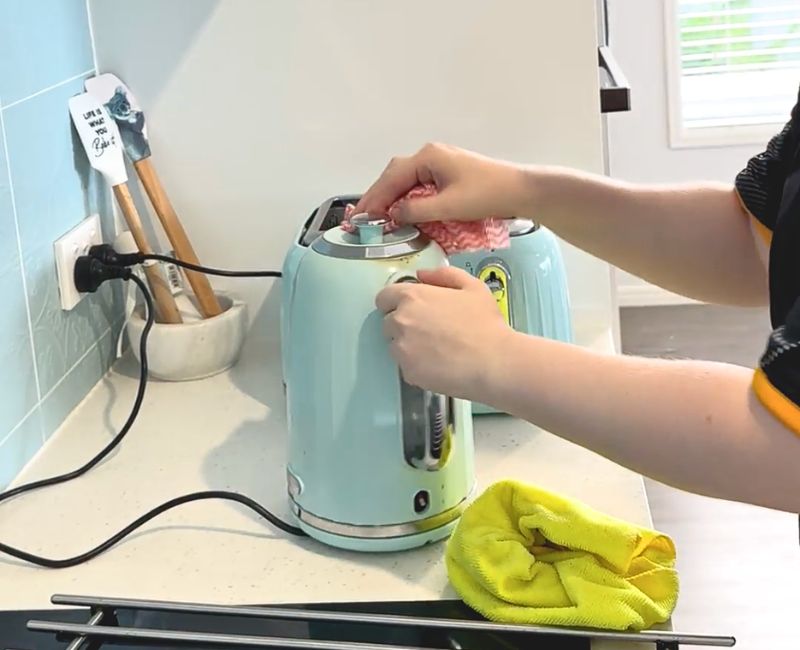
Limescale is less likely to build up on the outside of your kettle, but drips can still leave minerals behind. Improper drying after cleaning your kettle could also create a residue.
Always work with a kettle that’s switched off and completely cool!
Soak a paper towel in a 50/50 mix of water and white vinegar, then spread it over the affected area. For limescale in the spout, crumple the paper towel and fit it inside. Let that sit for 3–5 minutes for metal kettles, or up to 20 minutes for glass kettles.
Afterwards, buff away the limescale with the paper towel or a soft sponge. Rinse the surface with a damp cloth before wiping the kettle dry.
As an optional step for stainless steel kettles, pour a few drops of olive oil or food-safe mineral oil onto a microfibre cloth. Buff a thin layer over the exterior surfaces (going with the grain), then wipe away the excess to leave your kettle sparkling.
Preventing Limescale Buildup in Your Kettle
Unfiltered hard water will leave limescale deposits over time, but there are ways to minimise or prevent buildup.
Consider installing a water filter on the tap or a water softener in your plumbing. A full-system water softener will prevent limescale buildup in other areas, too, like the shower or kitchen sink.
When boiling water, use just as much as you need so you don’t leave standing water inside. Or use the leftovers for cleaning something, such as the sink drain! Standing water not only creates mineral deposits, but could also become a hotspot for bacteria or mould.
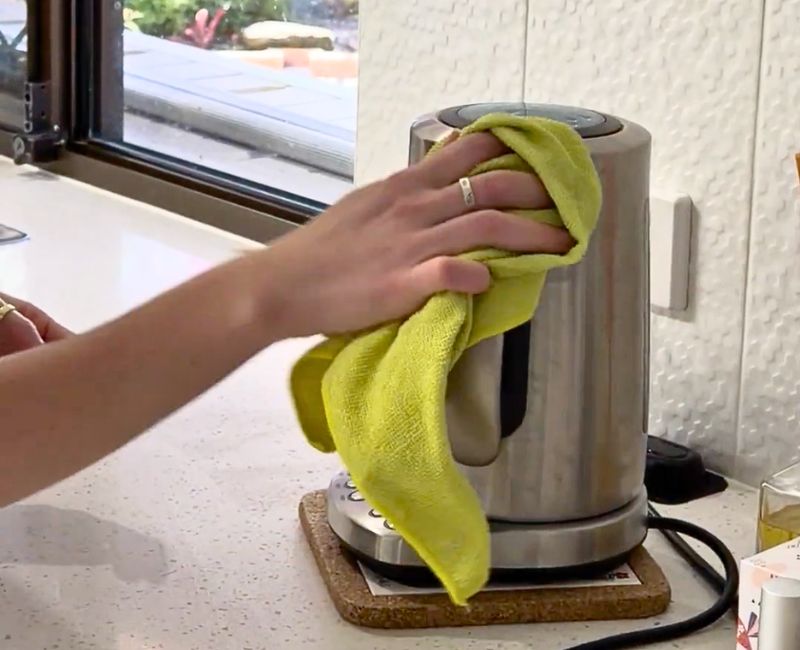
Empty and dry the kettle after each use, and spot-clean the exterior a few times a week to remove water marks and dust.
And of course, don’t wait to descale your kettle if you spot any buildup! Limescale is easier to remove when it’s just a thin residue. Caked-on, hardened deposits are tougher to dissolve, especially on the filter — too much buildup, and you’ll have to replace it.
FAQs About Descaling Kettles
We’ll answer a few more common questions about kettle descaling here.
What is the easiest way to descale a kettle?
You can easily descale your kettle by boiling vinegar or lemon juice with water, then letting it sit for several minutes. Both are easy to find in supermarkets or readily available in your kitchen.
Do you use baking soda or vinegar to descale a kettle?
White vinegar is more effective for descaling, since the acetic acid breaks down the minerals.
On the other hand, baking soda is alkaline, so it’s less effective since it doesn’t dissolve limescale.
How to descale a kettle with bicarbonate of soda?
You can mix bicarb soda (or baking soda) with water and dish soap to make a paste to treat mild limescale on a kettle’s exterior. Since bicarb is mildly abrasive, it can scrub off light buildup while being safe for materials like stainless steel.
It’s also a good way to neutralise the lingering smell from vinegar! After you’ve descaled and rinsed your kettle, boil another batch of water and let it cool slightly. Then stir in 1–2 tbsp of bicarb and let that sit for up to 20 minutes before emptying the kettle.
How to descale a kettle with Coke?
One online descaling hack involves boiling Coke inside your kettle, then pouring it out and scrubbing the kettle clean. The acid in Coke can dissolve minerals, similar to other suggested descalers.
However, we don’t recommend using Coke for descaling. Boiling soft drinks will just leave a sugary residue all over your kettle. You’ll end up with a sticky mess that takes more work to wash out.
Save the Coke for a hot day and stick to vinegar, lemon juice, or citric acid for removing limescale.
