
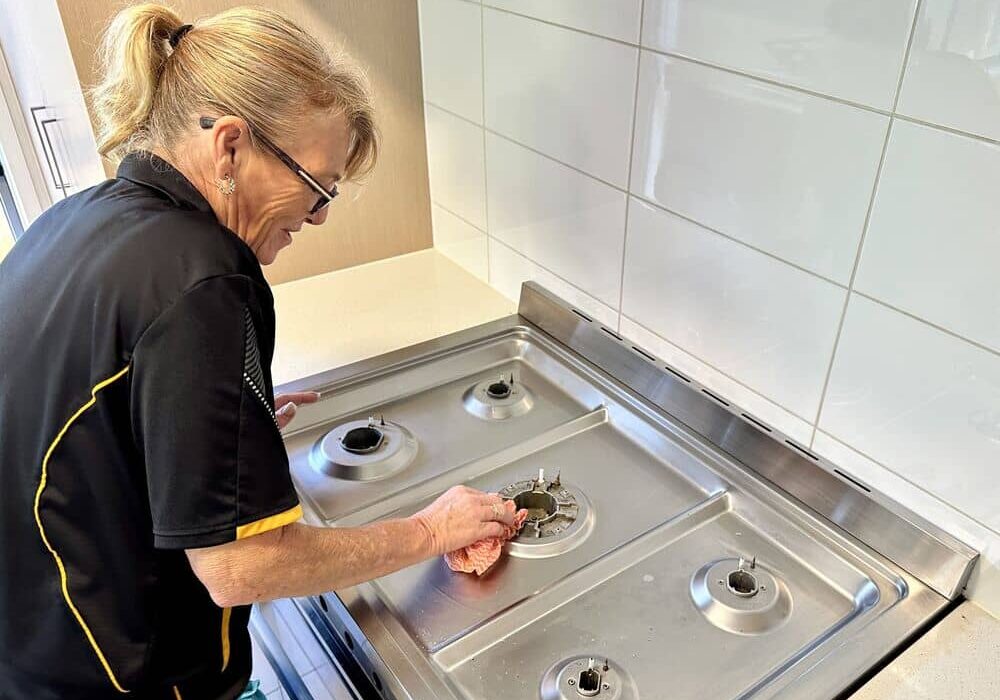
A stainless steel cooktop looks sleek and timeless, but smudges, fingerprints, and spills can dirty it up easily. Still, the stove is easy to maintain… so long as you do it right!
So, how to clean a stainless steel stove top? Wash the surface with either dish soap and water or diluted white vinegar. Then tackle stains with some baking soda paste and a bit of elbow grease.
With how often you use the stove, it’s essential to keep it hygienic and tidy. Here’s a range (ha!) of methods for stainless steel stove maintenance.
Before Cleaning | Daily Cleaning | Deep Cleaning | Removing Stains | Polishing | Maintenance Tips
Quick Overview of Stainless Steel Stoves
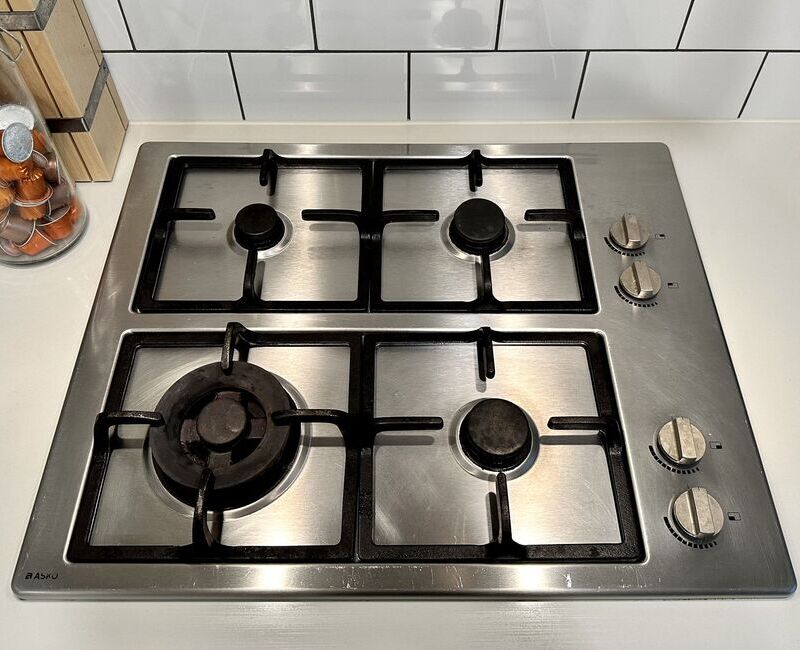
Stainless steel is a durable material that’s resistant to rust, so it’s ideal for cooktops. These stoves are typically long-wearing and hygienic, thanks to the non-porous surface.
However, the material can show stains, fingerprints, and smudges very easily. And since the surface heats up when cooking, spills tend to “bake” on and become tricky to remove.
Most stainless steel stovetops in Australia are gas stoves, though you might occasionally see stainless steel electric stoves or even black steel ones! Traditional stainless steel gas cooktops have burners protruding from the surface, with porcelain-enamelled cast iron grates on top.
You’ll need to wash both the stove top and the grates to keep the whole area clean.
How Often to Clean a Stainless Stove
Regular maintenance keeps a stainless steel stove safe and hygienic, so here’s a good routine:
| Mop up spills and stains | As soon as the cooktop has cooled |
| Wipe down the stove and grates | After every use, or at the end of each day |
| Deep clean the stove top | Every 1–2 weeks |
Of course, you can treat yourself to a kitchen that sparkles from stove to floor with a Maid2Match professional cleaning service!
Before Cleaning Stainless Steel Stoves
While it isn’t super fussy, knowing the best ways to clean a stainless steel stove means you won’t damage it or create a bigger mess.
Best stainless steel stove top cleaners
Mix one of the following solutions to make a DIY stainless steel stove cleaner:
- Equal parts white vinegar and water
- A bowl of warm water + a few drops of dish soap
When using vinegar, be mindful not to let it sit for more than 10 minutes, or the acid might etch the finish.
You can use a stainless steel cleaner for stove tops, but make sure it’s compatible with food surfaces. Koala Eco’s Stainless Cleaner is safe for the kitchen!
For tougher grime like burnt grease, tackle it with a baking soda paste (2 parts bicarb, 1 part warm water).
Besides that, you’ll need microfibre cloths or soft sponges, which won’t scratch the stove top.
What not to use for stainless steel stovetops
Avoid products containing bleach, ammonia, and other harsh chemicals, as these can strip the coating or corrode the material. The same goes for glass cleaners, which aren’t formulated for stainless steel.
Skip abrasive cleaners or tools since they can scratch the steel — so no scrubbing powders, steel brushes, or steel wool. Baking soda is fine, as it’s only mildly abrasive as a paste.
Stay away from oil- or wax-based products that may leave a film on your cooktop. The residue could attract more grime or release harmful fumes when heated.
Paper towels work fine, but often track lint that could burn onto the surface!
How to clean a stainless steel stove top without scratching
When cleaning stainless steel, be sure to wipe with the grain of the material. Those are the faint, brushed parallel lines on the surface of the steel.
By wiping in the direction of the grain, the cloth pulls out any dirt from the lines. On the other hand, going against the grain can trap dirt inside and lead to smudges or even fine scratches.
Additionally, use soft cleaning tools like microfibre cloths. For scrubbing brushes, look for ones with nylon bristles.
Daily Stainless Steel Stove Top Cleaning
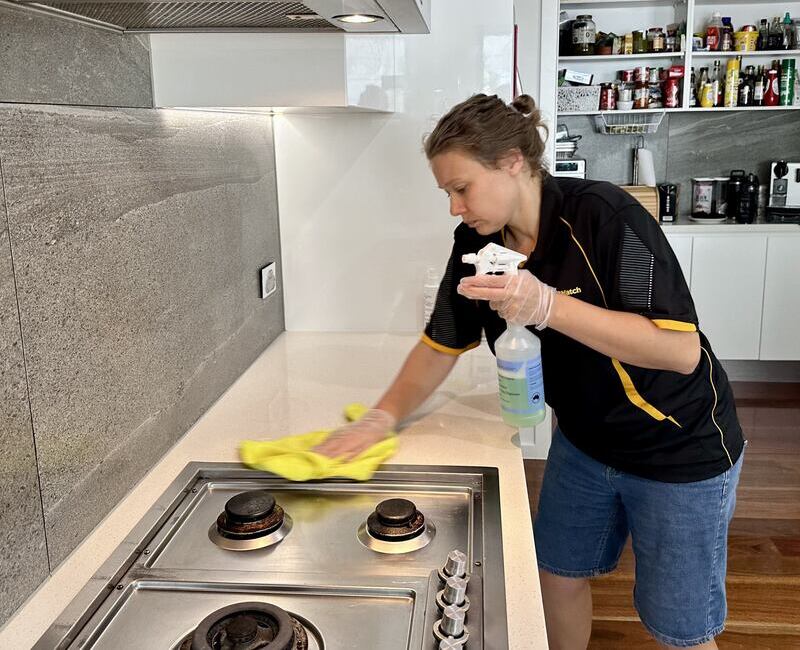
After cooking (or when the day is over), quickly wipe your stove clean as part of your kitchen cleaning routine. This minimises the buildup of grease and food residue, and makes deep cleaning easier.
Work while your stove is still slightly warm so any residue hasn’t fully dried. Just be careful about touching the cooking surface!
Dip a microfibre cloth into a bowl of warm water plus a few drops of dish soap. Wring it out so it’s just damp before wiping the stainless steel surface and the grates.
Rinse off any soapy residue with a clean, damp cloth, then follow with a dry microfibre towel to prevent water spots.
How to Deep Clean a Stainless Steel Stove Top
Before you start, always wait until the stovetop is completely cool. You can shut off the gas valve as a precaution, too.
Check your owner’s manual for how to take off any removable parts, like burner caps or knobs. There may also be advice on products to avoid!
If you don’t have the manual, look up the stove model online — the manufacturer’s website often has a digital copy.
Step 1: Clean the stainless steel cooktop surface
Lift off the stove grates and set them aside to wash separately. Use a dry cloth to brush off surface dirt, crumbs, and other residue.
Mix up your preferred cleaner — either warm water and dish soap, or equal parts vinegar and water. Apply it all over the stove top with a soft sponge, or spray it on for gas stove tops.
For soapy water, work it all over the stainless steel surface with the sponge. Pay extra attention to any food or grease stains.
For the vinegar, let it sit on the surface for 3–5 minutes before buffing away the loosened dirt with a soft cloth.
Afterwards, use a damp cloth to wipe off the residue, then dry the stove top straight away.
Step 2: Clean the burner caps and rings
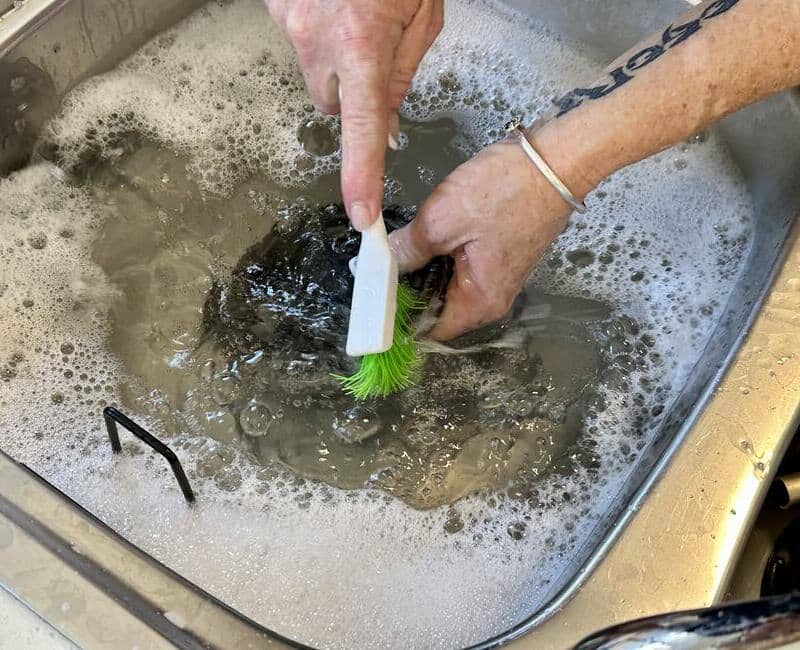
Follow the manufacturer’s instructions for taking off the removable burner caps and rings, once they’re fully cool.
Wash them in the kitchen sink with hot water and grease-cutting dish soap. For stubborn stains, let them soak in the hot, soapy water for 5 minutes first.
Don’t forget the burner ports (where the flames come out)! Clogged ports can cause uneven flames or ignition failures. Gently scrub the ports with a soft brush or use a toothpick to poke out stuck debris.
Thoroughly dry them with a microfibre cloth, then let them air dry for a few hours.
Step 3: Wash the stove grates
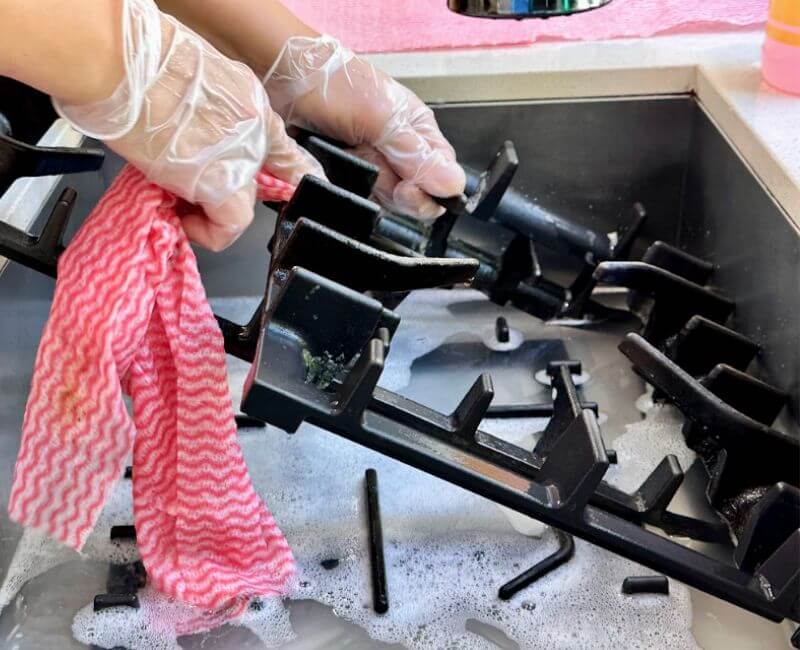
Modern porcelain-enamelled cast iron grates are both durable and easy to clean.
To clean your stove grates, soak them in an empty sink or laundry tub for 10–15 minutes in hot, soapy water. Go over them with a non-abrasive sponge.
For tough stains, make a paste with 3 parts baking soda, 1 part water, and 1 tsp of dish soap. Spread it over the grate, wait 5–10 minutes, then work it into the stain with a damp sponge.
Rinse and dry the grates afterwards.
Step 4: Clean the knobs and buttons
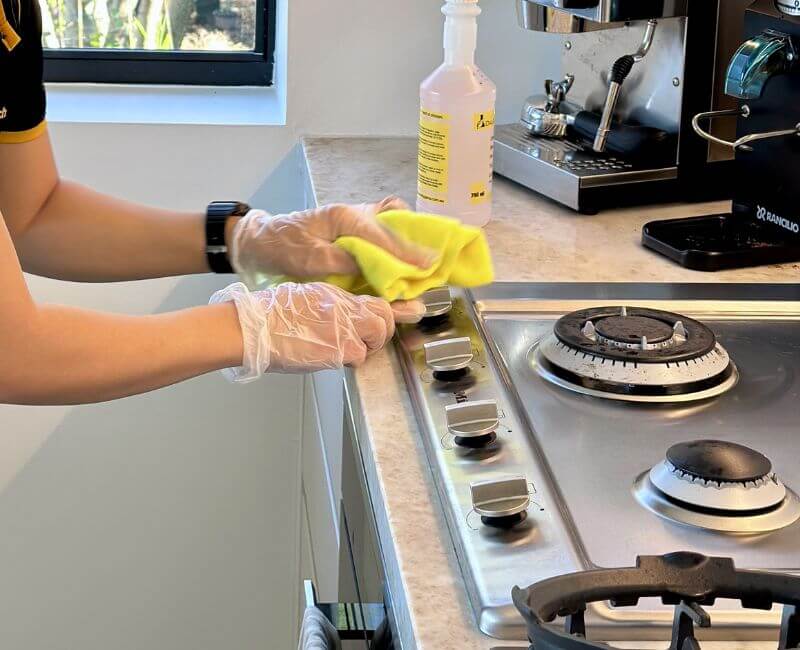
Check the manual to see if the knobs or buttons are removable — grease tends to build up in that hidden area behind knobs.
Use the same soapy water or vinegar solution when cleaning. Go over each knob with a cloth dampened in your cleaning solution, then wipe away residue with another damp cloth before drying.
For crevices, especially if there’s stuck food, use a cotton bud or toothpick.
Step 5: Wipe the exterior and reassemble your stove
Lastly, go over any handles, side panels, and front areas with a cloth dampened in the vinegar solution. Remember to wipe in one direction with the grain to prevent streaks.
Once every part has dried, reassemble the stove top. Set the grates down carefully so you don’t chip the coating or scratch the stove. And of course, don’t forget to reconnect the gas afterwards!
Removing Stains from Stainless Steel Stoves
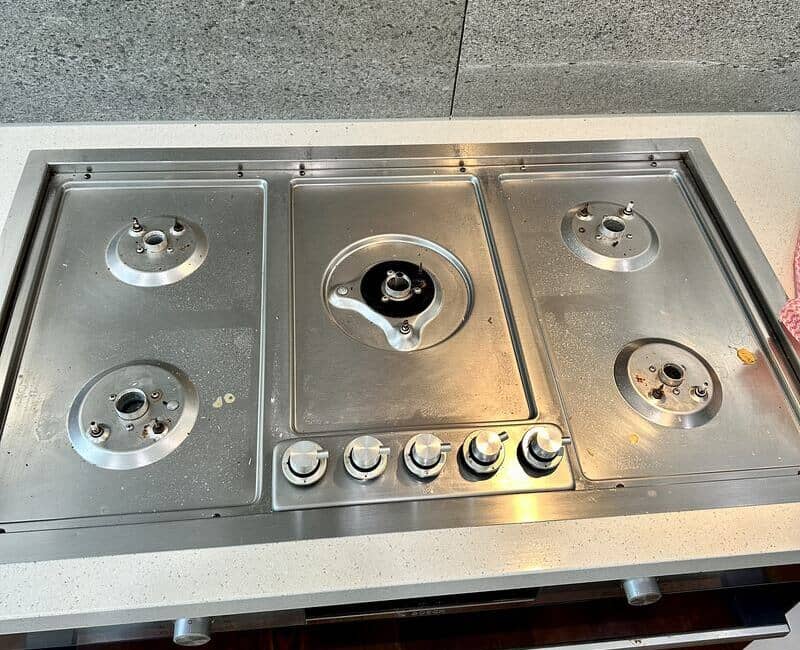
Whether your paste boiled over or you knocked something onto the cooktop, it’s essential you treat stains straight away. Otherwise, you can bake the stain onto the surface, making it harder to remove!
How to get baked-on grease off a stainless steel cooktop
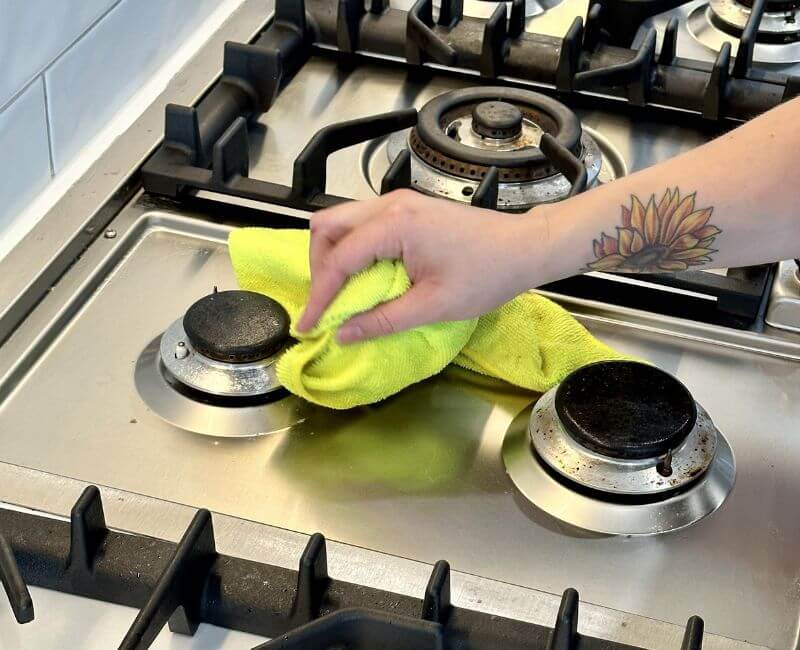
Burnt oil or grease can quickly turn stubborn on stove tops, so try not to let the stains sit. If you can, wash the area straight away with soap and water — that’s usually enough for fresh or mild grease.
If that doesn’t work, make a paste out of 2 parts baking soda, 1 part hot water, and 1 tsp dish soap. Apply the paste to the area with a damp sponge and let it sit for 5–10 minutes before working it into the stain with the sponge.
Wipe the residue off with a damp microfibre cloth, or give it a quick spritz of vinegar afterwards so it’s easier to remove.
How to clean a burnt-on stainless steel stove top
For burn marks on your stove, try the same baking soda paste (2 parts bicarb, 1 part hot water, 1 tsp dish soap). Leave for 5–10 minutes and gently scrub with a damp sponge.
For tougher burns, apply the paste, wait 5 minutes, then try to scrape off the marks with a cooktop scraper at a 45º angle.
However, some burn marks are permanent heat damage on the material. If scrubbing or scraping doesn’t work, stop and reassess if the burn mark is removable.
How to clean rust off a stainless steel stove top
White vinegar and lemon juice are great for treating rust! The acid reacts with the metal compounds, making them easier to remove.
Dip a paper towel into a mix of equal parts water and vinegar (or lemon juice). Lay it over the rust spots and leave it for 5 minutes at most.
When the time’s up, take off the paper towel and scrub off the rust with a soft, damp sponge. Wipe clean afterwards to remove any lint.
Alternatively, spread on the 2:1 paste of baking soda and water, and leave it for 5 minutes before scrubbing off the rust. Remove the residue with a damp microfibre cloth.
Prevent future rust by drying the stove after use or after cleaning, and being mindful not to scratch or wear off the protective coating on the stainless steel.
Polishing Your Stainless Steel Cooktop
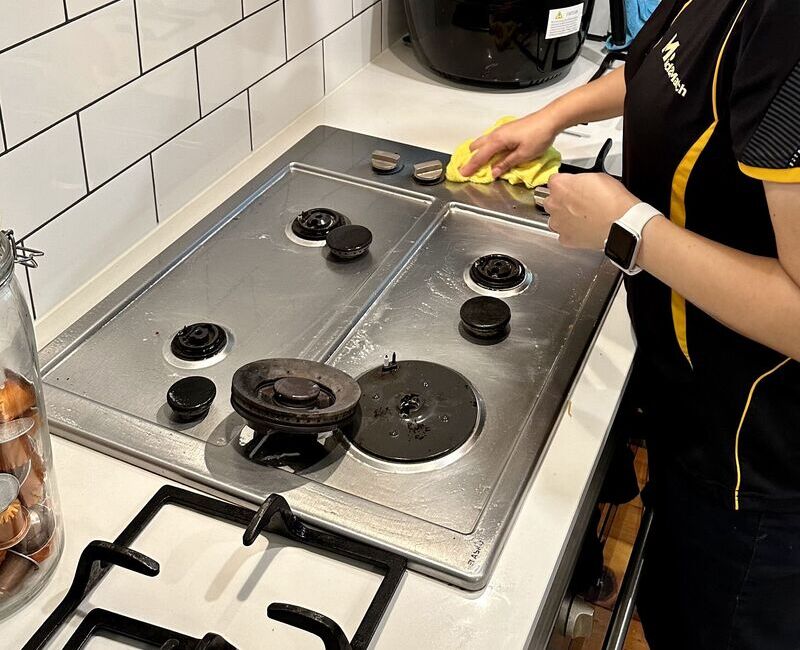
Polishing restores shine and adds a protective layer against moisture and smudges, especially after deep cleaning. It’s not strictly necessary, but it’s a good maintenance step.
For a stainless steel cooktop, use olive oil or a food-safe mineral oil so you don’t contaminate your food.
Dot a few drops of the olive oil onto a soft cloth, then work it over the entire stainless steel surface. Always follow the grain so the finish doesn’t turn streaky.
Buff the stove top with a clean, dry cloth to remove excess oil and bring out the shine.
Maintaining Your Stove Between Deep Cleans
Minimise the grease splatter around your stove by using splatter guards or lids when cooking! Less oil on the cooktop means it’s easier to clean.
Tackle spills straight away so they don’t dry and bake on. This is particularly important for acidic foods (like tomato sauce or vinegar-based marinade), since they can cause etching or pitting.
Carefully lift up pots and set them straight down to prevent chipping your stove grates. Avoid dragging anything across the cooking surface as well (like pots, kettles, and ceramic dishes) to protect both the stainless steel and your cookware.
Same with the stove grates — always lift and set them down gently, and be mindful not to drop them. Damaged coating could let in moisture and lead to rust.
Periodically inspect the burner ports to ensure they’re clear. Yellow or sputtering flames indicate clogging, which you’ll need to deal with ASAP!
FAQs About Cleaning a Stainless Steel Stove
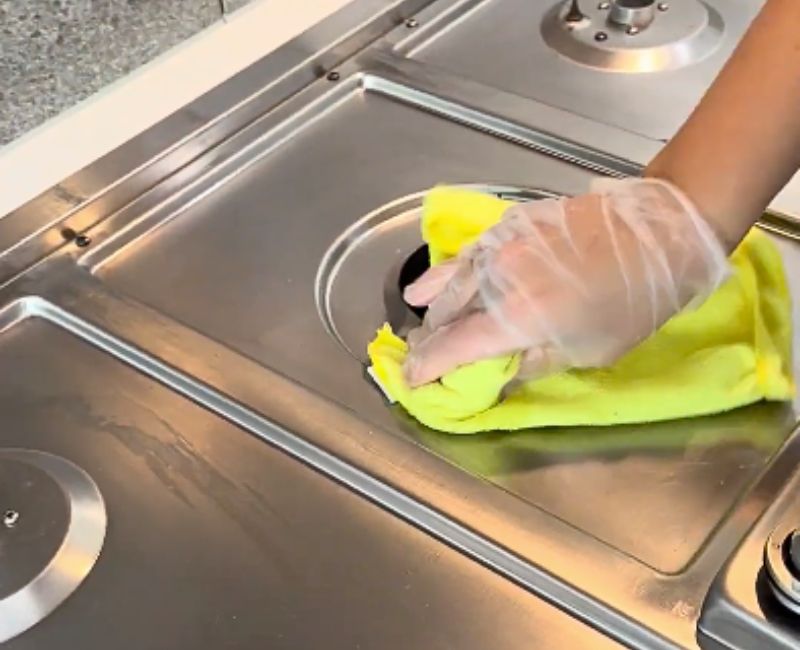
Here are a few other good things to know about maintaining your stove!
Is vinegar safe for stainless steel stoves?
Yes, but with a caveat! White vinegar is safe for cleaning stainless steel, but don’t let it sit for more than 10 minutes. The acid can etch or dull the finish on your stove.
If you’re worried, test your cleaning solution on a tiny, hidden spot first.
How do I get brown stains off my stainless steel cooktop?
Brown stains typically come from burnt oil or food stains. Tackle these with a paste of 2 parts baking soda and 1 part water, plus 1 tsp dish soap.
Leave for 5–10 minutes, then wipe off the residue afterwards and dry.
How do you clean a black stainless steel stove?
Like traditional stainless steel, you can clean a black stainless stove with dish soap and warm water! Use a soft sponge to go over the surfaces, then rinse off the residue with a damp microfibre cloth.
In general, stick to soft cloths and gentle cleaners so you don’t scuff the polymer coating.
