
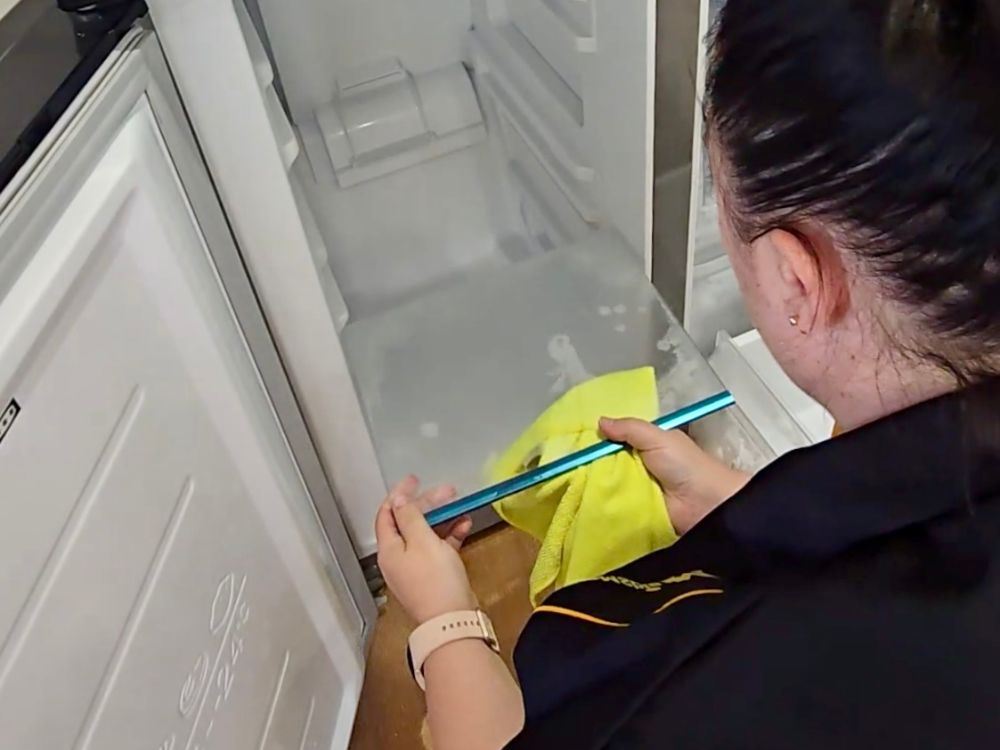
While taking out the chicken to thaw for dinner, ask yourself: when was the last time you cleaned your freezer?
It’s easy to forget about it with all the different kitchen chores to do. And hey, everything’s frozen inside, so surely it’s fine? (Nope, sorry!)
You need to clean a freezer to keep it in good condition and keep food safe. No one wants spoiled food or a costly repair bill down the line.
With good freezer maintenance, the only question that gets asked is how long those leftovers have been stuck in the back… Oops!
Before Cleaning | Cleaning Without Defrosting | Deep Cleaning | Common Freezer Problems | Bad Freezer Smells
How Often to Clean Your Freezer
Thankfully, this isn’t a frequent chore! Aim to clean your freezer at least once a year.
In between, mop up any spills or messes immediately. Spot-clean the exterior at least once a week as part of your kitchen cleaning routine.
You can block out an afternoon to tackle the freezer on the same day you clean your fridge. Or add on a fridge clean to your Maid2Match cleaning service so you can keep that afternoon for yourself.
Before Cleaning a Freezer
Don’t go taking out all the food just yet! Cleaning a dirty freezer is a big task, so gather your supplies first and set aside a few hours.
Do you have to defrost a freezer to clean it?
No, you don’t always need to defrost, especially for light cleaning (good news if you don’t have much time).
That said, it’s best to defrost your freezer for deep cleaning so you can wash off dirt and food particles on all surfaces. This also means any ice build-up gets removed before it gets out of hand.
If the freezer is full of ice, though, you absolutely need to defrost it.
What to do with food items while cleaning a freezer?
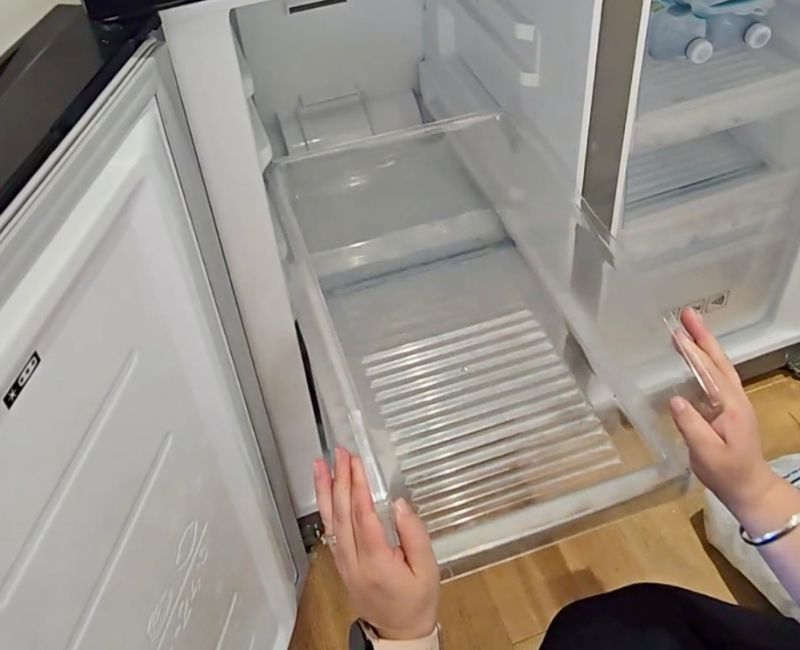
You should take out all the contents from the freezer so you can clean it thoroughly.
Use this time to sort through the frozen items. Toss out anything that’s expired or has freezer burn (dehydration from being poorly stored or stored too long in a freezer).
As for the rest, store items in an esky with ice packs so they stay fresh!
What is the best thing to clean a freezer with?
When cleaning your freezer, you need to use food-safe cleaners with antibacterial or deodorising properties.
Some of the best ways to clean a fridge freezer include:
- Food-safe antibacterial cleaner
- Equal parts white vinegar and warm water
- A few drops antibacterial dish soap in water
Cleaning tools include a non-abrasive sponge, soft cleaning cloths, a spray bottle, and a small toothbrush. Also, wear rubber gloves and a face mask for protection.
If raw meat has contaminated your freezer, use hydrogen peroxide or 70% isopropyl alcohol.
How to Clean a Freezer Without Defrosting It
If you don’t have the time or energy to defrost, go for a light cleaning method!
After taking out the food, remove the shelves and drawers. Set them aside so they come to room temperature, or they might crack while cleaning.
Mix equal parts white vinegar and (barely) hot water in a spray bottle. If you want some extra cleaning power, add 1/2 tsp of dish soap.
Spray the solution all over the interior, then wait a few moments. Use a soft sponge or cloth to scrub the dirt off the surfaces. Repeat as necessary until the freezer is clean!
Once the shelves and drawers have warmed up, give them a good wash in the sink. Dry everything, freezer and all, before putting your food back.
How to Deep Clean a Freezer
Be efficient when cleaning a freezer so it doesn’t stay unplugged too long (and you don’t risk any food thawing).
Work from the uppermost surfaces then downwards, and on one section at a time. Don’t cut corners, though — you wanna be quick but thorough!
Step 1: Defrosting
Unplug the refrigerator unit to start the defrosting process. Don’t worry about the fridge part; so long as the door remains closed, your food will stay safe for up to 4 hours.
Leave the freezer door open to speed up the melting process, and soak up any liquids with an old towel. Set any removable parts (e.g. shelves) aside to warm up to room temperature.
Don’t try to chip off any ice, as you could scratch the interior surface!
Step 2: Cleaning the inside
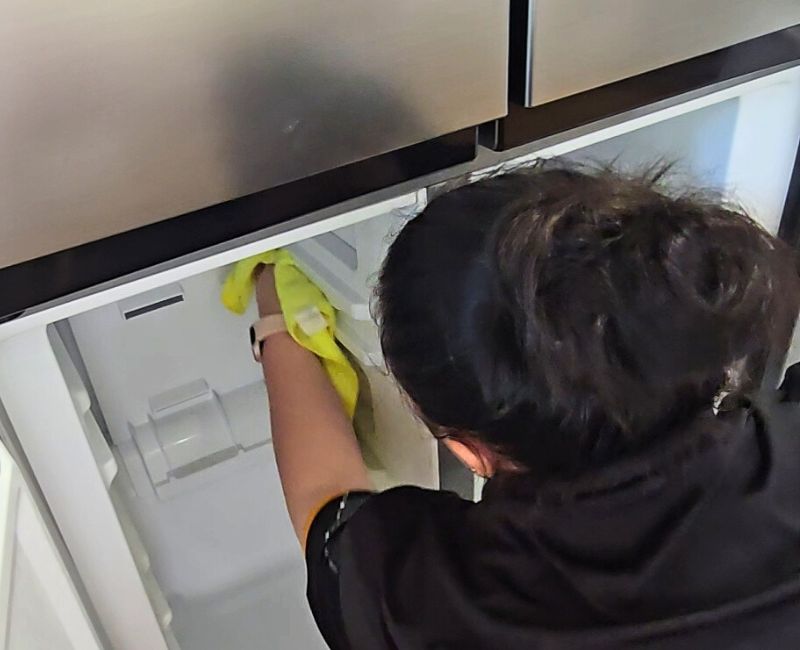
Generously spray your chosen cleaner over the freezer interior, or apply it with a soft sponge. Wait a few minutes before you start scrubbing.
For crevices and corners, switch to an old toothbrush or a clean grout brush.
Tackle stains with a thin paste of baking soda and warm water. Dab it onto the surface with a damp sponge and let it sit for a moment. Work the sponge over the spot until the stain lifts.
Rinse off any residue with a damp cloth before drying all the surfaces.
For the shelves, wash them in soapy water in the sink. Make sure they’re no longer cold or they could crack! Then put them back once they’ve been dried.
Step 3: Cleaning the gaskets
Rubber seals or gaskets tend to trap dirt in the folds, which can lead to mould or mildew. But since vinegar can dry out rubber, stick to water and some dish soap.
Dip an old toothbrush into the mixture and scrub between the folds. For any stuck debris, use a toothpick to pry it out.
Rinse off the residue with a cloth dampened in clean water. Following that, dry the seal to deter mould or mildew growth.
Step 4: Cleaning the exterior
Don’t forget the exterior, too! This should be easier, though — use the vinegar solution or an appropriate all-purpose cleaner.
Spray the cleaner onto the freezer exterior, then wipe everything clean with a soft cloth. For stubborn stains, use the baking soda paste and a damp sponge.
Vacuum the area around the fridge to keep it free of debris. Use a crevice or brush attachment around the freezer coils, or a coil brush if you have one.
Plug the fridge back in, but wait until the space starts cooling down before putting your food back inside.
Common Freezer Cleaning Issues
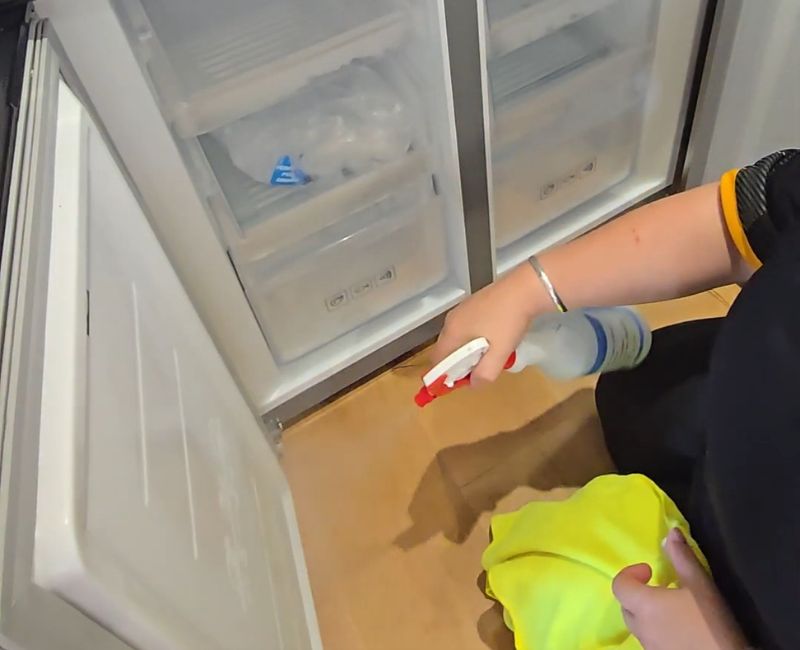
Whether it’s a lingering odour or mildew spots, freezers can run into a few problems.
Tackle them safely and effectively to protect both your food and appliance.
How to clean a smelly deep freezer
Good storage habits and routine cleaning will prevent bad odours inside your appliance. However, strong-smelling food, spilled liquids, or forgotten items can leave behind stubborn scents.
Follow the same steps for deep cleaning, but use a mix of equal parts water and either vinegar or lemon juice. These are great for getting smells out of freezers (and a smelly fridge, too).
Spray the solution over the inside of the freezer and let it sit for up to 15 minutes. Go over the surfaces with a soft sponge, then rinse with a damp cloth.
Dry the freezer and keep it open for a few minutes to let it air out.
How to clean a freezer that has rotten meat in it
If you’ve had raw meat or seafood contaminate a freezer (such as during a power outage), it should be disinfected!
Take everything out and dispose of any thawed or spoiled food. Freezing does not kill bacteria, so it’s safer to throw out suspicious items.
Absorb any liquids with old newspapers or an old towel you can toss out.
You must clean a surface before disinfecting, or it won’t be effective, so wash the freezer with hot water and dish soap first.
Here are some disinfectants and how long they need to sit on a surface:
| DISINFECTANT | TIME |
| Undiluted hydrogen peroxide | At least 10 minutes |
| 70% isopropyl alcohol | At least 5 minutes |
| Commercial disinfectant | Follow package instructions |
Rinse off any residue with some damp cleaning cloths. Afterwards, wipe off excess moisture and let the freezer air dry.
NOTE: Vinegar is not a disinfectant and should not be used for this purpose!
How to clean a mouldy freezer
Temperature fluctuations, power outages, or a mechanical failure can lead to mould inside a freezer. You must treat this immediately or it may become a health hazard.
Make sure to wear protective equipment (such as a secure face mask and rubber gloves) and work in a well-ventilated room.
Empty the freezer, tossing out any affected items. Any frozen food that’s still safe can go into an esky. Leave the door open to defrost — you want to expose all the surfaces.
To remove mould from a freezer, let your cleaning solution sit for enough time to work!
| CLEANER | TIME |
| Undiluted white vinegar | At least 1 hour |
| 3% hydrogen peroxide | At least 10 minutes |
Completely saturate the surfaces with the cleaner, then let it sit. Scrub all the mould off with a soft sponge or soft-bristled brush. Repeat the process as necessary.
Wash the surfaces with hot, soapy water afterwards. Let the freezer air dry.
For severe mould, though, you’ll need professional help… or a new fridge.
Help — My Freezer Smells Bad Even After Cleaning!
There are a couple of reasons your freezer smells bad even after you’ve washed it.
The most common is food that’s gone bad, usually from poor storage, incorrect temps, or overcrowding.
Notice freezer smells, but no rotten food? Other odour sources include:
- Exposed food
- Dirty air filter
- Dirty drip pan
- Clogged drainage hole
Check the refrigerator over so you can identify the cause. Clean any grimy parts with soapy water or a vinegar solution.
To remove odours from your freezer, place a small container of baking soda or activated charcoal on a shelf. Alternatively, place a used lemon or two inside!
Tips for Maintaining a Clean Freezer
Besides routine cleaning, there are a few more things you can do to maintain a fresh and tidy freezer.
Store food properly, whether that’s in its original wrapping or in airtight containers (so nothing leaks). Make sure everything sits upright and label leftovers to keep food organised.
Check the freezer regularly to catch any messes ASAP. Otherwise, they’ll be harder to clean and could allow bacteria to grow.
The recommended safe temperature for freezers is around -18ºC (0ºF). Make sure the settings are correct and use a fridge thermometer if needed.
Avoid overcrowding the freezer to maintain good airflow and ensure food cools evenly. It also means your appliance won’t have to work so hard to keep its temp!
FAQs About Cleaning the Freezer
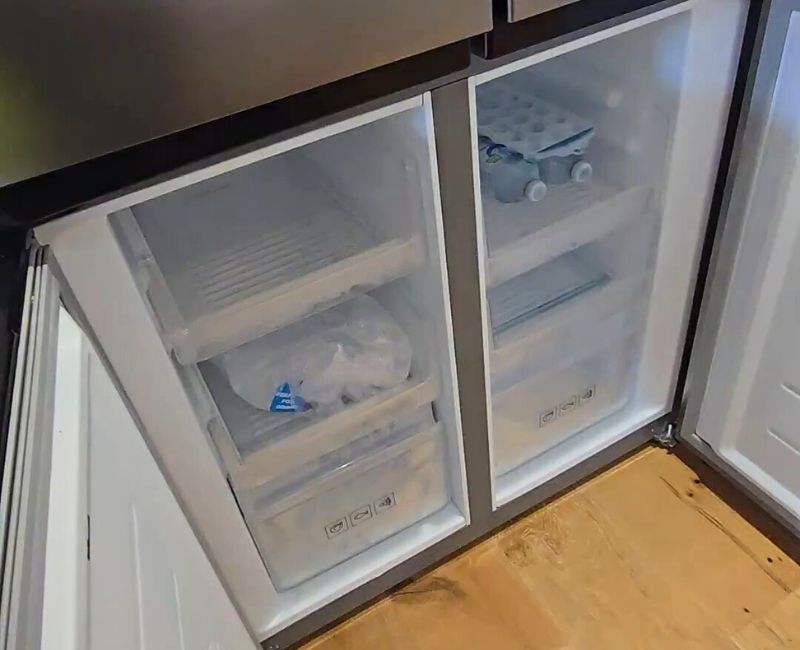
Got more questions about freezer cleaning? We’ll address some common ones here!
Can I use bleach to clean a freezer?
Avoid using bleach to clean a fridge or freezer, since bleach is not food-safe. It can also damage the interior surfaces or the rubber seals.
If you must use bleach (for rotten meat or mould), stick to oxygen bleach and dilute it according to the instructions. Never mix it with anything but water.
Why does my freezer smell like fish?
Fishy smells inside a freezer are usually caused by seafood that’s been exposed or otherwise lost its cover. The odour can get out and permeate the air.
However, if you notice a fishy smell and there is no seafood (or it’s all contained), inspect the outlet and wiring immediately.
It’s been reported that the early stages of an electrical fire may smell like fish or ammonia. You might also hear a faint crackling noise (like a “tick tick tick”).
Unplug the whole refrigerator, shut off the breaker, and contact an emergency electrician ASAP.
Why does my freezer smell like gas?
If either your fridge or freezer smells like gas (or like chemicals), that could be a freon leak! These are the chemicals used to cool down refrigerators.
A fault or break in your fridge’s cooling system can cause freon to leak, causing a chemical-like odour. Do not ignore this, as the freon can contaminate food and become a hazard.
Contact a professional ASAP to repair the fridge and replace the freon. Then give the fridge a thorough cleaning afterwards.
