
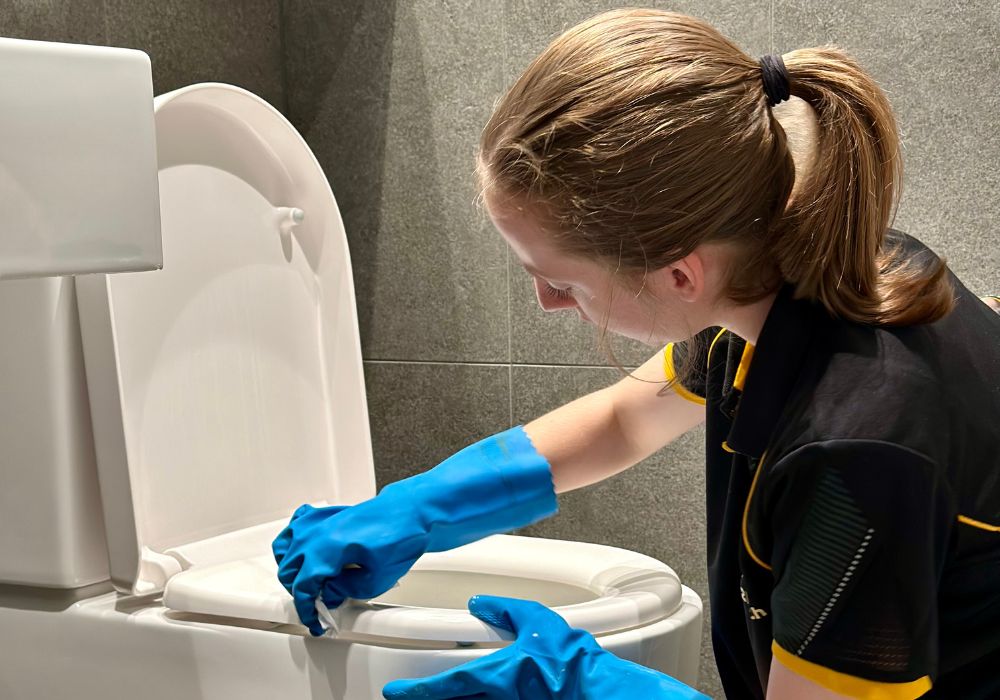
A self-tanner can give your skin a beautiful, sun-kissed glow. But there’s a catch: it can also leave unsightly, orange streaks on surfaces.
Unfortunately, toilet seats are a common casualty, especially if you sit on one too soon after applying fake tan.
The good news is that you don’t have to live with those stains forever. You don’t necessarily have to replace your toilet seat either!
So, how do you get fake tan off a toilet seat?
If you act quickly, gentle products are often enough. Baby oil or micellar water often works on fresh residue, and common cleaners like dish soap or baking soda can help as well.
For dried or stubborn marks, however, you might need stronger solutions like rubbing alcohol.
Below, we list different ways to lift fake tan stains, including mild methods and heavy-duty options!
Before Cleaning | Gentle Methods | Medium Strength Solutions | Heavy Duty Options | Keeping Your Toilet Clean
Why Does Fake Tan Stain Toilet Seats (and Other Surfaces)?
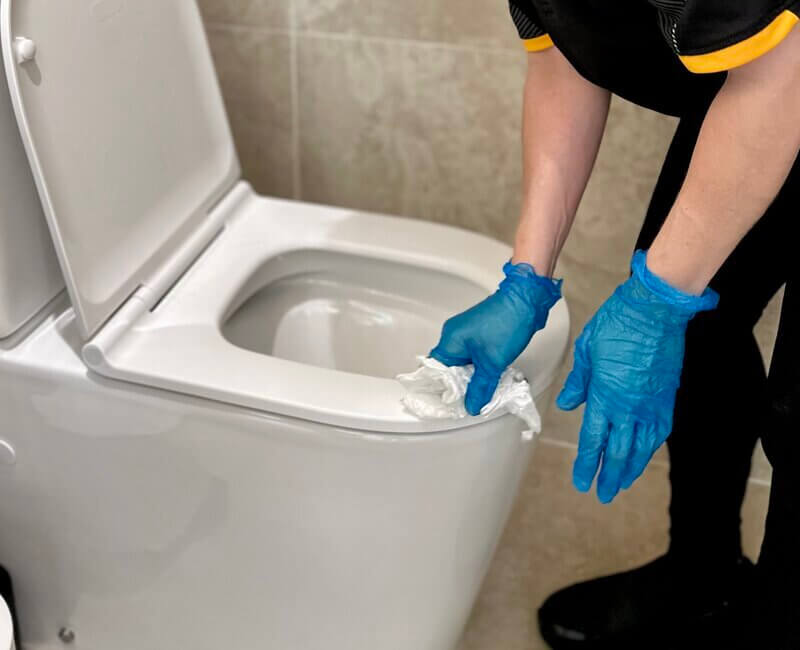
Many self-tanners use a colouring agent called dihydroxyacetone (DHA). This ingredient gives you that gorgeous, bronzed glow, as it reacts with the proteins in the skin.
The problem is that if your spray tan hasn’t fully dried, it can rub off onto whatever you sit on next — like a toilet seat. (Even your sheets can pick up the stain!)
It doesn’t help that toilet seats, whether plastic or wooden, are a bit porous.
They can soak up the oils and moisturisers in fake tan products, so the orange hue can stick and become tricky to remove.
Before Cleaning Your Toilet Seat
Before reaching for any cleaner, consider what your toilet seat is made of.
Plastic toilet seats are durable, but harsh products may still strip the shiny coating.
On the other hand, wooden toilet seats are more delicate. They might be more porous and can be easily damaged by strong solvents.
Whatever the material, it’s a good idea to spot test your cleaning method first. Try it on a small, hidden area (like under the seat) to confirm if it won’t scratch or discolour the surface.
Moreover, always use non-abrasive cleaning tools, like a microfibre cloth or a soft sponge.
Finally, it’s best to start with gentle cleaning methods, especially if the fake tan stain is still new. That way, you can clean the toilet seat without risking damage.
How to Remove Fresh Fake Tan Stains
When cleaning spray tan from a toilet seat, act ASAP!
For bronze streaks that are still fresh, mild solutions are usually all you’ll need to lift the colour.
Cosmetic products
A few everyday products can help remove new fake tan stains. Your options include:
- Baby oil
- Micellar water
- Fake tan remover
You can apply the product directly to the stained area, especially if it’s a mousse or gel remover. Alternatively, soak a paper towel or a few cotton pads and press them onto the stain.
Let the product sit for at least 5 minutes.
Gently rub the area with the same cotton pads or a damp cloth — use small circular motions to avoid spreading the tan. As you work, the orange pigment will transfer onto the pad or cloth, so switch to a fresh one as needed.
Once all stains are gone, rinse the toilet seat thoroughly.
Go over the surface with a cloth dipped in plain water. If you used an oily product, a towel dampened with warm, soapy water can help lift the slippery residue.
Afterwards, wipe the toilet seat dry to avoid water spots.
Household cleaning solutions
Common household products can help you clean fake tan from a toilet seat.
Here are some options:
| Dish soap and baking soda | Mix equal parts dish soap and baking soda, and apply with a damp sponge. |
| White vinegar | Mix equal parts vinegar and water in a spray bottle, then spritz onto the toilet seat. |
| 3% hydrogen peroxide | Apply directly onto the stains. |
Let your chosen solution sit for 5–10 minutes to break down the fake tan.
Lightly scrub the affected area with a damp sponge or cloth. Work in sections so you don’t smear the tan colour across the surface!
Now and then, check your sponge or cloth — you’ll need to wash it or switch to a clean section as it picks up the stain.
When you’re done, rinse off all leftover cleaning solution with a damp rag.
How to Remove Stubborn Fake Tan Stains
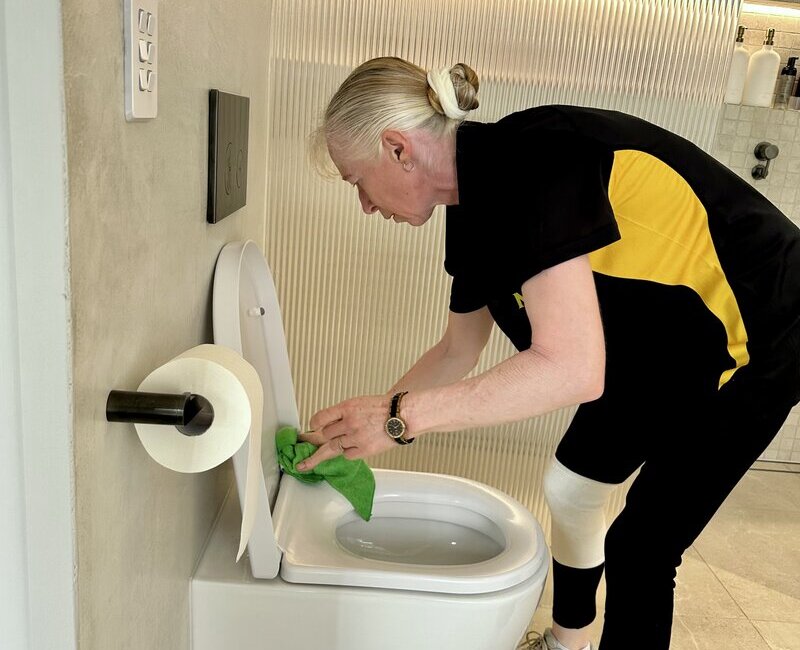
If mild solutions aren’t enough, it’s time to step up to medium-strength cleaners!
All-purpose cleaner
An all-purpose cleaner can help dissolve self-tanner residue on toilet seats. One popular option is The Pink Stuff.
Dip a soft sponge into the paste, and spread it over the stained area. Let it sit for a few minutes to break down the fake tan, then scrub gently.
A shower or bathroom cleaner can also work. Always read the label and follow the directions to get the best results.
Be sure to wipe up any residue with a damp towel after cleaning.
Magic eraser
A magic eraser is one of the most effective cleaning tools you can use to get self-tanner off a toilet seat. It’s made of melamine foam, which works by physically scrubbing the stained layer.
Just be aware that it can dull the seat’s shine, especially if you rub too hard or too much.
Run the magic eraser under water first. Squeeze out any excess moisture so it’s just damp, not soaked.
Gently scrub the stained area, cleaning one section at a time. You’ll notice the white sponge turning orange or brown as it lifts the tan from the seat.
Every few seconds, wipe the surface with a damp cloth to check your progress. Once the orange tint disappears, stop scrubbing to avoid overdoing it!
Magic erasers can leave behind a powdery residue, so don’t forget to rinse the surface with a damp cloth.
Rubbing alcohol
Rubbing alcohol may also clean fake tan stains on toilet seats. Just avoid using it on wooden seats, as it can “burn” the finish.
Spray the alcohol directly onto the affected area, and let it sit for 5–10 minutes.
Gently blot the stain with a damp microfibre cloth, switching to a clean section as it picks up colour. After lifting all stains, wipe off any leftover alcohol, and let the seat air dry.
TIP: In a pinch, hand sanitiser can also work, since it also contains alcohol!
Heavy Duty Solvents to Remove Fake Tan Stains
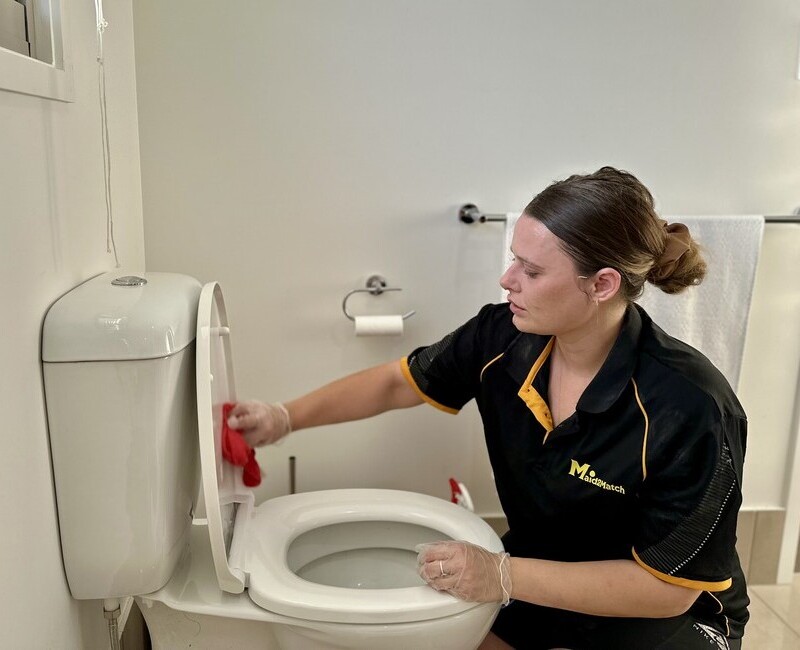
If other methods didn’t work, you’ve still got a few more options.
However, only try these as a last resort, and make sure to do a spot test first!
WD-40
WD-40’s solvent and lubricant properties can break down fake tan, making it easier to wipe away.
Spray a small amount onto a soft cloth — not directly on the toilet seat. That way, the surrounding surfaces and the inside of the bowl won’t become greasy.
Firmly scrub the stain using the cloth, cleaning one section at a time. You should see the fake tan transfer onto the cloth as you go.
Once the stain is gone, wipe off the excess WD-40 with a dry rag. Then, don’t forget to remove any leftover solution. Otherwise, a slippery toilet seat can cause accidents!
To rinse the surface, wash it with a towel dipped in warm, soapy water. Repeat until the seat no longer feels oily.
Do a final wipe with a cloth dampened in plain water, then follow up with a dry rag.
Nail polish remover
Nail polish remover usually contains acetone, which can help break down spray tan residue.
IMPORTANT: Never use acetone on wooden toilet seats, and be cautious on plastic surfaces, as prolonged contact can damage or discolour the finish.
Pour some acetone onto cotton pads, then stick them onto the toilet seat. Wait about 5 minutes, then use the same cotton pads to dab the fake tan stains.
Once the stains come off, remove all acetone residue thoroughly with a damp cloth.
Bleach
Bleach is sometimes recommended for removing fake tan stains on toilet seats, and it can be effective — but there are some risks!
At a high concentration, bleach can turn white toilet seats yellowish. It may also strip the shiny, protective layer, making the surface even more prone to stains.
It’s also not compatible with most wooden materials.
If you really need to use bleach, dilute it first. A 1:10 ratio of bleach to water is usually recommended, but always check the instructions on the bottle.
Apply the solution onto a cloth or sponge, and wipe the surface. Let it sit for 1–2 minutes, then gently scrub off the stains.
Use a damp cloth to rinse the bleach, and wipe everything dry.
Tips to Keep Your Toilet Fresh
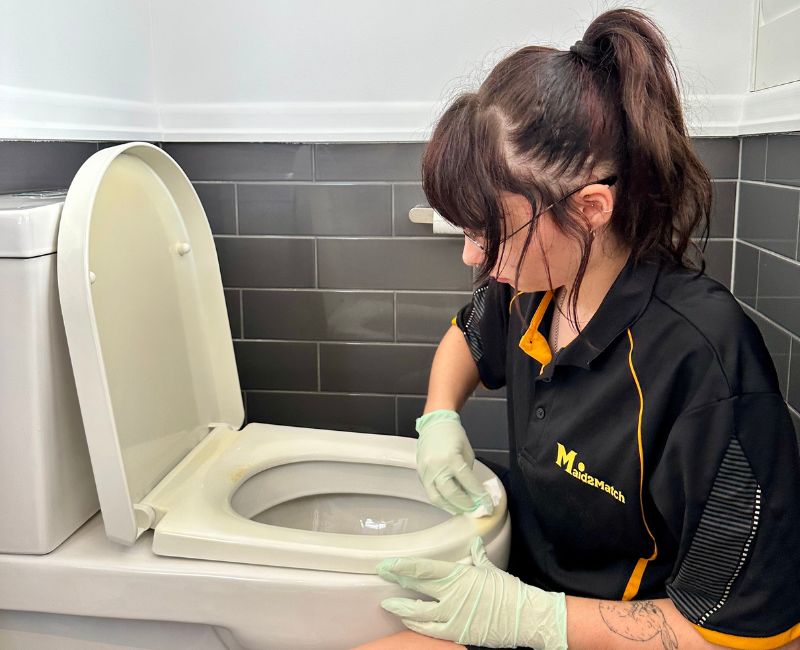
If you use fake tan regularly, remember that it can take a few hours to dry.
Also, be aware that you may sweat more during hot weather. This can loosen your self-tanner and increase the risk of staining surfaces.
To protect your toilet seat from spray tan, have disposable seat covers handy. You can also line it with a thick layer of toilet paper.
Beyond spray tan marks, it’s also important to maintain a clean toilet. Now and then, give the exterior a quick wipe to remove loose dirt, and disinfect it weekly to keep everything hygienic.
Better yet, you can hire a professional cleaner! They can keep your entire bathroom and toilet clean, so any stains don’t have time to build up or set.
