
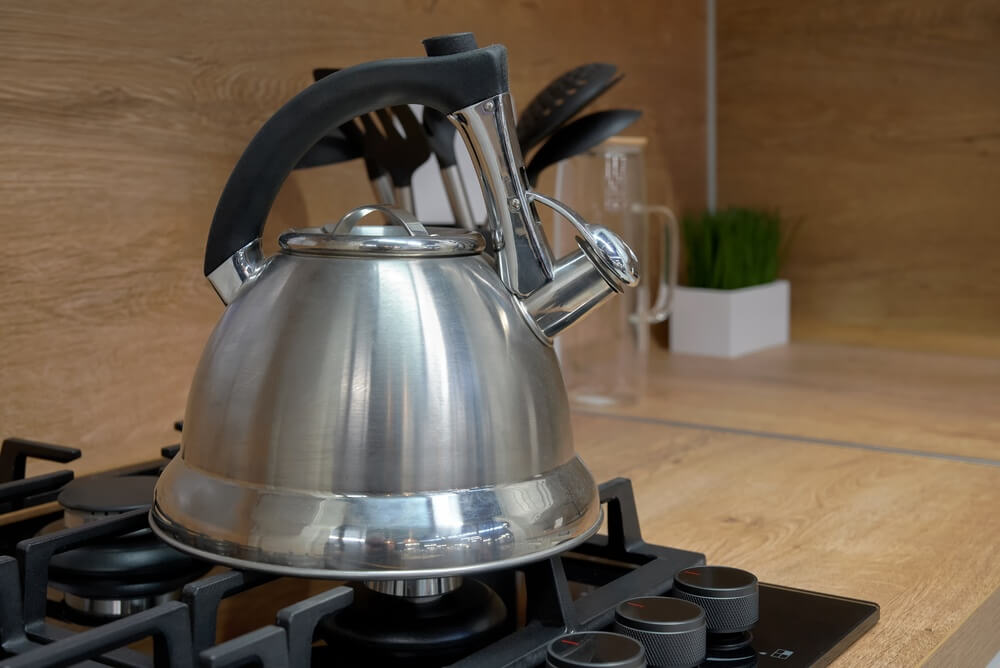
For those of us who can’t live without our tea or coffee, kettles are essential to our kitchens.
Stainless steel kettles are a classic, since they’re durable, rust-resistant, and great at sustaining heat. But on the downside, the metal accumulates limescale and shows fingerprints or smudges easily.
So, how should you clean a stainless steel kettle? For the inside, use dish soap, baking soda, or white vinegar. Then wipe the exterior with diluted vinegar or soapy water, and treat stains with lemon juice or baking soda paste.
Don’t let dirt and mineral deposits ruin a good brew! Regular maintenance keeps a kettle working well, so you can enjoy your morning tea just how you like it.
How Often to Clean | How to Clean Inside | Cleaning the Filter | How to Clean Outside | Treating Stains
Stovetop vs Electric Stainless Steel Kettles
Kettles are either stovetop or electric! Both can be made of stainless steel — the difference is in the heating method.
Here’s a quick rundown of the 2 kettle types and some handy cleaning info about them.
| KETTLE TYPE | OVERVIEW | CLEANING CHALLENGES |
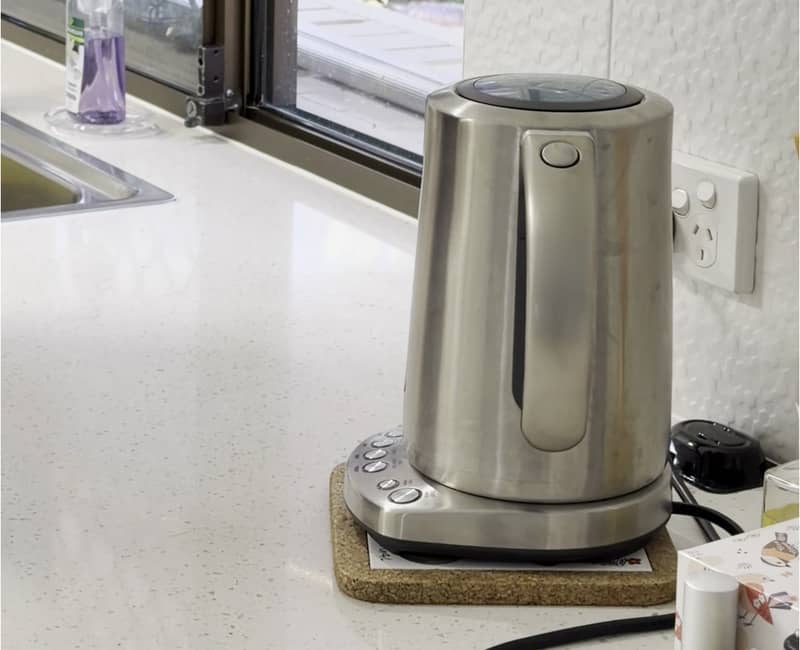
| Electric stainless steel kettle | These come with a base that houses the heating element, which transfers heat to the kettle through a connection point. | The bottom of the kettle and the base must not get wet, as you could short the electrical parts. |
| Stovetop stainless steel kettle | These “traditional” kettles go on top of a burner, which heats the water through the metal. | Direct heat can cause heat discolouration on the underside, especially with repeated exposure. Additionally, if the kettle boils dry, any leftover residue inside could scorch onto the surfaces. |
How Often to Clean a Stainless Steel Kettle
How often you use your stainless steel kettle helps determine how often you’ll clean it!
Generally, this is a good schedule to aim for:
| CLEANING TASK | FREQUENCY |
| Empty and dry the kettle | After every use (or at the end of the day) |
| Spot-clean stainless steel kettle exterior | A few times a week |
| Wash the kettle interior | Once a week |
| Wash or descale the filter | Once every 2 months |
| Descale stainless steel kettle | Every 2–3 months (or 4 months if not used regularly) |
It’s important to empty, rinse, and dry your kettle regularly. Leaving water sitting inside a stainless kettle for long periods could lead to mineral buildup, bacteria growth, or even mould.
Signs You Need to Clean Your Stainless Steel Kettle
Outside of the recommended cleaning schedule, there are a few signs to clean your kettle ASAP:
- Water smells or tastes off after boiling
- White, crusty mineral deposits on surfaces
- Visible grime inside or outside of the kettle
Before Cleaning the Kettle
Always take the kettle off the heat or switch it off and let it cool completely before working.
Gather your supplies beforehand so you’re efficient. For cleaning a stainless steel kettle, you can use one of these cleaners:
- Dish soap
- Baking soda
- White vinegar
For stubborn buildup or descaling, you can also use lemon juice, citric acid, or a commercial descaler.
Alongside the cleaner, you’ll need a soft-bristled brush (like a bottle brush), a non-abrasive sponge, and some soft cloths (e.g. microfibre cloths).
Check the manual or the manufacturer’s website to see if the kettle filter is removable, and if so, how to take it out. Set it aside to wash separately!
For stainless steel gooseneck kettles, use the accompanying cleaning tool or a straw brush to scrub inside the signature spout.
As for what not to use, avoid abrasive cleaners like steel wool or scouring powders, which can scuff stainless steel. Then skip the bleach, ammonia, and similar harsh chemicals, as these could corrode the metal or cause pitting.
How to Clean a Stainless Steel Kettle: Inside
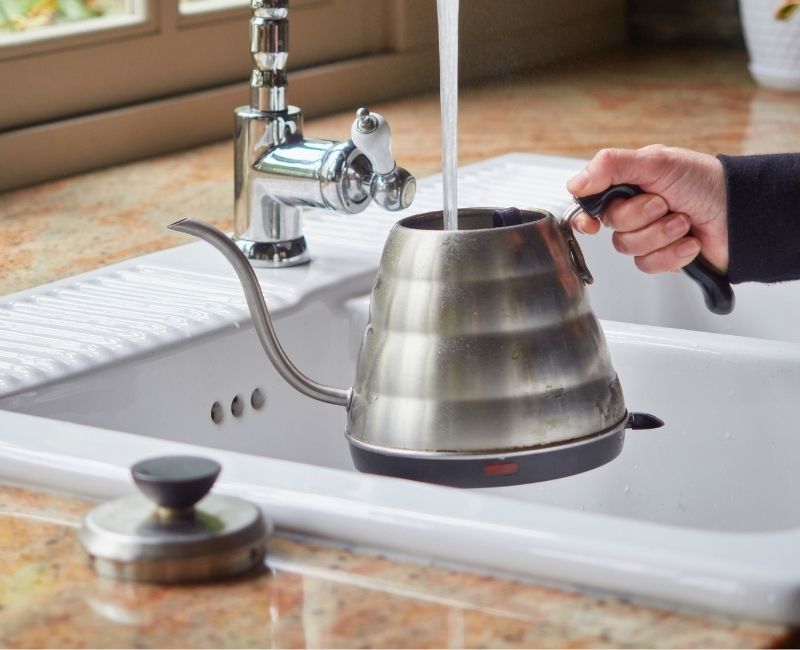
Regular kettle maintenance is key to a good brew — a dirty kettle could affect the water’s taste or even become a health hazard. You’ll need to wash all the interior surfaces, plus the spout.
If you’ve booked your kitchen for professional cleaning, ask your cleaner if they can wash your kettle, too!
Using dish soap
For routine cleaning, simply wash your kettle in your usual dish soap and warm water!
Slosh some water around the inside of a kettle, then scrub gently with a non-abrasive sponge or a soft brush and a few drops of soap. Rinse out the residue before drying the interior thoroughly to prevent water spots.
You should not put a stovetop kettle in the dishwasher unless the manual allows it. Never run an electric kettle in the dishwasher, or you could damage the electrical components.
Using baking soda
There are 2 ways to clean a stainless kettle with baking soda: adding some bicarb to hot water or using it as a paste.
For regular cleaning, fill your kettle halfway with water and bring it to a boil, then remove from heat or switch off. Wait a few minutes for the water to cool slightly before stirring in 1–2 tbsp of baking soda.
Avoid boiling the bicarb inside or adding it directly to boiling water, since it could foam up and overflow.
Leave the mixture to sit for 15–20 minutes, followed by a good scrub with some dish soap and a soft brush or sponge.
If there are tough stains inside the kettle, make a paste out of 2 parts baking soda and 1 part water, plus a squirt of dish soap. Spread it over the affected area and let sit for 5–10 minutes. Then work the paste into the stain with a damp cloth.
Rinse the kettle out, then boil fresh water to remove any residue.
Using white vinegar
Boiling vinegar has a strong smell, so switch on the exhaust or open a window. If you’d rather not deal with a vinegar smell, swap it for lemon juice!
Fill your stainless kettle halfway with 1 part distilled white vinegar to 3 parts water, then bring the mixture to a boil. For stovetop kettles, wait a minute or two before removing from the heat; electric kettles should automatically switch off.
Let the vinegar solution sit for 3–5 minutes, then use a bottle brush or soft sponge with a bit of dish soap to scrub off any dirt. Empty the kettle and rinse it a few times to remove lingering residue.
(NOTE: Avoid leaving vinegar inside your kettle for longer than 10 minutes. It could etch the metal, dry out rubber seals, or lead to corrosion and rust.)
Afterwards, get rid of the vinegar odour and taste by boiling fresh water, then allowing it to cool for a few minutes. Stir in 1–2 tbsp of baking soda (after the water has boiled) and slosh around a few times, then leave for a few minutes.
Wash the kettle with soapy water afterwards, then dry.
Cleaning a Stainless Steel Kettle Filter
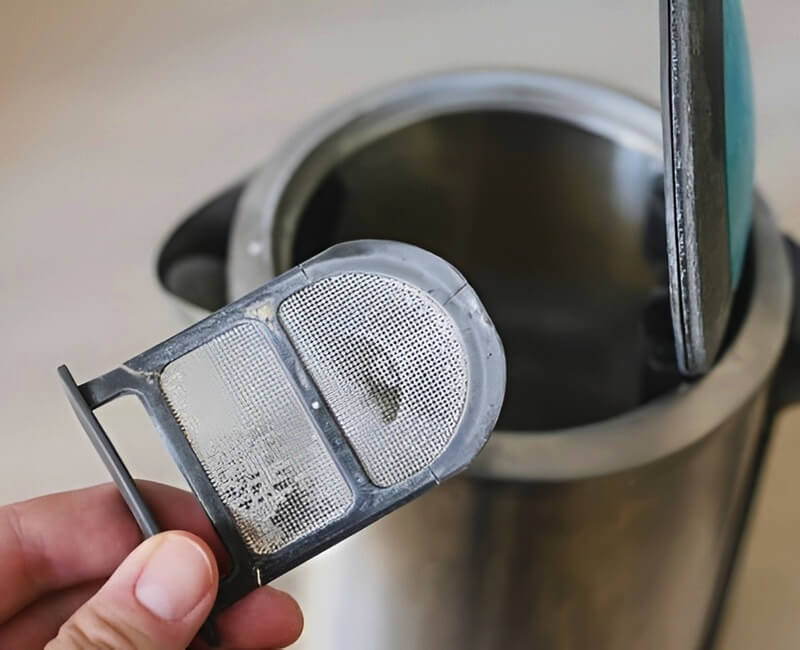
If your stainless steel kettle has a filter, check whether it’s removable. If yes, take it out and let it soak in some hot, soapy water for 5–10 minutes.
Once time’s up, give it a good scrub with a soft sponge and a bit of dish soap. Rinse the filter, then shake off excess moisture before drying.
For a filter with mineral deposits, use a mix of equal parts vinegar and warm water instead. Submerge the filter for 3–5 minutes before washing it clean.
However, if the mineral buildup is too hardened to remove, it’s best to replace the part!
How to Clean a Stainless Steel Kettle: Outside
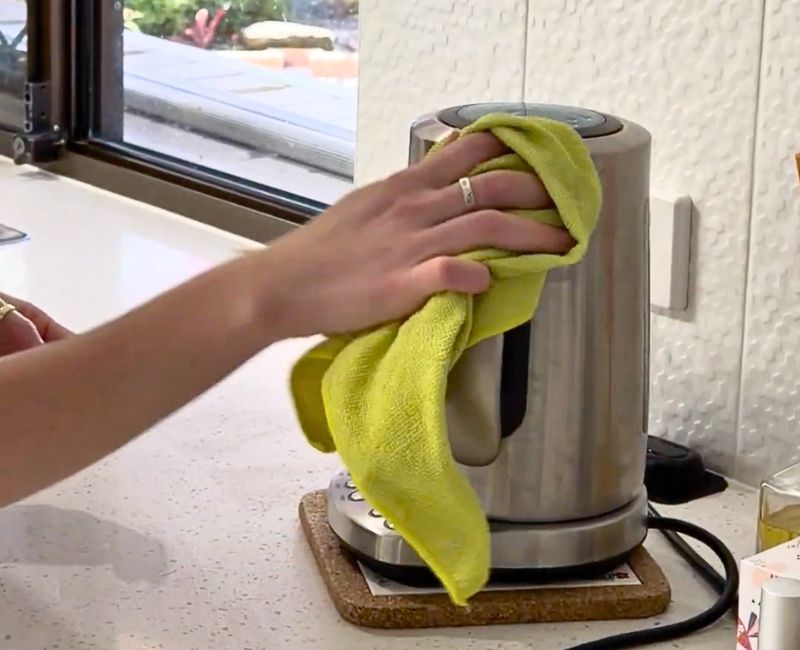
The exterior surfaces of your kettle also collect dirt over time, whether that’s drips from the spout or splatter from a fry-up.
How you clean the outside of your kettle will depend on whether it’s a stovetop or electric model!
Cleaning a stainless steel stovetop kettle exterior
For stovetop stainless kettles, wash them in the sink with hot water and dish soap. Scrub with a non-abrasive sponge, paying extra attention to the spout and handle.
If there’s stubborn grime, soak the kettle in hot, soapy water for 10–15 minutes first before washing.
Tackle water spots with a diluted vinegar solution! Spray it onto the marks and wait a moment before wiping them off with a damp cloth. Dry the kettle with a soft cloth afterwards.
NOTE: Check if your stovetop kettle has parts that shouldn’t get too wet, like a wooden handle. If it does, stick to wiping the metal parts with a cloth dampened in soapy water.
Cleaning a stainless steel electric kettle exterior
Do not submerge an electric kettle in water, since that could damage the heating element or electric base. That means no washing it in the sink!
Instead, wipe the kettle’s exterior with a cloth dampened with either diluted white vinegar or warm water and a drop of dish soap. Wipe with the grain of the metal so you don’t leave smudges or streaks.
Follow with a cloth dipped in fresh water to rinse off residue, then thoroughly dry the kettle.
Polishing your kettle
This is an optional step, but polishing your stainless steel kettle restores its sheen and adds a protective coating.
Pour a few drops of olive oil or food-safe mineral oil onto a soft cloth, then buff a thin layer all over the kettle’s exterior. Avoid using paper towels here, since they could track lint or leave smudges.
Give it a minute before wiping off the excess with a clean cloth.
Treating Stains from a Stainless Steel Kettle
Hard water minerals, scorch marks, rust — many things can leave stains on your kettle. So long as they’re not too old and baked on, they can be cleaned off.
However, over time and with regular use, some discolouration becomes permanent. Just think of it as a sign of a well-loved kettle!
How to remove limescale from a stainless steel kettle
Vinegar, lemon juice, or citric acid are effective ways to treat limescale buildup! The mild acids react with the mineral deposits, making them easier to remove.
To descale your stainless kettle, fill it halfway with water and bring to a boil, then let it cool for a few minutes so it’s just hot. Next, mix in one of the following solutions:
| DESCALER | DILUTION |
| White vinegar | Equal amount to the water |
| Lemon juice | 1 part lemon juice to 2 parts water |
| Citric acid | 1–2 tbsp per litre of water |
Let the solution sit for 3–5 minutes, or up to 10 minutes at most for tough buildup. Scrub the kettle clean with a soft brush or sponge, then rinse it thoroughly and dry with a microfibre cloth.
For very stubborn limescale, do not extend the dwell time. Instead, rinse the surface with a dampened cloth and repeat the application.
You can also use a commercial descaler! These come in liquid, powder, or tablet form, and the kettle’s manufacturing brand may have its own product.
How to clean a tarnished stainless steel kettle
Tarnish is a surface-level reaction, so it only discolours the outermost layers of metal. Light tarnishing can be cleaned off with a mild abrasive such as baking soda or Bar Keepers Friend Cleanser.
Combine 2 parts baking soda with 1 part water, plus a squirt of dish soap to make it “clingy.” Spread the paste on the tarnished spots and leave for a few minutes before scrubbing the kettle clean. Wipe away residue with a damp cloth.
For BKF, follow the package instructions, then wash the surface with some soap and water.
Dry the kettle completely afterwards.
How to remove rust from a stainless steel kettle
Rust is a deeper reaction that corrodes metal. High-quality stainless steel is rust-resistant, but scuffs or scratches could expose underlying layers to moisture and oxygen, causing rust.
Like limescale, the metal compounds in rust react with mild acids, making them easier to remove. For rust inside the kettle, boil equal parts water and either vinegar or lemon juice. Make sure the rusty spots are covered in the solution.
After boiling, switch off the kettle or take it off the heat and let the mixture sit for up to 10 minutes at most. Do not let it sit for longer since that could lead to further corrosion. Once done, pour out the mixture, then use a soft sponge to scour off the rust.
For exterior rust, make a thin paste with either citric acid powder and water, or lemon juice and salt. Apply it to the rusted area and lay a paper towel on top to maintain contact. Wait a minute before scrubbing the rust off with a damp sponge.
Wipe off the residue with a cloth dampened with water, then dry.
How to clean a burnt stainless steel kettle
Did you leave a stainless steel stovetop kettle going too long, or scorch an electric tea kettle’s surface? It may look bad, but you can clean a burnt kettle (usually).
For a stovetop kettle, submerge it in hot, soapy water for 10–20 minutes first and see if you can wash off the scorches.
If not, for both stovetop and electric models, make a paste of 2 parts baking soda, 1 part warm water, and 1 tsp dish soap. Bar Keeper’s Friend is an effective alternative for stainless steel, thanks to the oxalic acid.
Apply with a damp sponge and let sit for 10–15 minutes before carefully scrubbing off the burn marks. Wash your kettle in soap and water afterwards.
If the interior of your stainless steel kettle has burned, fill it halfway with water and bring to a boil. Afterwards, take it off the heat and let the water cool for a few minutes. Then add 1 tbsp of citric acid, stir to dissolve, and let it soak for 3–5 minutes at most.
Swirl the solution around before pouring it out, then work off the burn marks with a sponge or bottle brush, plus a bit of detergent. Rinse your kettle before drying thoroughly.
FAQs About Cleaning a Stainless Steel Kettle
Got more questions about cleaning stainless steel kettles? We’ll answer some common ones here.
Can you put vinegar in a kettle with metal elements?
Yes, vinegar is safe for descaling stainless steel kettles with exposed metal elements, though with some caveats!
Vinegar effectively tackles water marks and limescale buildup. However, you shouldn’t let it sit inside a stainless steel kettle for too long, as the acid could etch or corrode the metal surfaces.
Always dilute vinegar with water when putting it in your kettle, and avoid leaving it for more than 10 minutes. Fully rinse and dry the kettle afterwards.
When cleaning, do not scrub exposed metal elements, as that might damage the protective coating.
Is limescale in a kettle harmful?
Limescale buildup inside a kettle isn’t harmful to your health or the kettle itself, but it can clog up the filter, affect the water taste, and harden into stubborn deposits that are difficult to remove.
Limescale comes from minerals in hard water, like calcium and magnesium. It looks like white, chalky residue, and often forms on the spout and inside surfaces. Stainless steel in particular can be prone to limescale, and mineral residue is very visible on the metal.
Descale your kettle regularly (every 2–3 months with frequent use) to prevent limescale from building up and hardening. Tough buildup is extra tricky with stainless steel; you can’t soak the metal too long in vinegar or citric acid, since it could cause etching or corrosion. Better to minimise limescale accumulation instead.
Why does my new stainless steel kettle smell?
If there’s a metal or plastic smell in your new kettle, don’t worry! That’s usually a lingering odour from factory storage or packaging.
Get rid of the odour by boiling a full kettle of water, then letting it cool for a few minutes. After that, mix in 1–2 tbsp of baking soda and leave the solution inside the kettle for at least an hour to neutralise the smell.
Empty the kettle, rinse it with clean water, and wipe it dry.
If the smell persists after several rinses, contact the manufacturer to see if your unit might be defective.
