
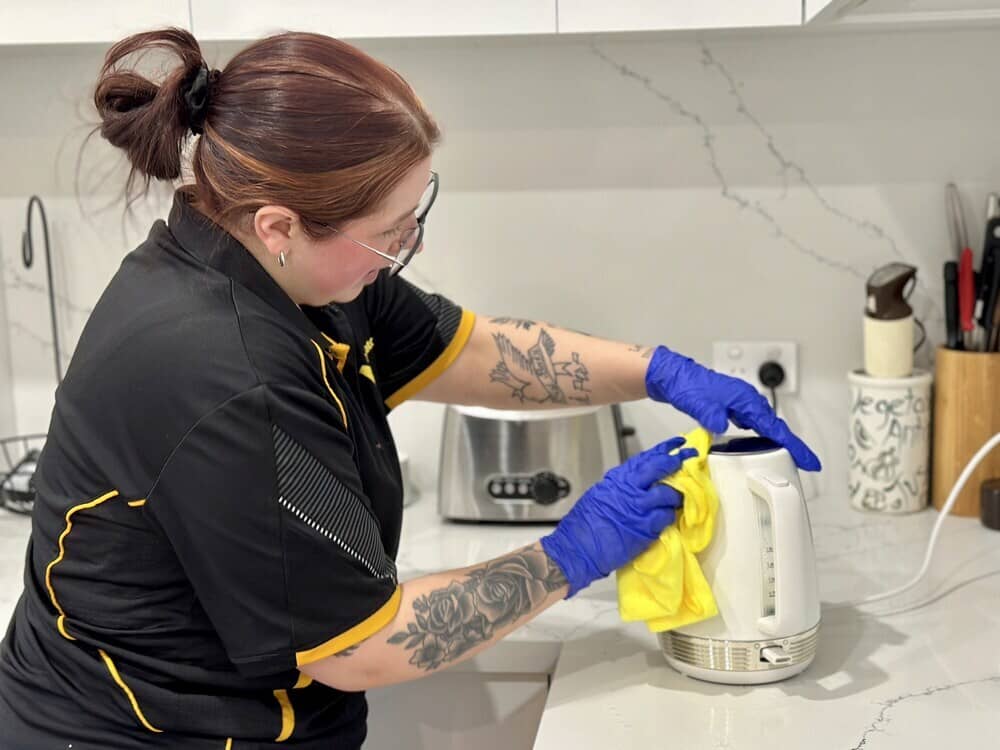
Hands up if you can’t function without your morning cup of coffee or evening mug of tea!
If you’re the same, then the kettle is one of your most hardworking appliances. And you must keep it clean, since dirt and limescale can affect the water’s taste (and ruin your drink).
So, how to clean a kettle? It depends on the material, but dish soap is the easiest solution. For descaling, use vinegar or citric acid, then treat stains with a baking soda paste.
Even if you’re only putting water inside (no milk, please), kettles still need cleaning. That ensures they stay hygienic and last longer — and keeps your favourite brew tasting delicious, day after day.
How Often to Clean | Before Cleaning | Cleaning a Kettle By Type | Cleaning Other Parts | Descaling a Kettle
Stovetop vs Electric Kettles
There are 2 main types of kettles: electric and stovetop.
You can use similar products, but each type has its own cleaning concerns.
| STOVETOP KETTLE | ELECTRIC KETTLE | |
| Heating method | Placed onto a stovetop burner and directly heated | Electricity goes through the heating element, which transfers heat to the kettle |
| Kettle materials | Most often made of stainless steel, ceramic, cast iron, or borosilicate glass | Have many different materials, but commonly plastic, stainless steel, or glass |
| Common features | Often “whistle” when the water is boiling | Many models automatically switch off when water has boiled |
| Cleaning tips | Soak the kettle in hot, soapy water to loosen stubborn stains | Always let the kettle switch off and cool down, and unplug it before cleaning |
| Cleaning challenges | The underside of a stovetop kettle is prone to soot or burn marks, especially on gas or hot plate stoves | Moisture can damage the heating element or electric components, so you can’t soak the kettle or place the bottom under running water |
How Often to Clean a Kettle
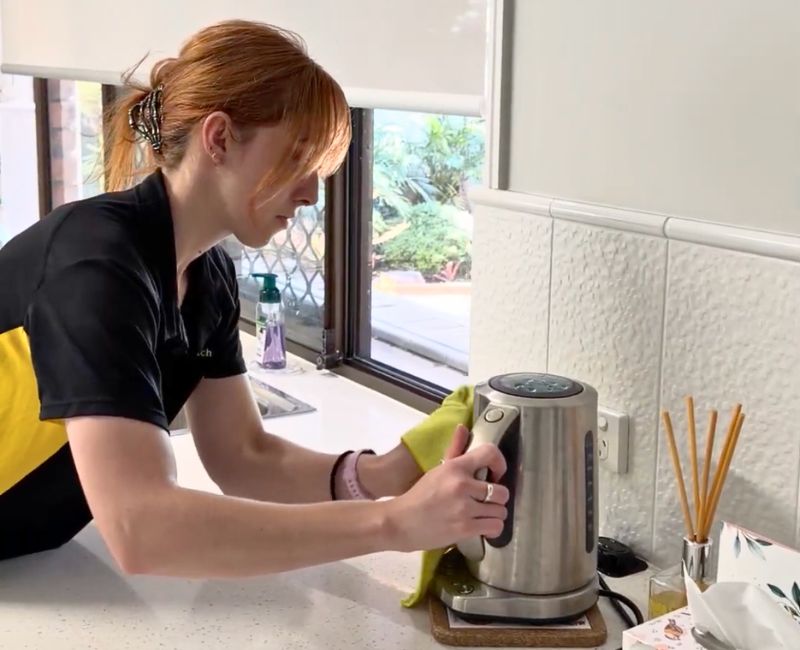
This will depend on how much you use the kettle!
But a good cleaning routine is essential for minimising dirt and mineral buildup, like this:
| CLEANING TASK | FREQUENCY | NOTES |
| Empty, rinse, and dry the kettle | After use or at the end of the day | Don’t leave standing water inside a kettle! That leads to mineral deposits or even bacteria growth. |
| Spot clean the kettle exterior | A few times throughout the week | Wipe away drips and water marks with a damp cloth. |
| Wash the inside of a kettle | Once a week | Dish soap and water are enough for routine cleaning! |
| Descale the filter | Once every 2 months | Limescale can clog the filter or affect water taste, so descale it regularly. |
| Descale your kettle | Every 2–3 months (or every 4 months for less frequent use) | If you notice a flat or mineral taste in your water, clean and descale the kettle ASAP. |
What to Know Before Cleaning Your Kettle
Kettles are both easy to use and easy to maintain, but you can’t put just anything into your kettle for cleaning.
Descaling vs cleaning process
Cleaning and descaling are overlapping but distinct processes. Cleaning removes dirt and stains, while descaling means treating limescale (mineral deposits from hard water).
Still, you can clean a kettle using methods meant for descaling, such as vinegar or lemon juice.
What to use when cleaning kettles
No need to complicate your supplies! For kettle maintenance, you’ll need:
| TASK | WHAT TO USE |
| Cleaning | Dish soap and water |
| Descaling | White vinegar, citric acid, or commercial descaler |
| Treating stains | Baking soda paste (2 parts bicarb, 1 part water, 1/4 part dish soap) |
| All | Soft-bristled brush (e.g. bottle brush), non-abrasive sponge, soft cloths |
For kettles with long spouts (like gooseneck kettles), use a thin, flexible brush (like a straw cleaner). Check if your unit came with its own cleaning implement!
Consult your user’s manual or the brand’s website for instructions on removing the filter.
As for what not to use, avoid strong chemicals like bleach or ammonia (so no glass cleaner, either). These could corrode the material or strip protective coatings.
Skip highly abrasive cleaners as well, such as steel wool or metal brushes, since they can leave scratches that trap dirt later on.
Signs to clean your kettle ASAP
These are some signs that you should wash or descale a kettle straight away:
- Visible grime on the kettle surfaces
- Water smells or tastes off after boiling
- White, chalky film on interior surfaces
- White, crusty buildup around the spout
- Standing water left inside for a few days or more
Best Ways to Clean a Kettle (By Type)
Your cleaning method will depend on the material. For example, you can’t clean glass kettles the way you would stainless steel or copper.
To make things easier, clean your kettle after you’re done using it, like at the end of the day.
Make sure it’s fully cooled down and, for electric kettles, switched off and unplugged. If there’s leftover water from your last boil, use that for your cleaning solution and top up as needed.
Alternatively, ask your Maid2Match cleaner to wash your kettle when they tackle your kitchen!
How to clean a plastic kettle
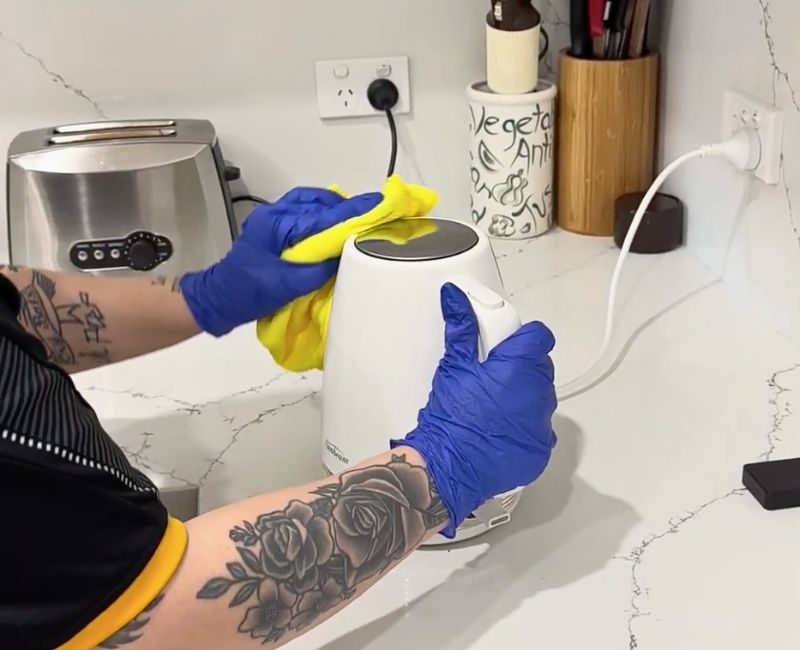
| WHAT TO CLEAN WITH | Dish soap and water |
Electric plastic kettles are very common in Australia. They’re affordable, convenient, and easy to clean. However, they’re not as durable as glass, ceramic, or stainless steel.
Wash the inside of your plastic kettle with a soft sponge, plus warm, soapy water. For the exterior, wipe it clean using a damp microfibre cloth dipped in the same cleaning mixture.
For any stains, coat them in a paste of 2 parts baking soda, 1 part water, 1/4 part dish soap. Give the paste 5–10 minutes to sit before working it into the stain with a damp sponge.
Rinse the kettle thoroughly before drying.
How to clean a stainless steel kettle
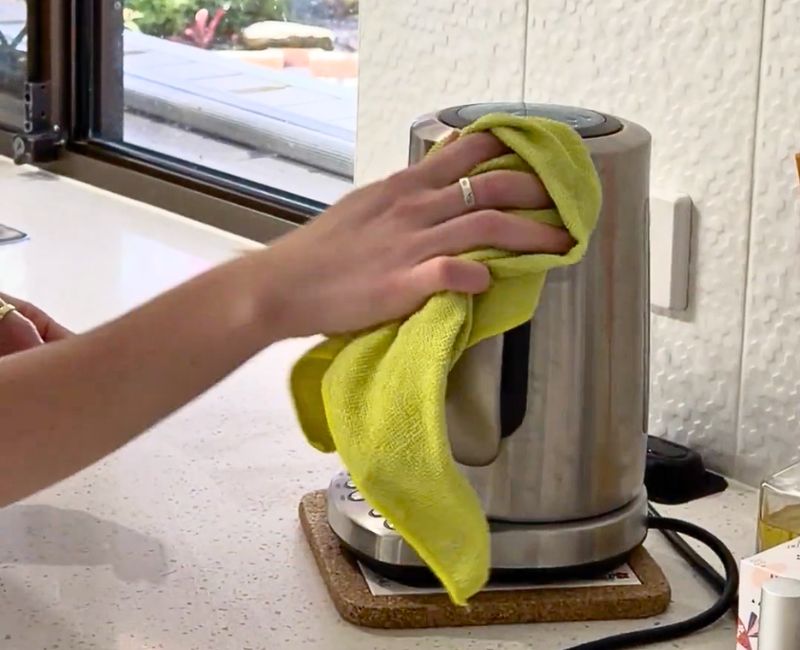
| WHAT TO CLEAN WITH | Soapy water or white vinegar |
Stainless steel is durable and rust-resistant, so it’s an ideal material for kettles. Just be mindful when using acids like vinegar — prolonged exposure could cause etching.
Wash your kettle with a non-abrasive sponge and warm water with a bit of dish soap. Or, if there are mineral deposits, quickly boil a 50:50 mix of vinegar and water. Leave inside for 3–5 minutes, then empty the kettle and wash with soapy water.
While boiling the vinegar, open the windows or switch on the exhaust! The fumes aren’t harmful, but they can sting your nose and eyes. (And the odour is very strong.)
Rinse the inside before boiling fresh water once or twice to remove the smell. Wipe the kettle dry.
TIP: As an optional step for stainless steel kettles, put a dab of olive oil or food-safe mineral oil onto a microfibre cloth. Buff a thin layer all over the metal, then wipe away the excess to leave your kettle sparkling.
How to clean a glass kettle
| WHAT TO CLEAN WITH | Lemon juice and dish soap |
Glass kettles are becoming more popular thanks to their aesthetic appearance. They can tolerate most cleaners, but be careful when handling them. The glass could chip or crack, then shatter later on when heated.
Also, if you regularly steep your tea in the kettle, the tannins may eventually stain the glass!
Acids such as lemon juice are great for treating tea stains and cleaning. Mix 1 part lemon juice to 2 parts water, enough to fill the kettle halfway. Bring that to a boil, then let the kettle switch off or take it off the stove.
Leave the lemon solution to sit for 10–20 minutes, then wash the interior with a soft brush and some dish soap. Rinse and empty the kettle before boiling fresh water to remove the citrus taste.
For more stubborn stains, make a thin paste with some lemon juice and cream of tartar. Coat the stain for 3–5 minutes before scrubbing the glass with a damp sponge, then rinse and dry the kettle.
How to clean a ceramic kettle
| WHAT TO CLEAN WITH | Warm, soapy water |
Ceramic kettles can handle most cleaners thanks to the protective glaze. Like glass, though, clean a ceramic kettle carefully so it doesn’t chip or break.
Wash your ceramic kettle with dish soap and water, and scrub with a non-abrasive sponge.
For limescale, treat the deposits with a mix of equal parts vinegar and water. Boil that inside the kettle and let sit for 10–20 minutes before washing the surfaces clean.
Rinse the kettle and wipe dry afterwards.
How to clean an enamel kettle
| WHAT TO CLEAN WITH | Warm, soapy water |
Enamel kettles have a metal base layer (e.g. steel or cast iron) with a porcelain-enamel coating. You’ll often see them with bright colours or cute designs, and a glossy finish.
Handle enamel kettles with care — any chips or cracks expose the metal underneath, which leads to rust. Avoid abrasive scrubbers or scouring powders that could scuff the coating, and dry the kettle completely after washing.
Dish soap and warm water are enough to clean your enamel kettle! Gently scrub the surfaces with a soft sponge, then rinse the kettle and wipe with a microfibre cloth.
How to clean an aluminium kettle
| WHAT TO CLEAN WITH | Mild dish soap and water |
Aluminium is an affordable material, but it’s prone to scuffing, pitting, and etching. Stick to gentle cleaners like mild dish soap and water, plus a non-abrasive sponge or brush.
Fill the kettle halfway with hot, soapy water, then let it soak for 10–15 minutes. Go over the surfaces with the sponge or cloth.
Flush the kettle with water to remove soapy residue, then dry immediately to prevent oxidation or water spots.
How to clean a cast iron kettle
| WHAT TO CLEAN WITH | Mild dish soap and water |
You’ll mostly find cast iron in Japanese tea kettles (called tetsubin) or camping kettles, and sometimes in vintage kettles. The cleaning process will differ depending on what type of kettle you own.
Camping cast iron kettles can be safely washed with mild dish soap and warm water. Gently scrub the surfaces with a microfibre cloth or non-abrasive sponge. Avoid using cold water, since the cool liquid on a hot kettle could stress the material.
For Japanese cast iron kettles, avoid using soap unless the manufacturer allows it. Instead, empty the water and let the kettle sit on a still-warm (not hot!) stove for a few minutes to dry the inside. Store the kettle as instructed.
Cleaning Other Parts of a Kettle
Of course, the inside of your kettle isn’t the only part that needs washing.
A dirty filter or spout can affect a kettle’s function, and no one wants to see a grimy exterior first thing in the morning.
How to clean a kettle filter
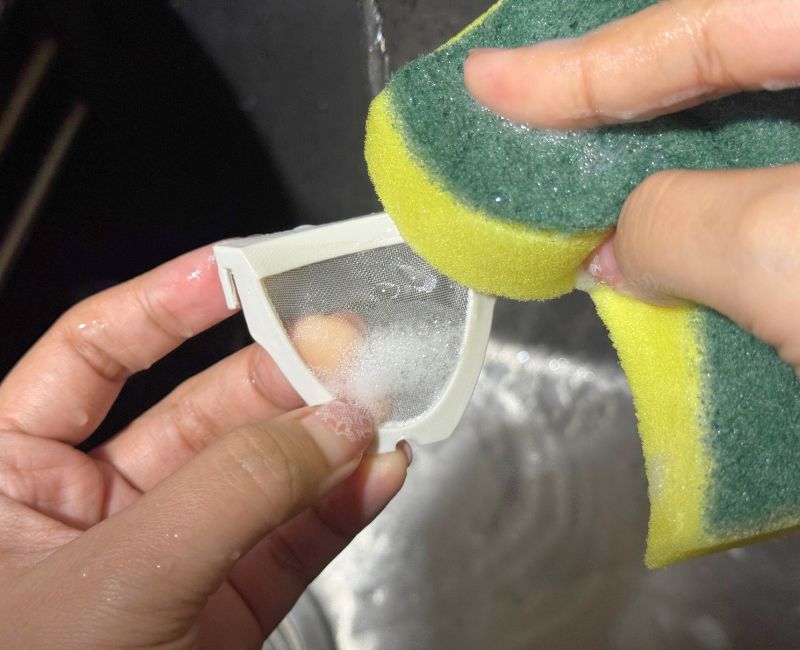
If your kettle has a filter, check the manufacturer’s directions for removal and cleaning. For most models, you’ll pop the filter out from inside the spout.
Let the filter soak for 5–10 minutes in a mixture of equal parts white vinegar and hot water. Next, scrub the mesh with a soft sponge and a bit of dish soap. Rinse it under running water, then shake off excess moisture or pat it with some paper towels.
Set the filter aside to air dry before reinstalling it.
If the limescale buildup is too tough to remove, even with repeated soakings, it’s better to replace the filter entirely!
How to clean a kettle spout
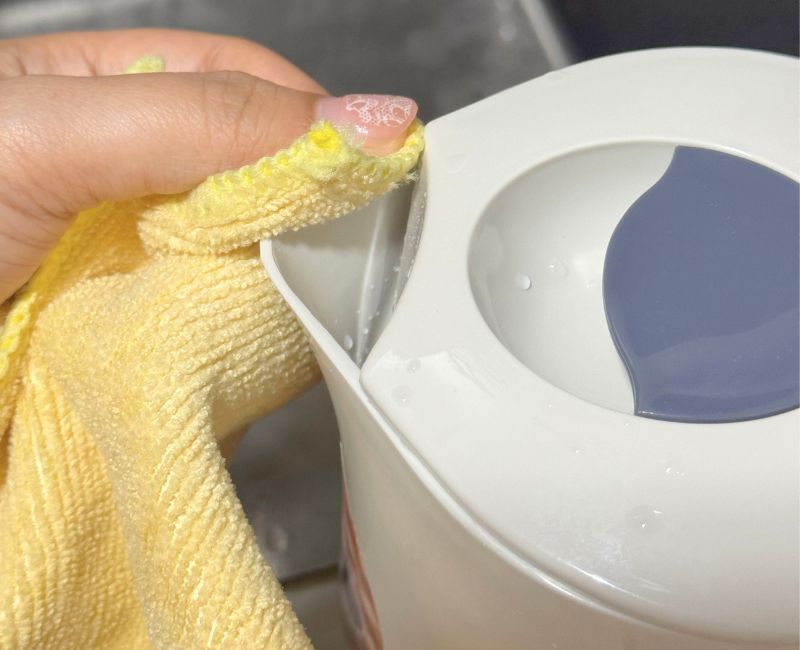
For kettles with shallow spouts, wipe inside the spout with a cloth dipped in soapy water. Use a cotton bud for the narrow spaces or crevices. Follow with a fresh, damp cloth to rinse away residue, before wiping the spout dry.
For kettles with long spouts, pour some water through the spout first, so you’re not scrubbing it dry. Then put a few drops of dish soap onto the spout cleaner or straw brush, and use that to scrub the inside surfaces.
Flush the spout with hot water from the tap afterwards.
Drain all the water out of the spout, then wipe the outside and the inside parts you can reach with a soft cloth or paper towel.
Cleaning a kettle exterior
For stovetop kettles, wash the exterior with warm water and dishwashing liquid. Scrub gently with a soft sponge, then rinse and wipe with a clean cloth.
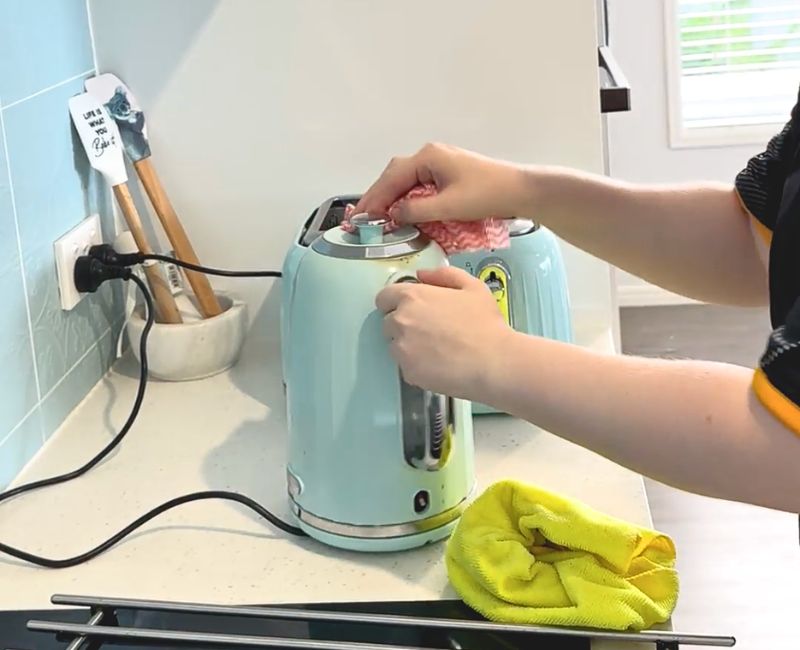
But with electric kettles, you’ll need to be more careful. Since the base can’t get wet, stick to wiping the exterior surfaces with a cloth dampened with either soapy water or equal parts vinegar and water. Follow with another damp cloth to rinse off residue before drying the kettle.
The vinegar solution also removes water spots or limescale buildup! Use it to dampen a cloth and wipe the spots off.
For food-based stains (like oil splatter), make a paste out of 2 parts baking soda, 1 part warm water, 1/4 part dish soap. Spread it over the stained area and let it sit for 5–10 minutes. Next, scrub the stain off with a damp sponge, then mop away residue with a moist cloth.
Use another cloth to dry the kettle.
How to clean the base of a kettle
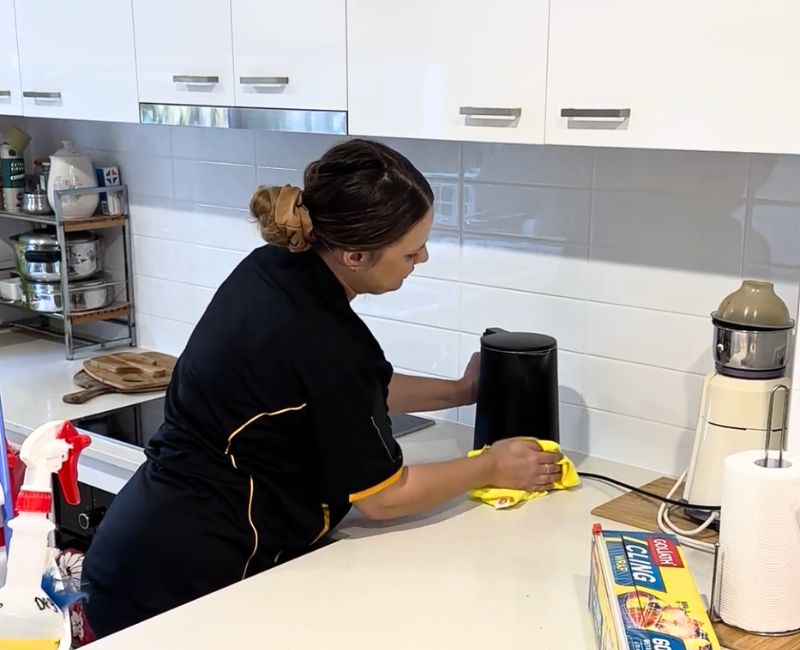
When cleaning the base of an electric kettle, it’s important to use minimal moisture. Any water that seeps into the electric components or heating element could cause a short.
Dip a microfibre cloth into either soapy water or a diluted vinegar solution, then wring it out so it’s just damp. Wipe the base of your kettle, staying away from any electrical parts. Follow with another lightly dampened cloth to remove residue before drying.
Since stovetop kettles don’t have electric parts underneath, you can wash the underside with your chosen cleaner. Be sure to dry the surface, or you’ll leave water spots that might scorch under direct heat later!
How to Descale a Kettle
Limescale is caused by minerals (like calcium and magnesium) in hard water. As the water boils and dries, it leaves behind deposits that build up into a white, chalky residue.
It’s not harmful to your health, but it can affect the taste of your water or clog up the filter.
How often you descale your kettle depends on both usage and water hardness. If you use your kettle a lot, or have very hard water, you should descale every 2–3 months.
How to remove limescale buildup from a kettle
Acidic cleaners like white vinegar and citric acid are best for descaling, since they dissolve the mineral deposits.
Here are 3 easy ways to descale your kettle:
| KETTLE DESCALER | HOW TO USE | DESCALING PROCESS |
| White vinegar | Combine a 50:50 mix of white vinegar and water, enough to fill the kettle halfway | Bring the vinegar solution to a boil and then switch off the kettle or take it off heat. Make sure the windows are open or the exhaust is on. |
| Citric acid | Stir in 1–2 tbsp of citric acid powder per 1 litre of water | Boil a half-full kettle of water, then switch off/remove from heat and allow to cool slightly. Stir in the citric acid until it dissolves. |
| Commercial descaler | See directions on the packaging | Dissolve into a kettle of water according to instructions. |
Do not boil the citric acid or add it directly to boiling water (aka when it’s still bubbling), since it’ll fizz up and might overflow.
For vinegar or citric acid, let it sit in the kettle for 3–5 minutes for metals (e.g. stainless steel) or 10–20 minutes for ceramic/enamel, glass, and plastic. Acids can etch metals with prolonged exposure, so be careful of the dwell time!
Afterwards, scrub the interior surfaces with a soft brush and a bit of dish soap. Rinse the kettle, then boil fresh water (1–2 batches) to remove any lingering taste or smell. Finally, empty the kettle before wiping it with a dry microfibre cloth.
TIP: Since boiled vinegar creates a strong scent and taste, neutralise that with baking soda!
Once you’ve boiled fresh water, let it cool slightly and stir in 1–2 tbsp of baking soda. Leave for 10–20 minutes before emptying and drying the kettle.
Preventing limescale in your kettle
If you live in a hard water area, limescale buildup happens more easily. Consider installing a water softener or water filter to minimise mineral deposits in your kitchen and bathroom.
Empty the kettle after use or at the end of each day. Standing water left inside could dry up and cause mineral buildup. Spot-clean the kettle’s exterior a few times a week, too, to remove water marks.
Limescale is easier to remove as a thin residue, so don’t let it build up! Descale your kettle as soon as you notice white residue inside or on the filter.
Hardened deposits (especially on the filter) may not fully dissolve despite repeated descaling.
Other Kettle Cleaning Problems
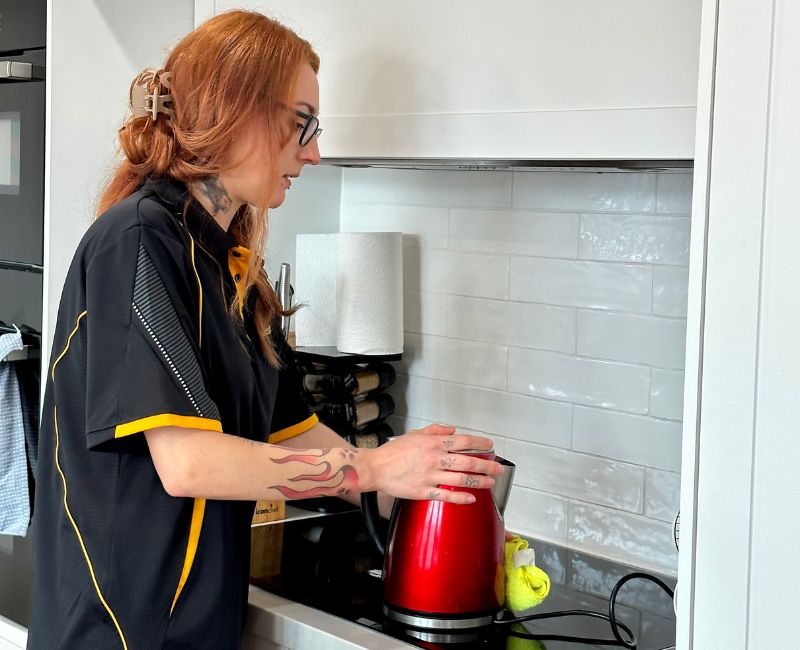
Even with routine washing, there are times your kettle needs a deeper clean, such as a scorched interior or even mould.
How to remove burn marks from a kettle
Tackle burn marks inside a kettle ASAP, when they’re easiest to remove. For mild scorching, try scrubbing with dish soap and a soft brush first — that’s usually enough.
If not, boil a kettle half-filled with water, then take it off the heat and let the water cool for a few minutes. When it’s just hot, dissolve 1–2 tbsp of citric acid powder.
Wait 3–5 minutes for that to work before scrubbing the burn marks off with the brush and some dish soap.
Empty the kettle, then rinse and dry.
How to clean the outside of a burnt kettle
For stovetop models, soak the exterior in hot, soapy water for 10–20 minutes. This should help loosen the scorch marks, so you can scrub them off with a damp sponge and some soap.
If that’s not enough, make the baking soda paste (2 parts bicarb, 1 part water, 1/4 dish soap). Spread it over the burnt area and let sit for 10–15 minutes before working it over the surface with a wet sponge. Rinse off the residue with water.
You can also use Bar Keeper’s Friend Cookware Cleanser, which has oxalic acid to treat the stains. Follow the product instructions for use.
How to disinfect a kettle
Have you accidentally left tea inside the kettle and it looks icky? Or maybe you boiled some lemon peels and then forgot them inside (whoops).
If you’ve found mould or other unpleasant grime in your kettle, it needs a deeper clean.
Start by washing the kettle to maximise exposure to the disinfectant. Use dish soap and hot water, then wipe the surfaces dry and allow the kettle to fully cool down.
Depending on the problem, use one of the following solutions:
| KETTLE PROBLEM | CLEANER | HOW TO USE |
| Mould | White vinegar | Boil equal parts vinegar and water in the kettle, then let it sit for at least one hour |
| Bacteria and other grime | Rubbing alcohol (70% isopropyl alcohol) | Spray the kettle surfaces with alcohol and leave for 1–3 minutes, then thoroughly wash the kettle with soap and water |
Always boil at least one batch of fresh water before using the kettle again, to remove any taste or residue.
FAQs About Cleaning the Kettle
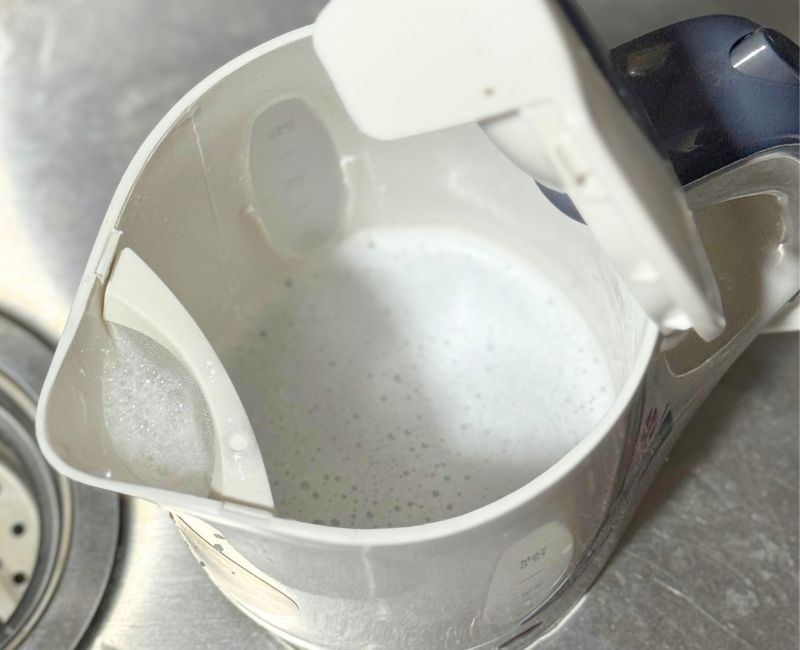
Need to know more about kettle cleaning? We’ll answer some common questions here!
What is the best way to clean the inside of a kettle?
For routine kettle cleaning, the best method is washing with dish soap and water. Scrub the interior with a soft-bristled brush, and the exterior with a sponge or cloth.
Then for descaling, you can use white vinegar, lemons, citric acid, or a commercial descaler.
How to clean the bottom of a kettle
The easiest way is with a soft brush with a handle, like a bottle brush or a dish scrubber.
The handle lets you reach down to the bottom of the kettle without awkwardly squeezing your hand through the opening. Make sure the brush has nylon or other soft bristles, not metal ones — that could leave scratches!
While there’s still water inside the kettle, add a bit of dish soap to the brush and use that to scrub the bottom. Rinse the kettle and dry it afterwards.
Does boiling vinegar clean a kettle?
Yes, boiling vinegar then letting it sit inside a kettle is effective for cleaning and descaling.
Just be mindful of dwell time — vinegar (and other acids) shouldn’t sit inside metal kettles for too long, or it could etch the material.
Stick to 3–5 minutes for regular descaling, or no more than 10 minutes for stubborn buildup.
Can you use bicarbonate of soda to clean a kettle?
You can! Bicarbonate of soda (also known as bicarb soda or baking soda) is only mildly abrasive, so it’s good for cleaning kettles — either as a stain-removing paste or an odour neutraliser.
Mix 2 parts bicarb soda with 1 part water and 1/4 part dish soap, then use the paste to scrub off food-based stains or burn marks.
For odours like vinegar, add 1–2 tbsp of bicarb soda to a kettle half-full of water and leave for 10–20 minutes. Empty, rinse, and dry the kettle once time’s up.
Can I clean a kettle with Coca-Cola?
Some online hacks claim that you can boil Coca-Cola (or Coke) to descale your kettle. And it does dissolve limescale, since soft drinks also contain acids, similar to vinegar and lemon juice.
However, we do not recommend using Coca-Cola for descaling. Boiling a soft drink will leave a sticky, sugary residue on the inside of a kettle, which just takes more effort to wash off. Moreover, if you boil the Coca-Cola too long, the liquid evaporates and the sugar could scorch onto the kettle’s surfaces.
Save your drink as a tasty reward after using a proper descaler instead!
